The Squid That Traveled From Sarufutsu, and the Propane That Almost Didn’t
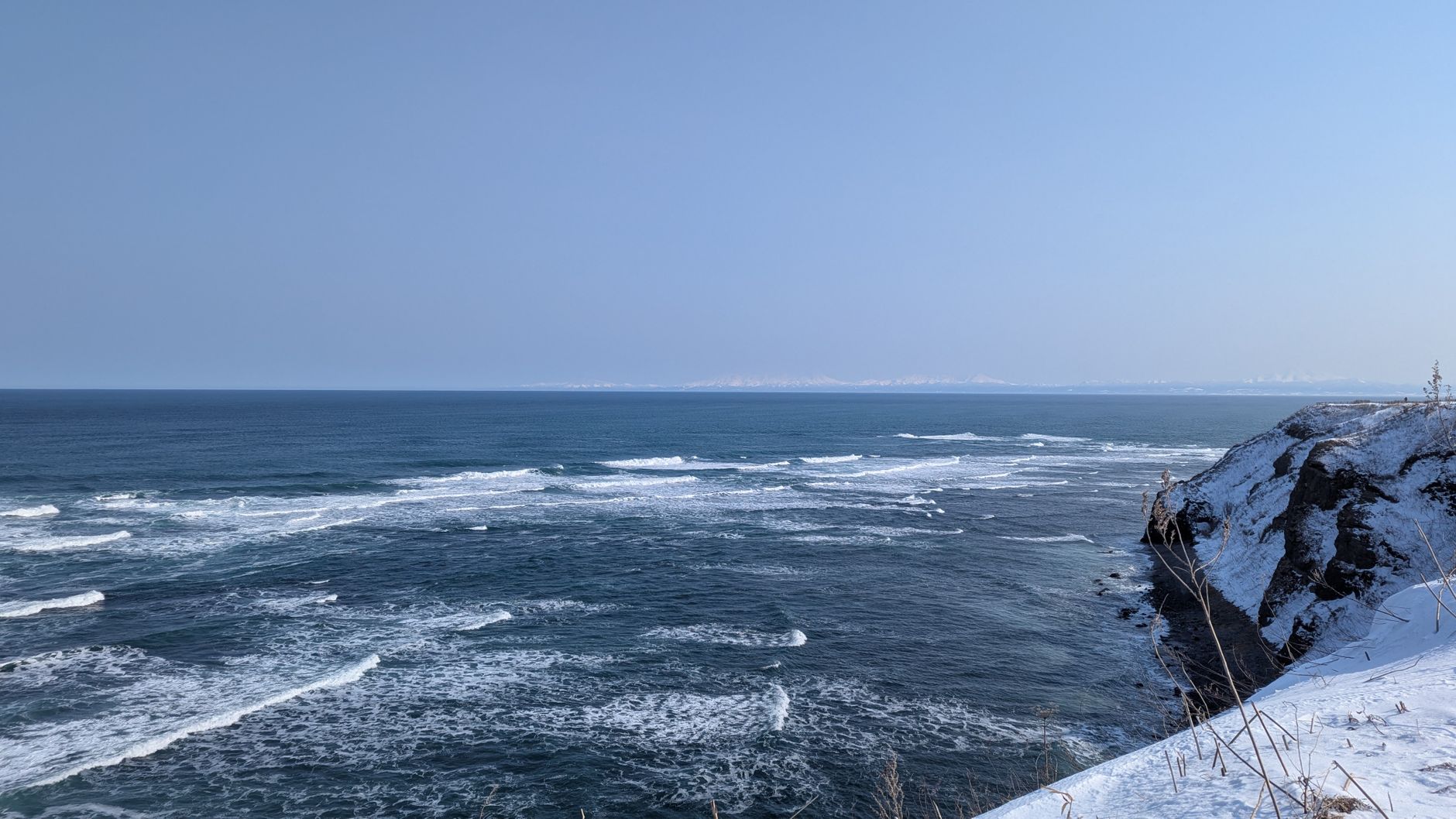
Three hours north of Wakkanai on Japan’s Route 238, the coastline has turned to scrubby tundra. The only signs of human life are occasional rusting fishing shacks and a vending machine that looks like it’s been standing there since the bubble economy. The wind off the Sea of Okhotsk is doing its best to peel the paint off the campervan, and the guidebooks treat Cape Soya as a footnote — a place to tick off on the way to somewhere else. But the road ends here, and that is precisely the point.
The thing about cooking at the top of Japan is that nobody tells you about the gas situation. Every campervan rental agency in Sapporo hands over a vehicle with one full canister, maybe two if lucky, and a cheerful wave that assumes you’ll stick to the Shiretoko Peninsula or the lavender fields of Furano. They don’t expect anyone to head north of Nayoro, where convenience stores thin out and the nearest gas exchange point might be a hundred kilometers away. On day four, standing in a gravel parking lot overlooking the Sea of Okhotsk with a half-empty canister and a bag of fresh squid bought from a fisherman in Sarufutsu, the distance to the nearest propane refill station in Wakkanai — a round trip eating three hours — becomes a concrete problem.
This is where the second canister becomes the difference between a memorable dinner and a sad meal of convenience-store onigiri eaten in the dark. The 250-gram screw-on canisters are not universally available outside the major cities, and the ones found in rural hardware stores often use a different threading system. Carrying enough fuel to cover cooking from Sapporo to the cape and back means budgeting for at least one backup canister for every three days of heavy cooking, more if the stove is used for morning coffee and evening meals.
The okonomiyaki made at Cape Soya is not the elegant, finely layered version from Osaka. It is a rugged, improvised thing born of necessity and a strong wind. The pre-mixed flour came from a supermarket in Wakkanai, along with a cabbage that has traveled as far as its cook. The frozen squid came from a roadside stand that also sold dried kelp and what appeared to be a stuffed fox. The batter comes together in a plastic bowl acting as a mixing vessel because proper kitchenware is buried under three days of camping gear, and the real skill of campervan cooking isn’t technique — it’s spatial awareness. Every surface multitaskes. The cutting board doubles as a table extension. The stove sits on a fold-down shelf perfectly positioned to catch the wind from the open sliding door, which is why the van gets angled so the body blocks the breeze.
The trick to cooking okonomiyaki in a campervan is heat management. A single gas canister burns hot and fast; cranked to maximum, it yields a seared exterior and a raw, doughy center. A low, steady flame — the kind that takes eight minutes per side — is what works. The first attempt ended with a pile of cabbage and batter that looked like a failed science experiment, flipped too early. Now, the technique is to wait until the edges are dry and the top starts to bubble through, then use two spatulas for the flip — one to lift, one to catch — and accept that a few shreds of cabbage will always escape into the burner. This is not cooking for Instagram. It is cooking for survival, for warmth, for the satisfaction of eating something hot and savory while the northern wind howls against the van’s windows and the sun sets over a sea that looks like hammered lead.
The okonomiyaki tastes different up here. The cabbage is sweeter — stressed by the cold, the same way alpine vegetables develop more sugar. The squid is chewy in a good way, carrying the faint iodine taste of the sea parked beside. Bottled okonomiyaki sauce, rationed since Sapporo, gets drizzled over the top, along with a squirt of Japanese mayonnaise from a tube that has been living in the cooler. The dried bonito flakes dance and curl in the heat from the stove. It is not a masterpiece. It is better than a masterpiece.
The logistics of cooking on the road require a different kind of planning than car camping in North America or Europe. In Japan, the gas canisters are standardized to the Lindal valve, and while they can be found at any home center in a city, the rural areas operate on a different economy. The hardware store in Hamatonbetsu might have them, or it might not, and the clerk won’t speak English. A traveler ends up miming a canister while the old man behind the counter looks on with confusion. The solution is to stock up in Wakkanai, which has two major home centers within walking distance of each other, and to check canister weight every morning by holding it and guessing how many meals remain. A full 250-gram canister provides roughly two hours of continuous cooking — about eight okonomiyaki, or twelve cups of coffee, or one very satisfying curry that takes an hour to simmer.
A small scale is a pro move. A digital luggage scale costs a few hundred yen at any Don Quijote, and it gives an exact read on remaining gas instead of a guess. The canister gets weighed every morning with coffee, and meals get planned around the numbers. Three hundred grams left means okonomiyaki for dinner and plenty for breakfast. One hundred grams means something quick — simple miso soup with whatever vegetables are left, or a one-pan soba noodle dish that cooks in five minutes. The scale becomes the most important cooking tool, more essential than a knife or cutting board, because it tells exactly how much freedom remains.
The other thing nobody tells you about cooking at Cape Soya is that the light is different. The northern Hokkaido summer has a quality of gold that you won’t find anywhere else in Japan — a long, slow twilight that stretches from seven in the evening until nearly ten, when the sun finally dips below the horizon and leaves a bruise of purple and orange across the sky. Timing the cooking for this golden window, when the wind tends to die down and the temperature rises just enough to cook with the van door open, becomes a ritual. Sitting on the step of the campervan, plate balanced on knees, watching the light change over the sea, the reason for making this journey becomes clear. It is not about the destination. It is about the moment everything stops moving.
There are practicalities beyond gas. Water must be thought about — the taps at roadside rest stops are not always running in the off-season. Waste must be considered — cooking oil cannot go down the drain of a campervan sink; it gets carried in a sealed container until a proper disposal point is found. The condensation that builds up inside the van when cooking will turn windows into a dripping, fogged mess and leave bedding damp by morning. The solution is simple: crack a window on the opposite side of the van from the stove to create cross-ventilation, and never cook without the exhaust fan running if one is available. These are the details that separate a comfortable trip from a miserable one, and they are the details no rental agency will mention.
The okonomiyaki at Cape Soya becomes a ritual. Made on the first night, arriving exhausted and hungry with the wind howling so hard it’s barely possible to hear. Made on the second night, after exploring the cape’s walking trails and the old Soviet-era monument that marks the northernmost point of Japan’s defense line. Made on the third night, when squid and cabbage run out but flour and eggs remain, so a scrappy, improvised version with canned tuna and the last of the scallions gets thrown together. It tastes just as good, because what is really being eaten is the satisfaction of making something from nothing in a place where nothing was guaranteed.
The spare gas canister sits in the storage compartment, a silent reassurance that nobody will be stranded without a hot meal. It gets checked every morning, stock rotated so the oldest canister gets used first, and empty ones get treated with respect — punctured with a can opener to prevent any residual gas from causing a fire hazard, then recycled at the designated disposal points common at Japanese campgrounds. By the time Cape Soya is left behind, heading south toward the lavender fields and the tourist crowds of Furano, four canisters have been used in six days, and every single meal has been cooked from scratch.
The food at Cape Soya is not about the recipe. It is about the realization that you are entirely self-sufficient in one of Japan’s most remote corners, that everything needed is in the metal box on wheels that has become home, and that the line between survival and luxury is as thin as the flame on the stove. Driving south with a full belly and the particular joy that comes from feeding yourself well in a place where convenience stores are a distant memory, the understanding settles in: the spare gas canister is not an accessory. It is the single most important piece of gear. The next time someone talks about a Hokkaido campervan trip, the advice includes the okonomiyaki at the cape, and then the practical detail: “And you need a spare canister. Actually, you need two.” They will think it’s dramatic. They won’t understand until they are standing at Japan’s northern edge, holding a hot spatula, and the wind is rising over the Sea of Okhotsk.

📷 Photos: Raksha B M (Pexels), Laurisa Deacon (Unsplash)