The Sound of the Shiga River at 3 a.m.
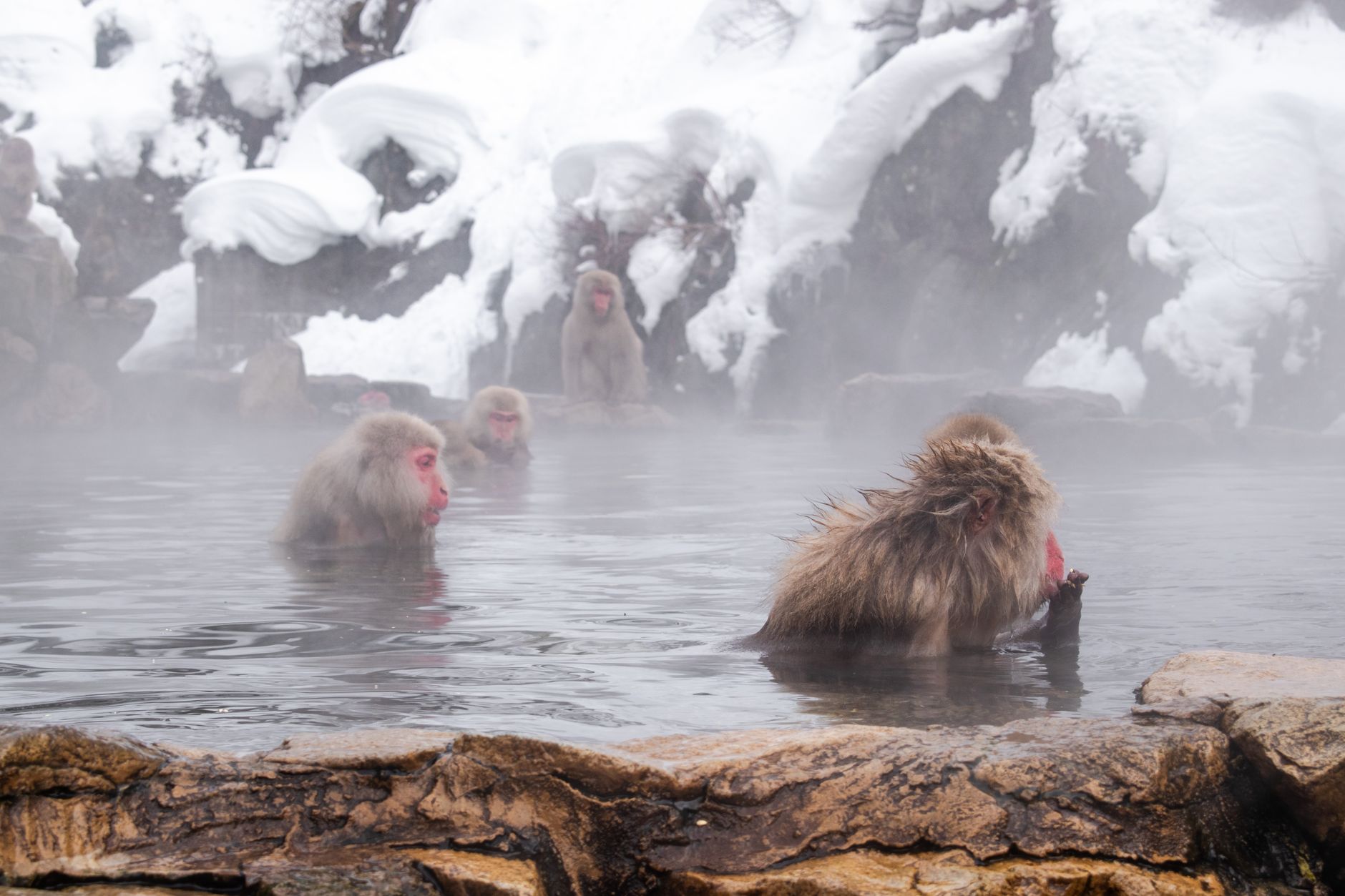
You’ve likely seen the photograph: a Japanese macaque, snow dusting its crimson face, submerged to its shoulders in a steaming pool with the peaceful expression of someone who has figured something out. What most coverage fails to tell you is that the real magic of Jigokudani happens not during the day, when you’re jostling with dozens of other visitors for a clear sightline, but in the early morning and late afternoon—and that the only way to truly experience those hours is to sleep within the sound of the steam vents. A campervan is the key to unlocking a version of this place that most people, even the ones who make the pilgrimage, never get to see.
The conventional wisdom says you base yourself in Yudanaka or Shibu Onsen, take the shuttle or walk the two-kilometre forest trail, spend an hour or so at the monkey park, then retreat to a ryokan for a kaiseki dinner. That’s fine, and you’ll have a lovely time. But you’ll also miss the moment when the last shuttle departs and the park goes quiet, when the snow begins to fall in earnest and the monkeys claim the hot springs entirely for themselves. You’ll miss the hour before sunrise, when the steam rises thickest against the cold and you have the boardwalk almost entirely to yourself. A campervan parked nearby gives you both ends of the day, and the middle too, on your own terms.
The first decision is where to station yourself for the night. The obvious choice is one of the parking areas near the trailhead, but you’ll want to think carefully about this. The main public parking lot at the Kanbayashi Onsen area fills early and is technically day-use only, though some travellers have reported successfully staying overnight discreetly. A better bet is to look for roadside pull-offs along Route 292 or the smaller roads that branch off it, particularly those that sit at a slightly higher elevation above the valley floor. These spots give you a vantage point over the treeline and, on clear nights, an unobstructed view of the stars falling across the mountain ridge. You’re not looking for a designated campsite here; you’re looking for a flat, safe shoulder where you can tuck in behind a stand of cedar and become invisible to the early-morning traffic.
What you’ll hear, more than anything else, is water. The entire valley is alive with it—the rush of the Shiga River below, the drip from branches overhead, the occasional gurgle of a natural hot spring vent somewhere off in the dark. It’s a sound that rewires something in the brain, replacing the hum of highways and refrigerators with something older. You’ll wake at intervals during the night, not from discomfort but from the novelty of the quiet, and each time you’ll notice a different layer of the soundscape: the soft clatter of snow sliding off the campervan roof, the distant cough of a macaque somewhere in the forest, the hiss of steam escaping from the earth’s crust a few hundred metres away.
The morning is where this setup really pays its dividends. The monkey park opens at 9 a.m., but the monkeys are active well before that, coming down from the surrounding hillsides to the hot springs and feeding areas. If you’re driving in from a hotel in Yudanaka, you’re arriving with the crowd. If you’ve spent the night in your campervan, you can be on the trail by 7:30, crunching through the snow with no one ahead of you and no one behind. The path itself is worth the early start: a gentle uphill walk through a forest of Japanese beech and horse chestnut, the snow muffling every step, the Shiga River running fast and green to your left. You’ll cross a small footbridge just before the park entrance, and it’s here, in the dim light of early morning, that you might spot your first macaque of the day—a solitary figure grooming itself on a riverside rock, entirely unbothered by your presence.
The park itself is smaller than you might expect. A small onsen pool, a feeding station, a few heated rest huts, and a network of boardwalks that keep you at a respectful distance from the monkeys. The animals are wild, despite their comfort with human proximity, and the park enforces strict rules about touching or feeding them. What makes the early morning special is the behaviour you’ll witness. In the midday hours, the monkeys tend to lounge in the hot spring with the languor of spa-goers, occasionally squabbling over position. But in the first light, they’re energetic and purposeful: mothers grooming infants, juveniles chasing each other through the snow, dominant males patrolling the edges of the group with a watchful intensity. You’ll see the hierarchy of the troop play out in real time, and you’ll understand why primatologists have spent decades studying this particular population.
Life near Jigokudani in a campervan requires some planning specific to winter conditions in the Japanese Alps. You’ll need a vehicle equipped with winter tyres or chains, and ideally one with a proper heating system rather than a portable heater that runs on gas canisters. The temperatures here drop well below freezing at night, and while your bedding might keep you warm in the sleeping bag, the interior of your van will reach ambient temperature within an hour of the engine being off. Invest in a good-quality cold-weather sleeping bag rated to at least minus ten degrees Celsius, and bring a thermos of hot tea or miso soup to warm you from the inside before you zip yourself in. A hot-water bottle tucked into the foot of your sleeping bag is not a luxury; it’s a survival tool.
Your cooking setup matters too, because the nearest proper grocery store is in Yudanaka, a twenty-minute drive away, and you’ll want to have your meals planned before you park for the night. The Japanese convenience store bento boxes and onigiri are enough for a single evening, but you can do better with a little forethought. Bring a small propane stove and a pot for instant ramen elevated with a soft-boiled egg and a handful of chopped spring onions. Pack vacuum-sealed curry packets that you can heat in boiling water and pour over precooked rice. Consider a thermos full of hot water for instant miso soup that will cut through the cold when you step back inside after an hour in the snow. The ritual of cooking a warm meal in the confined space of your campervan, with the windows fogged and the snow piling up on the roof, becomes part of the experience rather than an inconvenience.
What most visitors miss entirely is the hot spring experience that exists outside the monkey park. The Jigokudani valley is named for its “hell valleys”—geothermal zones where steam vents and boiling mud pots create a landscape that feels otherworldly. There are several small, undeveloped hot spring pools along the river that the monkeys use, but that you can also access with careful route-finding. None of these are official bathing spots, and you should never enter one without checking the temperature and depth first—some are dangerously hot, others are too shallow to submerge in. But if you find a safe pool in a quiet bend of the river, with steam rising around you and snow falling into the water, you’ll understand why the macaques come here. The sensation of being neck-deep in mineral-rich water while the world freezes around you is one of the great unsung pleasures of winter travel in Japan.
The light in this valley is its own character. Winter days are short, with the sun cresting the surrounding peaks around 7:30 a.m. and dropping behind them again by 4 p.m. The golden hour stretches longer than it does in lower latitudes, because the mountains cast shadows that shift slowly across the landscape. You’ll want to be at the monkey park during the last hour before closing, when the low-angle sun catches the steam rising from the hot spring and turns it into something luminous, the monkeys silhouetted against the glow like figures in a woodblock print. The photographers will have packed up by then, chasing the light elsewhere, and you’ll have the boardwalk to yourself as the park staff begin their closing routine. The monkeys don’t leave when the park closes; they stay in the hot spring until they’re ready, and you can watch them from the trail as you walk back to your van.
Your return to the campervan in the evening is a small ritual worth perfecting. Stamp the snow off your boots before you open the door. Boil water for tea while you hang your wet layers on the hooks you installed for exactly this purpose. Sit in the driver’s seat with your hands wrapped around a warm mug and watch the light drain from the sky through the windshield. The valley’s restaurant options are limited, and you’ll be grateful for the ingredients you stashed in your cooler that morning. The freedom of this arrangement—eating when you’re hungry, sleeping when you’re tired, moving when you want to—is the quiet luxury that hotels can’t replicate, no matter how many star ratings they accumulate.
One practical consideration that gets overlooked in most guides: the parking situation near Jigokudani in winter is genuinely challenging, and you need to arrive with a plan. The Kanbayashi Onsen area has several paid parking lots, but they fill by mid-morning and are not designed for overnight campervan use. The smaller lots near the trailhead are often closed in winter or restricted to hotel guests. Your best strategy is to scout your overnight spot during daylight hours on the day you arrive, before you head up to the monkey park. Find a pull-off that’s clearly outside any private property lines, that doesn’t block any access roads, and that gives you a manageable walk to the trailhead in the morning. Mark it on your phone’s offline map. The snow can obscure the edges of the road, and the last thing you want is to be searching for your spot in the dark.
The weather here deserves respect. A winter storm can dump half a metre of snow in a single night, and if you’re parked in a vulnerable position, you could wake up to find your campervan buried or your access road impassable. Check the forecast obsessively in the days leading up to your arrival, and have a contingency plan: if a major storm is predicted, consider base-camping in Nagano city and driving up for a day trip instead. The campervan lifestyle is flexible by design, and the smartest travellers are the ones who know when to adapt their plans rather than push through conditions that could become dangerous. The valley will still be there when the weather clears.
The snow sounded different at midnight than it did at dawn. The smell of the geothermal steam, carrying traces of sulphur and minerals, can still be summoned months later. The monkeys have figured out how to live well in a harsh landscape. You’ll tell people about the time you slept in a campervan near the snow monkeys, and you’ll struggle to explain why it mattered so much. The cold night, the warm tea, the steam rising in the dark—that’s the story your campervan allowed you to write.

📷 Photos: Salvador Chinchilla (Pexels), Pratik Bisht (Unsplash)