4 Days Campervanning the Tateyama Kurobe Alpine Route: Coastal Drives and Alpine Peaks
By the time a campervan points toward the mountains, the rhythm has already settled in. The engine finds its familiar hum, the little kitchen in the back starts to feel like home, and the small tricks that keep things running smoothly become second nature — like always pulling over at a roadside station when you see one, because you never know when the next bathroom or hot meal might appear. Day four finds the coast behind, and the landscape begins to shift in ways that feel almost theatrical, as if someone is slowly turning up the saturation on the world outside the windshield. You always pull over.
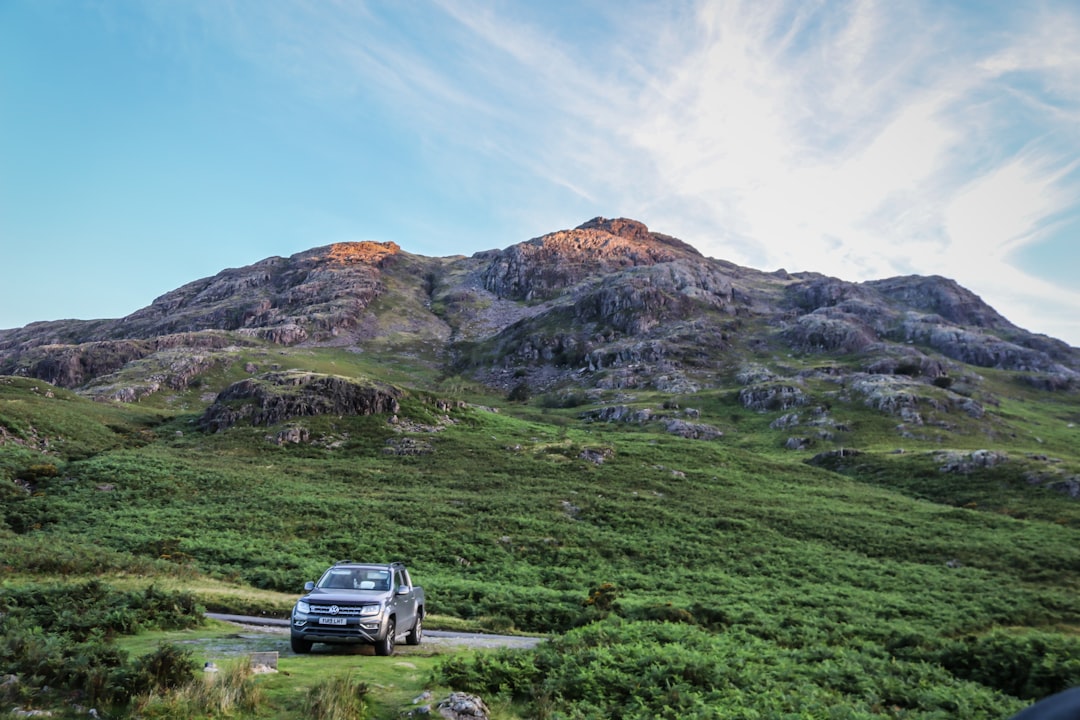
The drive from Toyama City toward the Tateyama Kurobe Alpine Route is a study in contrasts. One moment you’re cruising past suburban convenience stores and rice paddies, the next you’re climbing into a valley where the air turns cool and smells of cedar and something damp underfoot. This is where the campervan earns its keep. Unlike the train-bound tourists who pour through the route later in the season, you have the freedom to stop wherever the view demands it — and on this stretch, the views are relentless. Small roadside pull-offs appear just often enough to let you pull over, step out onto the gravel, and watch the clouds scrape across ridgelines that seem impossibly steep.
Time your arrival at the base of the Alpine Route carefully. The famous Tateyama Tunnel Trolley Bus and the cable car that climbs to Murodo are spectacular, but they operate on schedules that don’t care about a campervan itinerary. The best approach is to reach the Tateyama Station area by mid-afternoon, giving yourself time to find a parking spot for the van and orient yourself before the last departures. Parking here is limited and fills fast in peak season — May through October especially — so having a backup plan is wise. The paid lots near the station are your safest bet, running somewhere around ¥1,000–2,000 for overnight stays depending on the season, and they’re well-lit and secure.
Now here’s where the campervan reality of Japan makes itself known. Your van almost certainly doesn’t have a toilet or shower — very few rental campervans in Japan do, and those that claim to usually offer a cassette toilet you’ll quickly learn to avoid. The Japanese solution to this is elegant and deeply civilized: the michi-no-eki system. These roadside stations are scattered across the country, and the one just south of Tateyama Station is a godsend. Clean toilets open 24 hours, a small shop selling local produce and onigiri, and often a rest area where you can park for the night free of charge. The trick is to arrive early enough to secure a spot among the other campervan travellers who know this secret — by 7 p.m., the good spaces are gone.
The next morning, leave the van behind and climb into a world that feels geologically ancient. The Alpine Route itself is a marvel of engineering, a series of tunnels, cable cars, and buses that stitch together a landscape too rugged for roads. The cable car rises through forest that thins and eventually disappears, replaced by bare rock and patches of stubborn snow that linger well into summer. At the top, Murodo sits at 2,450 metres, and the air is thin enough that you’ll feel it in your lungs the first time you step off the bus. The sensation is disorienting and exhilarating in equal measure — your body reminding you that you are somewhere real, somewhere high, somewhere the rules of the lowlands no longer apply.
The snow corridor at Murodo is the headline attraction, and it deserves the hype. Walls of snow rise ten, fifteen, twenty metres on either side of a cleared path, and walking between them feels like passing through a frozen canyon. But the real draw comes when you step away from the main thoroughfare. A short hike up toward the active volcanic peak of Mount Tateyama puts you on a trail that most tourists skip, and within twenty minutes you’ll have the landscape largely to yourself. The ground here is volcanic scree and hardy alpine vegetation, and the views open up to reveal the entire Hida mountain range stretching toward the horizon. Pack layers — even in July, the temperature at this elevation can drop to single digits when the wind picks up, and the sun at altitude burns harder than you expect.
By late afternoon, you’ll be ready to descend, and this is where having the campervan becomes a genuine asset rather than just a novelty. Most day-trippers on the Alpine Route are funnelled back to Toyama or Takayama by train, but the van lets you choose your own ending. Head back down to the valley and point toward the remote onsen town of Unazuki, tucked into a gorge along the Kurobe River. The drive is winding and narrow in places — the campervan feels large on these roads, and you learn to use the frequent passing bays with gratitude — but the reward is worth the concentration.
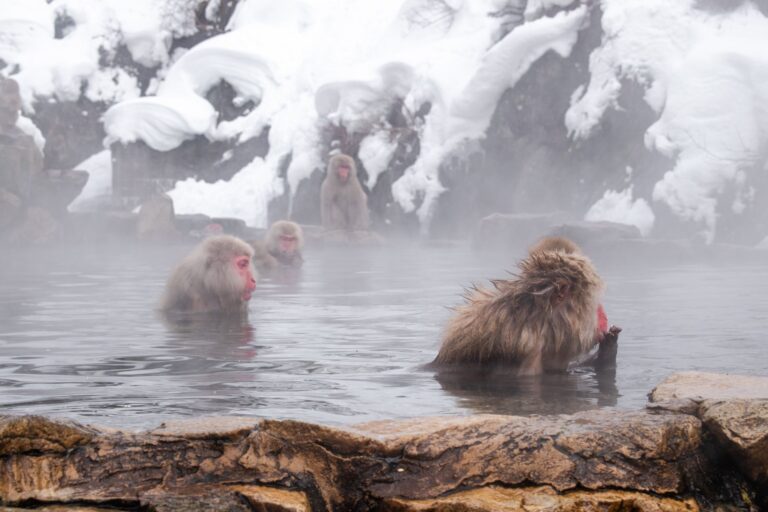
Unazuki is a proper hot spring town, the kind where steam rises from grates in the pavement and the smell of sulphur hangs in the air. For the campervanner, this is a kind of paradise. The town’s public baths are affordable — around ¥800 for entry — and they offer the one thing a van cannot: a long, deep, scalding soak that works the fatigue out of your muscles. Japanese onsen culture has a protocol, and you’ll want to observe it: wash thoroughly at the seated stations before entering the bath, keep your towel out of the water, and don’t be surprised if the locals are curious about the foreigner who just appeared. The outdoor bath at Unazuki’s main facility looks out over the river.
Dinner that night comes from the local supermarket, and this is where you learn another campervan truth about Japan: the convenience stores and grocery stores are better than they have any right to be. The selection of pre-made side dishes — korokke, fried chicken, pickled vegetables, little portions of grilled fish — means you can assemble a meal that rivals a restaurant’s without turning on your camp stove. A cold beer from the cooler and a seat on the van’s fold-out step, watching the river run past in the twilight, and you’ll wonder why anyone bothers with hotels.
Day six takes you deeper into the kind of driving that makes a road trip feel epic. The route from Unazuki eastward toward the Kamikochi area follows the Kurobe River through a series of gorges and tunnels. You emerge from one tunnel into a valley so green it hurts, only to plunge back into darkness and emerge again into a completely different landscape. The campervan handles the grades well enough, but you keep speed modest — the hairpins are tighter than they look on the map, and the oncoming trucks that appear around blind corners are larger than you’d like.
Somewhere along this stretch, you come across a michi-no-eki that sells locally grown apples and soft serve ice cream made from the milk of cows that graze in these high pastures. Stop. The ice cream is extraordinary — rich and dense in a way that industrial soft serve never is — and the parking area offers a view across the valley that makes a perfect break point. This is also where you should refuel if you’re running low. Petrol stations in the mountains are spaced farther apart than you’d expect, and the ones that exist often close early. The rule of thumb for campervanning in Japan’s alpine regions is simple: never let the tank drop below half if you’re heading into the hills.
The night of day six is best spent at one of the campsites near the base of the Norikura Highlands, another high-altitude route that parallels the more famous Tateyama Kurobe but sees a fraction of the crowds. These campsites range from basic to very basic — a patch of grass, a tap, a toilet block — but they cost as little as ¥500 per person and offer something the paid lots and roadside stations cannot: silence. Real, profound, countryside silence, broken only by the rustle of wind through birch trees and the distant sound of water. You cook something simple on a single-burner stove — maybe noodles with vegetables and a soft-boiled egg, the kind of meal that tastes better because you’re eating it outside, in the mountains, with no one else in sight.
Morning on day seven brings a choice. You can push further into the Japan Alps, chasing higher passes and longer views, or you can begin the gradual descent back toward civilisation. Neither decision is wrong, but this is where the campervan’s flexibility shines. If the sky is clear and the air is crisp, the drive up to the Norikura Skyline is a narrow road that climbs above treeline to a ridgeline parking area where you step out and stand among peaks that stretch away in every direction. The road closes for winter and even in summer can be closed by fog or rain, so check the conditions before you commit.
If the weather doesn’t cooperate, or if you’re ready for a change of pace, the descent toward Matsumoto offers its own pleasures. The city’s castle is one of Japan’s few remaining original-construction castles, and the approach through the castle grounds, with the Northern Alps rising behind the black-and-white keep, is a photographer’s dream. More practically, Matsumoto has a campervan-friendly parking situation near the station and a supermarket that sells everything you could possibly need to restock. The public baths in the city are excellent too — a hot soak after days on the road resets your body in ways you didn’t know it needed.
For all its spectacle, the Alpine Route is only half the story. The other half is the driving, the camping, the small decisions made over a cup of instant coffee in a parking lot with a view that would cost thousands in a hotel. The campervan is not just transport — it’s the lens through which you experience this landscape, and the Alps look different when you’re sleeping in their foothills, eating breakfast at their base, and carrying your home with you through every pass and valley. The road ahead stretches out, the tank is full, and there are still more mountains waiting.

📷 Photos: Annelie Turner (Unsplash), kiki (Unsplash)