Parking on the Dark Side: Finding Your Own Sky Above Aoraki
There is a moment in the Mackenzie Basin when the sun drops behind the Southern Alps and the light drains from the sky like water from a basin. It happens fast, faster than you expect, and if you are not paying attention, you will miss the thing you came for: the moment the stars punch through. But here is the catch. Most people pull into the same few campervan spots, line up their tripods, and count down to a crowded, headlight-streaked disappointment. This is not about the famous turnouts. This is about the spots you have to earn.
A campervan is already an advantage. It carries a bed, kitchen, warm blankets. But it also carries the curse of convenience: the temptation to park where everyone else parks, because it is easy, it is marked on the map, and the guidebook says it is the best. Do not trust the guidebook. Trust the back road, the gravel track, the spot that requires turning off the headlights and listening to the gravel crunch under the tyres for ten more minutes. That is where the sky opens.
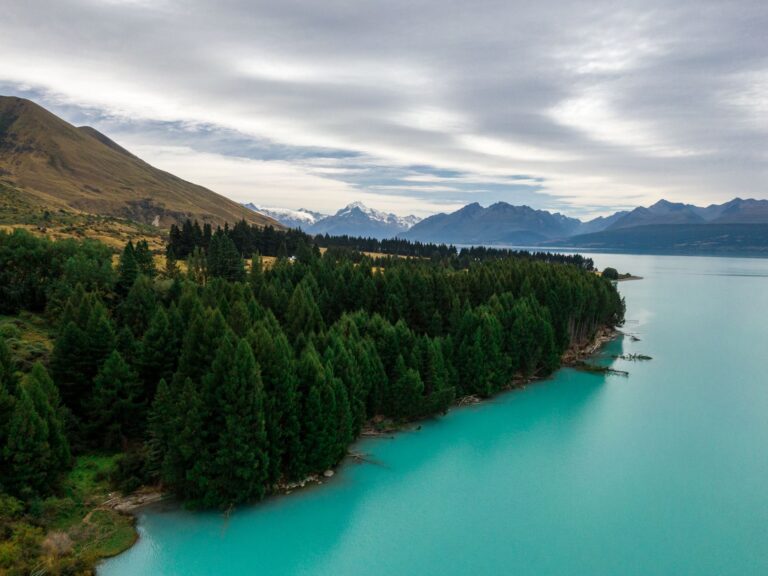
The first mistake almost everyone makes — heading straight for the Lake Pukaki Lookout. Yes, the view of Aoraki floating above the turquoise water is iconic. Yes, a campervan can park there. But so can forty other campervans, and most of them will leave their generator running, their interior lights on, their toilet hatch open. The light pollution from a single poorly parked campervan is enough to ruin a twenty-minute exposure. You stand there, shivering, watching the clock, waiting for someone to turn off their reading light so you can see the Milky Way. They will not. They are reading a novel about a man who rows a boat across the Atlantic, completely unaware that the best show on Earth is happening above their roof.
The solution is a right turn before the lake, onto a gravel road that leads to a Department of Conservation campsite called Braemar Station. There is no sign. There is no booking system. There is only a honesty box and a patch of gravel big enough for maybe six campervans, set back from the lake by a hundred metres of tussock grass. It feels like stumbling onto private property. It is not. This is public land. The ground is uneven, and the van will need levelling with plastic ramps, but the trade-off is this: no headlights, no generators, no readers. Just the cold, and a dome of stars so sharp you could cut yourself on them.
The second thing: the moon is the enemy. Not the moon itself — the moon is beautiful — but the moon when its phase has not been checked. You arrive at a spot researched for weeks, park facing south, switch off every light inside the van, even cover the dashboard LEDs with electrical tape. The sky is clear. The stars are out. But the moon is three-quarters full and rising at midnight, and by one in the morning the sky is a washed-out grey. You lie in your sleeping bag, furious at yourself, because you knew better. You checked the moon phase app a hundred times, but forgot to check it for this specific date. Now you pay the price. The best stargazing happens in the ten days around a new moon. Write it in permanent marker on the dashboard.
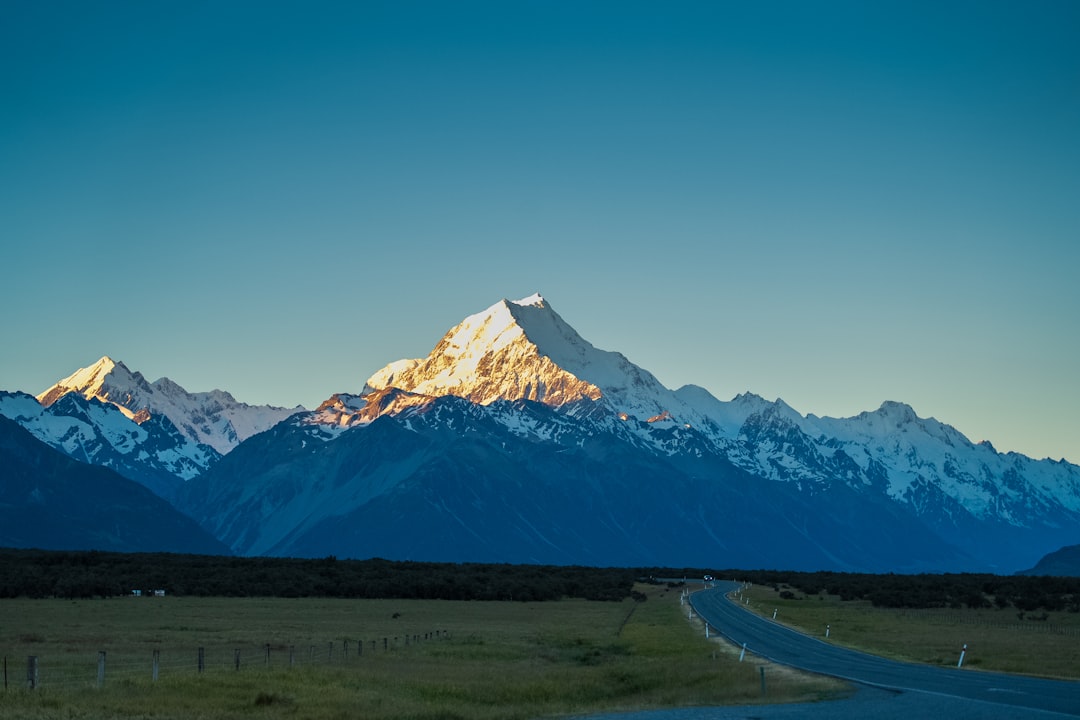
There is a specific spot in the Hooker Valley that almost nobody uses for overnight campervan stays. It is not a campsite. It is a car park at the end of the sealed road, just before the track begins. Freedom camping is not allowed there, and the signs are clear. But there is a gravel pull-off two kilometres before the car park, on a bend in the road, where the valley opens up and you can see the entire Mount Cook range laid out like a sleeping giant. You will not find it on any app. A local tramper mentioned it in a cafe — no names, just a tip. The pull-off is just wide enough for a campervan. There is no water, no toilet, no bin. But the sky is so dark here that the stars cast shadows on the ground. The Magellanic Clouds are visible with the naked eye, two faint smudges that look like misplaced galaxies. They are satellite galaxies, and you are looking at them without a telescope. That is how dark it is.
The downside is the cold. Aoraki is not kind to the unprepared. The temperature drops well below freezing even in summer, and the campervan heater will drain the battery overnight if run continuously. Do not rely on gas heating alone. Bring a proper sleeping bag rated to at least minus five degrees Celsius. Bring a hot water bottle. Bring a wool hat and wear it to bed. You wake at three in the morning to the sound of your breath condensing on the ceiling, reach out and wipe the frost off the inside of the window to see the stars still blazing. It is worth it.
Food becomes a tactical decision. Three-course meals at midnight when it is minus two outside and fingers are too stiff to hold a spatula are out of the question. Food needs to work in the dark, by touch, without a light. Pre-made wraps. Hard cheese. Apples. A flask of hot soup. The best meal is a cold chicken wrap, eaten in the pitch black, leaning against the side of the van, staring up at a sky that looks like a photograph but is real. You will not remember the meals in restaurants on this trip. You will remember this.
One more spot, and this one is the hardest to recommend because it is the most fragile. The Tasman Valley Road, past the Blue Lakes, ends in a large gravel car park. The road is unsealed and corrugated, and the campervan rattles like a tin of marbles. But at the far end, there is a small loop of gravel where a few vans can park, facing the glacier. The light pollution here is zero. The nearest town is sixty kilometres away. The sky is so full of stars that it feels like looking into a well of light. The problem is the wind. The valley funnels the wind straight off the glacier, and it howls across the car park at speeds that rock the van on its suspension. You park head-on into the wind, chock the wheels, and brace for a sleepless night. But if you can handle the noise, you might see the aurora australis. Not always. Not predictably. But on the right night, the sky turns green and purple, and you are the only person on the entire planet watching it from that exact spot.
Power is the issue. The campervan’s battery will not last two nights of fridge, lights, and heater without mains power. A portable solar panel, or a second battery, or a generator — the best solution is a lithium battery pack charged during the day while driving. It is expensive. It is worth every dollar. You will not be able to stargaze properly if you are worried about the fridge dying and the cheese going warm. Yes, cheese. It is the one thing you cannot replace at three in the morning in a gravel car park.
There is also the matter of other people. The best stargazing spots attract a certain type: the amateur astronomer with a telescope on a tripod, the landscape photographer with a remote trigger, the couple who drove four hours from Christchurch just to see the stars. These people are not enemies. They share tips, show camera settings, lend a lens cloth. But there is also the other type: the group who arrive at midnight in a rented campervan, turn on all their lights, blast music, and wonder why they cannot see the stars. You learn to park far away from the entrance, where the gravel road bends and the trees block the view of the main area. You learn to read the behaviour of other vans. You learn to leave before they do, or arrive after they leave.
The best advice: do not plan every night. Leave two or three nights unbooked, use them to chase the weather. The forecast changes fast in the mountains. A clear sky at noon can turn to cloud by sunset. Have a backup spot. Have a backup for your backup. Know the road conditions. Do not trust Google Maps — it will send you down a one-lane track that ends at a farm gate. Use the Department of Conservation’s website for real-time road closures and gate openings. Print it out. There will be no phone reception at most of these spots.
The final night, you find yourself at a spot almost missed. It is a tiny DOC site called Lilybank, on the eastern shore of Lake Pukaki, fifteen kilometres of gravel road from the highway. No water, no toilet, no shelter. Just a gravel patch large enough for three vans, facing the lake, with Aoraki rising directly across the water. You arrive at dusk, park, cook a simple pasta dinner, and sit outside in a fold-out chair with a sleeping bag pulled up to your chin. The sky goes from blue to purple to black. The stars appear one by one, then in clusters, then in a flood. The lake goes still, and the reflection of the stars doubles the sky. You sit for hours, not speaking, not thinking, just watching. At some point, a shooting star. Then another. Then a dozen. You do not take a single photograph. You just want to be there, in the dark, in the cold, in the presence of a mountain that has been watching the stars for millions of years.
That is the spot. And the best part is, you will not want to tell anyone about it.

📷 Photos: JinHui CHEN (Unsplash), Sean Gatz (Unsplash)