The ferry from Ambon arrives at Banda Neira just before midday, which is the worst possible time to see the place for the first time. The sun sits directly overhead, flattening every contour of the old Dutch buildings along the waterfront into a single white glare, and what should feel like stepping into a 17th-century engraving instead looks like a faded photograph of itself. I stood on the dock with my camera bag feeling the heat come off the concrete and wondered whether I had made a six-hour crossing for a town that was already half-asleep in the wrong light.
It took about forty minutes to realise the mistake was mine, not the island’s. The town wasn’t sleeping. It was simply waiting for the afternoon to pass, the same way it had for three centuries, and the colonial architecture along the main strip wasn’t faded so much as patient. The bone-white facade of the old Dutch church, the heavy wooden doors of the governor’s residence, the rust-streaked cannons still pointing out toward the harbor mouth — none of these things had been built for a midday reveal. They were made for the late afternoon, when the light comes in low across the Banda Sea and the shadows start to tell the real story.
I checked into a homestay on the eastern edge of town, a converted warehouse with high ceilings and a ceiling fan that moved the air without cooling it. The woman who ran it, a Bandanese woman named Renata whose family had owned the building for three generations, asked how long I planned to stay. I said three nights. She looked at the camera bag over my shoulder and said, “I don’t know, maybe that’s enough to feel like you missed something important.”
I walked the main street with no plan that first afternoon, the way you do when you’re still orienting yourself to a place that doesn’t have an obvious starting point. The fort at the north end of town, Fort Belgica, sits on a low hill overlooking the harbor, a five-pointed star fortress that the Dutch built to guard their monopoly on nutmeg. I climbed the path up to it around three-thirty, when the heat was starting to break, and found the gate unlocked and the interior empty except for a young couple taking selfies against the thick stone walls. The fort itself is remarkably intact — the ramparts, the powder magazine, the cistern — but what stopped me was not the structure itself. It was the way the light fell through the embrasures in the outer wall, casting long trapezoids of gold across the dark grass of the inner courtyard. I had come to photograph the colonial ghosts, and here they were, not in the architecture but in the geometry of the afternoon sun.
I stayed until the light went orange, then pink, then grey, and by the time I walked back down the hill the town had switched into its evening rhythm. A fish seller was packing up his catch on the waterfront. A group of children kicked a deflated football along the cobblestones. The air smelled of clove cigarettes and frying oil and something else I couldn’t place until I realised it was nutmeg, the spice that had made this tiny archipelago the most valuable piece of real estate on earth for a hundred years. You can smell it everywhere in Banda, not as a perfume but as a background note, like the memory of a smell that has soaked into the stone itself.
The next morning I woke early, determined to get the fort in the clean light of dawn, and made the mistake of not checking what time the gate actually opened. At five-thirty the sky was doing exactly what I had hoped — a pale apricot wash over the ocean, with the fort’s silhouette sharp against it — but the padlock on the gate was new and solid. I stood outside for forty-five minutes watching the light I had come for disappear into the flatness of morning. A man selling fried bananas from a cart on the road below saw me waiting and laughed, not unkindly, and gestured toward the waterfront as if to say the whole island was a photograph if I would just lower my expectations. I bought two bananas for five thousand rupiah and sat on the harbour wall eating them while the sun climbed and the moment I had planned for dissolved into the day.
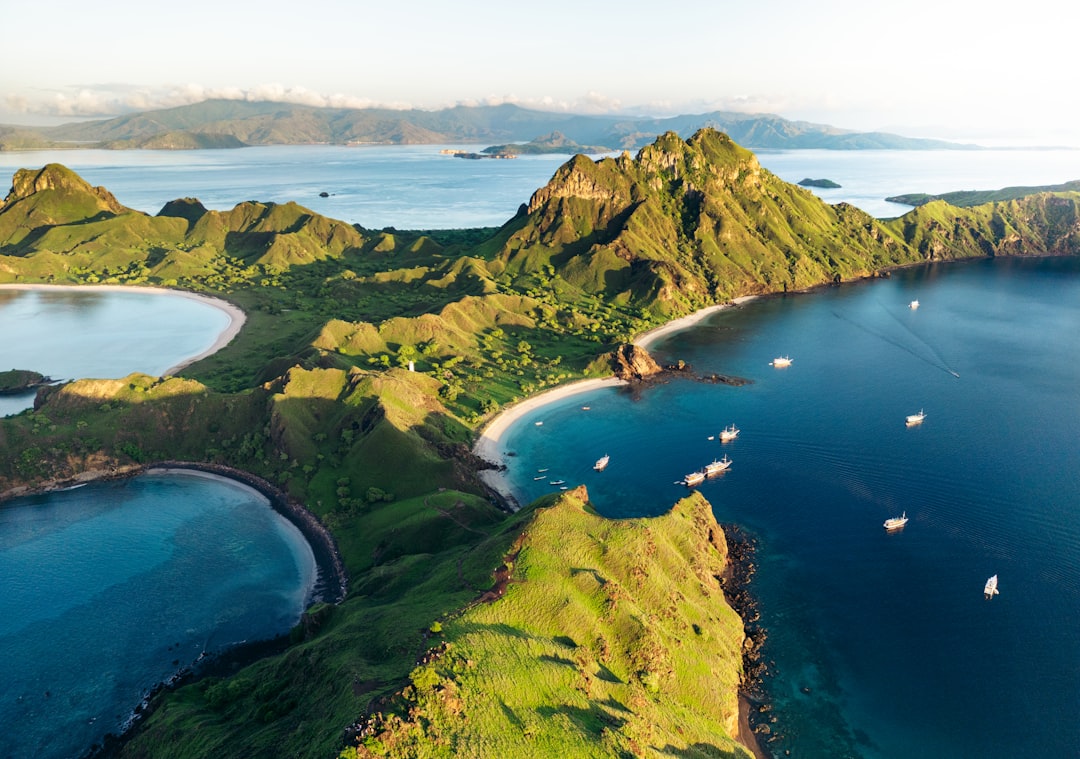
I spent the rest of that day on a small boat to the outer islands, organised through Pak Saman, a man with a notebook and a motorboat that looked older than he was. He asked for three hundred thousand rupiah for the day — about twenty dollars — which covered fuel and lunch and the promise that we would return before dark. We motored out past the harbor and into the open sea, past the jagged volcanic cones of Gunung Api and the smaller islands that dot the southern edge of the Banda group, and for an hour the only sound was the outboard motor and the water against the hull.
Pak Saman pointed out the sites as we passed them. The nutmeg plantations on Lonthor. The remains of a Dutch fort on Pulau Ai. A wrecked Japanese cargo ship from the war, barely visible beneath the surface, its mast breaking the water like a finger. At each stop I climbed out onto the shore and took photographs that felt inadequate to the place — the green of the jungle was too dense, the blue of the water too saturated, and every image came out looking like a postcard of somewhere that looked exactly like a postcard of itself.
The colonial history is strung across seventeen islands, most of them uninhabited, and to photograph it properly you would need a drone and a boat and a week of perfect weather and a willingness to accept that most of what made this place important happened in places that are now just trees and water and silence. The ghosts are not in the buildings. The buildings are just the stage. The real action happened in the sea routes between them, in the warehouses that are now rubble, in the treaties and massacres and monopolies that reshaped the global spice trade from a patch of volcanic rock no bigger than a suburb of Jakarta.
I had lunch on the beach of Pulau Run, the island that the British traded to the Dutch in exchange for Manhattan, which is the kind of historical detail that sounds like a joke until you stand on the actual sand and try to comprehend it. There was a small shelter with a tin roof and a woman selling grilled fish and rice for fifteen thousand rupiah, and I sat there eating with my hands while Pak Saman napped in the shade of a breadfruit tree. The nutmeg trees were visible from the beach, their leaves a darker green than the surrounding canopy, and I picked a nutmeg from the ground and cracked it open with a rock. The inside was a deep reddish-brown, almost wet, and the smell was so pungent it stung the inside of my nose. I put it in my pocket and forgot about it until three days later, when I found it in my bag and the smell had faded to something almost sweet, like cinnamon left in the sun.
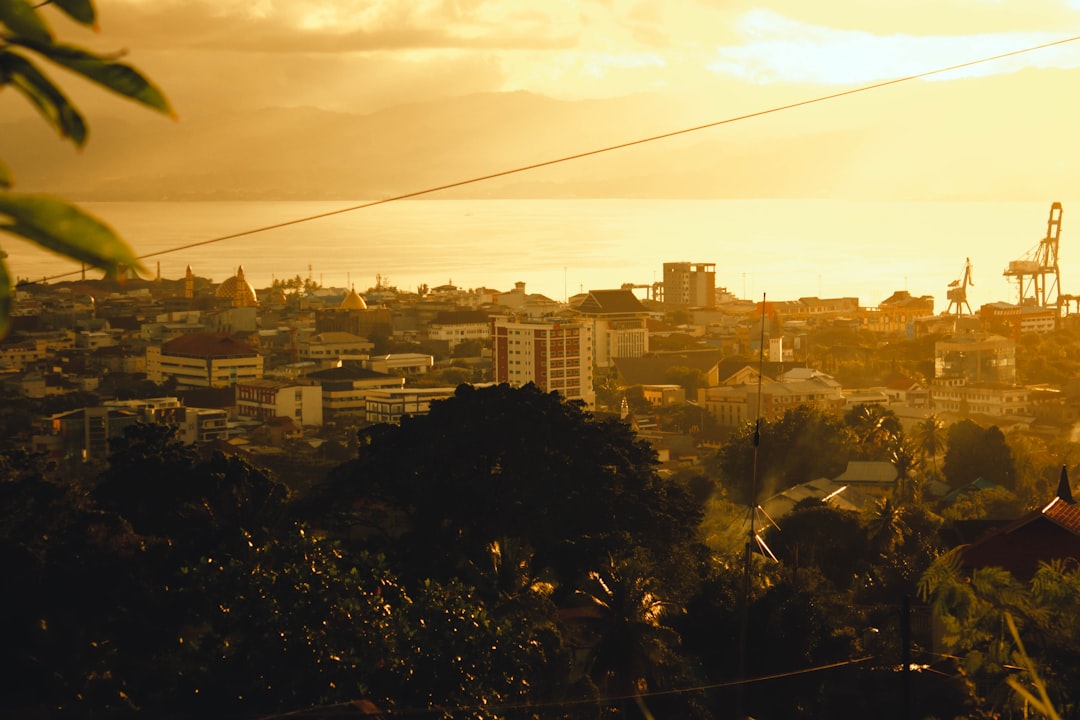
Back in Banda Neira that evening, I sat on the veranda of the old Dutch hotel near the harbor and drank a bottle of Bintang while the sun went through its final performance. The light hit the whitewashed facade of the hotel, the row of cannons, the flagstone path, the water beyond. I took maybe sixty frames in fifteen minutes, and when I looked at them on the camera’s screen I could see exactly what I had missed the day before — the way the low light adds a third dimension to flat surfaces, the way shadows carve depth into structures that look plain in the midday sun, the way a place that had seemed merely old in the morning became something else by evening.
The best shot of the trip was not on the veranda. It was on the dock the next afternoon, about an hour before I thought I was due to catch the ferry back to Ambon. I had packed my bag and was killing time, walking along the waterfront with no intention of taking another photograph, when I noticed a patch of light on the water that had landed on the hull of an old wooden fishing boat tied to the pier. The boat was listing slightly, its paint faded to a pale grey, and the reflection of the fort on the hill behind it was just visible in the still water between the boat and the dock. I raised the camera without thinking and took one frame. It was not a perfect photograph. The composition was slightly off, the horizon was tilted, and the light was already shifting as the sun dropped behind a cloud. But it was the only image I took on the entire trip that felt like it had arrived on its own terms, not because I had chased it.
I missed the ferry anyway. I had misread the schedule — it left at three, not four — and by the time I checked my phone I was already an hour and a half late. Renata found me a room at a friend’s house for a hundred thousand rupiah, and I spent the evening eating fried rice at a warung near the market and watching the bats come out of the cave on Gunung Api, a dark ribbon of wings against the last strip of orange on the horizon.
I had been so focused on the colonial remains — the forts, the churches, the cannons, the ghost of Dutch authority that still hangs over the place — that I had almost missed that the spice islands are not a museum. The colonial buildings are there, but they are also just buildings. The ghosts are not in them. The ghosts are in the light, in the smell, in the way the afternoon turns gold and leaves behind something between a memory and a photograph that never quite came out right.
I have one photograph that shows it, and it is not the one I meant to take.
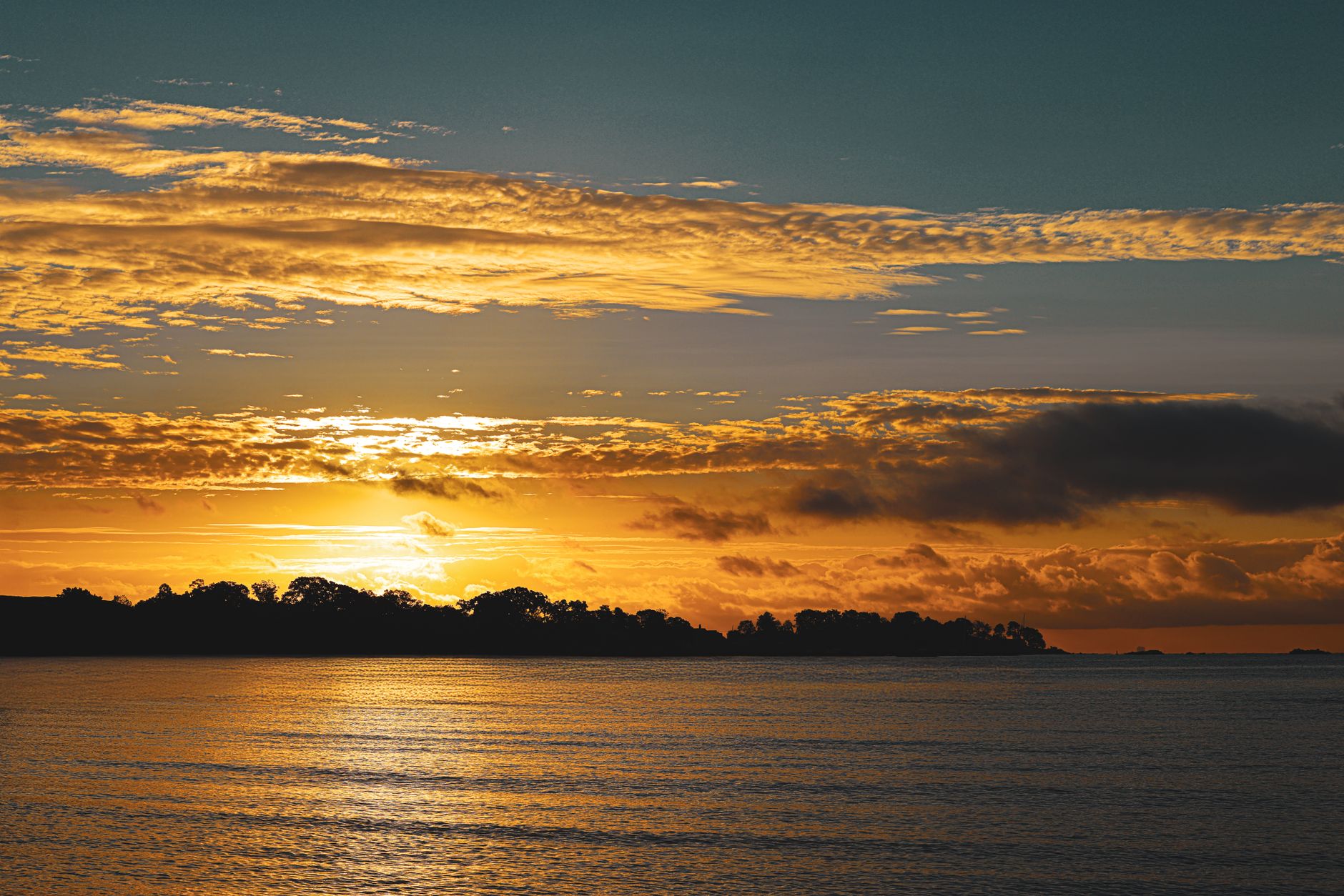
📷 Photos: The Ian (Unsplash), David Kanigan (Pexels)