We hadn’t planned on the boat breaking down. That wasn’t in any of the forum posts we’d read, and certainly not in the cheerful brochure the guy at the Taman Negara park office had handed us the day before. But there we were, maybe three kilometres up the Keniam River, the outboard motor coughing once, twice, then going quiet in a way that felt final. The boatman, a man in his fifties with a thick silver moustache and an expression that suggested this was not unusual, simply shrugged, pulled a small tool kit from under his seat, and began taking the engine apart. We bobbed in a slow current, the jungle pressing in from both sides, and the only sound was the occasional clatter of metal on metal and the high, insistent call of something that might have been a monkey or might have been a bird. It was barely nine in the morning, and the heat was already beginning to settle into a wet, patient weight on our shoulders.
The delay cost us about forty minutes, which we spent watching the river do its work. The Keniam moves with a dark, tannin-stained urgency, the colour of strong tea, carrying leaves and the occasional fallen branch on a journey that seemed both purposeful and indifferent to human schedules. Dragonflies hovered and darted, and once, a large monitor lizard slipped off a sun-warmed log and disappeared into the water with hardly a ripple. When the motor finally sputtered back to life, the boatman gave a small, satisfied nod and opened the throttle. We didn’t exchange a word, but it felt like a kind of agreement: this was how things worked out here.
The boat ride was the only way in. The Keniem River trail, which we’d start from later, begins at a small jetty that doesn’t appear on any map we’d seen. The jetty is a collection of weathered planks and a single orange buoy, and when we stepped off the boat onto it, the jungle around us was suddenly very close. The canopy above filtered the sunlight into a green, dappled half-light, and the temperature dropped by a degree or two, or maybe that was just the relief of being out of the direct sun. We paid the boatman — forty ringgit for the two of us, a figure that felt absurdly low for the trouble — and he handed us a plastic bottle of water he’d kept cool with a scrap of wet cloth. He pointed at the trailhead, said something in Malay that sounded like an instruction, then reversed the boat into the current and was gone. The silence that settled in his wake was not empty. It was thick with insect noise and the drip of water and the sense that we were now entirely on our own.
The trail itself is not a trail in the way most people understand the word. It’s a route, marked by occasional red paint slashes on tree trunks, and it follows the Keniam River upstream for about six kilometres before cutting inland toward a series of waterfalls. The first hour was slow going. The path was wet, the roots and mud requiring a careful, deliberate foot placement that we hadn’t quite mastered. Our boots squelched. A leech found its way onto my ankle before we’d made it two hundred metres — a small, determined black thread that I noticed only when I felt the faint, almost polite stickiness of its grip. We removed it with the edge of a bank card, a trick someone had told us about, and it left a small, tidy spot of blood that the rain would wash away within the hour.
Rain fell on and off throughout that first day. Not the heavy, dramatic downpours that you imagine in a rainforest, but a fine, persistent drizzle that seemed to have its own schedule. It would pause for twenty minutes, long enough for us to think about taking off our rain jackets, then resume with a soft, steady insistence. The effect was that everything — the leaves, the rocks, our skin — stayed perpetually damp. At one point we stopped beside a large strangler fig, its roots cascading down the trunk of its host tree in a kind of botanical strangulation that must have taken decades. The tree looked like a sculpture, something that could only exist in a place where time operated on a different scale.
We met only one other group that day: three hikers coming the opposite direction, a German couple and a Malaysian guide. They looked tired. The guide asked where we were headed, and when we said the Keniam Waterfalls, he nodded slowly and said something about the trail being “washed out, or something like that” in a section about two kilometres ahead. He didn’t say it was impassable, just that it was washed out, and the distinction seemed important. We thanked him and kept walking. Two kilometres later, we found the washout: a stretch of trail maybe thirty metres long where the river had undercut the bank and collapsed it into a slope of mud and loose rock. It was navigable, but just barely, requiring a sideways shuffle with hands pressed against the remaining earth for balance. Below us, the river churned with a new, muscular energy. It was the kind of moment where a mistake would have consequences, and we were careful, and then it was over.
The first waterfall we reached was not the main one. It was a smaller cascade, maybe eight metres high, where the Keniam dropped over a shelf of dark rock into a pool that looked deep and still. We sat on a boulder nearby and ate our lunch — packets of compressed rice, a can of sardines, and a bar of dark chocolate that had melted into a soft, unmanageable paste. The chocolate was a mistake, but we ate it anyway, and the sweetness mixed with the salt of the sardines in a way that somehow worked. The pool below the waterfall was clear enough to see the bottom, a bed of smooth stones and submerged logs, and the water was cold — significantly colder than the air. We didn’t swim, but we sat with our feet in the water for a while, and the coolness travelled up through our legs and into our chests, and the fatigue of the morning seemed to recede, at least for a few minutes.
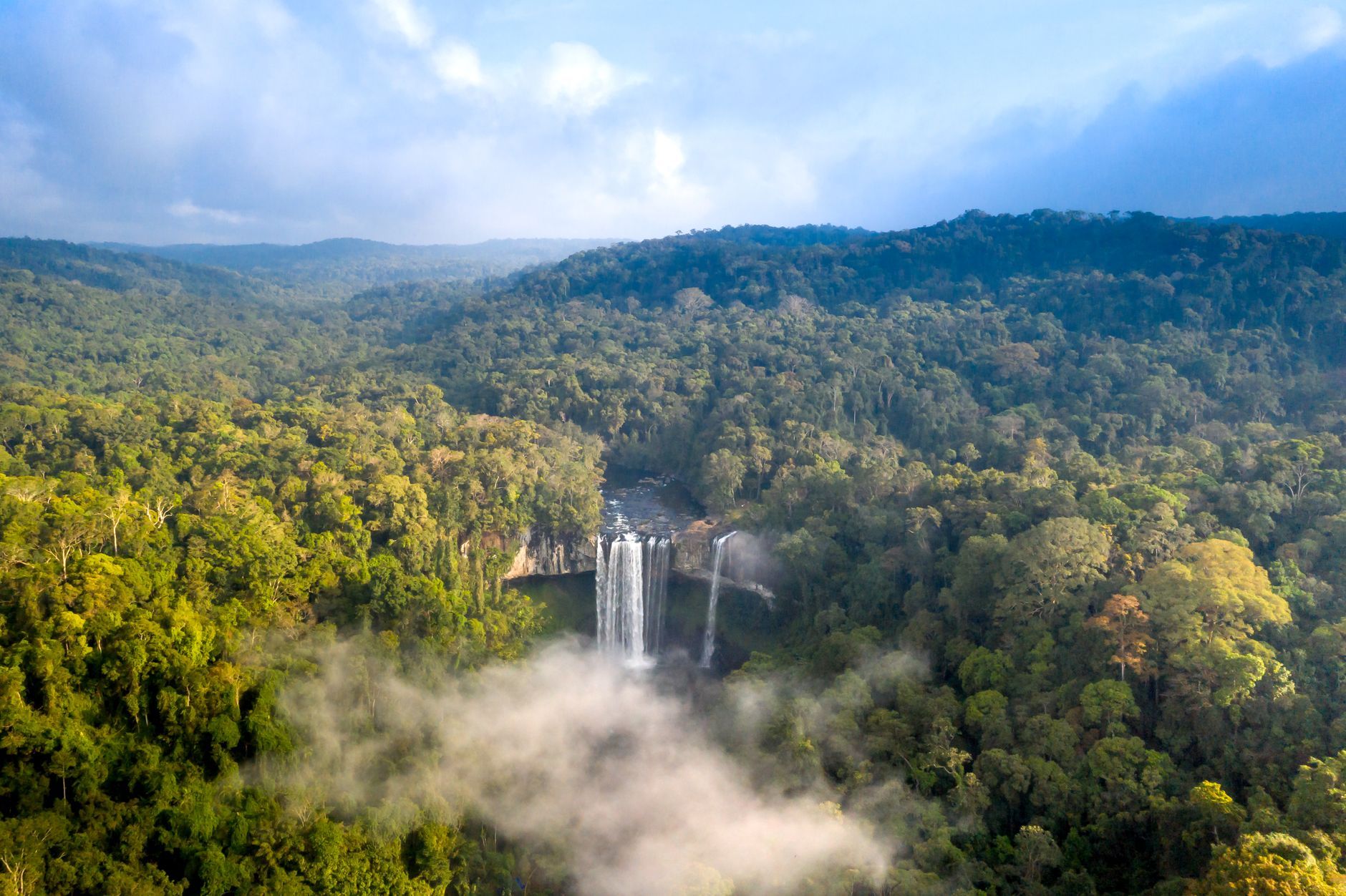
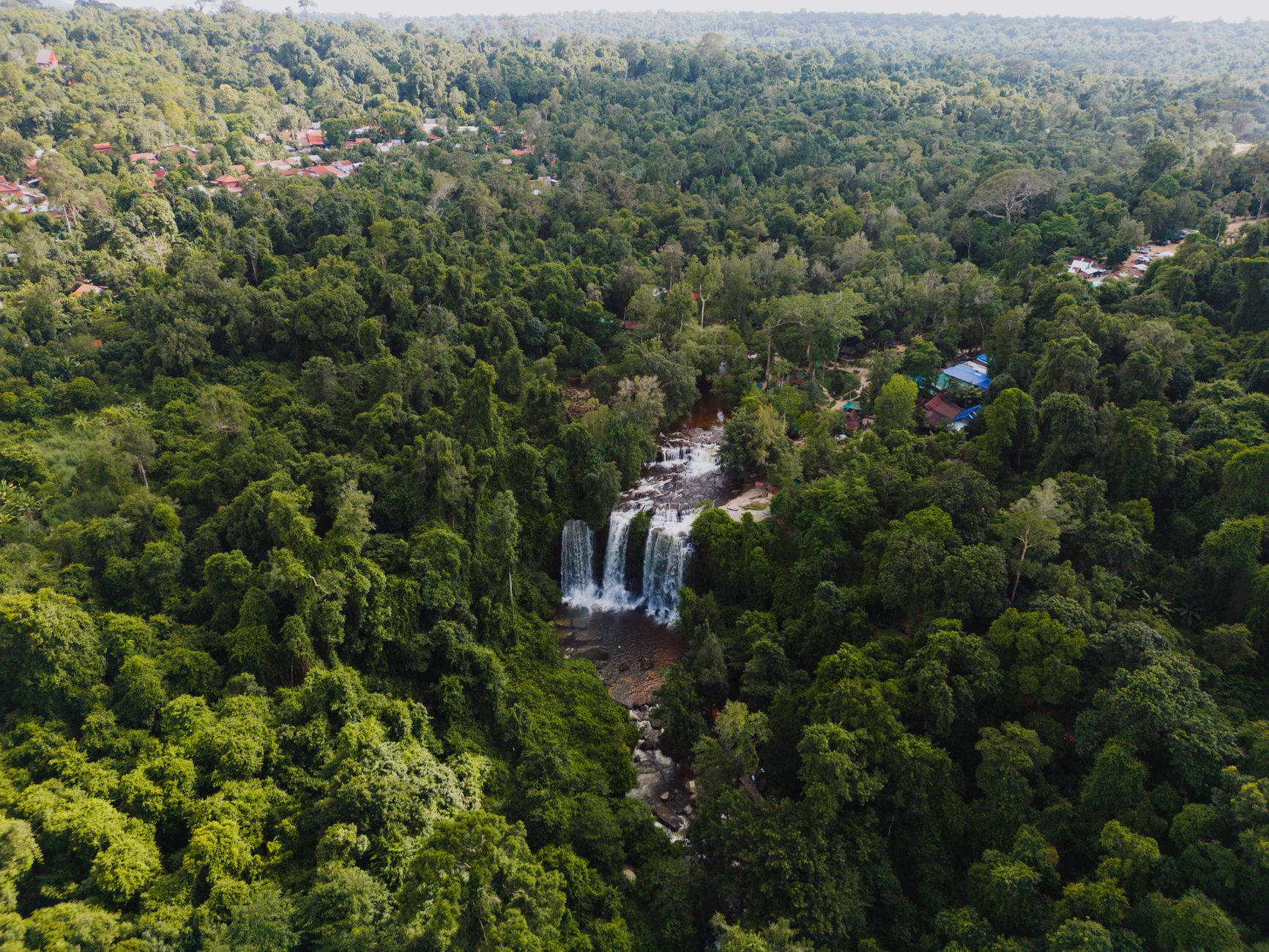
That night we camped at a designated site near the base of the main Keniam Waterfall, which was much larger than the first — maybe twenty-five metres, falling in three separate streams over a cliff face draped with moss and ferns. The sound of it was constant, a low rumble that became part of the background so thoroughly that when we stopped noticing it, we knew we’d been there for a while. We set up a small tent on a patch of raised ground that a previous camper had reinforced with a few flat stones, and we cooked dinner on a portable stove — instant noodles with a handful of dried vegetables and a generous spoonful of sambal that a friend had packed for us. It was not a good meal by any standard, but at that moment, sitting in the damp evening air with the waterfall in front of us and the jungle darkening around us, it was exactly what we needed.
The night was not quiet. Rain fell again, this time harder, drumming on the tent fly in a steady, hypnotic rhythm. Something large moved through the undergrowth near our camp — we never saw what, but the sound of it was deliberate and unhurried, the sound of something that knew where it was going and didn’t care that we were there. We lay in our sleeping bags, listening, and the moment passed. In the morning, the rain had stopped, and the air was cool and washed clean. The waterfall was louder than before, swollen from the overnight rain, and the pool at its base had turned a milky brown, the sediment stirred up and the clarity gone. We brewed coffee — instant, but it was hot — and we sat and watched the water pour over the edge, and we didn’t talk much.
The third day we pushed further inland, away from the Keniam and into the older forest that sits between the river and the mountain ridge. The trail here was less defined, the red paint marks spaced further apart, and we found ourselves stopping frequently to scan the trees for the next sign. This part of the forest was dominated by huge trees — trunks so wide that three people couldn’t have linked arms around them, their canopies so high that they seemed to belong to a different forest entirely. One of them, a seraya tree that a signpost identified as having been measured at over sixty metres, had a root system that rose above the forest floor like a series of fins, each one as tall as a person. We stood at its base, looking up, and the sense of scale was disorienting. The tree had been here before anyone had thought to draw a map of this place. It would be here long after we were gone.
It was somewhere near this tree that we had our moment of friction. We’d been walking for about four hours, the day was hot despite the canopy, and we’d misjudged how much water we had left. The map we’d been given at the park entrance showed a stream crossing about a kilometre ahead, but the trail had branched unexpectedly, and we weren’t sure which fork was correct. We stood there, tired and thirsty, and the argument that followed was not dramatic — it was the tired kind, the kind where neither person is really angry but both are frustrated, and the words come out sharper than intended. We took different sides of the argument — left fork versus right fork — and neither of us would give in. In the end, we split the difference and went right, and thirty minutes later we found the stream. It was barely a trickle, not enough to filter and drink, but the sound of it was enough to cool the mood. We sat on a fallen log, and we shared the last of our water, and the argument dissolved into the same silence that had greeted us at the boat jetty two days before. We didn’t talk about it again.
The return journey followed a different route, looping back toward the park headquarters through a section of forest that had been selectively logged decades ago. The difference was visible — the trees were smaller, the undergrowth denser, and there were old logging trails that cut straight lines through the forest, stark and unnatural. It was a reminder that Taman Negara, for all its reputation as pristine wilderness, is not untouched. The park has been influenced by human activity in ways both visible and invisible, and the forest we were walking through was a forest in recovery. It still carried the marks of its history, like a person with an old scar that has healed but not disappeared.
We came out of the jungle on the fourth day in the late afternoon, emerging from the treeline at a point where the trail met a gravel road. A small bus was waiting, empty except for the driver, who was reading a newspaper and didn’t seem surprised to see us. We climbed aboard, paid ten ringgit each, and sat in the worn vinyl seats as the bus lurched onto the road back toward Kuala Tembeling. Through the window, the jungle receded into a green blur. The air conditioning was broken, and the breeze through the open window was hot and smelled of the river.
Back in town, we found a stall selling nasi lemak wrapped in banana leaves, still warm from the steamer, for three ringgit each. We sat on a low wall near the jetty and ate, and the food was ordinary and perfect. The boatman from the first morning was there too, washing out his boat with a bucket, and he gave us a small wave. We waved back, and that was it. No great insight. No lesson learned. Just the memory of a waterfall at night, the sound of something moving in the dark, and the taste of melted chocolate and sardines, which somehow still made sense together.
📷 Photos: Quang Nguyen Vinh (Pexels), K (Pexels)