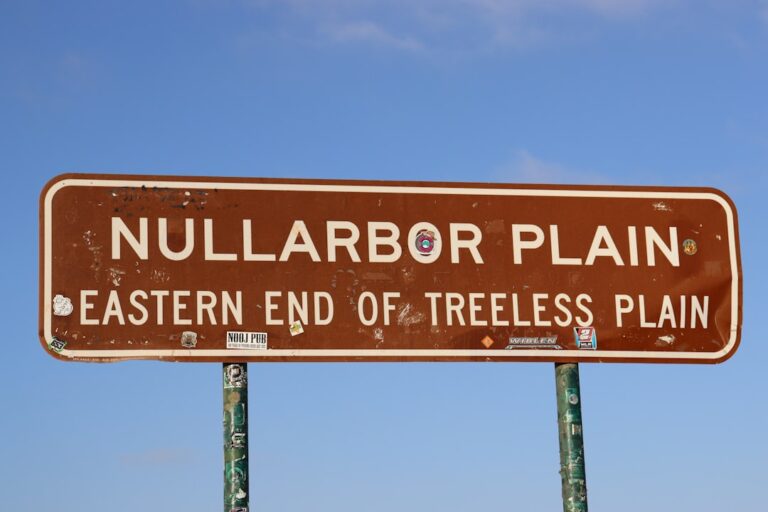
Chasing the Nullarbor’s Coastal Cliffs by Van: A One-Tank Mission to the Bunda Bluff Lookout
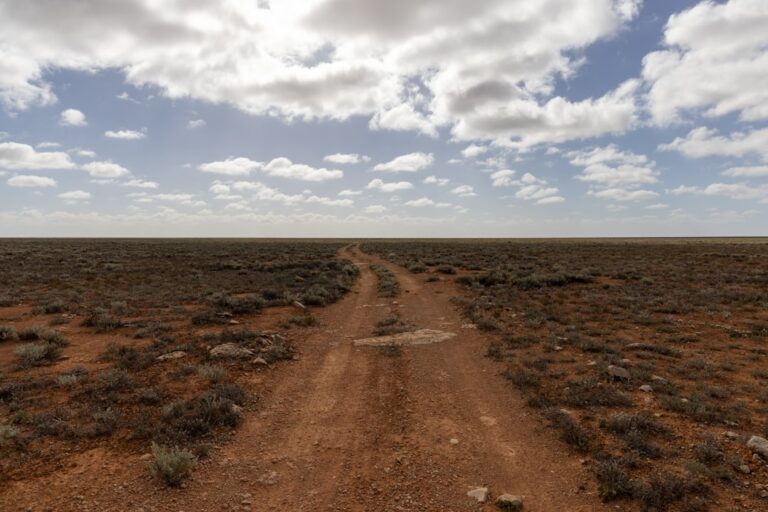
The Eyre Highway has a way of flattening time. You’ve been driving for hours, the bitumen a black ribbon stitched through a landscape so vast and mute it feels like the continent is holding its breath. The treeline has long since thinned to saltbush and bluebush, the horizon a perfect, unbroken seam between earth and sky. Then, without warning, the world drops away. You’re not expecting it—not really—even though every map and every traveller’s tale has warned you. One moment you’re cruising at a steady hundred, the next the road curves, the scrub parts, and the Great Australian Bight unfurls below you like a bolt of raw silk, stretching from your left shoulder to the vanishing point on your right. This is the moment the Nullarbor stops being a line on a map and starts being a place you inhabit. And the best part? You don’t need a four-wheel-drive, a convoy of support vehicles, or a fortnight of provisions to feel it. You just need a van, a full tank, and a willingness to follow the cliff’s edge until you find the spot where the limestone meets the sea.
Your campervan is the key that unlocks this whole experience, and not in the vague, aspirational way that travel magazines sometimes use the phrase. On the Nullarbor, a van is not a luxury; it’s a life-support system. You’ll come to appreciate this the moment you pull into the Eucla roadhouse and see the line of caravans and campervans parked along the verge like a nomadic settlement. The engine’s heat ticks beneath you as you step out, and the wind—that relentless Southern Ocean wind—hits you square in the chest, smelling of salt and something ancient. Inside your van, you have your bed, your stove, your water tank, and, crucially, your own private refuge from that wind. You can park with your back to it, brew a coffee, and watch the light change over the cliffs from the cocoon of your own wheeled room. There’s no rush to check in anywhere, no booking to honour. The roadhouse has fuel, basic supplies, and a pie warmer that will save your life at least once, but the real luxury is the freedom to simply stop when the view demands it.
Eleven Kilometres Off the Highway, the Limestone Drops Eighty Metres
The Bunda Bluff Lookout itself resists description because words feel inadequate against the scale of it. You’ll find it about eleven kilometres off the highway, down a graded dirt road that your van will handle without complaint if you take it slowly. The track winds through low mallee scrub, and you’ll think, for a moment, that you might have missed it, that the map is lying, that the ocean has receded and left you with nothing but dust. Then the track ends in a small, unsealed carpark, and you walk the last fifty metres to the edge. The cliff face here is a sheer wall of pale limestone, eighty metres high in places, its layers striated like the pages of a geological book. The drop is absolute, vertiginous, and utterly arresting. You stand on the very lip of Australia, and below you the Southern Ocean churns against the rock with a rhythm that hasn’t changed since the continents drifted apart. The colour of the water is impossible—a cobalt so deep it seems to absorb light—and the white foam of the breakers traces the cliff base like a lace hem. You will stand there longer than you planned, your hair whipping across your face, your mind empty of everything except the sound of the waves and the sheer, unbroken fact of the horizon.
A one-tank mission is exactly what it sounds like, but it’s also a state of mind. You leave Ceduna or Norseman—whichever direction you’re coming from—with a full tank of diesel and the intention of crossing the Nullarbor in a single, deliberate push. But the trick is not to treat it as a race. The Bunda Bluff Lookout sits roughly at the midpoint of the crossing, and it demands a pause. You’ll need to plan your fuel stops carefully: the stations at Eucla, Mundrabilla, Madura, and Cocklebiddy are spaced at intervals that will test your nerve if you’re running low, but if you fill up at each one as you pass, you’ll never feel the panic of the gauge dipping below a quarter. The real fuel you’re conserving, though, is attention. You want to arrive at the Bunda Bluff with enough daylight to linger, enough energy to walk the short trail along the cliff edge, and enough presence of mind to feel the place rather than just photograph it.
Honey and Amber on the Limestone at 5 P.M.
The light at the Bunda Bluff is a performance that runs on its own schedule. Midday is harsh, bleaching the limestone to a glare and washing the ocean to a pale, reflective grey. But if you arrive in the late afternoon, the world transforms. The low sun catches the cliff face and gilds it, turning the pale stone to honey and amber. The shadows of the breakers cast long, blue lines across the water, and the wind often drops to a whisper, as if the landscape itself is settling into evening. You’ll want to pull out a camping chair, crack open something cold from your van’s fridge, and simply watch. This is the moment when the Nullarbor reveals its secret: it is not empty, as the highway suggests, but full of a slow, patient grandeur that asks nothing of you except your stillness. Whales breach in the distance during the winter months—southern right whales and humpbacks using the Bight as a nursery—and you might spot their plumes of spray rising like signals from the deep. Tourists in cars will pull up, snap a few photos, and leave. You, with your van, can stay.
Practicalities matter, and the Nullarbor punishes neglect. Before you set out, make sure your van’s tyres are in good shape and that you have a spare that’s actually inflated. The heat on the bitumen is relentless, and a blowout at speed on this road is not a minor inconvenience—it’s an ordeal. Carry extra water, not just for drinking but for your radiator and for washing the dust off your hands when you stop. A gas cooker and a simple meal—pasta, tinned tomatoes, a knob of butter—tastes like a feast when you’re eating it with the cliff drop at your elbow. And bring a sturdy jacket, even in summer. The wind off the Southern Ocean carries a chill that no amount of sunshine can fully dispel, and you’ll want to be able to stand on that edge for as long as the light holds without shivering your bones loose.
The Ruins at Eucla, Half-Buried in Sand
The roadhouses along the Eyre Highway are more than fuel stops; they are anchor points in a sea of emptiness. At the Eucla roadhouse, you’ll find a museum of sorts—a small collection of relics from the telegraph station that once connected Australia to the world, now half-buried in shifting sand dunes just south of the highway. You can walk out to the ruins in the late afternoon, when the shadows are long and the sand glows ochre, and imagine the isolation of the operators who once sat in that lonely outpost, tapping messages across the void. It’s a humbling counterpoint to the scale of the cliffs, a reminder that human presence here is recent and thin. Back in your van, with the engine humming and the heater kicking in, you’ll feel a strange gratitude for the small, warm box that carries you through this landscape. It is not luxurious, but it is yours, and it is enough.
When night falls, the Nullarbor becomes something else entirely. The stars are not the washed-out, city-diluted version you’re used to; they are a solid, three-dimensional field of light, so dense that the Milky Way looks like a river you could step into. If you’ve parked your van at a rest area or a designated campsite back from the cliff edge—and you should, because parking too close to the drop is dangerous and illegal—you can lie on your roof or sit in your driver’s seat with the door open and watch the sky rotate. The silence is profound, broken only by the distant, rhythmic crash of the surf and the occasional cry of a bird. You’ll sleep better than you have in weeks, the exhaustion of the drive and the purity of the air working together to pull you under. In the morning, you’ll wake to a sky the colour of a pearl, the ocean a sheet of silver, and the cliffs standing sentinel in the dawn. You’ll make coffee, heat some porridge, and sit on your van’s step with the steam rising around your face, and you’ll understand why people talk about the Nullarbor as a pilgrimage.
Returning to the highway feels like re-entering a dream you’re still inside. The road pulls you forward, toward the next roadhouse, the next fuel stop, the next stretch of straight asphalt that seems to run forever. But you carry the Bunda Bluff with you now—that drop, that wind, that impossible blue. You’ll find yourself checking the rearview mirror, half-expecting the cliffs to have followed you, and you’ll smile at the absurdity of it. The van hums along, the tank still has plenty, and the horizon is always ahead. That’s the beauty of a one-tank mission: it’s not about how far you go, but how fully you arrive. And at the Bunda Bluff, you arrive completely. The rest is just driving.