The Smoke at Geylang Lorong 29 — and the Man Who Reads It
A version of claypot rice arrives at most tables already portioned into a bowl, the rice fluffy, the chicken tender, the lap cheong sliced into neat rounds. That version is consistent, efficient, and absolutely everywhere. On Geylang Lorong 29, a different beast survives: claypot rice cooked over a charcoal fire, by cooks whose hands have been scorched by the same clay pots for three decades. This is cooking that doesn’t compromise on time, on patience, or on fuel. It’s disappearing.
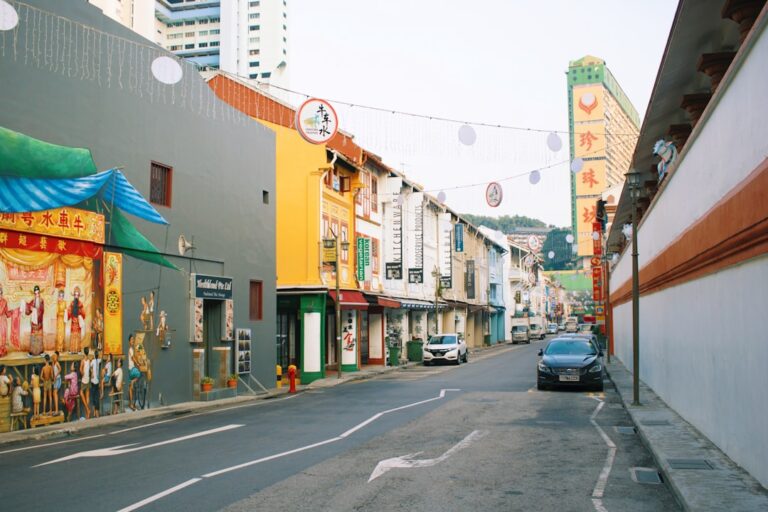
The stretch of Lorong 29 where this happens is unassuming—a row of coffee shops and shophouses, the air thick with frying garlic and soy, the constant hum of traffic. The stalls that still use charcoal reveal themselves not by faded signs but by a plume of smoke rising from a metal barrel just behind the cook’s station. Smoke is the first clue. The second is sound: a gentle, percussive hiss and crackle, fat and soy sauce hitting hot clay. An auditory map to a dying craft.
The economics of charcoal claypot rice are brutal. Each pot takes around twenty to twenty-five minutes. A gas burner does the same job in under ten. Charcoal cooks make their rice in small batches—often just four to six pots at a time—because the fire doesn’t allow for shortcuts. Each pot must be rotated, the lid lifted to check moisture, the vents adjusted to control heat. You cannot scale this. Season by season, stalls close.
Sitting down at one of these stalls requires recalibrated expectations. This is not fast food. The wait can stretch forty-five minutes for a single pot, and that pot arrives with its lid still on, the clay so hot it will burn fingers lifted too soon. The waiter—often a family member, often the cook’s son or daughter—brings a small saucer of dark soy sauce and a bowl of sliced red chili in light soy. They lift the lid, releasing a column of steam that smells of char and pork fat and something deeper, like the inside of a fireplace.
Then: a crust of browned rice clinging to the sides of the pot, grains separate and glossy, each coated in a thin film of rendered fat from chicken and Chinese sausage. The chicken pieces sit on top, bone-in, their skin crisped from direct heat. The lap cheong lies in slices, edges caramelized, fat translucent. Some stalls add salted fish, a crumbly, funky addition that divides purists. The purist wants the salted fish.
Eat straight from the pot. Use the small metal spoon, but better to use chopsticks and scrape at the edges, where the rice has turned into a golden, almost glassy layer—the guoba, the part that connoisseurs fight over. Dip a piece of chicken into the chili-soy mixture. This is rice that tastes like a craft that refuses to die quietly.
One stall operates under a yellow awning, its sign worn to near illegibility. The cook is a man in his sixties, his forearms a roadmap of burn scars. He works alone, movements economical, almost meditative. He lifts each clay pot from the pile, adds rice from a plastic tub, then water, then chicken, then sausage. He places the pot on the charcoal, then walks away to attend to another. He does not use a timer. He knows by the sound, by the smell, by the way the steam changes pitch. When he lifts a lid, he peers into the pot like a doctor checking a pulse. If the rice is too wet, another minute. If the crust forms too quickly, the pot moves to the edge of the fire. Watching him is watching a kind of knowledge that can’t be written down, only passed through hands.
This knowledge is not being passed down. The younger generation looks at twelve-hour days, the heat, the smoke, the marginal profit, and chooses something else. A few stalls have tried to adapt—offering delivery, pre-packaged portions, vacuum-sealed pots reheated at home. The soul of the dish is in the fire, that unpredictable, living heat source gas can never replicate. You can’t deliver that.
Go early, around 5:30 or 6 p.m., when the first round of charcoal has just been lit. The stalls are usually open until 10 or 11 p.m., but the last pots are often made with less care, the fire dying down, the cook tired. Go at the start of the dinner rush, when the energy is high and the charcoal is at its peak. Bring cash—most of these stalls do not take cards or PayNow. Bring patience. You are commissioning a piece of work.
The etiquette is simple. Do not hover. Do not ask, “How long more?” Do not tap a foot or sigh loudly. The cook will bring the pot when it’s ready. Rush them, and the rice arrives uneven, or raw in the middle. Regulars know this. They sit, they order a sugarcane juice from the drink stall next door, they scroll their phones, they chat.
Try a side-by-side comparison. Order from a gas-fired stall one night, then from a charcoal stall the next. The difference is not subtle. The gas-fired rice is uniformly cooked but lacks layered texture—the varying degrees of doneness that give charcoal rice its complexity. The gas version is clean; the charcoal version is smoky, almost dirty. The crust on gas is often soft, or worse, burnt in patches where the flame was too high. The charcoal crust is even, golden, and shatters when bitten.
Some stalls offer a hybrid: gas to cook the rice through, then a finish on charcoal for smoke. A compromise that works reasonably well, but the rice lacks the same depth. The smoke is surface treatment, not something absorbed into every grain over twenty minutes of patient cooking. The real thing requires the full journey.
The best claypot rice stalls don’t offer many variations. Chicken, Chinese sausage, maybe salted fish. No prawns. No abalone. No truffle oil. The chicken must be fresh, the sausage from a reliable supplier, the rice an aged variety that can withstand long cooking without turning to mush. Simplicity is not a limitation; it’s a discipline.
At a recent visit, the cook at the yellow awning slid a pot onto the table with the barest nod. The lid came off, and the steam hit first. A regular at the next table, a man in a company polo shirt, said to no one in particular: “He won’t talk about it, but his father taught him. Father’s gone now.” The cook didn’t react. The regular shrugged. “It’s a problem. He’s the last. His son works at a bank, or something like that.” The cook rotated a pot, listened, added a splash of water. He had nothing to add to the conversation. The pots did the talking.
Walking down Lorong 29 after the meal, the sky darkening, the neon lights of Geylang’s other attractions flickering on, a satisfaction settles that’s rare in modern eating. Not quick. Not efficient. A burn on the tongue, a soy stain on the shirt. Something real, and it won’t be around forever.
The smoke. The man with scarred forearms. One pot of chicken and sausage with salted fish. Eaten from the clay vessel, scraping every last grain of crust from the sides. Pay in cash. Say thank you. The fire, for one night, is still burning.
📷 Photos: Galen Crout (Unsplash)