Three Lessons From a Less-Than-Perfect Dawn at Cape Soya
There’s a particular kind of hubris that strikes when you’ve been on the road a few days, sleeping in a new corner of Hokkaido every night, everything clicking into place. The weather app shows a clear blue icon for the northernmost tip of Japan. You’ve got a campervan, a full tank of diesel, and a plan that feels foolproof: park at a roadside station near Cape Soya overnight, wake up before the alarm, and watch the sun rise over the Sea of Okhotsk from the very top of the country. What could possibly go wrong? As it turns out, quite a lot. This is the story of how that plan went sideways, and what you should really know before you try it yourself.
Michi-no-Eki Soya, 10 p.m.
The roadside station, or *michi-no-eki*, at Cape Soya is called *Michi-no-Eki Soya* — and it’s a perfectly adequate spot for a campervan overnight, but only if you know what you’re signing up for. You pull in around 10 p.m., the parking lot empty except for two other vans and a single delivery truck. The air smells of salt and cold metal. The van’s diesel heater hums, and you settle in, congratulating yourself on the strategic genius of this location. There’s a public restroom attached to the station building — clean, well-lit, heated. You’ll use it before bed, and you’ll feel smug about the convenience.
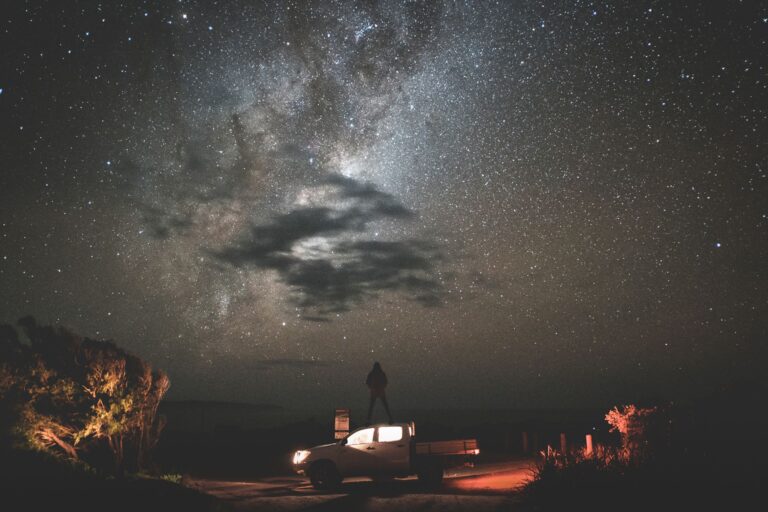
What you don’t realize, as you close the curtains and drift off, is that this *michi-no-eki* sits on a flat, exposed stretch of land with zero windbreak. There are no trees, no buildings to block the gusts coming straight off the Sea of Okhotsk. By 2 a.m., the van is rocking gently — then less gently — as the wind picks up. The metal panels creak. The curtains billow. You lie awake listening to the rig groan, wondering if the handbrake is really enough. You should have parked perpendicular to the wind direction, but you didn’t think about it. You just backed into a space and assumed the world would cooperate. Lesson one: scout your overnight parking spot during daylight, or at least pull up Google Maps satellite view to check for exposure. A sheltered corner, even if it means a longer walk to the viewpoint, is worth ten times the convenience of being right next to the toilet block.
5:40 a.m.
You set your phone alarm for 4:15 a.m. — early enough to walk the ten minutes to the cape viewpoint, find a spot, and watch the sky change before the sun breaks the horizon. You fall asleep at midnight, exhausted from a day of driving winding coastal roads and stopping at every cheese farm you passed. Your plan is airtight.
You wake up, and it’s dark. You check your phone: 5:40 a.m. The alarm never went off. Or it did, and you slept through it — the wind, the cold, the deep exhaustion of travel. The panic is immediate and physical. You throw on layers in the dark: thermal base, fleece, down jacket, windbreaker, hat, gloves. You grab your camera bag and stumble out of the van into air that bites at your face. The walk to Cape Soya Monument is a blur of gravel crunching under your boots and a sky that’s already turning from black to a bruised purple. You’re moving fast, cursing your own body, your phone, the universe. By the time you reach the railing overlooking the sea, the sun is already a sliver of orange on the horizon, well past the golden moment you’d imagined. You missed it.
If you do this, bring a dedicated travel alarm clock — the kind with a loud, mechanical bell. Do not trust your phone, especially if it’s been running navigation all day. Set three alarms, five minutes apart. Put the phone across the van so you have to get up to turn it off. Treat the wake-up like a flight you can’t miss. The sunrise waits for no one.
The Wind That Roared
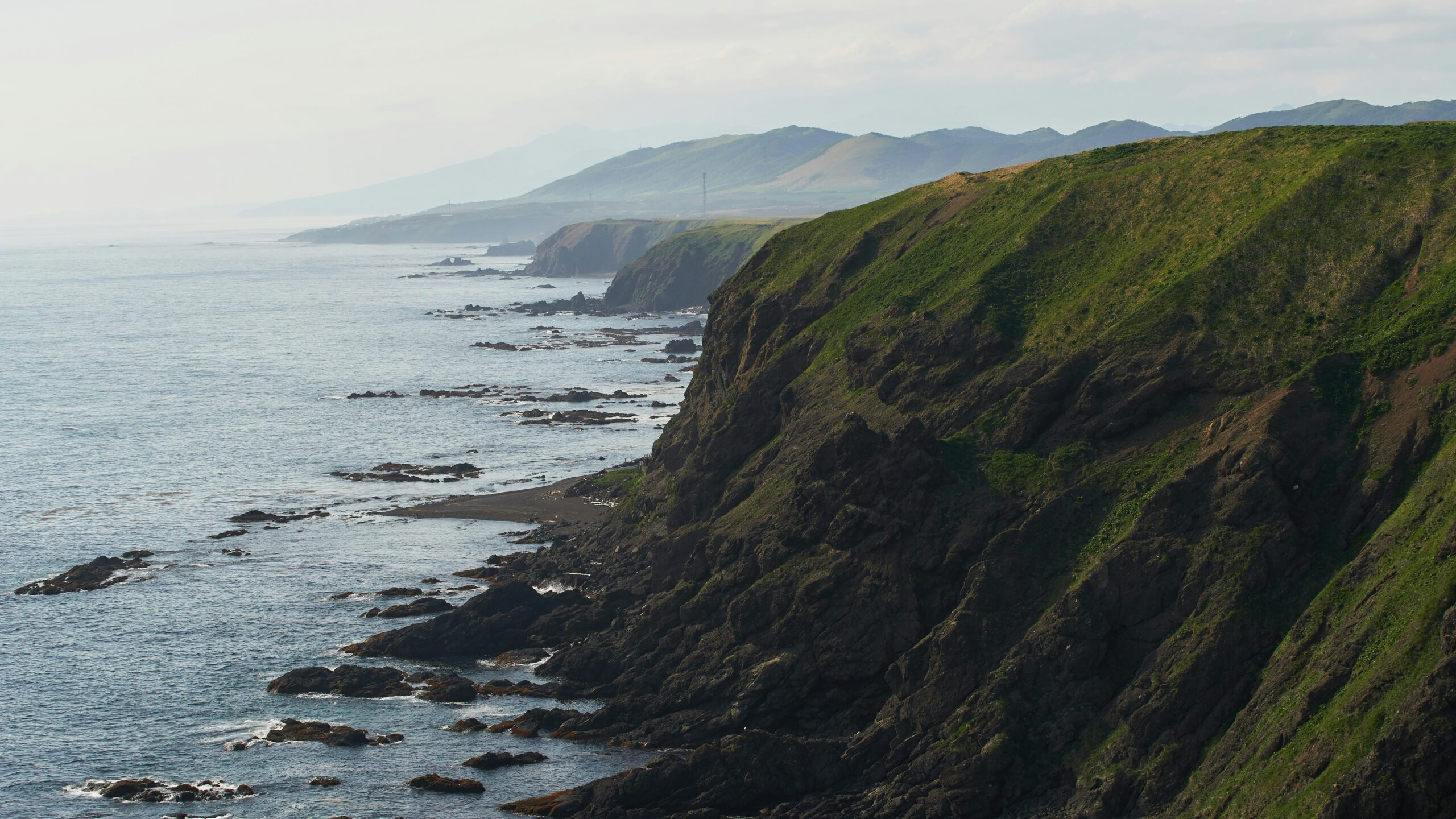
You’re standing at the Cape Soya Observation Deck — the actual northernmost point of Japan’s main islands — and the wind is unforgiving. It’s not a breeze; it’s a sustained, horizontal assault that makes your eyes water and your cheeks go numb within minutes. The monument, a triangular steel structure pointing north toward Russia, seems to lean into it. The sea below is a churning grey, whitecaps stretching to a horizon that feels impossibly far away. You try to take a photo, but your hands are shaking so badly the image blurs. You hold the camera against a railing, brace your elbows, and fire off a few frames. They’re not great.
Here’s what no one tells you about Cape Soya: the wind is not a weather condition, it is the permanent state of being. You need a face mask — not for pollution, but for windburn. You need gloves that let you operate a camera shutter. You need a hat that straps under your chin, because anything less will be ripped off and sent tumbling toward Siberia. You should have packed a thermos of hot tea or coffee. You didn’t. You’re standing at the top of Japan, shivering, with nothing warm in your hands, watching a sunrise you barely made, and feeling very, very small. It’s humbling, and it’s beautiful, but it’s also a genuine physical discomfort that distracts from the experience. Dress for a polar expedition, even if the forecast says 5°C. The wind chill will cut that in half (or something like that — it feels worse than the math suggests).
The Walk You Should Have Planned
From the *michi-no-eki* parking lot, the monument is a ten-minute walk along a paved path. That sounds easy. In daylight, with no wind, it’s a pleasant stroll. In pre-dawn darkness, with a gale blowing, it feels twice as long. The path passes a small shrine and a few informational plaques, but you’re not reading them — you’re hunched forward, fighting the wind, regretting not bringing a headlamp with a red light to preserve your night vision. Your phone’s flashlight is too bright and makes the path look flat and featureless; you nearly trip over a raised curb near the monument base.
What you’d do differently: scout the route during the evening, before dark. Walk it once, note the uneven spots, the curb, the gate that might be locked (it wasn’t, but you didn’t know that until you got there). Pack a proper headlamp, not just your phone. And if the wind is really howling, consider driving the van as close as you can to the monument — there’s a small parking area right at the cape, but it fills up. You didn’t know about it because you didn’t research. You assumed the *michi-no-eki* was the only option. It’s not. There’s a dedicated parking lot for the Cape Soya area itself, with maybe a dozen spaces, and it’s a 30-second walk to the monument. If you’d known, you could have slept there — more exposed to the wind, yes, but you’d have rolled out of bed and been there. Next time, you’ll check Google Maps street view for every possible parking option within 200 meters of your destination.
The Dawn You Sort of Got
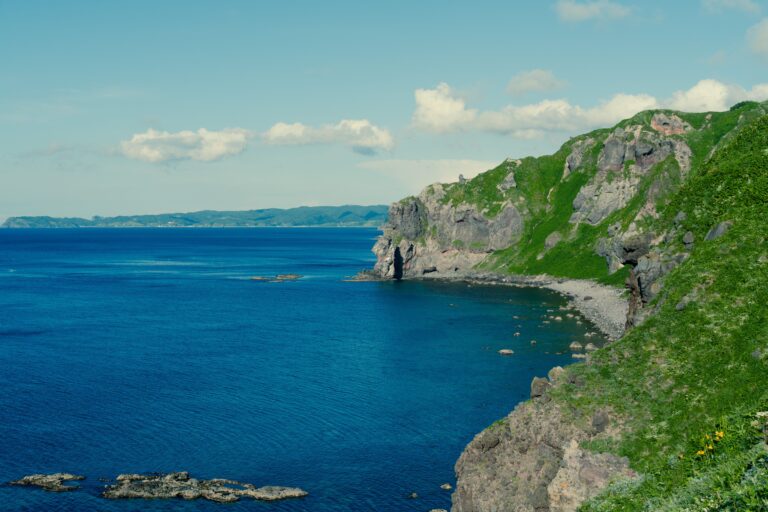
For all the small disasters, you did get something. By 6:10 a.m., the sun was fully above the horizon, painting the sea in shades of pale gold and grey-blue. The wind didn’t stop, but the light changed everything. The monument cast a long shadow toward Russia. A fishing boat chugged past, impossibly small against the immense water. You stood there, teeth chattering, and watched for twenty minutes as the world’s northernmost edge of Japan woke up. It was quiet, except for the wind and the waves. No crowds. Just you, two other photographers who’d had better luck with their alarms, and a single jogger in full winter gear who looked like he was training for something insane.
You took more photos. Some of them were okay. One, of the monument with the sun just behind its peak, the shadow stretching like an arrow pointing north — that one worked. You framed it with the sea and a strip of sky, and it captured the loneliness and the scale of this place.
Cafe de la Mer, 7 a.m.
After you’ve watched the sunrise and your fingers have gone numb, drive the ten minutes south to the town of Wakkanai. There’s a small coffee shop near the ferry terminal called *Cafe de la Mer* that opens at 7 a.m., and they serve a thick, dark roast with a side of toast and butter that tastes like victory. You can sit by the window and watch the ferry to Rishiri Island depart while you thaw out. They also have a curry bread — a soft bun filled with mild curry, fried golden — that is exactly what you need after a morning of failure and triumph in equal measure.
Alternatively, head to the Wakkanai Morning Market, which is open from 8 a.m. if you can wait that long. There’s a stall selling fresh sea urchin over rice — a local specialty from the waters around Cape Soya. It’s sweet, briny, and pretty expensive, but you’re at the top of Japan and you just survived a suboptimal dawn. You deserve it. Eat it standing up, looking out at the sea you just watched the sun rise over. It will taste like redemption.