Why Hiking the Tongariro Alpine Crossing at Dawn Is Both a Brilliant and Terrible Idea
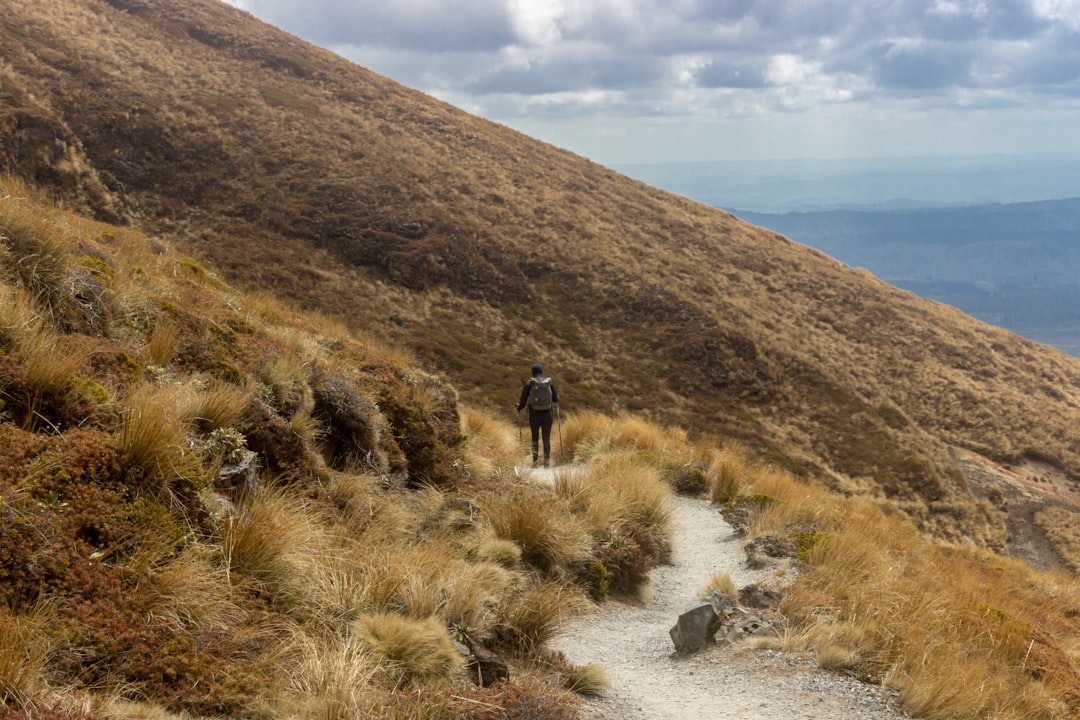
The travel brochures and magazines always feature this scene: the otherworldly Emerald Lakes glowing like jewels in the first light, steam rising from volcanic craters, a lone hiker silhouetted against a Technicolor sunrise. It’s the kind of image that sells New Zealand to the world, and it’s exactly why you’re here, standing in a freezing car park at 4:30 a.m., questioning every life choice that led to this moment. The Tongariro Alpine Crossing at dawn is a bucket-list experience that delivers exactly what it promises — but it also delivers a few things nobody mentions in those glossy Instagram captions. Here’s what you need to know before you trade sleep for that sunrise shot.
The Alarm Clock Is Your First Enemy
You’ll set your alarm for 3:45 a.m., because that’s what the blogs told you to do. And you’ll hit snooze. Then you’ll wonder why you thought this was a good idea while you’re shoving cold toast into your mouth in a pitch-black rental car. The sunrise over the Emerald Lakes is a genuinely spectacular payoff — but the getting there is a grind. You’re driving from wherever you’re staying (likely Taupō, Turangi, or one of the National Park Village lodges) to the Mangatepopo Road car park, which is a forty-five-minute drive even in good conditions. The road is unsealed, winding, and dark. You’ll pass maybe three other cars, all filled with people doing exactly the same questionable thing you are. By the time you park, your hands are cold, your coffee is lukewarm, and you’re already second-guessing the layers you put on.
You’ll want to book a shuttle from your accommodation, because parking at the trailhead is limited, and walking back to your car at the end — when you’re exhausted, your knees ache, and the sun is high — is a special kind of torture. But here’s the truth: even with a shuttle, the pre-dawn start is the hardest part of this whole experience, not the hiking itself. You just have to swallow it and go.
The Dark Hike You Didn’t Anticipate
You step out of the car into a world that is completely black. Not dark-the-way-your-bedroom-is dark, but deep, primal, star-filled black that makes you feel very, very small. You have your headlamp, which you bought specifically for this, but you’ll still trip over a rock within the first hundred meters. The first hour of the hike is through alpine scrub and tussock, climbing steadily but not steeply, and you’ll share the trail with maybe a dozen other headlamps bobbing in the distance ahead of you. It’s quiet, cold, and a little eerie — the only sounds are your own breathing and the crunch of volcanic gravel under your boots.
The mistake people make is underestimating this part. It’s not technically difficult, but it’s relentless. You’re climbing in the dark, so you have no visual reference for how far you’ve come or how close you are to the summit. The trail markers are reflective, which helps, but the path is uneven, with loose rocks that shift underfoot. You’ll sweat even though it’s freezing, which means you’ll unzip your jacket, then zip it back up when the wind hits, then unzip it again, in an endless cycle of regret. By the time you reach the first proper landmark — the South Crater, a flat, alien landscape that feels like another planet — you’ve been walking for nearly two hours and you’re starting to wonder if the sunrise is even going to happen.
The Devil’s Staircase Will Find You
Just when you think you’ve found a rhythm, you hit the Devils Staircase. It’s a steep, zigzagging climb up volcanic scree that feels engineered to break your spirit. The switchbacks are endless, and each one reveals another, steeper one above it. You’ll pass people who have already given up, sitting on rocks with their heads in their hands. You see a couple who brought nothing but a single bottle of water between them, and you feel a surge of smugness because you packed three liters and a pack of peanut butter crackers. But the smugness evaporates as your thighs start burning and you realize you’re still only halfway up.
The trick here is to let go of any pride. You stop. You breathe. You pretend you’re just admiring the view — which, in the dark, is mostly just the lights of Taupō in the distance and the faint outline of Mount Ngauruhoe against the stars. You take small steps, plant your feet carefully, and don’t look up. The staircase takes about forty minutes, and when you finally reach the top, the wind hits you like a wall. You’re standing on the Red Crater, the highest point of the crossing, and the world opens up around you. It’s still dark, but the sky is starting to shift from black to deep blue, and you realize you’ve made it in time.
The Sunrise at the Emerald Lakes Is Everything You Hoped
You turn left off the main trail, following the faint path toward the Emerald Lakes. You’ve read about this moment, planned for it, and now you’re standing on the edge of a volcanic basin, watching the sun crest over the rim of the Tongariro massif. The lakes — three of them, each a different shade of luminous green — catch the first light and transform. They look radioactive, but in the most beautiful way possible. The steam rises from nearby vents, and the whole scene is silent except for the whistle of wind across the crater.
You take your photos. You sit down on a cold rock and eat your peanut butter crackers. You watch the color change as the sun climbs higher, and for ten minutes, everything is perfect. You feel like you’ve earned this. You’ve fought the dark, the cold, the staircase, and you’re here, alone with the lakes and the light. Then you hear voices. You turn around, and you see them: the hordes. They come in waves, streaming over the Red Crater in a steady stream of headlamps and puffing breath. The sunrise window is narrow — maybe twenty minutes before the trail becomes as crowded as a city street at rush hour. You’re glad you started early, but you realize that your “dawn” is everyone else’s “late.”
The Descent: A Test of Character
The hike down from the Emerald Lakes is where the real damage happens. The trail descends into the Central Crater, then climbs again toward Blue Lake before the long, punishing drop toward Ketetahi. You’ll walk on volcanic sand that gives way beneath your feet, making every step feel like a half-commitment. Your knees will start to ache. Your toes will jam into the fronts of your boots. You’ll pass people who are limping, clutching their knees, or just staring blankly at the horizon.
The worst section is the descent from the Ketetahi Hut to the car park. It’s a steep, winding path through scrub and forest that goes on for what feels like forever. The views are gone — you’re surrounded by bush, and you can’t see the lakes or the craters anymore. You’re just walking, one foot in front of the other, until your brain goes numb. This part takes over an hour, and it’s brutally boring. You’ll check your phone, find no signal, and put it away. You’ll think about the beer you’re going to drink in the pub. You’ll rehearse the text you’re going to send your friends: “I did the Tongariro Crossing. It was amazing. I am broken.”
What You’ll Do Differently Next Time
If you’re sane enough to do this again, you’ll make a few changes. First, you’ll pack lighter — one liter of water is enough, because you can refill at the hut if you’re savvy. You’ll bring a windproof jacket that actually works, not the one you grabbed from the back of your closet. You’ll wear proper hiking boots, not the trail runners that leave your ankles rolling on every loose rock. You’ll also book a shuttle from the start that picks you up from the finish, so you don’t have to hitchhike or walk an extra kilometer to your car.
And you’ll accept that the dawn start is a romance, not a strategy. It’s an experience you remember more for the feeling than for the photos. You’ll tell people about it, and they’ll nod politely, but they won’t understand the cold, the pain, the perfect moment when the sun hit the water and you forgot you were exhausted. You’ll know, though. And that’s enough.
So go ahead. Set that alarm. Drive that dark road. Climb those stairs. The Tongariro Alpine Crossing at dawn is a terrible idea in all the best ways — the kind of terrible you’ll be grateful for every time you look at that photo on your wall. You just have to be willing to suffer for it. And you are, because you’re exactly the kind of person who reads articles like this and thinks, “Yeah, I can do that.” And you can. You absolutely can.
📷 Photos: Hernan Perez (Unsplash)