Moke Lake’s Secret Neighbour: The Backcountry Track Most Campervanners Miss
Moke Lake’s Secret Neighbour: The Backcountry Track Most Campervanners Miss
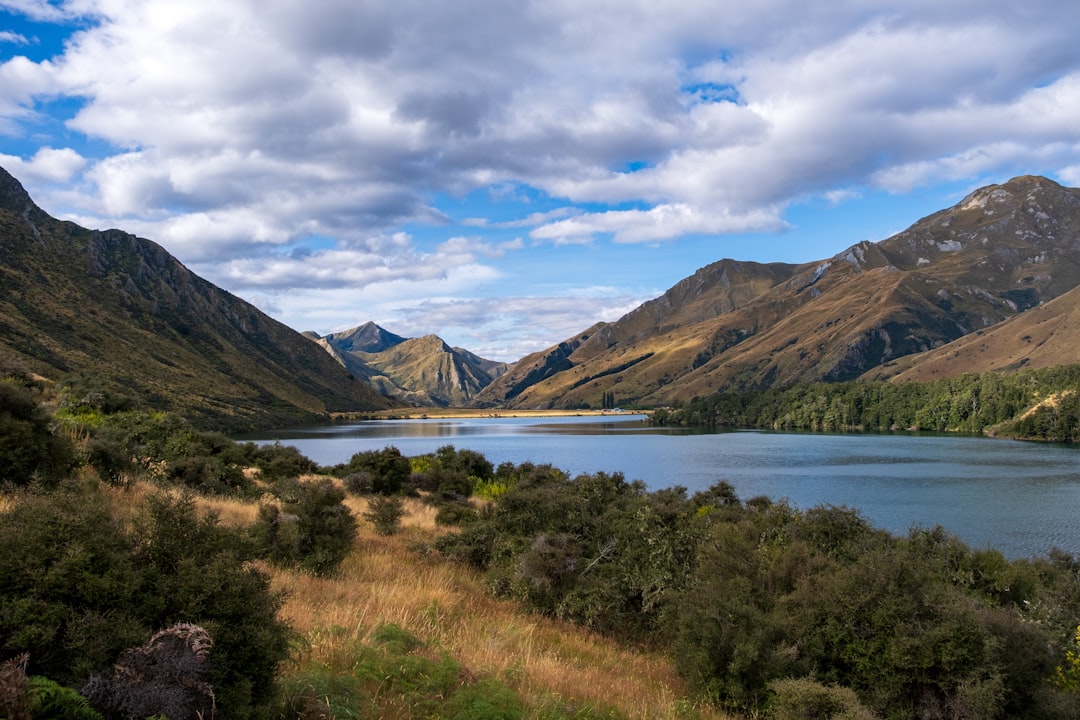
You’ve read the guidebooks. You’ve scrolled the forums. Everyone talks about Moke Lake as a day-trip from Queenstown — a glacial basin, a mirror-like lake, a short gravel road that feels like a secret. But what nobody tells you, what you won’t find in the official NZMCA app or the tourism brochures, is the backcountry track that branches off just before you reach the main lake carpark. It’s an unmarked, unsealed, utterly unassuming lane that locals call the Moke Lake Loop Track access road, and it’s where a campervan can spend a night in absolute, cathedral-quiet darkness.
This isn’t the sort of spot stumbled upon by accident. You’ll need to know exactly where to look, and you’ll need to be driving a self-contained campervan (or at least a vehicle with a certified toilet), because this is true backcountry freedom camping territory — no facilities, no power, no neighbours. What you gain in exchange is a night under a sky so dark you’ll see the Milky Way as a three-dimensional river of stars, and the Southern Cross so crisp it feels like you could reach up and touch it.
Most campers arrive at Moke Lake proper, park in the designated freedom camping area by the lakeside, and call it a night. That spot isn’t bad — it’s actually quite good, with the water lapping footsteps from the door. But the quiet that makes you whisper even when you’re alone lies a few hundred metres further on, around the lake’s far shore, where the road narrows to a single lane and the canopy closes overhead. That’s where a night truly begins.
The Silver Beech Turnoff
The turnoff is easy to miss. Coming from Queenstown on Moke Lake Road, pass the main lake carpark on the left — that’s the obvious one. Don’t stop there. Keep driving another two hundred metres past the carpark entrance, and you’ll see a narrow, gravel track branching off to the right, partially hidden by a grove of silver beech trees. This is the start of the Moke Lake Loop Track road. Your ticket to solitude.
The track itself is about 1.5 kilometres long, winding through a corridor of native bush that gradually opens into tussock-covered flats. Go slow — 10 km/h is the speed here, not just for the track’s sake but for the experience. The bush on either side is thick with ferns, mossy boulders, and the occasional rimu tree, and the air carries that particular New Zealand forest scent: damp earth, fresh growth, and something faintly sweet you can’t quite name. With the window rolled down, you’ll hear nothing but the crunch of gravel under tyres and the distant call of a bellbird.
The track ends at a small, flat clearing just above the lake’s eastern shore. There’s no marked site here, no sign, no picnic table — just a natural gravel pad big enough for one or two campervans, surrounded by tussock and low scrub. This is your home for the night. You’ll have the place entirely to yourself, nine nights out of ten. The only company you’re likely to have is the occasional pair of ducks gliding across the water, or a startled pukeko that will eye the van with suspicion before scurrying into the undergrowth.
Zero Light Pollution
Here’s the detail that makes this spot genuinely special: this is a Bortle Class 1 sky on a good night. That’s the darkest classification on the light pollution scale, the kind of darkness usually requiring hours of driving to find. Queenstown’s glow is hidden behind the ridge to the west; Glenorchy’s minimal lights are blocked by the hill to the north. The only illumination comes from the stars themselves, and they arrive in densities that feel almost overwhelming.
Set up a camp chair outside the van, facing away from the lake, and give your eyes at least twenty minutes to adjust. At first, familiar constellations appear — the Southern Cross, the Pointers, the Magellanic Clouds. But as night vision deepens, the sky begins to light up with light you didn’t know existed: the faint blue-white glow of the Milky Way’s core, the subtle movement of satellite trails, and, if you’re lucky, the green-and-pink swirl of aurora australis dancing on the southern horizon. Photographers, bring your tripod. With a 20-second exposure at ISO 3200, you’ll capture detail that the naked eye can barely perceive.
One practical note: the campervan’s internal lights are the enemy here. Even the tiny glow from the fridge’s control panel can ruin night vision. Hang a dark cloth over the interior, or better yet, do all pre-bed preparations before full darkness falls. Cook dinner early, close the blackout blinds, and step outside to a world that feels entirely different from the one you left behind in Queenstown.
Practical Realities
This spot is not for everyone, and you should know the trade-offs before committing. There are no facilities here — zero. No toilet block, no rubbish bin, no water tap, no picnic table, no cell phone reception (a phone will be useless for data, though you can sometimes get a single bar of voice signal by climbing the nearby knoll — there’s a bit of a view up there too, actually). You’ll need to be completely self-contained: a certified toilet, enough water for drinking and washing, and a reliable method for disposing of both grey and black waste.
The track itself is also worth considering. It’s not suitable for large motorhomes or long rigs — anything over 6 metres will struggle with the tight turns and low-hanging branches. A standard campervan, like a Toyota Hiace or a Mercedes Sprinter conversion, is ideal. You’ll also want good ground clearance; the track is generally smooth enough, but there are a few sections where loose gravel has washed out into shallow ruts.
Weather is another factor. Moke Lake sits in a basin that collects rain and fog with surprising efficiency. A clear afternoon can turn into a misty evening in under an hour, and you’ll lose that spectacular sky. The best approach is to check the MetService forecast for the “Queenstown Lakes” district (not Queenstown town itself, which is often sunnier) and look for a night with low cloud cover and minimal wind. Autumn and winter nights tend to offer the clearest skies, though they also come with temperatures that can drop below freezing inside the van.
Dawn Over the Remarkables
The beauty of this spot isn’t just the night — it’s the day that follows. Wake with the sun, which rises over the Remarkables and paints the lake in shades of gold and rose. Brew coffee on the camp stove, sit on the van’s step, and watch the mist lift off the water. The entire Moke Lake Loop Track is at the doorstep — a 4.5-kilometre walking trail that circles the lake through tussock, beech forest, and open flats. It’s an easy two-hour walk, suitable for any fitness level, and you’ll likely have it to yourself until mid-morning.
After the walk, options open up. A twenty-minute drive back towards Queenstown brings you to the Glenorchy-Queenstown Road, where a right turn leads to Glenorchy itself — a small town at the head of Lake Wakatipu with a legendary pub, a general store that sells excellent pies, and access to the Routeburn Track. A left turn takes you back to Queenstown in thirty-five minutes, ready for a shower, a proper meal, and whatever adventure is planned next.
But here’s the insider move: don’t rush. That second night, if you can spare it, is even better than the first. The knowledge that you’re tucked away in a spot that most travellers will never know about, that you’ve found the kind of quiet that rewires your nervous system, that you’re sleeping under a sky that hasn’t changed in millennia — that’s worth an extra day.
A Pair of Pukeko
You’ll hear plenty about freedom camping in New Zealand, much of it negative. Horror stories about campervanners dumping waste in inappropriate places, about overcrowded sites, about locals growing tired of the intrusion. Those stories are real. But this spot — this unmarked, unsung, barely-documented corner of the Moke Lake area — represents everything that responsible freedom camping can be. You leave no trace. You make no noise. You share the space with nothing but the birds and the stars and the wind off the lake.
So plan your route. Check your self-containment certification. Fill your water tank. And when you reach that unassuming turnoff, take it. The stars are waiting.
📷 Photos: Sylvain Cleymans (Unsplash)