
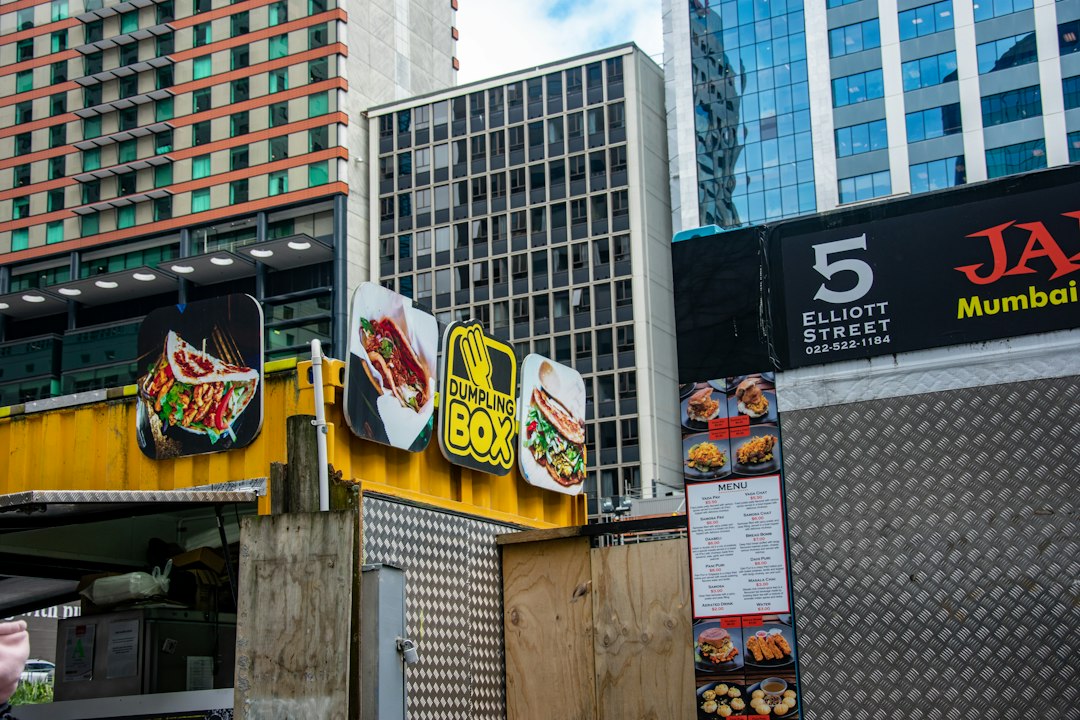
The queue at the Sandringham shop starts somewhere near the doorway and folds back on itself, a loose rope of people who all seem to know exactly what they’re waiting for. Nobody’s reading a menu. The smell coming off the flat-top — cumin hitting hot oil, then a slower note of charred dough — does the explaining.
Auckland eats cheap, and it eats widely. The city’s food map isn’t drawn around its harbour or its volcanic cones but along a handful of arterial roads where immigration patterns have stacked one cuisine against another, sometimes within the same block. The result is that a ten-dollar lunch here can come from a kitchen where the recipe has been cooked the same way for three generations, and the person handing it across the counter can tell you which suburb their grandmother lived in before they moved to this one.
What follows is a walking and bus-hopping survey of twelve such places, arranged not as a best-of list but as a route — because the geography matters as much as the food, and the gaps between stops are part of the meal.
On Dominion Road, the dumpling houses cluster in the stretch between Valley Road and Balmoral, and the ritual there is unvarying: a woman at a counter folding wrappers by hand, a steamer that whistles when the lid is lifted, a plate of twenty pork-and-chive dumplings that costs less than a supermarket sandwich. The wrappers are the tell — thin enough to read a shadow through, thick enough to hold the soup. Order the pan-fried, not the boiled, and eat them standing because the tables fill within about four minutes of a school bell going off nearby.
There are no tasting menus at this end of the price range. The best meals in Auckland arrive on melamine, under fluorescent light, with a laminated card held to the table by a strip of electrical tape, and nobody seems to mind. A city that has spent decades telling itself it’s a café culture has quietly become a city of lunch counters.
Ten minutes’ walk north, a Malaysian kitchen runs out of a two-storey terrace house with a corrugated iron awning. The laksa arrives in a bowl that’s too hot to touch on the rim, and the broth — coconut, prawn shell, a chilli heat that builds rather than spikes, and there’s a story about the recipe that the owner will tell you if the room is quiet, which it never is — comes with the option of extra noodles for two dollars. On a wet Tuesday the room steams up so thoroughly that the window to the street becomes a fog. Nobody leaves. A man near the window is eating his second bowl and reading a book.
Heading east, along the Great South Road, the rhythm changes. The shops get wider, the car parks bigger, the portions more serious. A South Indian canteen near Otahuhu serves a thali on a stainless steel tray with a dozen small bowls arranged in a ring, and the server will refill any of them without being asked — the rice, the sambar, the thin buttermilk, the sweet. It costs less than a movie ticket. The trick is to eat in the order the tray suggests, which is roughly clockwise, and not to fill up on the poori at the top.
The afternoon light through that shop’s window lands on a table of taxi drivers taking their break, phones face-down, one of them asleep upright. Nobody has designed the room for anyone’s camera. It has been designed to feed people quickly and well between shifts, and that is why it works.
From there, a detour. A side street off the main road leads to a small Filipino bakery whose window display is mostly pandesal and a tray of bibingka, a purple sponge with a slice of salted egg pressed into the top. The woman behind the counter, whose name is Malou, laughs when asked what it is. “You buy one, you find out,” she says, or something close to that, and hands it over without further explanation. The texture is somewhere between cake and rice pudding, sweet and then abruptly salty. It is the single best thing eaten all day, and it is not on any list.
That detour has a cost. The route south to the night market now runs against the evening traffic, and the bus takes nearly forty minutes to cover what the map insists is a short distance. The market itself is out the back of a car park, under strings of bulbs, and the first stall visible sells nothing but grilled corn with a squeeze of lime and a dusting of chilli. Two dollars. The smoke is extraordinary.
A stall selling grilled skewers of pork belly, a stall selling fried bread dough with a bowl of condensed milk to dip it in, a woman making roti canai by slapping the dough flat against the counter until it goes translucent, then folding it like a letter. All of it under ten dollars, most of it under five. The crowd is a mix of families with strollers, teenagers in school uniforms, and a few people who have clearly come straight from work still in their lanyards.
Not everything lands. A stall selling what’s advertised as “Kiwi fusion” — a meat pie filled with butter chicken — is more interesting as an idea than as a pie, the filling too sweet against pastry built for something savoury. It gets eaten anyway, because it’s cold and the line was short. The next stall over, selling nothing but cups of hot ginger tea, redeems the entire row.
Further west, in Avondale, a Saturday-morning ritual has been running for years with almost no advertising. A warehouse space fills with tables of produce, but the real draw is at the back, where a woman named, depending on who’s asked, either Aunty or simply “the lady with the pot” sells a coconut-and-taro dish out of a slow cooker for four dollars a bowl. The recipe is not written down. Asked about it, she shrugs. “You cook it till it’s done,” she says. “Then you cook it a bit more.”
The bowl is never quite the same twice — sometimes thicker, sometimes sweeter, depending on what the taro is doing that morning. The regulars know this. A woman in a bright headscarf buys three bowls and explains, without being asked, that the first is for now and the other two are for the freezer. She has been coming for eleven years. She has never seen anyone famous here, and says so with some satisfaction.
By mid-afternoon, a bakery in Kingsland, tucked between a hardware shop and a laundromat, sells a pastry the size of a paperback and filled with a slow-cooked beef cheek that costs eight dollars and takes two hands. The pastry shatters at the first bite, and a woman at the next table leans over to say, “Get extra napkins before you start,” which turns out to be excellent advice.
A few doors down, an ice cream counter serves what it calls a “real fruit” scoop, and for once the phrase is accurate — the strawberry version has actual seeds, and the mango one has strands of fibre suspended in it. Three dollars. The server, asked how long the shop has been there, says, “Longer than me,” and goes back to scooping.
The last stop, because it’s close to the bus back, is a small shop in Ponsonby selling nothing but bowls of hot soup — a clear broth with noodles, a few slices of beef, a fistful of herbs on top. Six dollars. The broth has been on since the morning, and the woman ladling it out says she makes it “every day, the same.” She means it as a plain statement of fact. The same, every day.
Outside, the light has gone flat and the buses are running their evening timetable. There is a bag of pandesal in one pocket and a paper cup of ginger tea in the other hand, and the route home passes the dumpling house, which has a queue again — the school bell, the evening shift, the same rope of people folding back from the doorway. The flat-top is still going. The cumin still hits the oil first.
📷 Photos: Duskfall Crew (Unsplash)