Umbrellas fold and a queue of arriving passengers shuffles into a huddle under the terminal awning at Christchurch airport. A man in a dripping rain shell pulls a camera bag off his shoulder and holds it in front of his chest like a hot water bottle, checking the seams. He laughs at something the person beside him says, which is the only reasonable response to a forecast that, three days ago, promised clear skies for the length of the South Island.
New Zealand has a way of making a mockery of the weather app. The country’s climate is governed by a long, narrow landmass dropped into the middle of an ocean, mountains running down its spine, and a prevailing wind that arrives from the west carrying whatever the Tasman Sea has decided to throw. What this produces is not four seasons but a rolling handful of them, sometimes within the space of a single afternoon. Photographers who arrive with a fixed itinerary of views and a fixed idea of the light that will fall on them tend to spend a lot of time waiting. A lot of time disappointed.
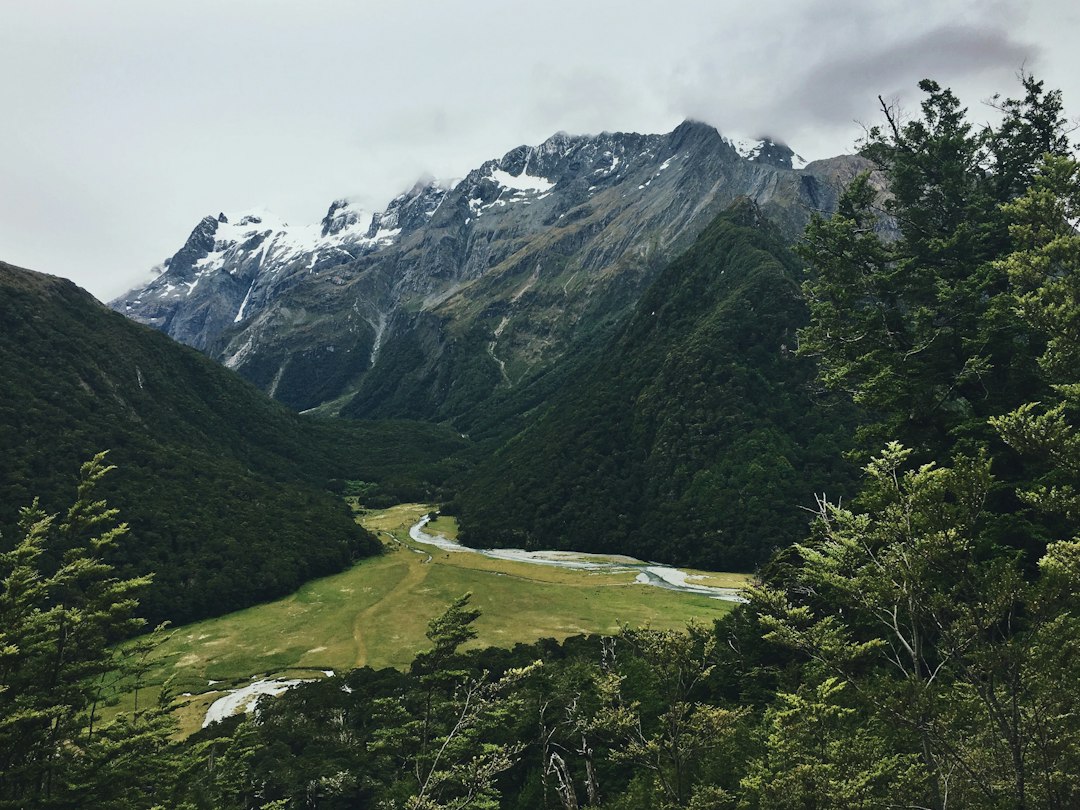
Ask around the township of Te Anau on a grey afternoon and the conversation lands quickly on Fiordland, that vast, steep, rain-soaked corner of the southwest where the annual rainfall is measured in metres rather than millimetres. The place is famous for its hanging valleys and black water, and equally famous for the fact that a large proportion of visitors see none of it, because the cloud has come down to the level of the car park. The advice that circulates among people who spend their seasons there is counterintuitive: a clear day in Fiordland is a rare gift, but a wet one is the standard condition. Waterfalls appear where no waterfall was marked on any map. The beech forest darkens to a deep, almost bruised green. Mist moves through the valley in slow horizontal layers, and every few minutes the composition of the scene reassembles itself at no extra cost.
On a low-cloud day near Milford Sound, the temptation is to give the scene a few minutes and move on. But standing still in one spot through an hour or more of shifting weather produces something a snapshot can’t — the valley emerging and disappearing and emerging again, each time slightly different. A tripod helps. So does a plastic bag. The detail that matters most, though, is time, and the willingness to spend it — which is the one piece of gear nobody packs and almost everybody, sooner or later, runs out of.
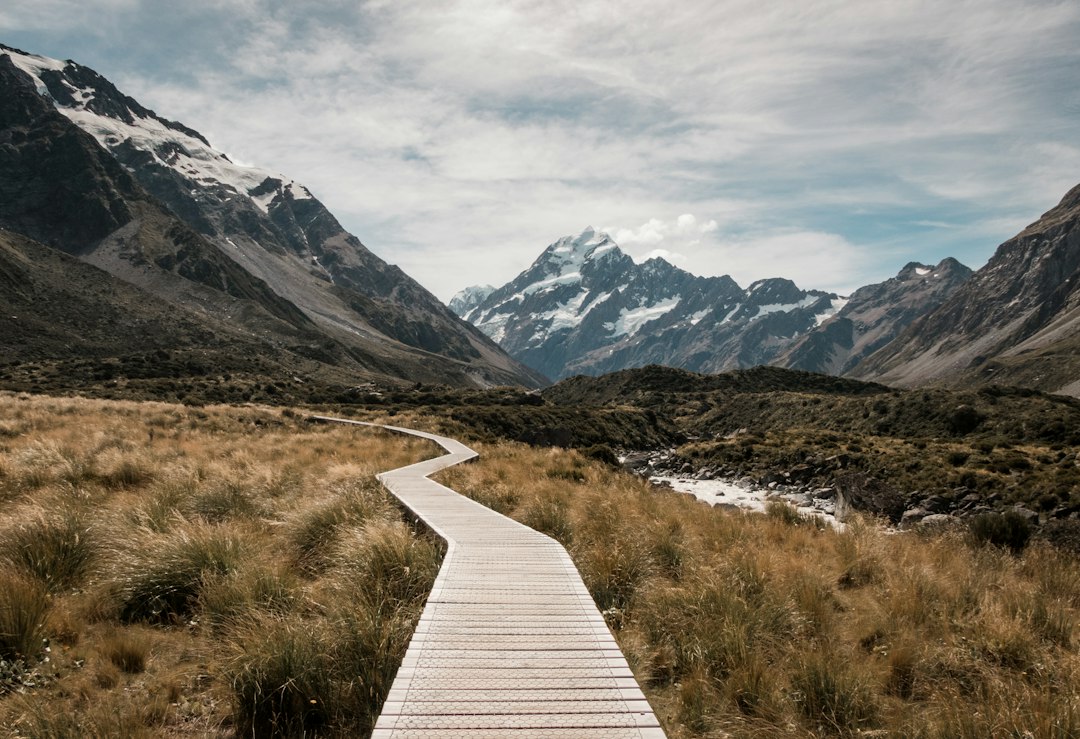
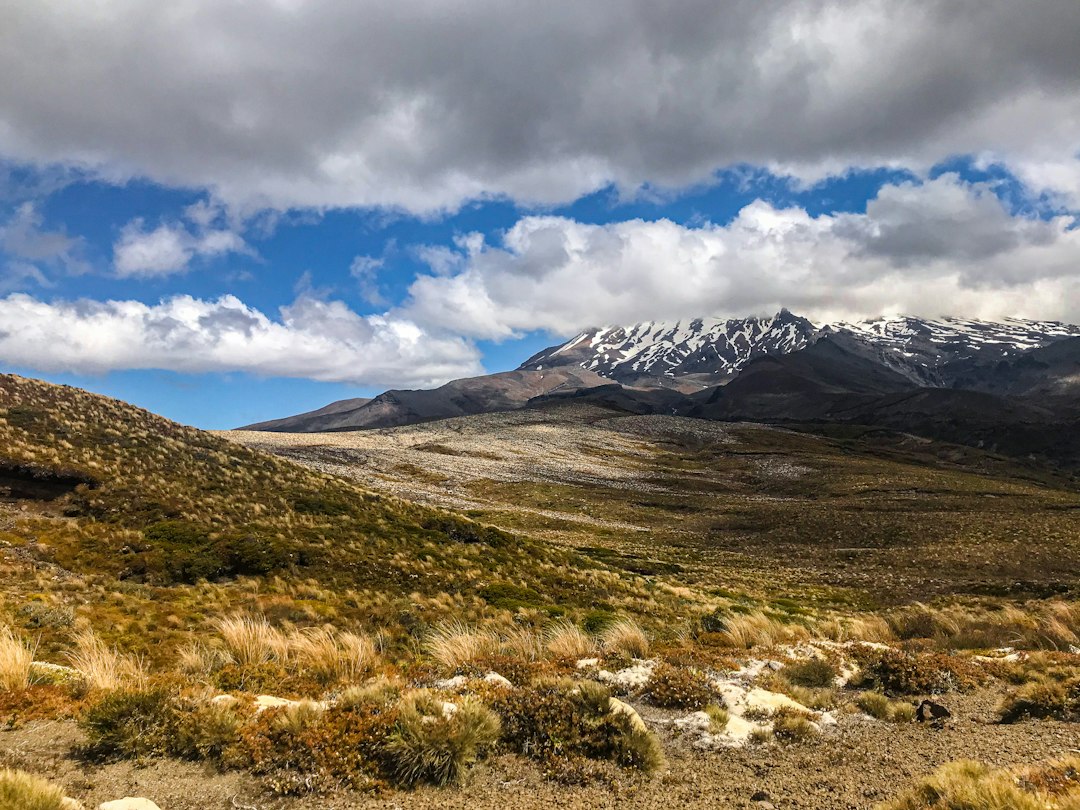
Drive east out of the mountains and the weather logic inverts. On the Canterbury Plains, the nor’wester is the local phenomenon, a warm and punishing dry wind that pours down off the Southern Alps, whips the tussock flat, and turns the sky a milky, high-contrast white that plays havoc with exposure. It arrives with a strange heat to it, warm enough on a spring day to make a jacket uncomfortable, and it carries dust and pollen and the smell of dry grass. The light under a nor’wester is flat and diffuse and, to a certain eye, difficult — no interesting shadows, no warm colour, just a bleached glare across the plains. Photographers who know the country learn to watch for the change, which often comes late in the day as the wind drops and the front moves through, and the light turns suddenly, briefly, extraordinary.
Further south, the coast around Dunedin deals in a different register again. The city sits on a harbour that funnels cold air off the Pacific, and the weather changes on a scale of minutes rather than hours. A walk out along the Otago Peninsula can begin in bright sun, pass through a squall of horizontal rain, and come out the other side into a rainbow thrown across the harbour.
On the peninsula, the wildlife is the reason most people are there — the albatross colony on the headland, the fur seals on the rocks below, the yellow-eyed penguins coming ashore in the evening. And the wildlife is where the weather stops being an aesthetic question and becomes a practical one. Seabirds in flight against a dark, storm-heavy sky make a very different photograph from the same birds against a bright one, and the wind that ruins a landscape shot is the same wind that lets an albatross hang almost motionless above the cliff. A wet afternoon is a good afternoon to be on the headland; the birds are active, the light has weight, and the few other people out there have usually gone home.
What surprises a lot of visitors is the temperature. New Zealand sits at a latitude where the sun, when it appears, is fierce — the ozone layer overhead is thin, and a bright day in the far south can burn skin in a fraction of the time a traveller expects. The same clear light that makes the mountains crisp can leave a photographer with a sunburnt neck after two hours on a glacier viewpoint. The remedy is the same as the one for the weather generally: a layer system, a hat, and the assumption that the day will get colder, brighter, wetter or all three before it ends.
Some of the most rewarding light turns up in the gaps between fronts, and those gaps are short and unpredictable. Don’t plan the shoot around the forecast; plan the day around being somewhere worth photographing when the forecast is wrong. The gear stays packed. The locations are chosen for what they offer in any weather — a shoreline is interesting in rain, a forest is interesting in fog, a mountain valley is interesting when the cloud is low as long as you’re close enough to see it move. A location that depends entirely on a clear view of a distant peak is a location that will, on any given day, let you down.
Lake Matheson, on the West Coast, is the textbook example of a view that depends on a specific condition: the windless, glassy morning that produces the famous mirror reflection of Aoraki and Mount Tasman in the dark water. On a windy day the reflection is gone, and the lake is simply a lake. But that’s the version of the place the postcards don’t show, and it has its own rewards — the water turning over in small ripples, the bush on the far shore dark and close, the mountains behind the cloud not as a postcard but as a presence, felt rather than seen.
The point isn’t that every photograph works better in bad weather. It’s that the range of conditions on offer in New Zealand is huge, and the photographer who has learned to work with several of them has access to a much richer set of images than the one who has learned to work with only one. A photographer met on the West Coast has a line about this: the clear days are for the tourists, the grey ones are for the photographs, or something along those lines. It sounds like a rationalisation if you hear it on a sunny afternoon. It sounds like obvious good sense if you hear it on a wet one.
The logistics of this kind of travel are less romantic than the images suggest. Long drives over mountain passes, often in rain, often with the road closed or partially flooded at the far end. Weather-related cancellations are a real thing on the West Coast, where the passes can close for days, and the good-humoured approach is to treat the road network as part of the weather system — as something that can change on you and that you build a bit of slack around. A second pair of socks, a dry bag for the camera, and the willingness to change plans are worth more than an extra lens.
In the fiord country, the rain has another effect that has nothing to do with photography. It turns the bush into an audible place — water dripping off the ferns, small streams appearing where no stream was, the whole forest ticking and running. The air smells of wet beech and cold stone. It’s the sort of thing that’s easy to miss when the camera is out and the aim is a particular shot, and it’s the sort of thing that much of the best work from the region is quietly built on.
A flat white bought at a roadside café outside Fox Glacier for a little over five dollars, drunk standing up while the rain came across the car park in sheets. A packet of chips and a chocolate bar for a few dollars more at a petrol station in the Mackenzie Country, eaten in the front seat with the heater on. The woman behind the counter at a small takeaway in Franz Josef, indifferent to the weather, asking whether the visitor was staying another night and advising, when the answer was yes, to come back tomorrow because the forecast looked better.
By evening, the front has usually passed. The cloud breaks, the light comes in low and long and slightly ridiculous, and the mountains put on the show they’ve been withholding all day. Somewhere on the far side of a lake, a photographer who has spent the afternoon waiting in a car park will be running for a viewpoint, and someone else who gave up hours ago will be eating dinner. Both have had a day in the same country, and only one of them will have a photograph of it.

📷 Photos: Cassie Matias (Unsplash), Adam Edgerton (Unsplash)