We hadn’t planned for the ferry to feel quite so final. That’s the thing about crossing from Bali to Lombok — it isn’t just a short hop on the water, though the distance itself is short, less than an hour from Padangbai to the dock at Lembar. It’s the shift in atmosphere, the way the island announces itself through a different kind of heat, a different pace of movement at the port. We’d left Amed that morning, the campervan loaded with a week’s worth of sand and salt and the particular grime that builds up when you live out of a vehicle for that long. The road to Padangbai winds through hills that still feel recognisably Balinese, but by the time we’d queued for tickets and watched the crew lash the van onto the deck, the landscape on the other side already felt like a separate country.
The ferry itself is unglamorous in the way Indonesian inter-island ferries always are — a working vessel, not a tourist amenity. We sat on plastic chairs near the stern, watching the coast of Bali recede behind the haze. A group of women across from us were travelling with baskets of dried fish, the smell cutting through the salt air in a way that was neither pleasant nor unpleasant, just present. It took about forty minutes to reach Lombok, though nobody seemed to be timing it. The crew gestured us back to the van with the casual efficiency of people who do this crossing four or five times a day, and we rolled off the ramp into a port that felt noticeably less developed than Padangbai — dustier, less organised, with fewer people offering to carry your bags. We found a spot to camp for the night not far from the beach, a stretch of coast where the sand was darker than what we’d gotten used to in Bali and the waves broke at a different angle. It wasn’t a planned campsite, just a place that looked like it would do, and it did.
By Day 12 we were headed north toward Senaru, the village that sits at the trailhead for Mount Rinjani. The road there is a study in contrasts — smooth asphalt that suddenly gives way to gravel, then back again, then to an unsealed stretch where the van’s suspension reminded us it had done this before. Senaru itself sits at about six hundred metres elevation, and the air shifts noticeably as you climb. It feels less coastal, more like the foothills of something serious. The mountain was visible above the treeline, its upper slopes hidden in cloud that hung there persistently, neither clearing nor turning to rain. We parked the van near a warung that doubled as a registration point for trekkers and spent the afternoon walking to the Tiu Kelep waterfall, a two-hour hike through forest that got cooler and damper the deeper we went.
The trail to the waterfall is well-trodden but not what you’d call maintained — roots form natural steps, and in places the path narrows to a single-file track against a hillside where the drop-off is just enough to make you pay attention. We passed a pair of French hikers coming back, their clothes wet and their expressions the kind of tired that suggests the payoff was worth it. At the waterfall itself, the spray reaches you before the sound does — a fine mist that settles on everything, making the rocks slick and the air feel thick. The pool at the base is deep enough to swim in, though the water is cold in a way that makes the body reject the idea for the first few seconds. We stayed maybe forty minutes, long enough to watch a local guide coax one of his clients — a German woman in her fifties, clearly anxious — into the water near the edge, where the current is gentler. She got in up to her shoulders, stayed for perhaps three minutes, then scrambled back out with a laugh that was mostly relief. The guide wasn’t pushy, just patient, and the smile afterward was genuine.
The return hike felt shorter, as it often does, but the path had changed character by then. The light filtering through the canopy had shifted, and the sounds of the forest — birds, insects, the distant rumble of water — seemed louder in the late afternoon. We got back to the van as the warung owner was lighting a small fire for cooking, and we ate a simple dinner of nasi goreng and fried tempe while he told us about the eruption in 2015, how the ash had fallen on Senaru for days. “The mountain gives, the mountain takes,” he said, in the kind of English that gets the meaning across without worrying about grammar, or something like that. We slept well that night, the van’s windows open to the cool air, the mountain invisible in the dark but impossible to ignore.
Day 13 took us south again, toward Mawun Beach, a name that had come up several times during the trip. “White sand, good waves, quiet,” one surfer in Canggu had told us, and the description turned out to be accurate, though “quiet” meant something different than we’d expected. The beach sits at the end of a narrow road that dead-ends at the sand, and the few other vehicles there were mostly local — a pickup truck with surfboards in the back, two scooters parked under a tree, a minibus that had brought a family from Mataram for the weekend. The sand was as white as promised, fine-grained and clean, and the water graded from pale turquoise near the shore to a deeper blue further out. The waves were breaking in a consistent left-hand peel that would have been ideal for longboarding, though we hadn’t brought boards and spent the afternoon swimming and walking the curve of the bay instead.
Camping on the beach itself turned out to be less straightforward than we’d imagined. A group of local men approached as we were scouting a spot near the treeline, and through a combination of broken Indonesian and hand gestures we gathered that camping there was fine, but that we should move the van closer to the warung if we wanted to use their bathroom in the morning. It wasn’t a negotiation so much as a gentle redirection, the kind of interaction that happens often in Indonesia when a foreigner is trying to figure out the local logic of a place. We moved the van, ate dinner at the warung — grilled fish that had been caught that morning, rice, a sambal that was hotter than expected — and fell asleep to the sound of waves that were closer than we’d anticipated, the tide having crept up during the night. We woke once, around three in the morning, to find the water lapping at the sand maybe fifteen metres from the van, the moonlight making the whole bay look like a long exposure photograph. Moments like that don’t need a camera. It would have undersold it anyway.
The morning brought the kind of light that makes places like Mawun look like they’ve been staged for a tourism campaign, but the reality was grubbier and more interesting: a stray dog digging at something near the warung’s kitchen, a flip-flop floating in the shallows, the sound of someone starting a generator. We swam before breakfast, the water warm and clear, and by the time we’d packed up and headed north toward Mataram, the beach was already filling with day-trippers. It felt like we’d left just in time, though that might have been ungenerous — Mawun is a beach that can handle visitors, and the people arriving seemed as pleased with it as we had been.
Mataram on Day 14 was a different proposition entirely. After four days of coastal roads and mountain trails and sleeping on the sand, the city felt like a return to something more structured, more defined by schedules and traffic lights. We had the campervan to return by late afternoon, and the morning stretched out in a way that felt both luxurious and slightly anxious — the sense that the trip was winding down, that the next vehicle we got into would be a plane, not a van. We spent the morning at the Museum Negeri Nusa Tenggara Barat, a modest building with a surprisingly good collection of Sasak textiles and a model of a traditional Lombok house that explained the layout better than any guide had. The woman at the ticket booth seemed surprised to see us — foreigners in Mataram are less common than in the beach towns, and the museum sees maybe a dozen a day on a good week — but she gestured us through with a smile and pointed toward the textile room with a wave that said “that one, that’s the best one.” She was right.
The rest of the day we drove without particular purpose, getting lost in the network of streets that make up Mataram’s centre, stopping for a meal of ayam taliwang — the grilled chicken that Lombok is known for, spicy in a way that builds rather than hitting you immediately — at a warung that seemed to be doing good business despite having no visible signage. The chicken was excellent, the sambal fiercer than the one at Mawun, and we drank several glasses of sweet tea trying to cool down before giving up and accepting the heat as part of the experience. The van’s air conditioning had been temperamental for three days, and Mataram’s humidity made it clear we’d reached the end of what the vehicle could handle. We dropped the keys at the rental office, a clean concrete building near the airport, and the man behind the counter asked if we’d enjoyed the trip. It was a straightforward question, the kind you answer with a nod and a vague affirmation, but standing there in the cool of the air-conditioned office, it felt harder to sum up than it should have been. We’d covered four islands in two weeks, slept in places that ranged from organised campsites to patches of sand we’d found by chance, eaten meals that were sometimes incredible and sometimes just fuel. The campervan had been both liberating and constraining — freedom to stop wherever we wanted, but also the constant awareness that we were moving a small house from place to place, with all the negotiation that entails. Lombok had been the leg we’d known least about going in, and it had rewarded that ignorance with days that felt less rehearsed, less mediated by the expectations that Bali carries with it. Senaru’s mountain air, Mawun’s waves, the taste of that grilled chicken in a warung we’d never find again — these are the details that hold, the ones that surface months later when someone asks what the trip was like. The ferry crossing that had felt so final didn’t end up being final at all. It was just the last time we crossed water in that particular way, on that particular trip, and that’s a different kind of finality than we’d imagined at the time.
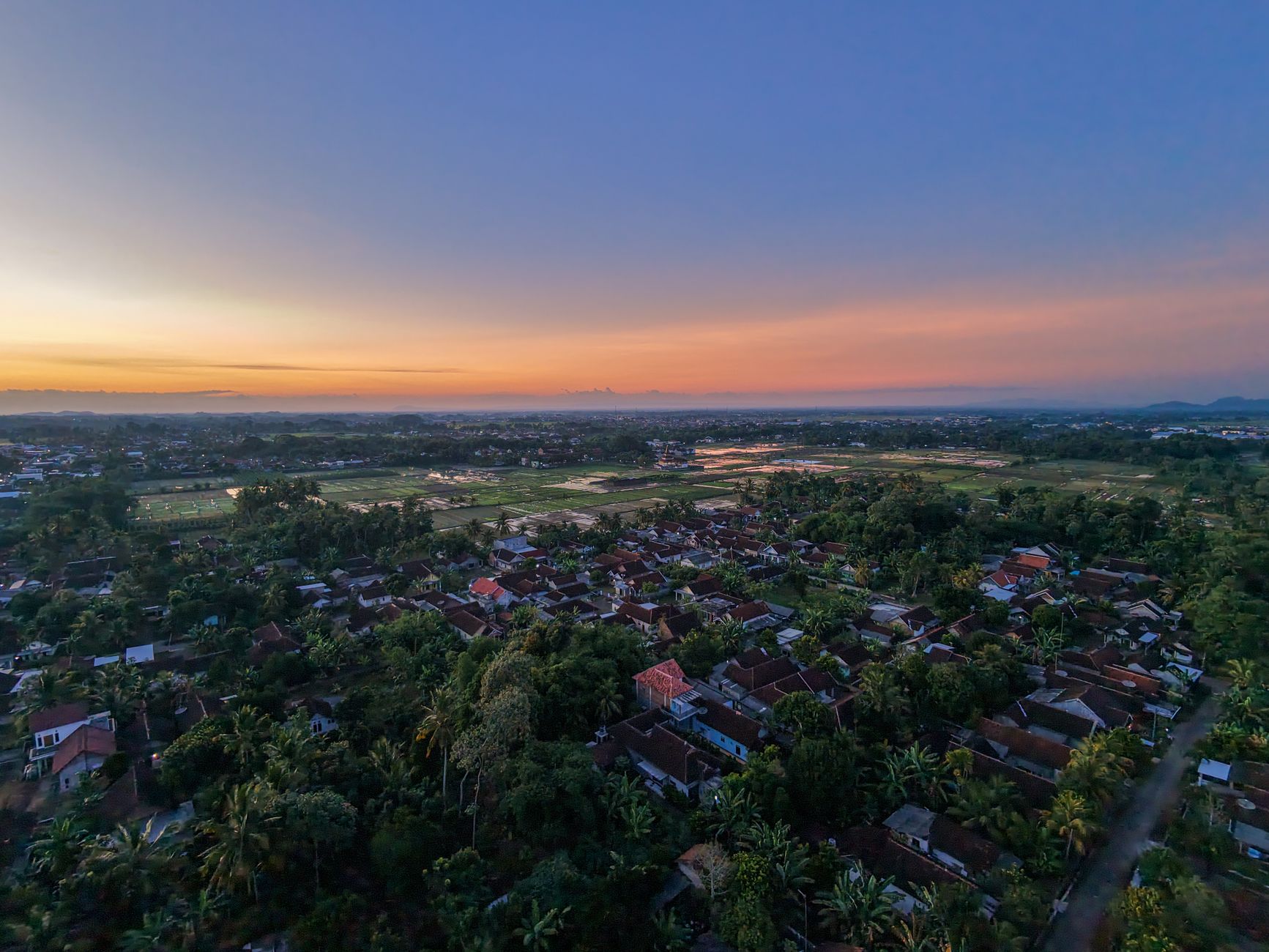
📷 Photos: setengah lima sore (Pexels), Mytho Digital (Pexels)