The rain started near Gongju, not hard but persistent, the kind that makes you reconsider whether the drive is worth it. I was coming from Daejeon, the campervan still smelling faintly of the previous night’s convenience store ramyeon, and the wipers across the windshield had settled into a rhythm that felt like the engine’s own breathing. By the time I reached the Gongju National Museum, the parking lot was almost empty — not because the site was unpopular but because the weather had cleared the space for anyone willing to get wet.
The tomb of King Muryeong sits inside a low hill on the edge of the city, unearthed in 1971 during drainage work. What struck me first wasn’t the scale — it’s modest compared to the grand tombs of Gyeongju — but the fact that you walk into the burial chamber itself, not a reconstruction but the actual brick vault where the king and his queen were found. The humidity inside hit immediately, a dense weight that felt older than anything I’d encountered so far on the trip. The museum next door houses the excavated treasures: the gold crown, the jade pendants, the bronze mirrors still dark with patina. A display case held the king’s wooden pillow, carved with lotus petals, and I stood there longer than I expected, trying to reconcile how something so intimate — a place where a head once rested — had ended up behind glass.
The rain had stopped by the time I walked back to the van. I sat in the driver’s seat for a few minutes, not starting the engine, watching a groundskeeper sweep water off the museum steps. It was the eleventh day of a trip that had already taken me through Andong, Gyeongju, and down the southern coast, and the campervan had become less a vehicle and more a kind of portable room — my own small chamber, moving through the landscape at 80 kilometers an hour.
From Gongju to Seoraksan National Park is a drive that takes roughly three and a half hours if the traffic cooperates, and on a Tuesday in late autumn, it mostly did. The road east climbs through a series of tunnels carved into the Taebaek Mountains, each one spitting you out into a different version of the same scenery: steep forested slopes, then a sudden glimpse of the sea, then back into darkness. I stopped once at a rest area near Jecheon for a cup of instant coffee from a vending machine — 300 won — and stood by the railing watching fog settle into a valley below. It was the kind of non-event that becomes memorable only in retrospect, the way unplanned moments do when nothing goes wrong.
Seoraksan’s entrance fees have changed over the years, but on that day it cost 3,500 won for the park and another 1,000 for parking. The campervan site near the park boundary was basic — gravel pads, shared bathrooms, a small shop selling dried squid and soju — but the location made up for it. From the campsite’s edge, the granite peaks of the park rose like a broken jaw, the tallest of them catching the last of the afternoon light. I cooked dinner using the van’s portable stove: a packet of kimchi jjigae I’d bought in Daejeon, some rice, an egg cracked in at the last minute. Eating outside with the engine off and only the sound of other campers’ conversations drifting over, I remembered why I’d chosen this trip over the alternatives — not the destinations themselves, but the space between them.
Day twelve began before sunrise, which was not by plan but because the campsite’s water pump started rattling at five. I gave up trying to sleep and made coffee, then set out for the Ulsanbawi Rock hike while the light was still grey. The trail starts at the park’s main entrance and climbs for roughly four kilometers, much of it up steep stone steps carved into the mountainside. The first hour is through forest — cool, damp, the air thick with pine and wet soil — and then the trees thin out and the rock face opens up. There are twelve distinct switchbacks, each one marked with a small signpost, and by the seventh, my legs had stopped complaining and settled into something closer to acceptance.
Near the top I passed a man in his sixties who was sitting on a boulder, not out of breath but simply looking. He wasn’t wearing hiking gear — just a baseball cap, a cotton shirt, and sneakers that had seen better days. I asked him in my halting Korean if he came here often. He said yes, every month, or something like that — and that the view changes depending on the season, the weather, even the time of day. “Some days you can see the East Sea. Some days you can’t see your own feet.” He smiled when he said it, and then he stood up and continued climbing at a pace I couldn’t match.
The summit of Ulsanbawi is a flat slab of granite with a small shrine at one end. The East Sea was visible that morning, a strip of deep blue between layers of haze, and I sat on the rock for twenty minutes eating a banana and watching other hikers arrive. The descent took less than an hour, and by the time I reached the bottom, the parking lot had filled with tour buses and family groups. I walked past them to the van, changed my shirt, and drove the short distance to Sokcho without stopping.
Sokcho sits at the northeastern edge of the country, a fishing port that has learned to accommodate tourists without fully becoming one. The beach on day thirteen was mostly empty — a few older couples walking along the sand, a father teaching his daughter to ride a bicycle on the promenade. The water was too cold for swimming in late October, but I took off my shoes and walked to the waterline anyway, letting the foam wash over my ankles. The temperature mattered less than the act of standing at the edge of something, the final coast before the trip turned inland toward Seoul.
Abai Village is a short walk from the beach, reachable by a hand-pulled ferry that costs 500 won and takes about two minutes. The village was settled by refugees who fled from North Korea during the Korean War, and it retains a character distinct from the rest of Sokcho — narrow alleys, low houses with corrugated roofs, small restaurants serving abai sundae, a type of blood sausage that originates from the northern side of the border. I ordered a plate from an elderly woman who gestured more than she spoke, and ate it sitting on a plastic stool outside her door. The sausage was dense, savory, served with salt and a side of kimchi that had been fermented long enough to taste almost sweet. I paid 8,000 won and walked through the village afterward, past a small museum and a mural depicting the evacuation, past a community center where two men were playing baduk in the afternoon light.
Day fourteen was a return to Seoul that felt more like administrative closure than adventure. I drove the campervan south along the expressway, the road curving through tunnels and past the same rest stops I’d seen a dozen times. Returning the van to the rental depot in Gangseo-gu took twenty minutes: a quick inspection, a signature, a credit card swipe for the deposit refund. The person at the counter asked where I’d gone, and I listed the cities — Daejeon, Gongju, Sokcho — and she nodded as if she already knew the route. “Next time, try the west coast,” she said. I told her maybe I would, but I didn’t mean it the way someone says something politely. I meant it as a note to myself, a recognition that the trip was already suggesting its own sequel.
After the van was gone, I took the subway to Hongdae and checked into a guesthouse near the university. The room was small, a single bed and a desk, and after two weeks of sleeping in the campervan’s fold-down mattress, the sheets felt starched and foreign. I sat on the edge of the bed for a while, not unpacking, not going anywhere, letting the silence of being stationary settle around me.
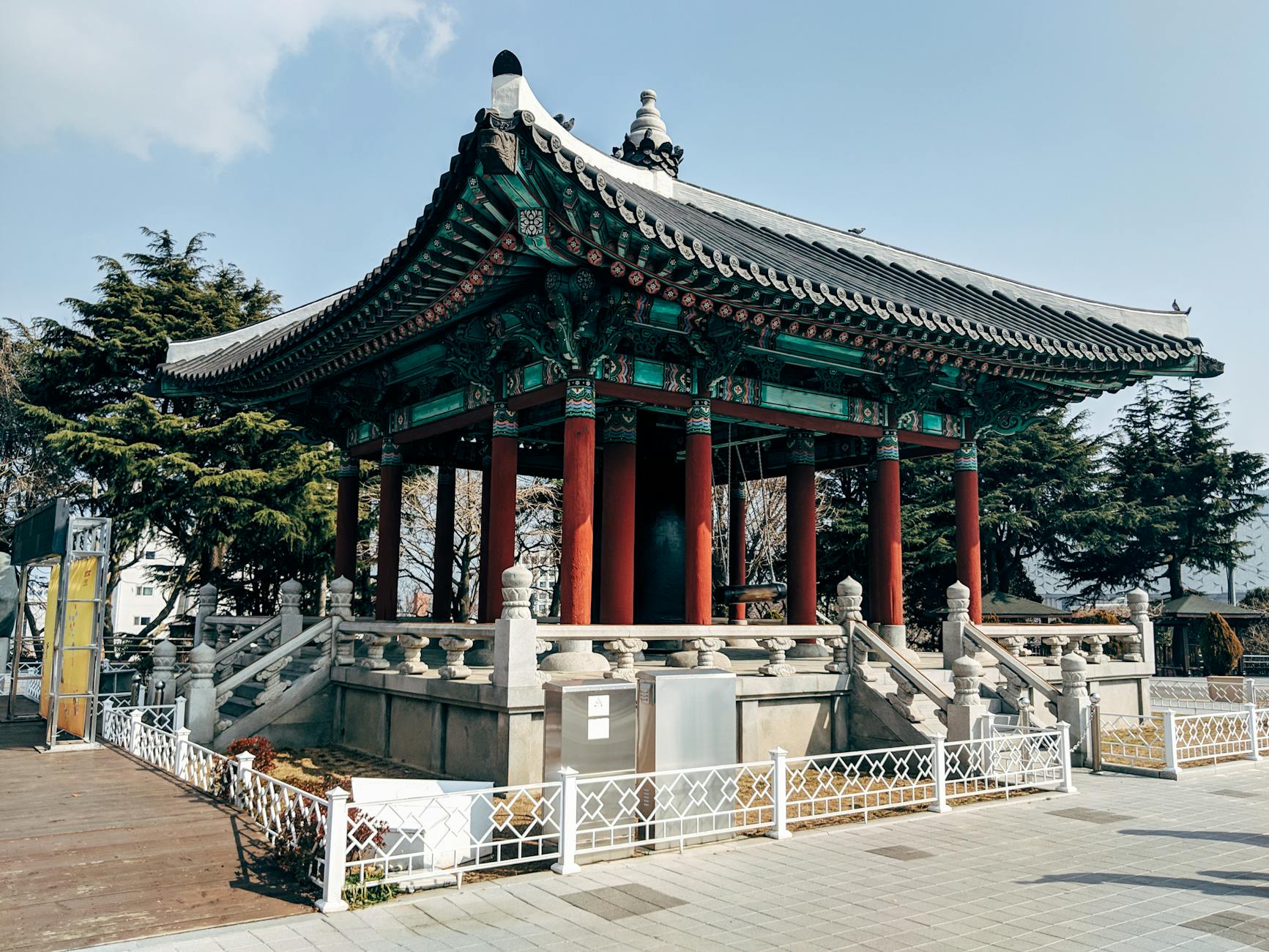
📷 Photos: Nezaket (Pexels), Markus Winkler (Pexels)