Headed for the hills that shouldn’t exist
Headed for the hills that shouldn’t exist
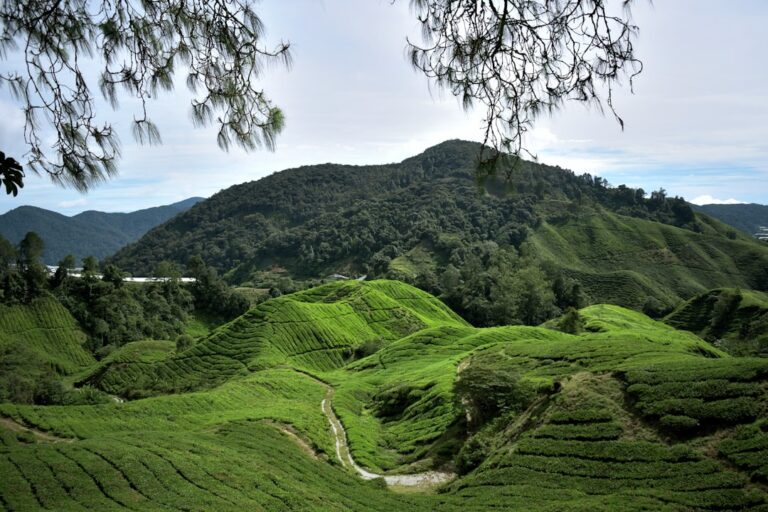
The road from Đồng Hới to Phong Nha runs flat for an hour, past rice fields and the occasional water buffalo making its point about right-of-way, before the topography begins to sound an alarm. The karsts start as a smear on the horizon — low, grey-green, unremarkable. Then, around the final bend before the town of Sơn Trạch, they stop being a suggestion and start being a problem for anyone trying to maintain a steady hand on the wheel. They rise in clusters, sharp and improbable, like the earth decided to grow bones.
The man behind the wheel — a regular visitor to central Vietnam, not a first-timer — knew the area’s reputation. Phong Nha is home to some of the oldest karst formations in Asia, and its most famous cave, Sơn Đoòng, has been photographed enough to be recognizable to people who have never set foot in the country. What he didn’t know, and what would become the defining feature of the trip, was how much the weather could change the experience — and how little the guidebooks said about what to do when it did.
The fog that arrived unannounced
He’d read the forecast before leaving Đà Nẵng. Clear skies, 28 degrees, low humidity. By the time he reached Phong Nha two days later, the fog was sitting on the valley floor like a lid someone had forgotten to take off. Visibility was maybe 100 meters. The karsts, which were supposed to be the whole point of the drive, had disappeared into a white nothing. A local café owner, a woman named Trinh who ran a small place near the market, shrugged when he asked how long it might last. “Maybe today. Maybe three days. Hard to tell here.”
This is something the glossy travel features don’t mention. Phong Nha’s geography — a narrow valley surrounded by some of the tallest karst peaks in the region — creates its own microclimate. When the wind comes from the wrong direction, or when the wet season hasn’t properly ended, the fog can settle in and stay. It’s not a morning mist that burns off by 10 a.m. It’s a dense, hanging fog that can persist through an entire day, turning the landscape into something closer to a blank canvas than a postcard.
He’d come specifically for the view from the higher trails — the ones that look down over the valley of karsts, the ones that make people say “it looks like another planet.” He’d seen the photos. Everyone had. What the photos didn’t convey was that those shots were taken on specific days, at specific times, under specific conditions. The rest of the time, it just looked like fog over a field.
The decision to go anyway
At 6 a.m. on the first full day, the situation hadn’t improved. If anything, the fog seemed thicker. The man stood on the balcony of the guesthouse — a simple place run by a family who had converted their ground floor into a few spare rooms — and watched the whiteness where the karsts should have been. He had three days. Waiting for perfect conditions would mean spending them inside.
He set out for the Paradise Cave trailhead anyway, paying 40,000 Vietnamese dong for a coffee from Trinh’s café — the equivalent of about $1.60, and the only transaction of the day that felt like good value. The drive to the trailhead took thirty minutes, and every minute of it was spent peering through fog that reduced the road to a grey tunnel. He passed exactly two other vehicles: a motorbike carrying what looked like a family of five, and a minibus with Korean license plates that had probably been in the fog for longer than he had.
The trail itself starts at the end of a concrete road that winds through secondary forest — the kind that has regrown after logging, which means it’s dense but not old. The first kilometer is a gentle climb. The second is steeper, and the steps, cut into the limestone, become uneven. By the third kilometer, at an elevation of about 400 meters, the fog was still there, and he realized he could no longer see more than thirty feet in any direction.
What the hike actually revealed
The usual view from the Paradise Cave viewpoint looks out over a valley of karst peaks that rise like spines from the forest floor. From photographs, it resembles the limestone landscapes of southern China — the ones featured in classical paintings and modern tourism campaigns alike. In the fog, that view was gone. What remained was something else entirely: the sound of the forest. With the visual distraction removed, the place became auditory. Birds — some of them species that ornithologists have identified as endemic to the Phong Nha region — called from invisible perches. Water dripped from limestone overhangs. The wind moved through the trees not as a rustle but as a low, continuous note.
It was not what he’d come for, but it was not nothing. A researcher camping near the trail for a study on forest acoustics mentioned that he’d been collecting sound recordings in the area for two years. “Most people come for the caves,” he said. “They don’t realize the fog is the best time to hear the forest. The animals are louder when they can’t see you.”
This is a strange kind of compensation: a loss that gives you something else in return. The man spent an hour sitting on a limestone boulder near the viewpoint, listening to a forest he couldn’t see. It was not a transcendent experience. It was a quiet one, and quiet in a world that markets itself as spectacular can feel like a letdown until you let the alternative sink in.
The one clear moment
On the third morning, the fog broke. Not dramatically — there was no grand reveal, no parting of the mists like in a film. It just thinned, gradually, and by 9 a.m. the karsts had re-emerged. He drove to the same trailhead, took the same path, and arrived at the viewpoint to find it occupied by a group of about fifteen tourists, most of them taking photos with their phones. The view was everything the pictures had promised: a sweep of jagged limestone stretching into the distance, green and grey and surreal.
He stood there for maybe ten minutes. Then he walked back down. The sight was exactly what he’d expected. The soundless, fog-bound morning had been something he hadn’t known to expect, and had not prepared for.
Most who’ve tried it say they’d come back — and that they’d do at least one part of it differently next time. For this traveler, the difference would be simple: when the forecast says clear, bring a rain jacket anyway. When the fog settles in, skip the viewpoint and head for the trail where the forest can’t be seen. And when a local says “maybe today, maybe three days,” believe them — and plan for the day the fog wins.
📷 Photos: Florian Delée (Unsplash), Florian Delée (Unsplash)