From Christchurch to Wellington: A South Island Alpine & West Coast Campervan Voyage: Day 6 to 10
The rain started somewhere between Arthur’s Pass and the Otira Viaduct, a wet curtain that didn’t lift for three days. I’d been warned about the West Coast weather before leaving Christchurch—everyone who’s done the drive has a story about the moment the sky turned—but knowing something intellectually and standing in it are different things entirely. The campervan’s windscreen wipers worked at full speed and still couldn’t keep up, and the road ahead was a smear of grey and green where the bush pressed close to the asphalt.
Day six of a ten-day run from Christchurch to Wellington, and I’d already learned that a South Island road trip is less a straight line than a series of decisions about what to sacrifice. The classic route—up through the Canterbury Plains, over Arthur’s Pass, down the West Coast to Greymouth and Hokitika, then across via Lewis Pass or back over through Hanmer Springs—is well documented. But the documented version tends to leave out the things that actually shaped the trip: the run-down service station where the diesel pump ate $87 worth of my credit card before deciding it didn’t actually work, the hour spent waiting for a one-lane bridge on State Highway 6 while a dozen kea perched on the signs watching like they were keeping score, the way the rain made every decision feel slightly compromised. You start to think the trip is about the landscape. It’s not.
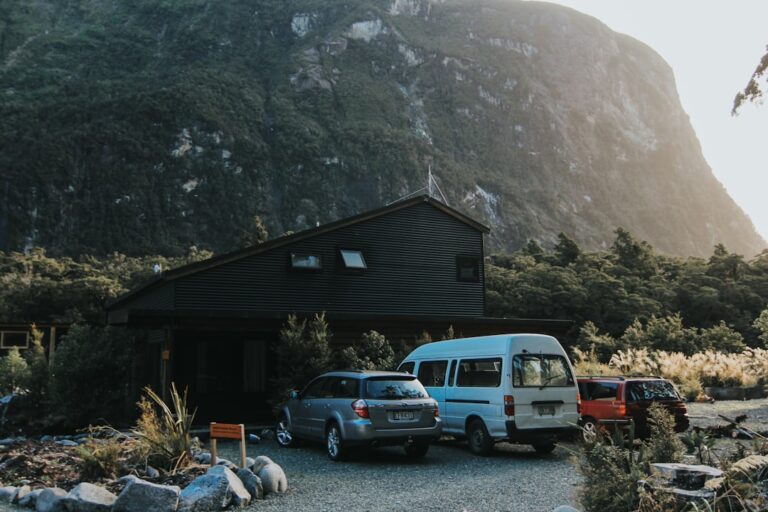
The campervan itself was a six-berth model from a Christchurch rental company whose name I’d found on a forum thread about avoiding the big operators. It smelled faintly of last season’s damp towel and had a dent in the sliding door that the handover notes blamed on “a previous customer’s navigational error.” The fridge ran on gas and could keep things cold if you remembered to switch it over before leaving the powered sites, which I forgot to do twice. A carton of milk went sour somewhere around Hokitika. I bought another one for $4.20 at a Four Square whose aisles were so narrow you had to turn sideways to pass another shopper.
The stop at Hokitika Gorge is the kind of place the tourism board photographs on its best day, when the water runs that impossible milky turquoise from glacial flour. I arrived under cloud cover so thick the colour was muted, more green than blue, and the car park held exactly two vehicles—mine and a battered Subaru whose owner was sitting in the driver’s seat eating a sandwich. The walk to the swing bridge took maybe fifteen minutes, and the bridge itself swayed more than I expected. Someone had carved their initials into the wooden handrail alongside a date from 2018. I wondered if they’d had better weather. Probably.
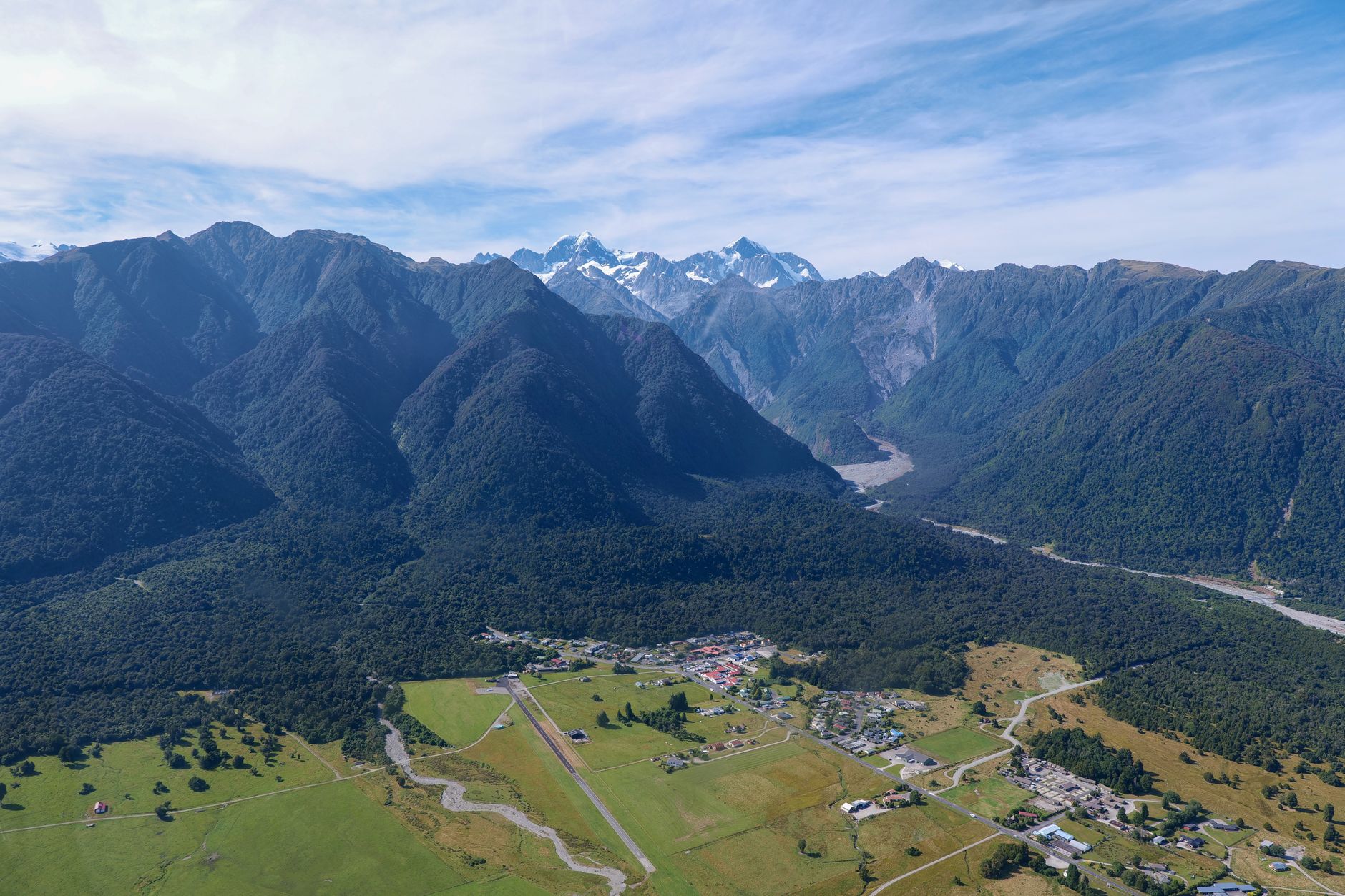
Further south, Franz Josef Glacier sits in a valley that feels smaller than the photographs suggest. The terminal face has retreated so far up the valley that you can’t see it from the car park anymore—a two-hour walk gets you close enough to feel the cold air coming off the ice, but the glacier itself remains partly hidden behind a moraine wall. A ranger at the information centre said the retreat has accelerated noticeably in the last decade, and that several of the guided heli-hike companies have had to move their landing zones multiple times. I didn’t take a helicopter. The walk was enough, and the rain had started again, and the track was a running stream by the time I got back to the van.
The idea that every moment of a road trip should be memorable is itself a kind of pressure that works against the actual experience. Some of the most vivid memories from those middle days were the least scenic: the hour spent in a laundromat in Greymouth trying to figure out why the dryer kept stopping mid-cycle, the conversation with a man at a DOC campsite near Whataroa who was on his fifth week of fishing the West Coast rivers and hadn’t caught anything worth keeping, the realisation that I’d left the van’s fresh water tank empty and had to refill it from a tap behind a public toilet in a town whose name I forgot as soon as I left it.
The DOC campsite near Lake Paringa, where I stayed on night seven, cost $15 and had a long-drop toilet and a picnic table that someone had dragged into the sun. The lake itself was flat and grey in the evening light, and a pair of black swans drifted past so slowly they barely seemed to move. I cooked pasta on the van’s two-burner stove, standing under the awning because the drizzle hadn’t stopped, and watched the light fade over the water. A German couple in the site next to mine were debating whether to push on to Fox Glacier the next morning or spend another night. I heard one of them say the weather was supposed to clear by midday. It didn’t. Classic West Coast.
By morning eight, I was heading north again, back through the same rain that had followed me down the coast. The road from Whataroa to the Otira Viaduct is one of those stretches that demands full attention—narrow, winding, with sections where the cliff face drips water onto the road and the camber drops away toward a valley you can’t quite see. A truck carrying logs came around a blind corner faster than seemed reasonable, and I pulled over at the first passing bay I could find, letting my hands rest on the steering wheel until my heartbeat settled. The driver didn’t acknowledge me. He was probably just trying to make Greymouth before the weigh station closed.
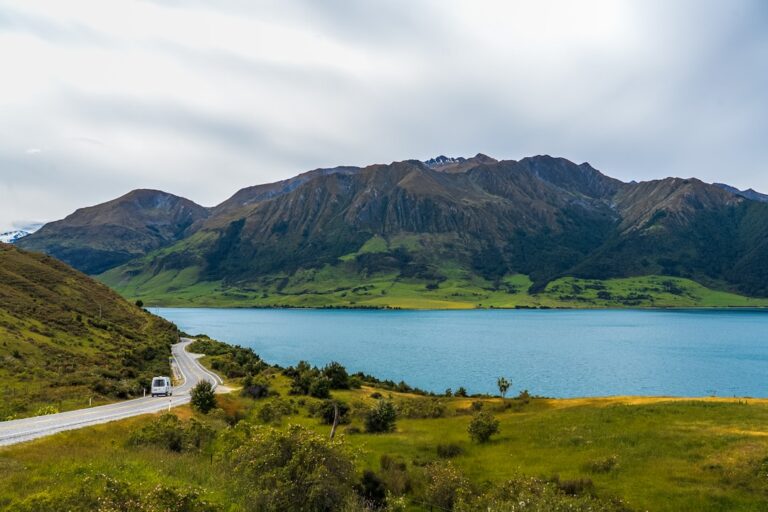
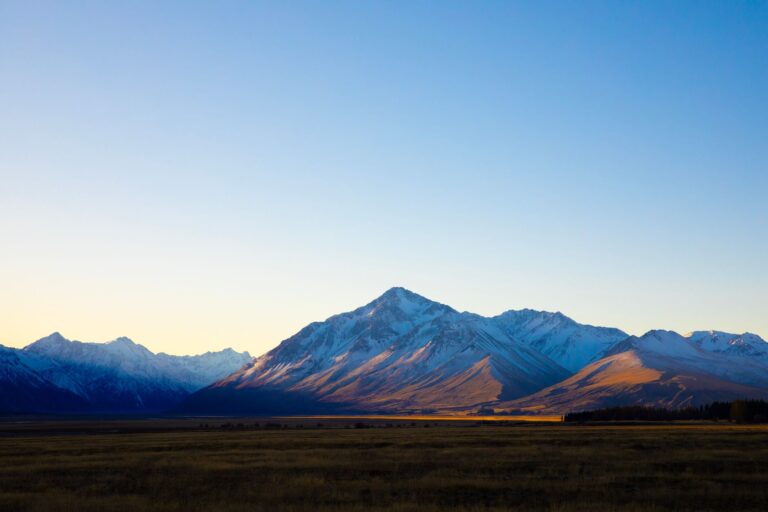
The turnoff to Lewis Pass appeared on the map as a dotted line with no guarantee of surface quality. I’d read conflicting advice about whether a campervan could manage it—some forum posts said yes without hesitation, others described single-lane sections and loose gravel that had them wishing they’d gone the other way. The road itself was fine, a sealed surface that narrowed in places but never felt dangerous. What I remember most isn’t the driving but the silence at the top of the pass, where I stopped the van and got out and stood in the cold air for a minute without hearing anything except wind moving through the beech forest. No traffic. No birdsong. Just the noise of air over open ground.
Hanmer Springs sits on the other side of the pass like a reward for making it through the rain. The thermal pools are the main draw, and they were busy even on a weekday afternoon—a queue at the ticket counter, families spread across the outdoor pools, the sulphur smell hanging in the warm air. I paid $27 for entry and spent an hour in the hottest pool, letting the water work on muscles I hadn’t realised were tight from days of driving. A woman next to me told her companion she’d been coming to Hanmer for twenty years and that the pools had been rebuilt twice in that time, each time more expensive and more crowded. She didn’t seem unhappy about it. More resigned, I guess.
The stretch from Hanmer to Kaikōura is one of the most photographed sections of the entire South Island route, and for good reason—the road hugs the coast for long stretches, with the Seaward Kaikōura Range rising on one side and the Pacific on the other. I’d planned to stop in Kaikōura for the night, but the whale-watching tours were all fully booked, and the campsite near the waterfront had a sign advertising powered sites at $48 per night. I drove through without stopping, past the seal colony at Ohau Point and the lookout where a dozen cars were pulled over taking the same photo of the same view that appears in every guidebook published since 1995.
Near Clarence, the road turns inland and the landscape shifts again—from coastal scrub to the dry, open country of the Marlborough region, where the vineyards start appearing as regular markers. I stopped at a roadside stall selling apples from a bin with a handwritten sign asking for honesty-box payments. Three apples cost me $2, and they were the best-tasting thing I’d eaten all week, cold and crisp and tasting faintly of the dust that had settled on them from the road.
Picton arrived at dusk, the ferry terminal lit up against the harbour, the Interislander boats sitting at the docks like they’d been there for decades and planned to stay for decades more. I’d booked the morning crossing to Wellington two days earlier, paying $119 for the van and myself, and the woman at the check-in counter asked if I’d read the terms about vehicle height restrictions. I hadn’t. The van was fine—two-point-two metres, well under the limit—but there was a moment of uncertainty that reminded me how much of this trip had been spent not quite knowing what came next.
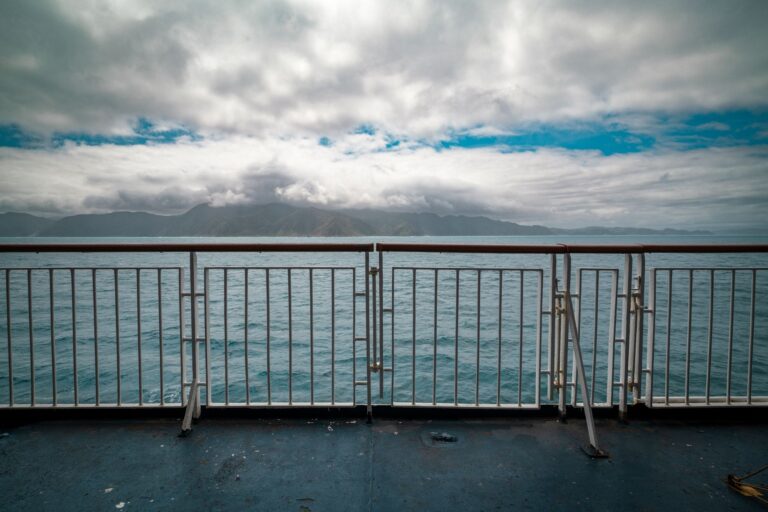
The ferry crossing itself was calm, the Cook Strait living up to its reputation for unpredictability by being perfectly flat. I stood on the deck as the South Island receded, watching the sounds and bays fold into each other until Picton was just a cluster of lights at the edge of the water. A man next to me was photographing the wake with a camera that looked expensive and well-used. He said he’d done the crossing sixty or seventy times, maybe more, and had never gotten tired of it — or something like that. I believed him.
Wellington came into view as a city built on hills, the houses climbing the slopes like they’d been dropped there by accident and had decided to stay. The ferry docked on schedule, and I drove off into a city that felt both familiar and completely new—the streets narrower than Christchurch’s, the wind stronger, the harbour pressing in from every direction. I stopped at a petrol station on the way to the campervan depot to fill up for the last time. The total came to $87.50, almost exactly what the faulty pump in Christchurch had charged me and then refunded six days earlier. I thought about keeping a log of these coincidences, then decided not to. You’d run out of notebook pages eventually.
I returned the van with an hour to spare before the depot closed. The check-in took ten minutes, and the woman behind the counter barely looked up when she told me the cleaning fee had been included in the booking. I walked away from the lot with my bag over one shoulder and no plan for where to go next. The city was there, waiting. I found a coffee shop three blocks away and sat down to figure out what came after a trip like this one—a question I’m still not sure I’ve answered.

📷 Photos: Mark Direen (Pexels), Baptiste Valthier (Pexels)