Alps to Adventure: A South Island Campervan Arc: Day 1
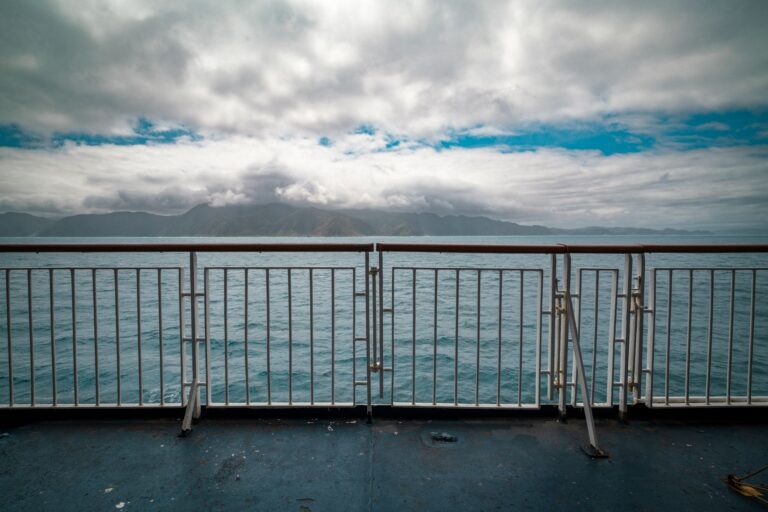
The ferry from Wellington dropped us in Picton just after lunch, and the first thing we noticed was how wrong everyone had been about the weather. Not the forecasters—they’d been accurate enough, calling for a mix of sun and cloud. It was the people at home, the ones who’d spent six months telling us the South Island in November was a gamble, that we’d need thermals even in the back of a campervan, that we should brace for sideways rain. The sky was the colour of a shallow sea, warm for spring, and the air had that particular stillness that settles after a front has passed through and exhausted itself.
The campervan was waiting at a depot ten minutes from the terminal. A six-berth Britz model, white with a green stripe, the kind that looks identical to a hundred others until you climb inside and find someone else’s dried tea bag in the sink. We’d booked it three months out, during a late-night session fuelled by cheap wine and the kind of confidence that only arrives when a trip is still theoretical. The rental agent, a woman named Aiko with a ponytail and a patient way of explaining things, walked us through the gas system twice. “The first group who took this van out last week,” she said, “they cooked for five days before realising they hadn’t turned the bottle on.”
We didn’t make that mistake. We made different ones, better ones, the kind that don’t show up on any checklist.
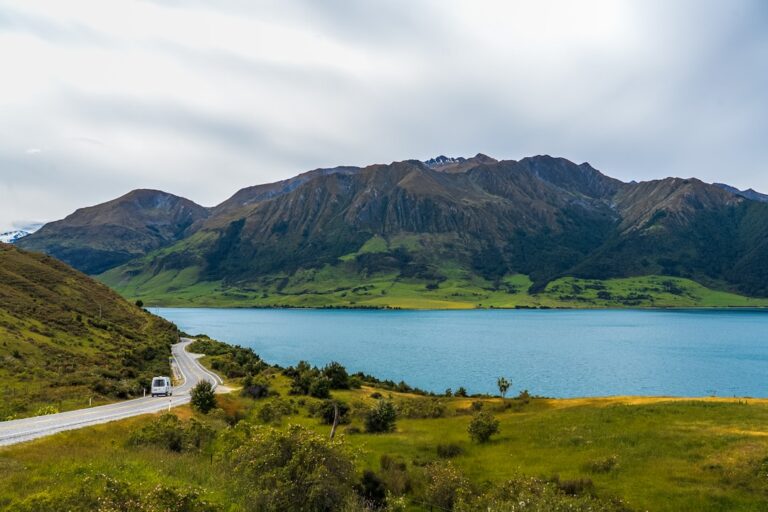
Queen Charlotte Drive runs along the ridgeline above Picton, and everyone tells you to take it because it’s scenic. What nobody tells you is how narrow it is—two cars meet at a blind corner and someone has to reverse, and that someone is usually you if you’re driving a vehicle the size of a small house. The road surfaces were a patchwork of fresh seal and the original tarmac from what looked like the 1980s, and the campervan groaned every time we climbed a gradient steeper than a gentle hill. But the views, when they appeared through the gaps in the coastal bush, made you forget you were gripping the steering wheel at all. Cloudy Bay below us, the water a deep slate grey under the shifting light, and across the sound, the fingers of forest that reach down to the waterline like something from a century-old engraving.
We stopped at a pull-off near Cullen Point. There was a DOC sign marking a short walk to a lookout, and we took it, partly to stretch our legs, partly to see if the view was worth the sudden urge to abandon the van and hike the rest of the trip. The path was muddy in patches, the kind of mud that grabs your boot and doesn’t want to let go, and we passed a family coming the other way whose youngest child was crying about something we never learned. The lookout itself was worth the slog: a wooden platform perched above the sound, with nothing but water and hills in every direction, and a wind that had travelled across the entire Tasman Sea before reaching us. We sat there for maybe twenty minutes, not talking, just watching the light change across the water as clouds passed overhead. Nobody else came. It was a Tuesday afternoon in late spring, and the spot felt like a secret.
Back on the road, the first real lesson of the trip arrived somewhere between Havelock and Pelorus Bridge. We’d planned to stop at the Pelorus River for a swim, having read somewhere that the water was clear enough to see the bottom at three metres. What we hadn’t accounted for was the temperature. The river, fed by snowmelt from the Richmond Range, was cold in a way that felt personal, as if the water itself was offended by our presence. We lasted maybe thirty seconds, long enough to gasp, to laugh, to remember that we were in our late thirties and not the teenagers we kept imagining ourselves as. We ate lunch at the picnic tables by the bridge—sandwiches made from supplies bought at a New World in Picton, the bread already going stale—and watched a group of kayakers launch upstream with the kind of casual competence that suggested they did this every week. One of them, a woman with grey hair and a drysuit that looked older than our campervan, caught us staring and gave a small wave. We waved back. Nobody said anything.
The Department of Conservation campsite at Pelorus Bridge was full by the time we’d finished lunch, which surprised us. We’d assumed mid-week in November would be quiet, but the carpark was dense with rental vans like ours, and the grassy area near the river had a dozen tents clustered close together, their occupants scattered about on camp chairs and picnic blankets. We hadn’t booked ahead—the Freedom Camping app suggested there would be spots available on the day—and now we were faced with a choice: drive another hour to the next DOC site at Kaiuma Bay, or take a chance on one of the informal roadside spots we’d noticed on the way in. We chose the roadside option, a gravel pull-off above a creek with no facilities but a flat enough surface for the van and a view of the stars that would be unobstructed by trees. It was the first time we’d camped without a designated site, and the feeling of illegitimacy—the sense that we might be doing something wrong—took a while to settle. Nobody came to tell us to move. The only sounds were the creek and the occasional car on the road above, and by the time the stars came out, the sky was the darkest we’d seen since leaving the city.
We cooked dinner on the portable stove—pasta with a jar of sauce that had seemed like a sensible purchase at the supermarket but turned out to be bland in a way that made us miss the flavour of anything—and ate sitting on the van’s fold-out step, watching the last of the light drain from the valley. A possum appeared at the edge of the bush, watching us with the nervous stillness of an animal that has learned to be cautious. It stayed for a minute, then vanished back into the undergrowth. We washed the dishes in a bucket, using water we’d filled at a tap in Picton, and the process of scraping food residue into a rubbish bag felt unexpectedly satisfying, as if we were proving something to ourselves about our capacity to live this way.
The night was colder than we’d expected. The van’s heater, a small gas-powered unit mounted near the rear door, struggled to keep the cabin above fifteen degrees, and we ended up sleeping in layers—thermal tops, fleeces, socks—burrowed into sleeping bags that were rated for conditions we clearly weren’t experiencing. At some point after midnight, we woke to the sound of rain on the roof, a steady drumming that lasted for hours, and the realisation that we hadn’t properly sealed one of the side windows. A small pool of water had formed on the bench seat nearest the door, and we spent twenty minutes mopping it up with a towel that would never fully dry for the rest of the trip. We lay awake after that, listening to the rain, feeling the van shift slightly in the wind, thinking about all the things we hadn’t anticipated. The guidebooks tell you about the scenery, the hikes, the places to eat. They don’t tell you about the middle-of-the-night moments when a small mistake becomes a long re-calibration.
Morning came grey and damp, the valley draped in low cloud that made the world feel smaller than it had the day before. We made coffee on the stove—instant, because we’d been too optimistic about our willingness to grind beans in a moving vehicle—and sat with mugs cupped in both hands, watching the mist move through the trees across the creek. A pair of fantails appeared in the bush beside the van, flitting from branch to branch with the restless energy that gives them their name, and we watched them until our coffee was gone and the cold started to seep through our clothes. The rain had stopped, but everything was wet, and the process of packing up the van took longer than it should have—drying the bench seat, checking the seal on the window, disentangling the sleeping bags from each other in the confined space. Aiko had warned us that the first morning would be the hardest, and she was right. But by the time we pulled back onto the road, the cloud was beginning to break, and the light that filtered through was the pale gold of early spring, soft and forgiving.
The road to Nelson wound through the Rai Valley, past farms and patches of native bush, and we stopped at a roadside stall selling apples and feijoas, the kind of place that operates on the honour system with a cash box and a handwritten price list. We bought a bag of apples for three dollars, and they were the best apples we’d ever eaten—crisp, sweet, still warm from the sun that had started to break through. We ate them driving, the juice running down our chins, and the moment felt like a small victory: we had survived the first night, we had learned about the window seal, we had made instant coffee in a damp campervan and still wanted to keep going. The road ahead was full of things we’d planned for and things we hadn’t. The apples left a faint film of sweetness on our fingers that we didn’t bother to wipe off.

📷 Photos: Matthew Stephenson (Unsplash), JinHui CHEN (Unsplash)