Christchurch to Aoraki/Mount Cook: Mackenzie Basin & Southern Alps Campervan: Day 3
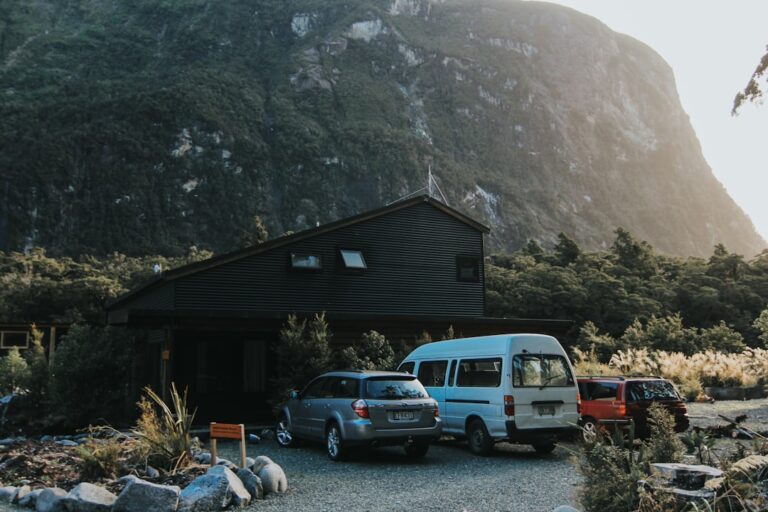
The campervan didn’t want to wake up. Three turns of the key, and nothing but a flat, reluctant click from somewhere deep in the engine bay. It was six-thirty in the morning, still dark over the Christchurch Holiday Park, and the only other sound was a distant train shunting somewhere near the industrial edge of town. We sat there in the cab for a long moment, watching our breath fog the windscreen, before anyone said the obvious thing out loud.
The battery was dead. Not a slow drain from leaving the lights on — something else, something that had been building overnight in the cold. The woman at the reception desk when we called said it happened sometimes with the older fleet vehicles, especially after a frost. She sounded almost apologetic, the way people do when they’re delivering news they’ve delivered a dozen times before. A jump start would fix it, she said, but the park’s own kit was out with another guest. We’d have to wait for the roadside service.
Ninety minutes. That was how long it took for a man named Felix to arrive in a flatbed truck, carrying a portable battery pack the size of a suitcase. He was maybe sixty, with the kind of unhurried patience that comes from spending decades fixing things that other people had given up on. “These vans,” he said, clipping the leads on, “they don’t like the cold. And the cold’s been getting worse this spring.” He didn’t say it as a complaint. It was just a fact, delivered the way a farmer might talk about a late frost.
By the time we were rolling, the sun had cleared the Port Hills and the day had shifted from grey to gold. The delay cost us an hour and a half. But it also meant we hit the highway out of Christchurch at exactly the wrong time — right as the morning commuter traffic was tapering off, which somehow made the road feel emptier and longer than it would have at dawn. We passed through the outskirts, past the last of the suburban dairies and the overpasses tagged with graffiti, and then the city just fell away.
The drive southwest is deceptive. Flat at first, past the Waimakariri River, where the braided channels catch the light like veins of silver on a grey bed. Then the land begins to lift, almost imperceptibly, and the paddocks get wider and the trees get sparser. By the time we reached Rakaia, the sky had that high, thin quality that New Zealand’s eastern plains do in spring — bright enough to squint through sunglasses, but with a cold wind that found every gap in the van’s seals.
We stopped at a petrol station in Geraldine, partly to refuel the van and partly because we needed to eat something that wasn’t muesli bars. The station had a café attached, the kind that sells homemade pies and slices under a heat lamp, and the woman behind the counter recommended the venison pie. She was right. It was the sort of thing you eat fast, standing up, because the pastry keeps flaking onto your jacket and the filling is so hot it burns your tongue, but you keep eating anyway because it’s exactly what a cold morning needs.
Geraldine itself is the kind of town that most people drive through on their way to somewhere else. It has a main street, a few antique shops, a cheese shop that was already busy at ten in the morning.
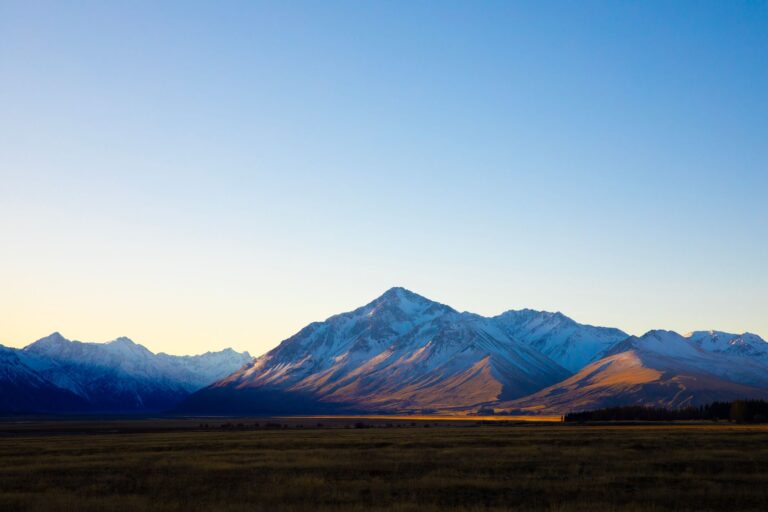
It happened just past Fairlie. The land changed character so suddenly that we both noticed it at the same time. The paddocks gave way to tussock, the sheep got fewer, and the sky began to press down on the horizon in a way that felt deliberate. This was the Mackenzie Basin, and it didn’t announce itself — it just replaced whatever was there before, quietly, like a door that closes behind you without a sound.
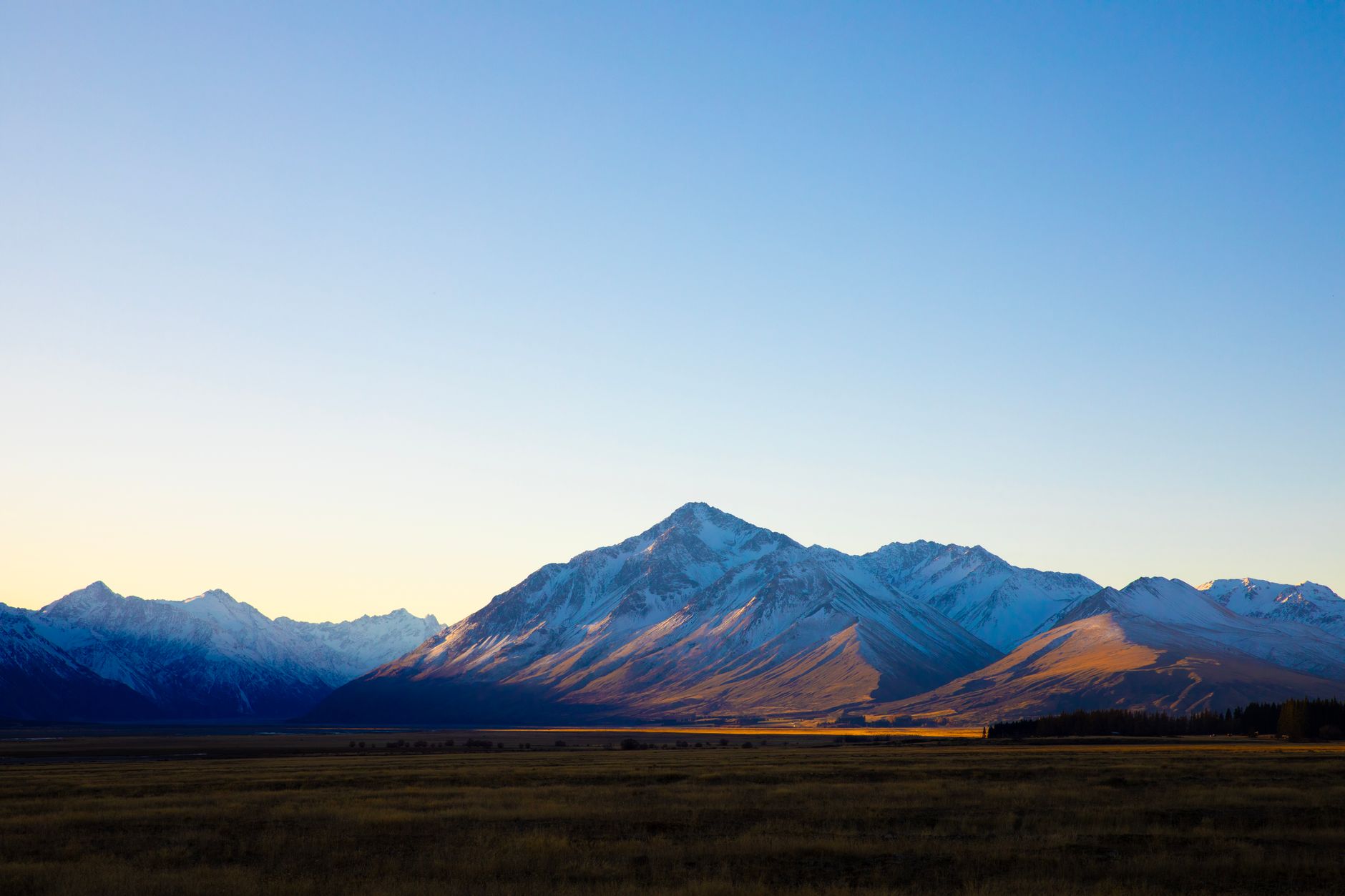
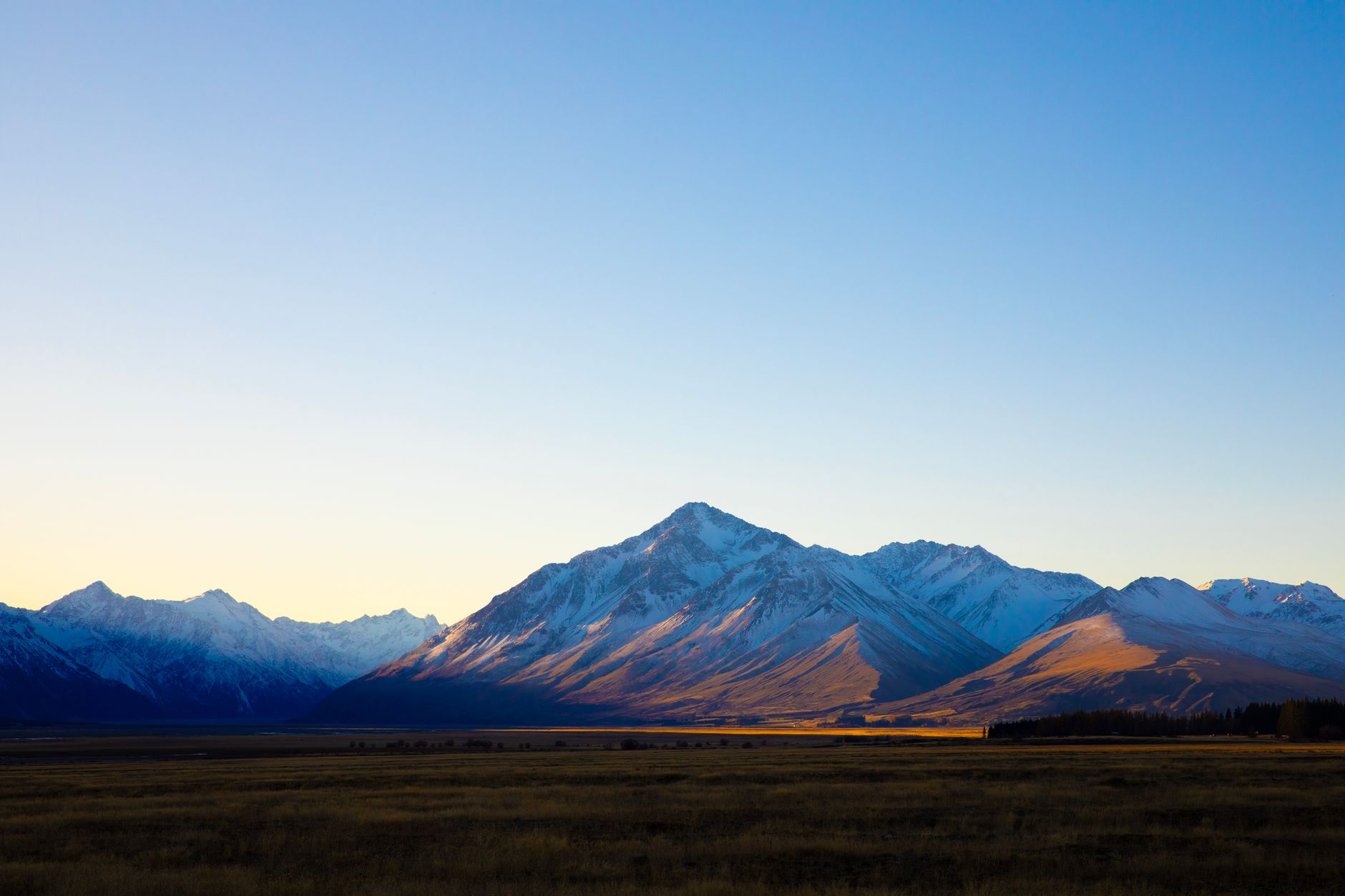
The road into the basin is State Highway 8, and it’s one of those New Zealand highways that feels like it was laid down by someone who had never seen a straight line and didn’t want to start now. It rises and falls over gradual hills, each crest revealing the same view again — brown and gold tussock stretching to the base of mountains that are still too far away to have any detail. The light here is different. It’s not the soft, green light of the West Coast, or the harsh glare of the Canterbury plains. It’s a dry, clear light that seems to strip the colour out of everything except the sky, which remains a shade of blue that feels almost synthetic.
We pulled over at a lookout point near the Burkes Pass turnoff. There was nobody else there. A single picnic table, a sign explaining the history of the Mackenzie sheep station, and the wind — constant, low, and humming across the tussock in a way that made the silence feel louder. The guidebooks don’t mention the wind. They mention the views, the lakes, the mountain, but they don’t mention that the wind in the basin is always there, always moving, always carrying the sound of grass rubbing against grass and nothing else.
Lake Tekapo appeared as a shock of colour — that milky turquoise that photographs always seem to exaggerate, but that in person is even more vivid. It’s caused by glacial flour, suspended rock particles that scatter light in a particular way, and knowing the science doesn’t make it any less surreal. The town itself is small, built mostly for the tourist traffic, with a handful of cafes, a supermarket, and the famous Church of the Good Shepherd sitting right at the water’s edge.
The church was surrounded by people. Not a crowd, exactly, but a steady stream of visitors walking up to photograph it, then walking back to their cars. We didn’t join them. Instead, we walked down to the lake shore, where the water was so still it looked like it had been painted onto the earth. The stones at the edge were the colour of bone, polished smooth by years of water and wind, and the cold coming off the lake was sharp enough to sting the face.
It was at this point that we made the mistake. We’d planned to push on to Mount Cook Village that afternoon, but we’d read somewhere that the road from Tekapo to Twizel was an easy two-hour drive, and that the stretch past Lake Pukaki was the best part of the trip. What we hadn’t accounted for was the roadworks. A section of highway near the Pukaki viewpoint had been reduced to one lane, with a traffic controller waving cars through in batches. The wait was twenty minutes, then thirty, then forty. By the time we reached Twizel, it was past three o’clock and the light was already starting to shift.
We stopped at a supermarket in Twizel to buy supplies — bread, cheese, a bottle of wine that we had no business buying because we weren’t sure we’d have time to drink it. The woman at the checkout asked where we were heading. When we said Mount Cook, she nodded and said, “You’ll want to get there before four. The last shuttle goes up to the village at four-thirty.” We hadn’t known about a shuttle. We’d assumed we could drive all the way to the car park at the White Horse Hill campground. But the road past the village, she explained, was closed for maintenance. The shuttle was the only way to get to the start of the Hooker Valley Track.
We made it to the village at ten past four. The shuttle was a small bus driven by a man named Yusuf, who had moved to New Zealand from Pakistan eight years ago and now spent his summers ferrying tourists up and down the same six-kilometre stretch of road. “It’s the same road every day,” he said, as the bus bumped over a gravel section, “but the mountain is different every time.” He didn’t elaborate.
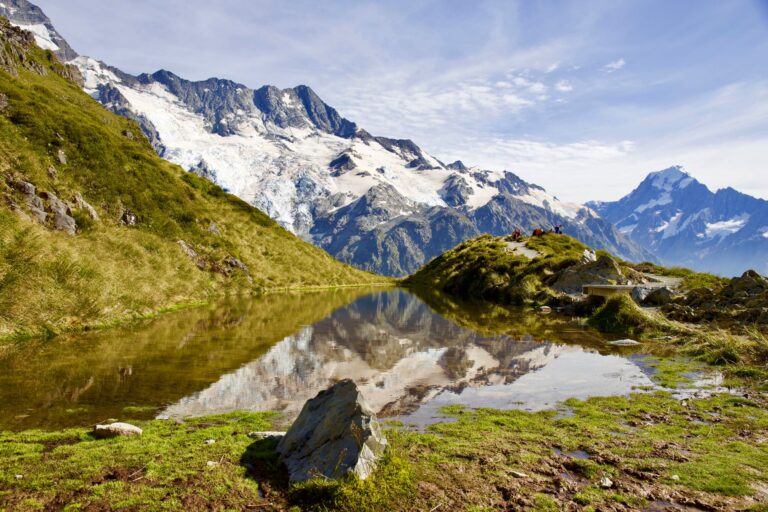
The Hooker Valley Track is the most popular walk in Aoraki/Mount Cook National Park, and for good reason. It’s flat, well-maintained, and ends at a glacier lake with a view of the mountain that is, by any standard, spectacular. But the best part isn’t the end. It’s the middle, where the track crosses three suspension bridges over the Hooker River. The river is the colour of milky tea, churning with glacial silt, and the bridges sway with every step. The sound of the water below is a constant, low roar that drowns out everything else, including your own thoughts.
We reached the lake at five-thirty. The light was golden, the mountain was out — no clouds, no haze, just the massive bulk of Aoraki rising straight up from the valley floor. The lake itself was a dull grey-green, studded with icebergs that had calved from the glacier at its head. They floated there, silent and still, their edges sharp in the fading light. A woman in her sixties stood at the shore, sketching the scene in a small notebook. She told us she’d been coming here for thirty years, every summer, and that the glacier had retreated so far in that time that the lake had doubled in size. “The mountain doesn’t change,” she said, not looking up from her sketch. “But everything around it does.”
We sat on a rock and ate the sandwiches we’d bought in Twizel while the light drained out of the sky. The cold crept in quickly, rising from the lake, and by the time we started walking back, our fingers were numb and the stars were beginning to appear. The walk back was faster, quieter, the path lit by a headlamp and the thin light of a crescent moon. The suspension bridges creaked under our weight, and the river below was invisible now, just a sound in the dark.
The shuttle was waiting at the trailhead, engine running. Yusuf was reading a book under the interior light. He put it down when he saw us, nodded, and said nothing. The drive back was silent, the headlights cutting through the dark, the mountain behind us a huge, dark shape that we couldn’t see anymore but could feel, somehow, pressing against the sky.
We spent the night at the Glentanner Park Centre, a campground about twenty minutes south of the village. It was basic — gravel pitches, shared bathrooms, a kitchen with a single stove burner that worked intermittently. But the sky was clear, and the stars were so dense that they looked like a layer of dust across the darkness. The Southern Cross was visible, low on the horizon, and somewhere in the distance a morepork called — a sound that carries in the quiet of the basin like a bell.
The night was cold. The van’s heater struggled against the drop in temperature, and we ended up sleeping in two layers of clothing, curled under a duvet that was never quite thick enough. At some point in the early hours, the wind picked up, rattling the van’s windows and shaking the awning that we’d forgotten to stow. Neither of us got much sleep. But when we woke, the sky was clear and the mountain was there, unchanged, waiting for whatever came next.
📷 Photos: Ray Bran (Pexels), Ray Bran (Pexels)