The water off Oslob, on the southeast coast of Cebu, doesn’t look like much before dawn. A flat gray sheet, a few outrigger bancas already bobbing at anchor, and the smell of diesel mixing with something briny and faintly sweet — the shrimp paste that locals crush and toss overboard by the bucketful. By 6 a.m., the first pump boats are already idling, a dozen tourists in life vests being briefed on the rules: no touching, no flash photography, stay at least four meters from the animal. The briefing takes maybe ninety seconds. Nobody asks whether the rules are actually followed.
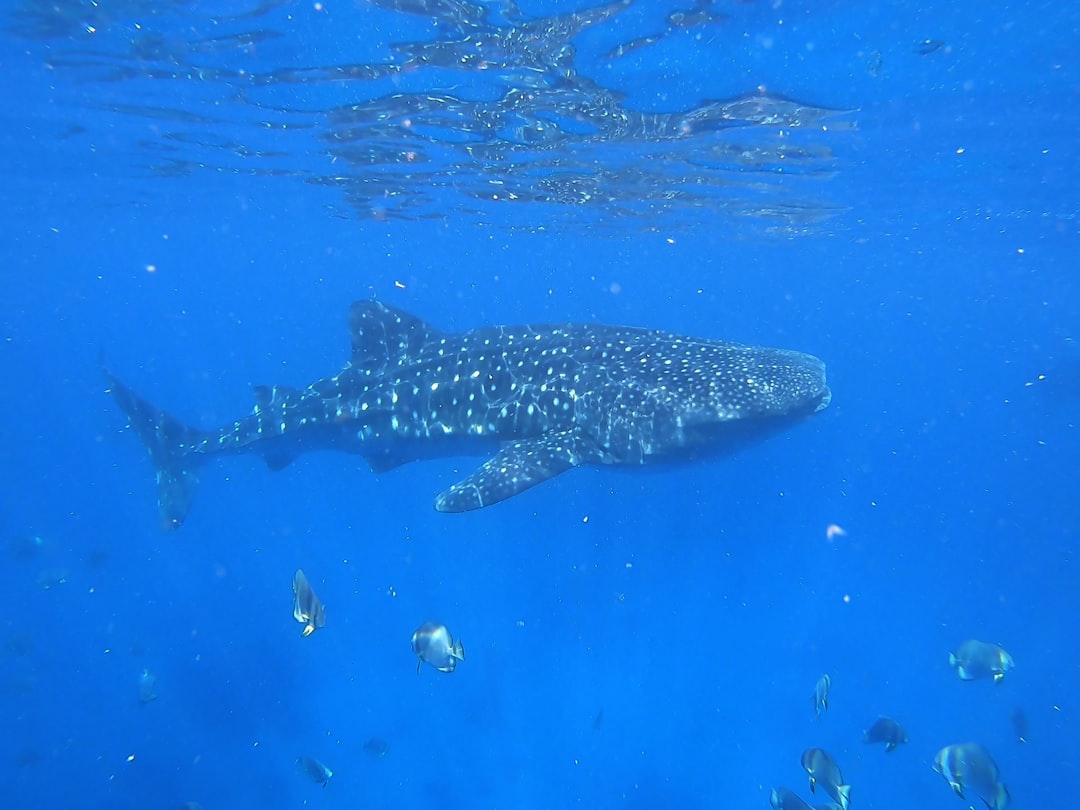
What happens next is both exactly what the brochures promise and nothing like it. A spotter on a banca calls out — the Tagalog word echoes across the water — and suddenly the surface breaks maybe twenty meters off the port side. A dorsal fin. Then another. Then the shape itself, a dark mottled pattern resolving into something the size of a small bus, moving with a slow, deliberate dignity that makes the tourists in the water look frantic. The whale shark doesn’t seem to mind the commotion. It opens its mouth — a gap wide enough to swallow a person whole, though the throat is only the size of a grapefruit — and takes in the cloud of krill and shrimp paste that hangs suspended in the current. Someone on the boat lets out a high-pitched laugh that isn’t quite joy. More like relief that the thing is real.
The ethical questions arrive before the second pass. The whale shark makes a slow arc and comes back toward the same spot, where another handful of shrimp paste has just been tossed. It’s learned exactly where the food comes from and what time it arrives. This is the crux of the Oslob experience: the animals aren’t wild in any meaningful sense. They’re habituated, conditioned, drawn in by a feeding practice that started around 2011 when a local fisherman discovered that tossing shrimp waste overboard attracted the sharks, and that tourists would pay good money to see them. By 2014, the practice had become a full-time operation, regulated by the local government but funded almost entirely by the visitors who pour into this stretch of coast every day.
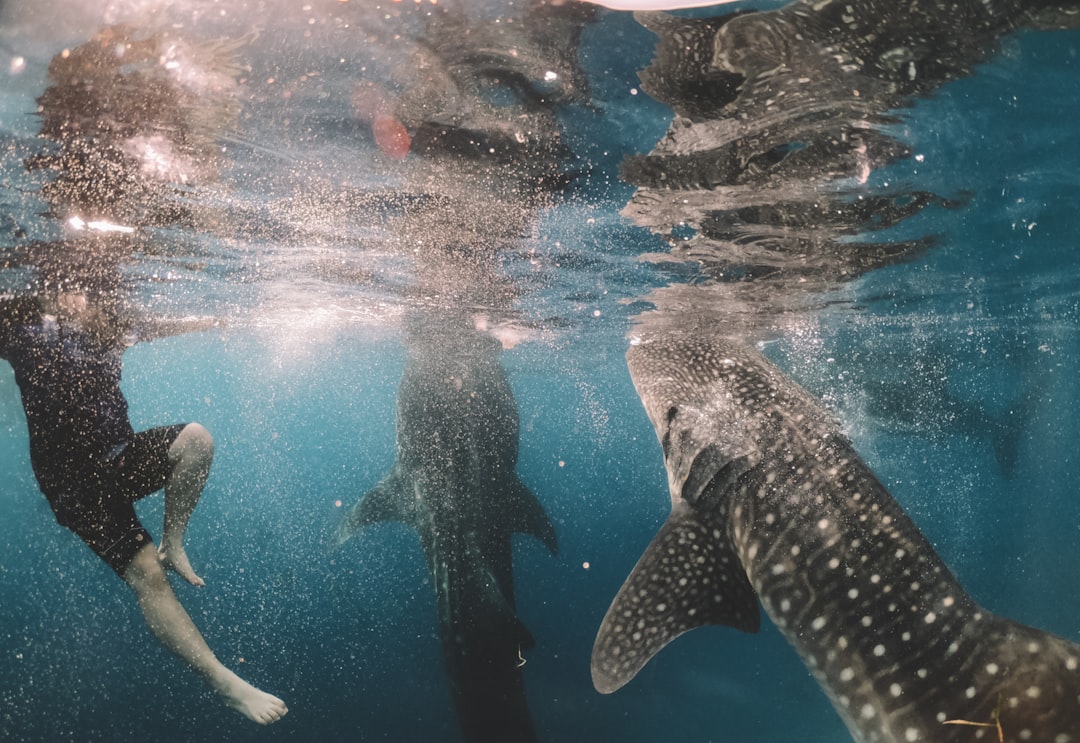
The numbers are hard to ignore. On a good day, a single whale shark might be surrounded by forty or fifty swimmers at once, all thrashing and kicking and trying to get close enough for a photo. The rule about staying four meters away is essentially unenforceable in murky water where depth perception vanishes. A visitor from Manila named Carlo, who came with two friends and a GoPro, described the experience bluntly: “You’re not swimming with them. You’re waiting in line for them to swim past you, or something like that.” He meant it as a complaint, but it’s also an accurate description of the logistics. The boats anchor in a rough semicircle, and the sharks move through the center like actors on a stage, repeating the same loop until the feeding stops.
What the promotional material doesn’t show is the aftermath. By 10 a.m., when the last of the morning tours have cycled through, the water is visibly cloudier. The shrimp paste — fermented krill, salt, and fish offal — gives the bay a milky tint that takes hours to clear. The sharks drift away, their hunger sated, their route through the feeding grounds imprinted daily. On the beach, a few leftover locals chat about the morning’s haul: 1,200 pesos per foreign visitor, 500 for Filipinos, plus a separate fee for the boat and the mandatory life vest rental. A small plastic bottle of water costs 25 pesos from the vendor near the registration counter. A single feeding session uses roughly ten kilograms of shrimp paste, bought from a supplier in the next town.
The defenders of the practice point to the alternative. Before the whale shark tourism started, Oslob was a quiet fishing village where income was seasonal and families often struggled during the lean months. The feeding operation employs around 150 people directly — boat operators, spotters, registration staff, cleaners — and supports a ring of ancillary businesses: guesthouses, eateries, scooter rentals, souvenir stalls. A tricycle driver named Benjie, who ferries tourists from the town proper to the whale shark site, said he earns more in a single morning now than he used to make in a week fishing. “Before, we catch fish, sell fish, maybe enough for rice. Now, the tourists come, we have money for school, for medicine.” He didn’t seem troubled by the ethical questions. The sharks are still alive. The tourists are happy. The village has electricity that stays on.
But the local government’s own data tells a more complicated story. The number of whale sharks visiting Oslob has remained relatively stable year over year, but the time individual sharks spend in the bay has increased significantly — a sign that they are lingering longer because the food source is reliable, rather than passing through on a natural migration. Researchers from the University of the Philippines and the Large Marine Vertebrates Research Institute have documented changes in the sharks’ behavior: they are less skittish around boats, more likely to approach swimmers without provocation, and more concentrated in the feeding zone than in the surrounding waters. A study from a few years back found that the average body condition of Oslob’s whale sharks had declined slightly compared to non-fed populations, suggesting that the artificial diet, while calorie-dense, may lack the nutritional variety of natural foraging.
The tourists themselves are rarely unaware of the trade-offs. On the boat ride back to shore, a French couple who had booked the earliest slot of the day debated whether they would recommend it. The woman said the experience was “incredible, honestly incredible” but added that she felt “a little guilty” afterward. Her partner shrugged. “Every tourism is a compromise. You go to a zoo, you know the animal isn’t free. This is better than a zoo.” It’s a common rationalization, and not entirely wrong — whale sharks in aquariums exist in only a handful of facilities worldwide, and they rarely survive more than a few years in captivity. The Oslob sharks, by contrast, can still leave. They choose not to, because the food is easy and the water is warm. You can’t really blame them.
A more uncomfortable question is what happens when the feeding stops. The local government has periodically discussed phasing out the practice, citing pressure from international conservation groups, but the economic dependence is too deep now. The guesthouses that line the road to the whale shark site are full most nights. The parking lot charges 50 pesos per scooter, 200 for a car. A small restaurant near the registration area does a brisk business in fried rice and fresh mango shakes for 70 pesos each. The entire local economy has reconfigured itself around this single attraction, and to remove it without a replacement would be devastating.
What surprises most first-time visitors is how much the experience depends on the particular circumstances of the day. A cloudy morning, with low light filtering through the haze, can make the water look ominous and the sharks appear suddenly, almost threateningly. A bright, clear morning turns the bay into a postcard — turquoise water, golden sun, the dark shapes gliding beneath like something out of a nature documentary. The difference between the two is just weather, but it changes the emotional register of the encounter. One group leaves exhilarated. Another leaves unsettled. Neither is wrong.
The most honest description of Oslob came not from a researcher or a guide but from a retired schoolteacher from Germany who had traveled to the Philippines specifically to see the whale sharks. She sat on the beach after her swim, wrapped in a towel, watching the boats return. “I knew before I came,” she said, “that it wasn’t really wild. But I wanted to see one anyway. I wanted to know what it felt like to be in the water with something that large.” When asked if it felt the way she expected, she paused. “It felt like I was watching something that was watching me back. But I don’t know if it was watching me, or just waiting for the next handful of food.”
That ambiguity is the core of the Oslob experience — not a clear answer, but a persistent, unresolved tension. The whale sharks are magnificent, and seeing them up close is genuinely thrilling. The water churns, the dorsal fins slice the surface, and for a few seconds the sheer scale of the animal is overwhelming. Then the shrimp paste hits the water, the shark turns, the moment passes, and the questions come back. The ethical dilemma is not whether to go — plenty of people go and come away satisfied with their decision — but whether the experience itself is worth the compromises it requires. The answer, for anyone who goes, is something they have to settle on their own, in the gray light of an Oslob morning, with the taste of salt on their lips and the image of that dark shape still vivid behind their eyes.

📷 Photos: Cameron Armstrong (Unsplash), OLIVER SCHWANEBERG (Unsplash)