The bus from Manila dropped me at the Banaue town proper just after noon, and the first thing I noticed wasn’t the terraces. It was the light — thin, high-altitude light that flattens shadows and sharpens every edge of the concrete and corrugated tin. The second thing was the smell: grilled pork fat and fried garlic and something else, something sour that cut through the diesel and dust like a clean line drawn through mud. I followed it. That’s how you end up at a place with no sign, no menu, and a woman named Lourdes who serves sinigang that makes you question every bowl you’ve had before.
A lot has been written about the rice terraces. Less has been written about what sustains the people who maintain them. The Ifugao have been carving these slopes for over two thousand years, and they’ve been eating sour soup for roughly that long. But the sinigang of Banaue isn’t the sinigang of Manila or even Pampanga. It’s thinner, lighter, built around ingredients that come from within a day’s walk of the kitchen. The tamarind that Lourdes uses isn’t the powdered stuff from a sachet. She picks the pods from a tree behind the eatery, cracks them open, and soaks the pulp in hot water until it releases its flavor. I watched her do it. It took longer than pouring from a pack would have, but the result was a broth that tasted more like the fruit than the idea of the fruit — sour with a vegetal edge, not just a sour that arrives and disappears.
The first bowl cost seventy pesos. That’s about a dollar forty, which in Manila would get you a small cup of instant noodles at a 7-Eleven. Here it got me a generous bowl of pinakbet sinigang — squash, string beans, okra, and a few precious cubes of pork belly that had been browned separately and added at the end so they didn’t lose their texture to the acid. The broth was a pale orange from the squash, with a fine sediment of tamarind fibers at the bottom. I drank it like tea between bites of rice, which is the only sensible way to eat sinigang — a mouthful of rice, a sip of broth, a piece of vegetable dipped in patis, repeat until the bowl is empty and you’re sweating through your shirt in the cool mountain air.
I made the mistake of asking Lourdes for her recipe. She laughed — not a mean laugh, but the kind you’d give a child who asks how the sun works — and said something in Ilocano that her daughter translated as “she says the recipe is whatever is in the basket that morning.” That’s the thing about sinigang in the Cordilleras. It’s not an exact dish in the way a French mother sauce is an exact thing. It’s a method: sour the water, add what you have, adjust with salt and fish sauce until the balance feels right. The result changes with the season, with the day’s market haul, with the mood of whoever’s cooking. A cookbook would call this inconsistency. A cook would call it living.
The second time I ate there, a Wednesday around three in the afternoon, the sinigang came with leaves I didn’t recognize — dark, slightly bitter greens that Lourdes’s daughter said were from a plant that grows wild along the irrigation channels of the rice paddies. They had a bite that cut through the sourness in a way that spinach or kangkong never could. I asked what the plant was called. “Alugbati,” she said, though alugbati in Manila refers to Malabar spinach, which this wasn’t. It was something else, something local, and the name probably didn’t translate because nobody had bothered to translate it. That’s how language works in the mountains: if it grows here and you eat it, you don’t need a Latin name for it.
The eatery doesn’t have a name because it doesn’t need one. It’s the one across from the basketball court, next to the hardware store that sells bags of cement next to sacks of rice. The sign out front advertises nothing — just a faded Coca-Cola logo and a handwritten note that says “OPEN” in English and something else in Ilocano. Tourists walk past it every day on their way to the terrace viewpoints. They don’t stop because there’s nothing to stop for: no TripAdvisor sticker in the window, no English menu taped to the door, no wi-fi password scrawled on a chalkboard. Two weeks ago, a group of German hikers came in, took one look at the handwritten list on a piece of cardboard, and walked back out. Their loss. The sinigang that afternoon was made with river fish, small and bony and intensely flavorful, caught that morning by Lourdes’s brother-in-law. The bones were a nuisance, yes. But the broth was something else entirely — richer than the pork version, with a mineral quality that tasted like the river stones the fish had been swimming over the day before.
I’ve eaten sinigang in a dozen countries, at restaurants in Los Angeles and Singapore and Dubai where the broth is carefully calibrated and the plating is precise. None of it compares to a bowl served on a scratched melamine plate at a folding table in Banaue, eaten with a bent spoon while a rooster wanders through the open door. Part of it is the altitude — flavors present differently at 4,000 feet, less intense but more persistent. Part of it is the ingredients, which traveled meters rather than kilometers to reach the pot. But most of it is that the cook doesn’t need to light up anyone’s expectations. Lourdes isn’t making sinigang for a review, for a social media post, for a competition. She’s making it because it’s lunchtime and people are hungry, and the tamarind tree is loaded with pods that will rot if nobody picks them.
I asked her once if she ever gets tired of cooking the same dish day after day. Her daughter translated the question, and Lourdes gave me a look that suggested the question itself was the problem. “It’s not the same dish,” her daughter said, translating the answer. “It’s different every time. You don’t see it because you only had it a few times. But it’s different.” She was right. The sinigang I had on my last day, a Friday, was nothing like the sinigang from my first day. It was thicker, more sour, with less fish sauce and more salt. Lourdes had run out of tamarind and used green mangoes instead — not quite the same effect, but close enough, and interesting in its own right. The green mango gave the broth a sharpness that tamarind doesn’t, a kind of acid that hits the back of the tongue instead of the sides. I wouldn’t say it was better, but it was different in exactly the way she meant.
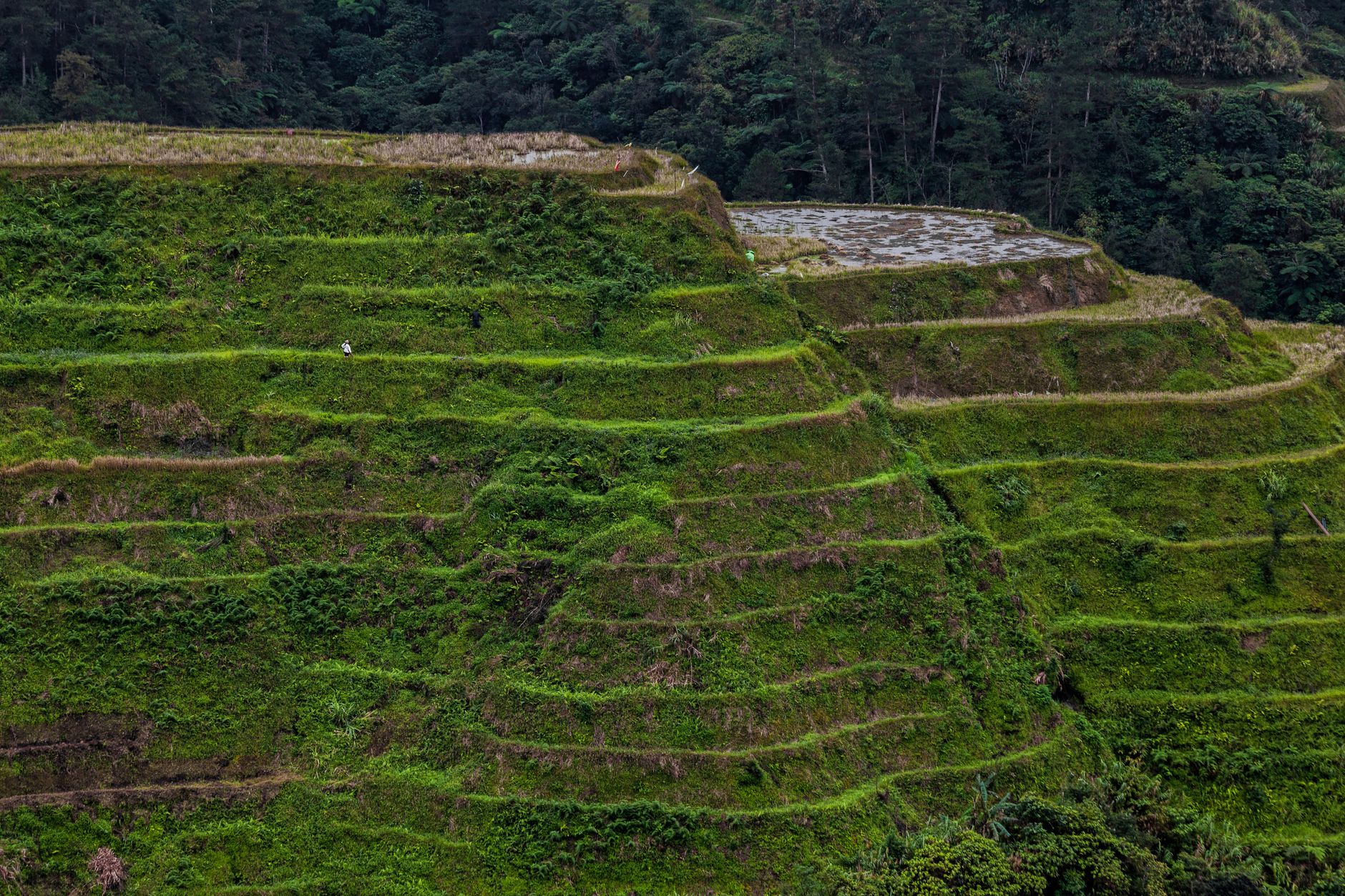
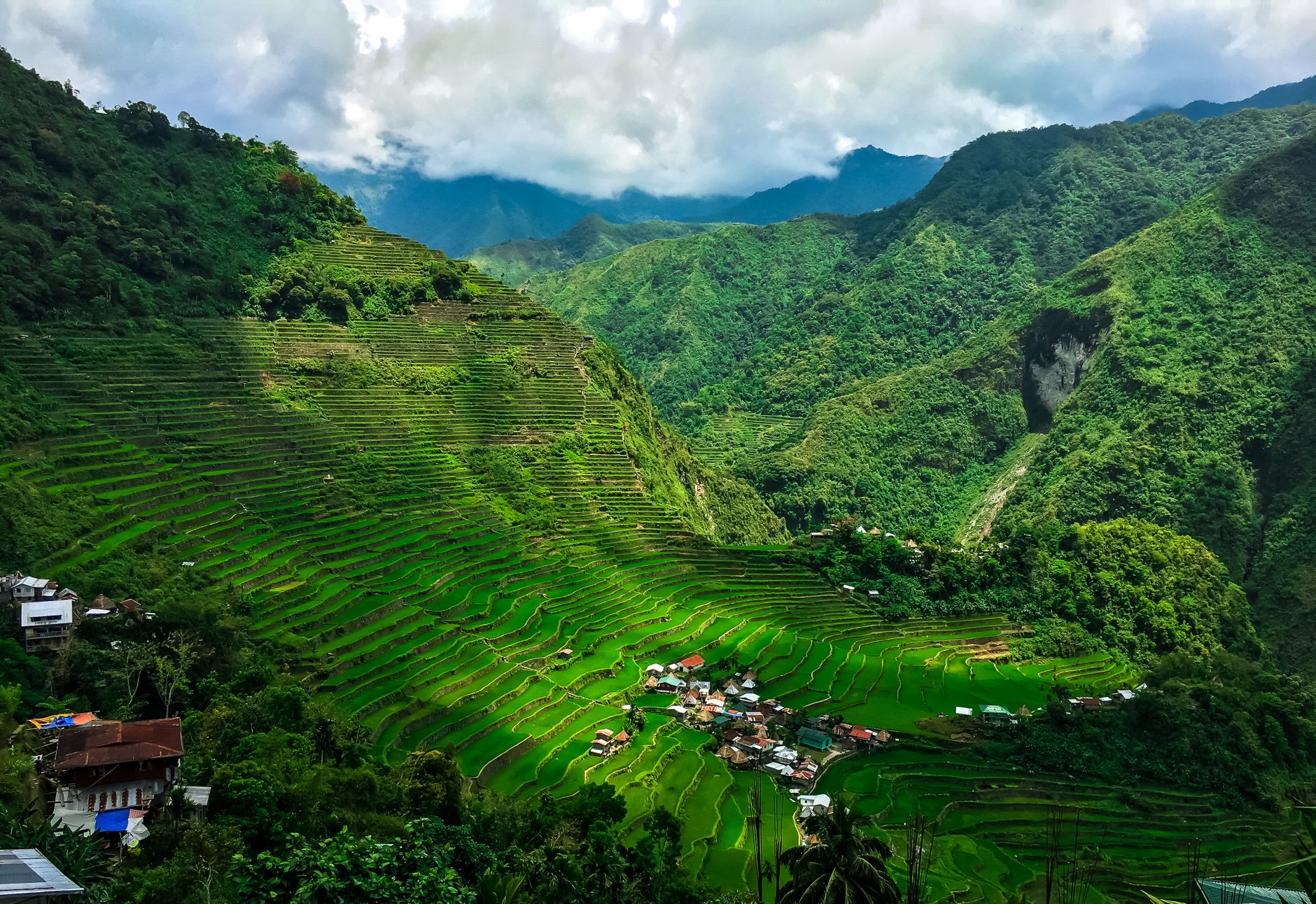
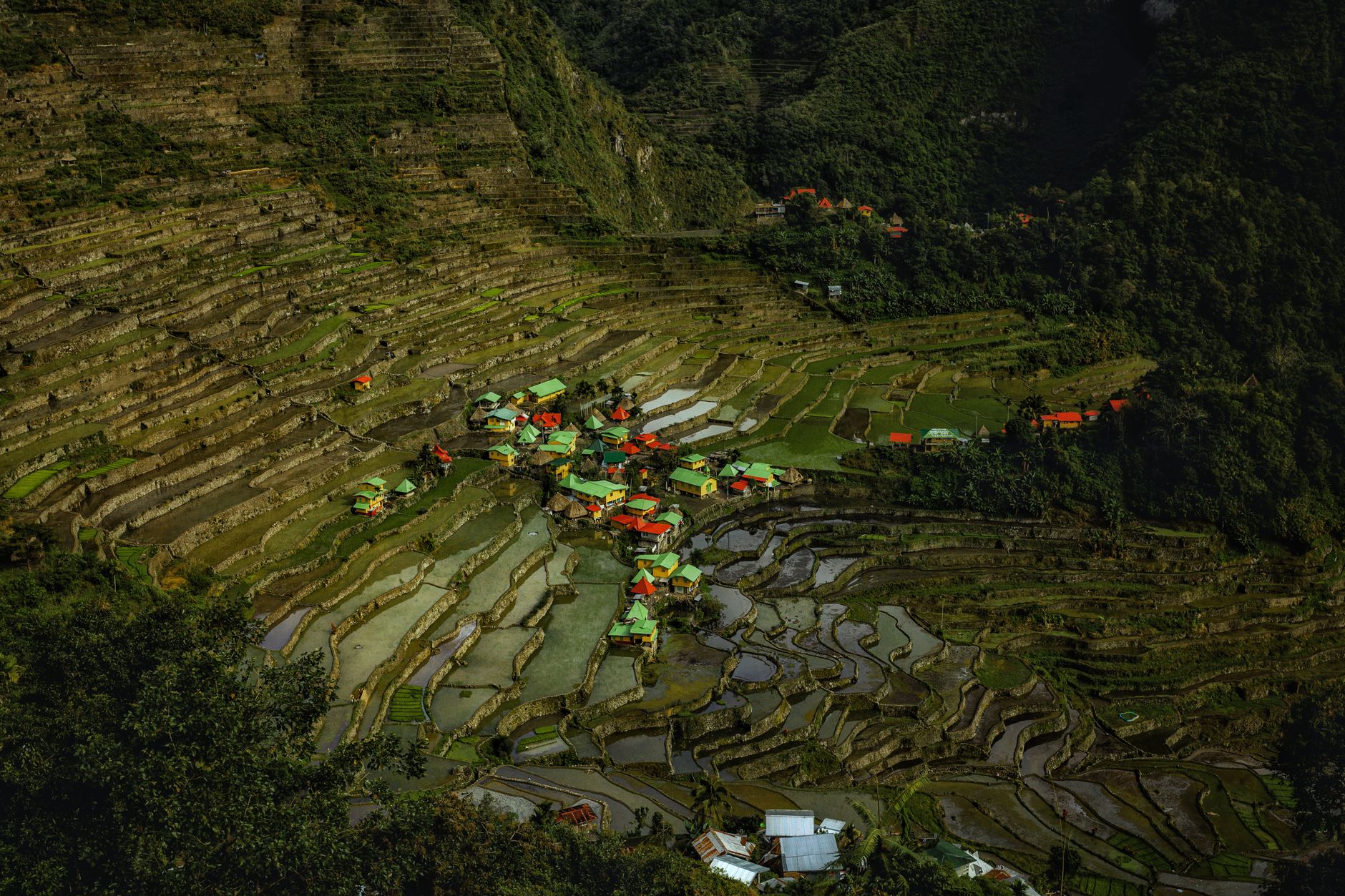
The rice terraces are the reason people come to Banaue. They’re the headline, the main attraction, the thing that gets photographed and posted and captioned with superlatives about man’s harmony with nature. And they are, genuinely, remarkable — looking at them from the viewpoint at the edge of town, the way the paddies tumble down the mountainside like a staircase built by giants, it’s easy to understand why they’re a UNESCO World Heritage site. But the terraces are also a kind of trap. They make you look outward, at the landscape, at the grandeur, at the thing that can be captured in a frame. They don’t make you look inward, at the cooking fire, at the woman cracking tamarind pods with her thumb, at the bowl of soup that contains within it the entire logic of how people live on this mountainside.
The last bowl I had was on a Saturday morning, before the tour buses arrived. I was the only customer. Lourdes was washing dishes in a plastic basin while her daughter swept the floor. The sinigang was a breakfast version, which in the Cordilleras means it comes with a fried egg on top — a concession to the fact that a person needs protein in the morning, and a fried egg is the simplest way to deliver it. The broth was made with leftover pork bones from the previous night, simmered with tamarind and ginger and a whole head of garlic that had been smashed with the flat of a knife. It was rougher than the lunch versions, less refined, but breakfast sinigang isn’t supposed to be refined. It’s supposed to wake you up, and this one did, the way a sharp thing can wake you up just by existing in close proximity to your tongue.
I paid my seventy pesos and walked out into the morning light. The terraces were still there, glowing green in the kind of light that only exists at altitude in the hour after sunrise. But I wasn’t thinking about them. I was thinking about the tamarind tree behind the eatery, and whether the next person to order sinigang would taste the same bowl, or a different one, or something like that.
📷 Photos: Palu Malerba (Pexels), Max Mishin (Pexels)