From Christchurch to Wellington: A South Island Alpine & West Coast Campervan Voyage: Day 11 to 14
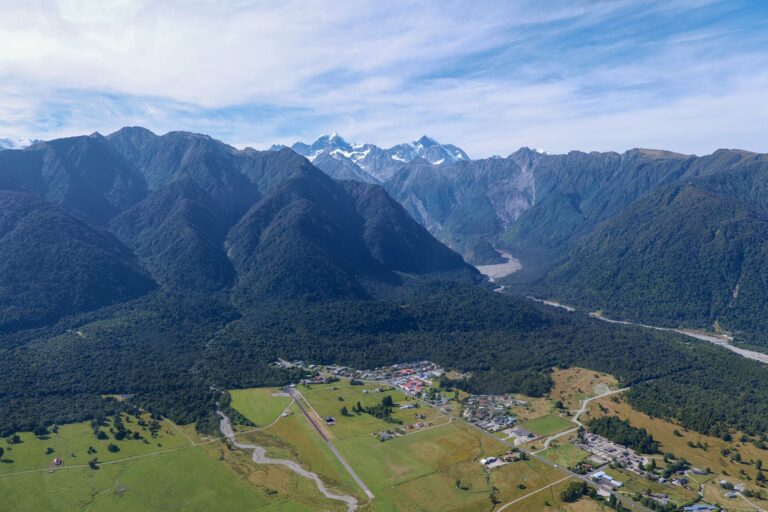
The rain started somewhere between Hokitika and the glacier turnoff, the kind of sideways drizzle that makes you question every sunny forecast you checked that morning. I’d been driving since eight, past the pancake rocks at Punakaiki and through a series of one-lane bridges that felt increasingly like dares, and by the time I pulled into the Franz Josef car park, the windscreen was doing that thing where the wipers just smear everything. A man in a high-vis vest stood under an awning, holding a clipboard, looking at the sky the way locals look at tourists who’ve clearly ignored something obvious.
“You’ll want at least three hours,” he said, when I asked about the walk to the glacier face. “If the track’s open. It wasn’t yesterday.”
I had booked a 2 p.m. slot at the hot pools forty minutes south, thinking I’d squeeze in a quick hike beforehand. This was the kind of planning that assumed the world would cooperate, and the world, as it turned out, had other ideas. I walked the twenty minutes to the viewing point anyway, past signs warning about falling ice and unstable moraine, and stood in front of a grey wall of rock and rubble where the glacier was supposed to be. The actual ice was visible maybe a third of the way up, a pale blue tongue retreating into the cloud. A couple next to me took a selfie with their backs to it, and I couldn’t tell if they were posing with the glacier or with the rain. The whole thing took maybe forty minutes, including the walk back.
The Fox Glacier turnoff came and went while I was still trying to dry my collar with the van’s heater, and I let it pass. I’d read somewhere that the two glaciers were similar enough that you only needed to see one, but I hadn’t factored in the weather narrowing that choice for me. By the time I reached the hot pools, the rain had stopped, which felt like a small cosmic joke. I sat in the 38-degree water watching steam rise off my shoulders, wondering if I’d made the wrong call on timing, and decided I probably had.
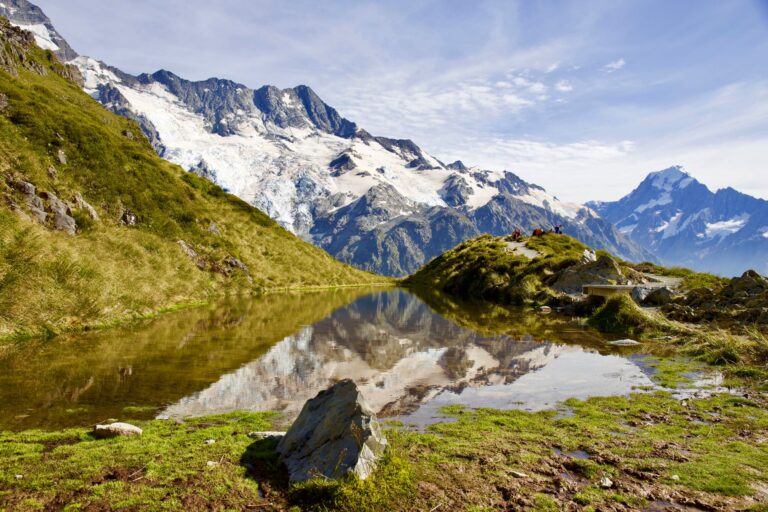
That night, I parked at a freedom camping spot just south of Lake Matheson, where the only other vehicle was a rental van from Auckland with a couple cooking pasta on a camp stove. The lake was still as glass at dusk, and I could see why the postcards show it reflecting Mount Cook and Mount Tasman. But from where I stood, the mountains were hidden behind cloud, and the reflection was mostly grey sky and the dark shape of trees. A woman from the Auckland van walked past and said, “Bit different from the photos, hey,” and I laughed because it was true and because there was no point pretending otherwise. I ate a sandwich in the dark and went to sleep early.
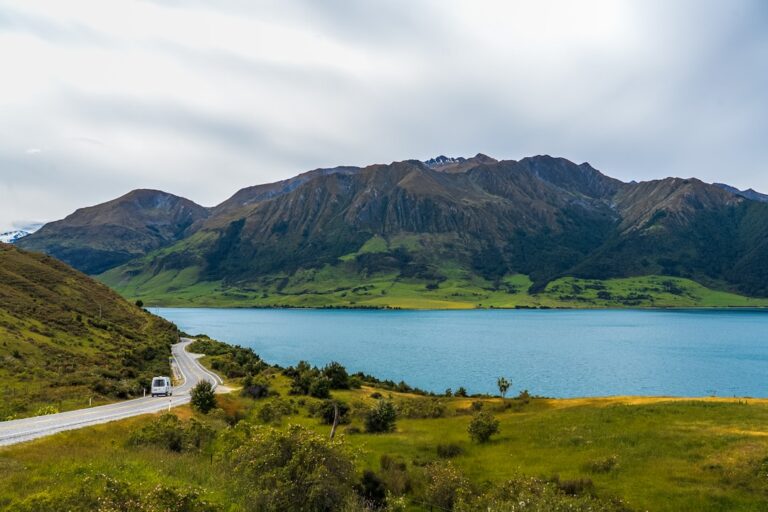
It wasn’t. The Haast Pass road the next morning was wet and winding, and the van’s engine laboured on the uphill sections in a way that made me nervous. I’d rented a six-berth model that was fine on the flats but felt underpowered on the grades, and I spent a lot of the drive wishing I’d sprung for the diesel option. There’s a lookout point near the top of the pass where the road curves along a cliff face, and I pulled over to let a line of cars pass. The view was of a valley filled with low cloud, the kind of vista that looks atmospheric in photos but is mostly just damp in person. A tour bus pulled up behind me and disgorged a dozen people in matching rain jackets who took group shots and were back on the bus in under five minutes. I stayed for ten, watching the cloud shift, and then got back in the van.
Lunch was at the Makarora general store, where the pies were good but the coffee was the instant stuff you pour from a thermos. The woman behind the counter had the kind of unhurried manner that comes from serving people who are always in a hurry. “You heading through to Wanaka?” she asked, and when I said yes, she nodded slowly. “Road’s open. Bit of gravel through the construction zone, but you’ll be fine.” I asked if there was anything I should know about the drive ahead, and she thought about it for a moment. “The one-lane bridge just past the Blue Pools — give way to the uphill traffic. People forget.”
I did not forget, because I was thinking about it the whole way, and when I reached the bridge I gave way to a pickup truck whose driver gave me a two-finger wave off the steering wheel. The Blue Pools themselves were worth the stop — a stretch of water so clear you could see the river stones at the bottom from the footbridge. The colour was something between turquoise and green, and a group of teenage boys were taking turns jumping off a rock into the deepest part. I watched for a while, envying the simplicity of it, then walked back to the van.
Wanaka arrived in late afternoon, and I found the lakefront carpark full of campervans in various states of setup. A man was trying to level his vehicle with plastic ramps while his partner held a spirit level against the counter. I parked a few spaces down and walked to the waterfront, where the famous tree stood in its spot, being photographed by a steady stream of people. The light was flat and grey, and the mountains across the lake were half-obscured by cloud, and still there were at least a dozen people with phones and cameras arranged in a crescent around the tree, waiting for something to happen. I took a photo anyway, because you have to, and it turned out exactly as you’d expect.
The thing about the Wanaka tree is that it’s just a tree in water. The photographs make it look solitary and dramatic, but in person it’s surrounded by other trees along the shoreline, and the effect is more like a natural arrangement than a singular icon. A woman next to me was adjusting her tripod and muttering about the light. “Waste of a drive,” she said, not to me, and I didn’t respond because I wasn’t sure I disagreed. But later, after the crowds thinned and the cloud broke slightly, I walked back and saw it in a different light — literally, the sun coming through a gap and hitting the water just right — and I understood why people try. It’s not the tree. It’s the moment when the light works, and you happen to be standing there.
Dinner was at a place on the main street that served a lamb shank that had been braised long enough to fall apart, and I ate it at a table by the window watching the evening settle over the lake. The waitress asked where I was headed next, and when I said Christchurch, she made a face. “The road out of here can be a bit hairy after rain,” she said. “Just take it slow through the Rakaia gorge.” I asked if she meant State Highway 73, the Arthur’s Pass route, and she nodded. “That’s the one. Beautiful drive, but she’ll punish you if you rush it.”
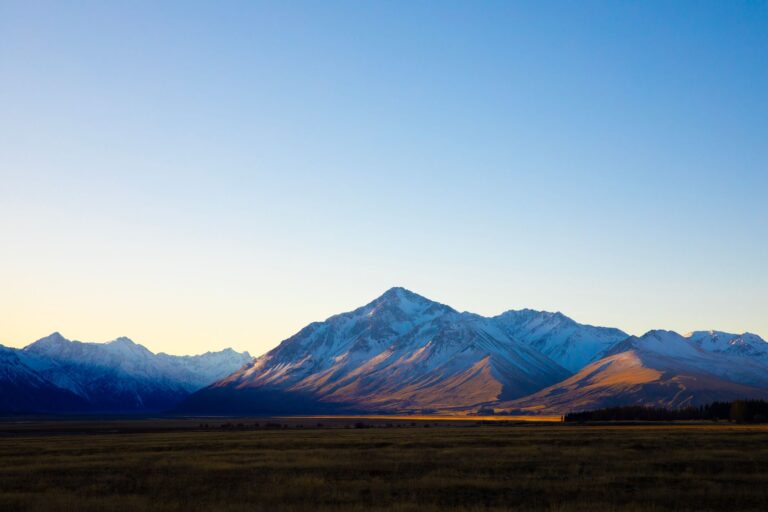
I left Wanaka early the next morning, before the tourist traffic got going, and headed for the Lindis Pass. The road was empty and the sky was clear for the first time in three days, and the landscape opened up into something I hadn’t expected — rolling golden hills that looked more like the high country of the North Island than the alpine scenery I’d been driving through. I stopped at the summit lookout and stood in the wind, watching the road snake ahead into the distance, and for a moment the whole trip felt worth it. Not because of a destination or a photo, but because of the scale of the place and the fact that I was alone in the middle of it.
The mistake I made at Arthur’s Pass was not stopping at the visitor centre. I drove through the township at midday, saw the DOC office, and decided to push on to the Otira Viaduct instead. That decision cost me an hour of backtracking later, when I realised the best walk in the area — the Devil’s Punchbowl track — was a ten-minute drive from where I’d been. The track itself was a steep climb through beech forest, the kind that works your calves and makes you question your fitness choices, and at the top the waterfall was roaring with enough force to feel it in your chest. A couple from Germany were eating muesli bars on a bench, and the man said, in careful English, “This is better than the glacier, or something like that.” I didn’t argue.
The drive over Arthur’s Pass itself was everything the waitress had warned about — tight corners, sudden drops, and sections where the road narrowed to a single lane with a cliff on one side and a rock face on the other. I met a logging truck coming the other way on one of those sections, and we both stopped, and the driver waved me through with the kind of patience that comes from doing it every day. I gave him the same two-finger wave I’d received at the Blue Pools, and he nodded, and I drove on feeling like I’d passed some kind of test.
By the time I reached the Canterbury Plains, the landscape had flattened out and turned brown, and the mountains were behind me. I stopped at a roadside café in Springfield for a milkshake that was mostly ice cream, and the woman at the counter asked where I was coming from. “The West Coast,” I said, and she raised her eyebrows. “You made it over the pass, then. Good on you.” She said it like it was an achievement, and maybe it was. I paid and got back in the van, and the last stretch into Christchurch was straight and easy, the kind of driving that lets your mind wander back over everything.
I returned the van at the depot in the late afternoon, and the check-in guy walked around it with a clipboard, noting a scratch on the bumper that I hadn’t noticed and a chip in the windscreen that I had. “That’ll be the gravel road through the Haast construction zone,” I said, and he shrugged and said it happens, and the excess came out of my bond. It wasn’t a lot, but it was more than I’d budgeted for, and I stood in the rental office doing the mental arithmetic of what I should have done differently. Taken the diesel van. Left earlier for Franz Josef. Checked the weather before committing to the West Coast route.
Months later, people who’ve made the trip tend to say the same thing: some places just stay with you. For me, it’s not the glaciers or the tree or even the waterfall at Arthur’s Pass. It’s a moment I almost missed — pulling over on the Haast Pass road, watching the cloud shift over the valley, alone except for a tour bus that had already left. The rain had stopped, and the air smelled like wet earth and something green, and I stood there long enough for my shoulders to relax. I never got the shot I wanted of Franz Josef, and the Wanaka tree photo sits unshared in my phone, and those two hours I’d planned around the glacier became a forty-minute damp walk that taught me nothing except that forecasts lie. But that valley in the cloud — that was real. I’d do it all again just for that.

📷 Photos: Donovan Kelly (Pexels), Chen Te (Pexels)