The Stall That Wasn’t There
The Stall That Wasn’t There
The first attempt was a Tuesday afternoon in late February. The address was still listed on Google Maps—Jalan Pasar, number 12, in the heart of George Town’s old market district. The street was there. The awning was there. But the stall itself was a padlocked metal shutter with a faded sign that read Air Asia Cafe, the letters peeling in the tropical humidity. A woman selling kuih from a basket across the street watched the visitor stand there for a full minute, phone out, looking from the map to the shutter and back again. “Sudah tutup,” she said, already knowing what the question would be. It’s closed.
She was right, but not quite. Air Asia Cafe was indeed closed—had been for two years, since the pandemic shut down Penang’s inner-city food stalls in a wave that never fully receded for some. But the stall that had occupied this address before Air Asia Cafe, the one that had been the subject of forum threads and hushed inquiries on food blogs since 2022, was the real prize. Penang Assam Laksa stall number 12, the one locals called “the original” in a city where every other hawker centre had a version. It had vanished during the lockdown and never returned—until a single Instagram post in early March announced, without fanfare, that it would reopen on April 1st.
The post had six likes. The account had forty-seven followers. It looked like a bot or a mistake. But the date was specific. So was the time: 11am, Monday to Saturday, same as before. The only question was whether it was real, or whether someone had simply taken over the old name and hoped nobody would notice the difference.
What Was Lost
To understand why anyone would drive three hours from Kuala Lumpur to chase a single bowl of noodles, it helps to understand what Penang Assam Laksa actually is—and what this particular version was said to be. The dish is a sour fish-based noodle soup, thick with tamarind and lemongrass, topped with shredded mackerel, cucumber, pineapple, and a spoonful of shrimp paste that stains the broth a murky orange-brown. It is not pretty. It does not photograph well. But done right, it has a layered acidity that cuts through the humidity in a way no other street food manages.
Stall 12 near the junction of Lebuh Kimberley and Jalan Pasar had been operating since the early 1990s, run by an elderly Hokkien couple whose recipe had drawn regulars from as far as Singapore. The broth was darker than most versions—almost black from the amount of tamarind paste—and the mackerel was flaked by hand, not machine-blended, giving it a coarser texture that held up against the noodles. The couple’s daughter had taken over around 2015, and it was she who kept the stall running until March 2020, when the first lockdown emptied Penang’s streets and the stall simply never reopened.
Rumours circulated. The daughter had moved to Johor. The parents had retired. The recipe was lost. One forum user claimed to have tracked down the family and been told they had no plans to return. Another insisted the stall had actually reopened in 2021 under a different name in a different part of town—the visitor checked that lead too, and found a coffee shop serving instant noodles and iced Milo. It felt like the trail had gone cold for good.
Waiting for a Reopening
April 1st was a Saturday, which meant the visitor arrived the day before, checked into a guesthouse on Muntri Street, and walked to Jalan Pasar at 10:30pm to confirm the shutter was still down. It was. The Air Asia Cafe sign was gone—that much had changed—but the metal shutter was pulled tight, with no sign of activity. A neighbour running a late-night nasi kandar stall confirmed that someone had been seen cleaning the space earlier in the week. “Maybe tomorrow,” he said, shrugging. “Maybe next week.”
The uncertainty was the point. A stall that has been closed for two years does not reopen on a fixed schedule like a chain restaurant. There would be no ribbon-cutting, no announcement beyond that single obscure Instagram post, and no guarantee that the same family would be behind the counter. The visitor woke at 8am on Saturday, skipped the guesthouse breakfast, and walked to Jalan Pasar at 9:30am—early enough to watch the market come alive, late enough to avoid being the only person standing in front of a closed shutter.
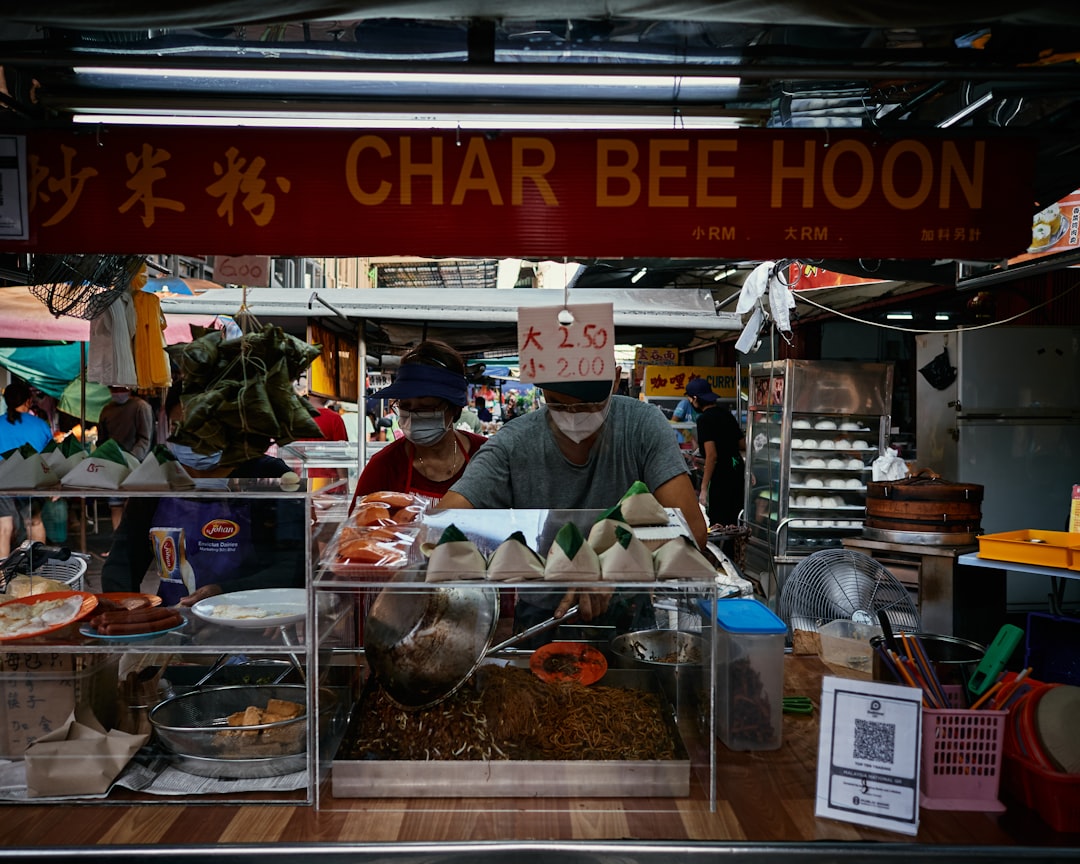
At 10:15am, a woman in her late thirties unlocked the shutter and rolled it up. She was carrying a plastic bag of lemongrass and a bundle of banana leaves. She did not look at the visitor, who was trying to appear casual while leaning against a wall ten metres away. She disappeared inside and began clattering pots. At 11am exactly, she flipped on a fluorescent light, set out a stack of ceramic bowls, and placed a handwritten sign on the counter: Assam Laksa RM8.50.
The First Bowl in Two Years
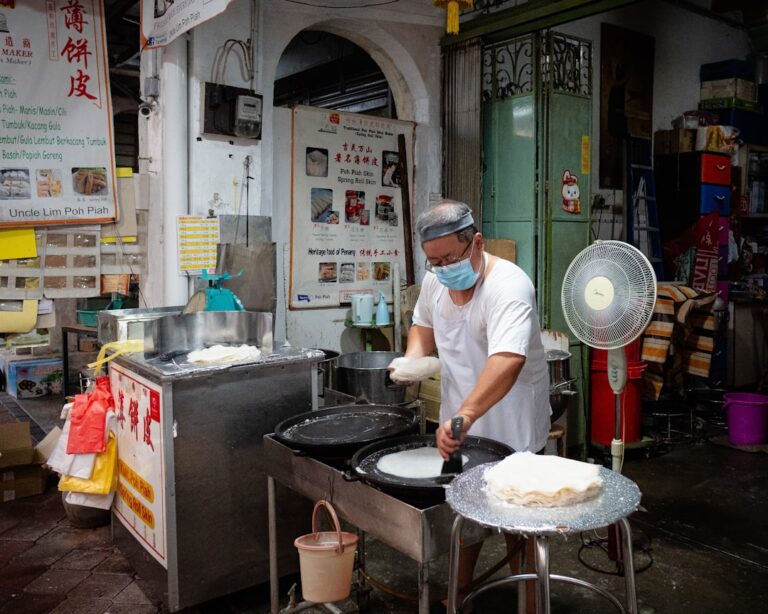
The visitor was the first customer, which meant watching the entire process unfold from scratch—the broth reheating from a large pot on a portable gas burner, the rice noodles being blanched in a separate pan of boiling water, the mackerel being flaked from a container the size of a shoebox. The woman worked without conversation, her movements efficient but unhurried. She did not ask what the visitor wanted. There was only one thing on the menu.
The bowl arrived in under four minutes. It was darker than any assam laksa the visitor had seen in the two years since—a deep, almost mahogany brown, with a slick of red oil on the surface and a tangle of noodles barely visible beneath the toppings. The shrimp paste was served on the side, a small dollop on a saucer, as was traditional. The visitor added a spoonful, stirred, and tasted it.
It was not the same as before. Or rather, it was, but with a subtle difference—the tamarind was sharper, less mellowed than what memory had constructed. The broth had a raw edge to it, the kind of acidity that makes the back of the jaw tingle before the heat of the chilli follows. The visitor had expected something familiar, a taste that would match the mental image built from years of reading and hearing about it. What arrived was something alive and immediate, not a memory but a fresh encounter. A younger version of the same dish, perhaps, now that the couple’s daughter was running it alone.
She emerged from behind the counter after the visitor was halfway through. “How is it?” she asked, in English. She seemed genuinely curious, not just making small talk. The visitor said it was good—better than expected, given the two-year gap. She nodded, not quite smiling, and said: “I had to relearn it. My mother’s recipe was all in her head. She never wrote anything down.”
The Recipe That Almost Died
Over the course of an hour, as the stall slowly attracted a trickle of customers—an elderly man who ordered two bowls to take away, a family of four who asked for extra chilli, a young couple who took photos for Instagram before remembering to taste it—the woman, whose name is Mei Ling, told the rest of the story between orders.
Her parents had retired to a village near Alor Setar in early 2020, just before the movement control order took effect. They had assumed they would return to Penang once things settled down. They never did. Her mother fell ill in late 2021 and died the following year. The recipe, which had never been written down as anything more than a mental list of proportions and techniques, died with her—or so it seemed.
“I didn’t cook it for two years,” Mei Ling said, wiping down the counter. “I couldn’t. It felt like I would be pretending.” She had worked at a hotel in Batu Ferringhi during the gap, making RM2,800 a month as a front-desk clerk, saving enough to rent the stall space again when the lease finally became available earlier this year. The Air Asia Cafe tenant had defaulted on rent and disappeared during the pandemic, leaving the space empty for months.
The first batch she made in February, using her mother’s old equipment—a giant aluminium pot, a wooden ladle worn smooth from use—had been undrinkable. “Too sour, and the fish was dry. I threw it away and cried for an hour.” She called her father, who still lived in Alor Setar, and asked him to dictate what he remembered of the process. He could not. He had never made the broth himself. But he told her a detail her mother had mentioned once: that the tamarind paste should be soaked overnight in cold water, not boiled directly, and that the mackerel should be simmered whole, not filleted first. These small corrections changed everything.
The version the visitor ate was the result of six test batches over three weeks, each one slightly different. Mei Ling had not charged for the test bowls—she gave them to neighbours and the nasi kandar stall owner for feedback. The final recipe was close enough that her father, who drove down from Alor Setar two days before the reopening, told her it tasted “like home.” She took that as approval.
A Bowl and the City Around It
By noon, the stall had a small queue—six people, mostly locals who had heard through word of mouth. One of them, a retired schoolteacher named Mr Wong who had been eating at stall 12 since 1995, said he had been checking the street every few months for signs of life. “I thought it was finished,” he said, holding his bowl with both hands. “I ate at the other assam laksa stalls—the one at Air Itam, the one in Gurney Drive—but none of them tasted like this.” He gestured vaguely with his chopsticks. “This one has a tang. You know what I mean.”
The visitor knew. The broth had a brightness that the more commercial versions lacked—not from any single ingredient but from the balance of tamarind, lemongrass, and the faint bitterness of torch ginger flower, which Mei Ling had sliced thin and scattered on top as a garnish. It was a dish that demanded attention, not the kind of thing to eat while scrolling through a phone. The acidity cleared the sinuses and left a pleasant numbness on the tongue.
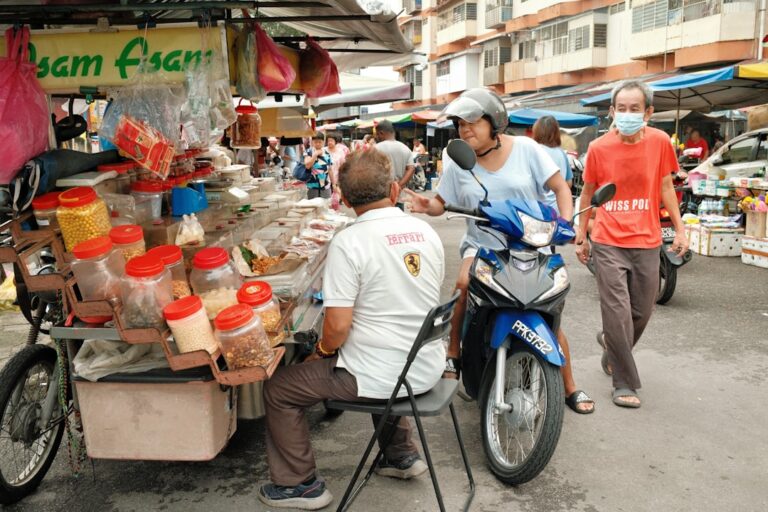
The total cost for the bowl was RM8.50—about USD $1.80. A bottle of iced barley from the drinks stall next door added RM2.50. The visitor sat on a plastic stool at a metal table, watching the market activity pick up around them: a fishmonger hosing down his display, a woman negotiating over a pile of kangkung, a stray cat weaving between table legs. It was an ordinary Saturday in George Town, made slightly less ordinary by the fact that a small piece of the city’s culinary history had just been resurrected in a rented stall space on a side street that most tourists would never find.
Mei Ling did not know if the stall would survive. Rent was RM1,500 a month. Ingredients were more expensive than before the pandemic. She had no social media presence beyond that single Instagram post, which had been posted by a friend who ran a small food blog. But she had made the broth from scratch, from a recipe she had reconstructed through trial and error and a single phone call to her father. And for now, that was enough. The queue was growing. The bowls were being emptied. And on Jalan Pasar, at number 12, the original stall was serving assam laksa again.
📷 Photos: Kelvin Zyteng (Unsplash)