The Bowl That Rewrites Your Map
The Bowl That Rewrites Your Map
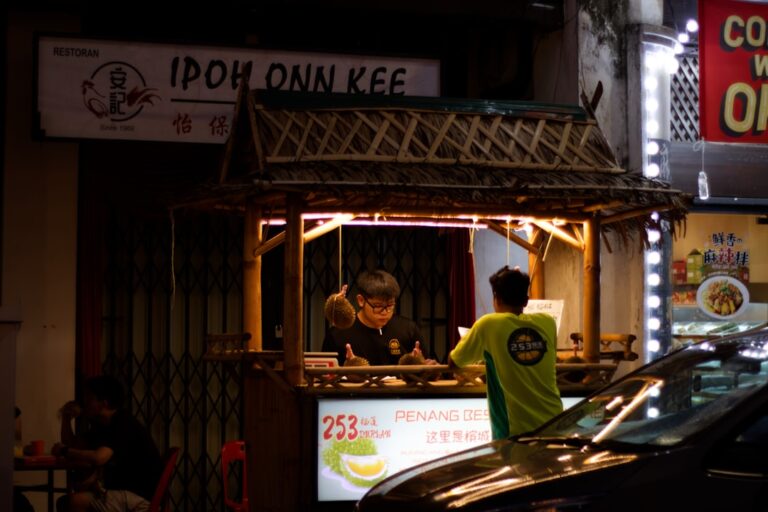
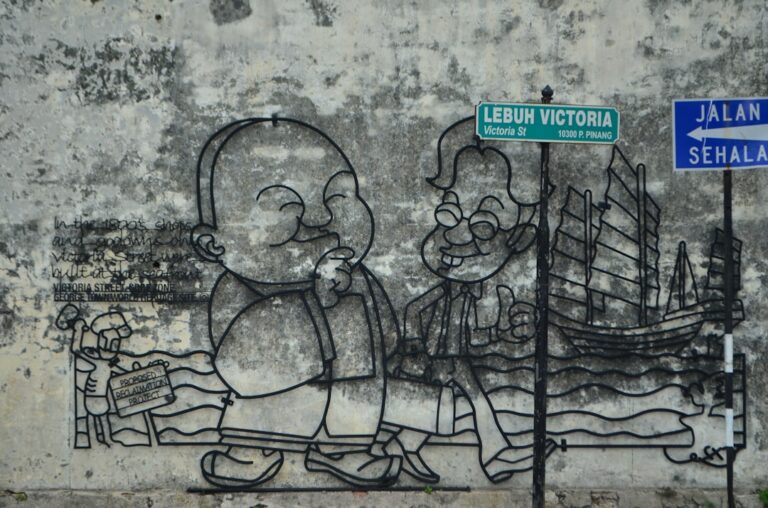
George Town’s morning air tastes like diesel and fish stock. By 7:45, the hawker stalls along Kimberley Street have already been firing their woks for two hours, and the scent of prawn shells caramelizing in pork fat drifts into the open-fronted coffee shops. Most visitors come here for the street art—the murals of kids on bicycles, the iron-rod caricatures of colonial life. But the real map of Penang isn’t drawn in paint. It’s drawn in broth.
The prawn mee trail doesn’t start with a sign. It starts with a rumor. Someone at a hostel mentioned a stall behind a kopitiam in Air Itam. Someone else swore the best bowl was at the end of a dead-end lane in Pulau Tikus. And then there was the old man—nobody could agree on his name—who was said to cook his broth for eighteen hours and served only until 10:30 a.m., or until the pot ran dry, whichever came first.
Tracking down these bowls becomes its own kind of geography. Not the geography of maps and GPS coordinates, but the geography of overheard conversations and handwritten notes on napkins. The search itself is the point.
Morning at Market Street
The First Bowl
Jenny Huang runs a small food blog from her apartment in Kuala Lumpur, and she’s been coming to Penang for six years. Her method is simple: she ignores internet lists. “The ones on blogs are usually the stalls that paid for a photographer,” she says, standing at the edge of the Market Street hawker center. “You want the ones where the auntie’s grandchildren are helping out. That means it’s been around long enough to matter.”
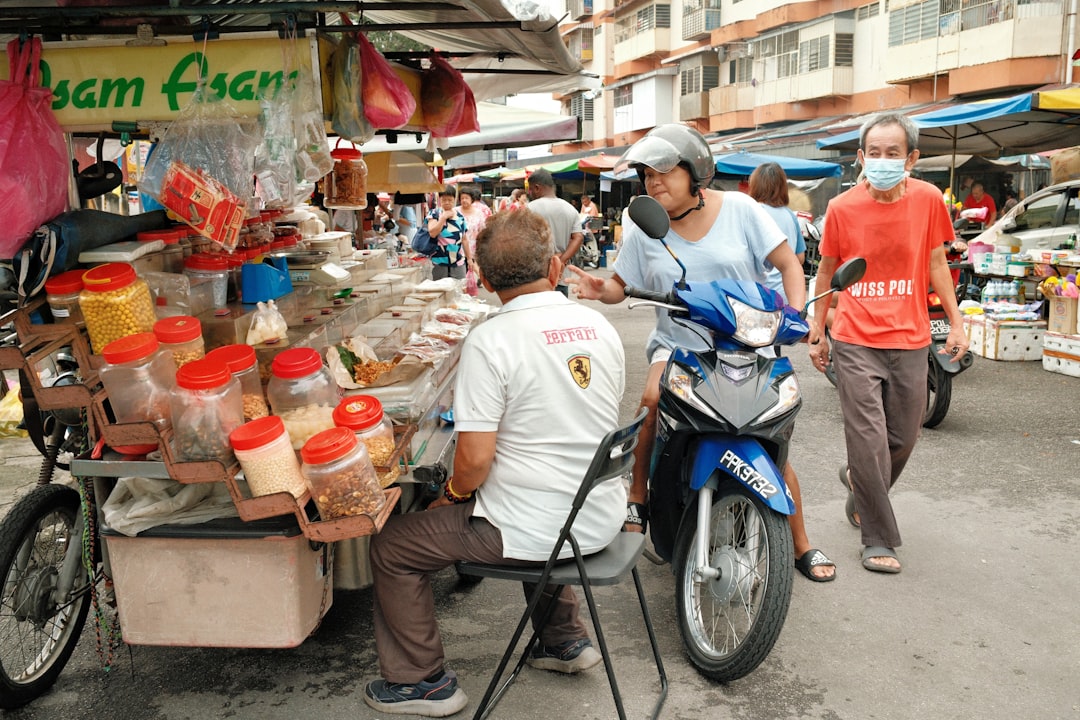
Market Street itself is a concrete shelter crammed with twenty-two stalls, each one run by someone who looks like they’ve been doing this since the 1970s. The prawn mee stall here, No. 17, is run by a woman who does not smile at customers. She pours the broth with the focus of someone defusing a bomb. The bowl arrives fast: yellow noodles coiled in a dark, brick-colored liquid, topped with slices of lean pork, a halved hard-boiled egg, and a scattering of fried shallots. A single prawn sits on top, shell-on, bright orange.
The broth is the thing. It’s not sweet, not heavy—it tastes of fire and dried shrimp and time. The heat comes from a separate bowl of sambal on the side, which is a mistake many first-timers make: they mix it in too eagerly and lose the broth entirely. Better to dip the spoon in the sambal, let it dissolve slowly, taste the adjustment.
A bowl costs 7 ringgit. The woman at No. 17 does not make eye contact when she takes the money. She’s already pouring the next order.
A Mistake Worth Making
Halfway through the first bowl, a traveler realizes the error: ordering the wrong noodle type. The standard is yellow noodles with a little vermicelli on the side, but the real locals order koay teow—flat rice noodles that soak up broth differently. The consistency changes everything. It’s not a small mistake. It’s the difference between a good bowl and a bowl that makes you stop talking.
By the time the mistake registers, the bowl is already half-empty. There’s no fixing it except to order another bowl the next day, which nobody has time for, and which means doubling back when the itinerary says to move on. The traveler watches someone at the next table pick up their spoon and dip it into a bowl of koay teow, and there’s a moment of genuine regret. It costs twenty minutes of internal debate before deciding to just eat faster and move on. The lesson doesn’t need to be stated. It just sits there, unapplied, for the rest of the trip.
The Kopitiam That Doesn’t Look Like Much
Finding the Dead-End Lane
Behind a kopitiam on Lebuh Presgrave, there’s a metal gate that’s usually left ajar. Push through it, and the lane opens into a courtyard surrounded by pre-war shophouses, their paint peeling in long strips. A single stall sits under a blue tarpaulin. The sign is handwritten on a piece of cardboard: “Prawn Mee. 7am-11am. Sometimes later.”
The stall’s owner, a man named Ah Leong, has been making broth here for twenty-three years. He is fifty-seven years old and has no plans to retire. “My wife says we should stop,” he says, wiping a cloth over the counter. “But where would I go? The coffee shop?” He laughs, but it’s not a joke. The stall occupies the same space his father used in the 1980s, and the photographs taped to the wall show the same courtyard, the same blue tarp, the same handwritten sign.
The broth here is different from Market Street—lighter, almost floral, with a sweetness that comes from caramelized shallots rather than sugar. Ah Leong adds a pinch of white pepper at the end, directly into the bowl, and the effect is immediate: a warmth that builds from the back of the throat. The prawns are larger here, too, and there are three of them instead of one. It costs 9 ringgit.
What the Photos Don’t Show
A group of four tourists arrives while Ah Leong is serving. One of them holds up a phone to photograph the broth, and Ah Leong stops moving. He stands still, holding the ladle, waiting for the phone to lower. It’s not rudeness—it’s a quiet preference. The stall isn’t a performance. It’s a transaction. When the phone finally comes down, he resumes pouring.
The tourists finish their bowls in five minutes, pay, and leave. They don’t linger. There’s no bench here, no place to sit except on a low wall that runs along the courtyard’s edge. The experience is not designed for comfort. It’s designed for speed. Eat, pay, leave. The next customer is already waiting.
Air Itam and the Reckoning
The Hidden Stall That Isn’t Hidden
Air Itam is where the Penang Hill funicular drops visitors, and the area around the market is thick with stalls selling the same things to the same crowds. But behind a kopitiam on Jalan Pasar, down a narrow alley that smells of wet concrete and fried garlic, there’s a stall that does not appear on any map. Not Google Maps, not Grab Food, not the hand-drawn guides sold at hotel lobbies.
The stall belongs to a woman named Mak Cik Zainab. She is seventy-two years old, and she cooks her broth in a cauldron that looks like it was forged in the 1960s. She does not use a timer. She uses her nose. “When the smell changes,” she says, “then it’s ready.” She stirs the pot with a wooden paddle that’s been worn smooth by years of use, and the broth moves thickly, almost like a sauce before it’s diluted with water.
The bowl here is different from the others—richer, darker, with a depth that comes from roasting the prawn shells before boiling them. Mak Cik Zainab adds a spoonful of dark soy sauce, which is unusual for Penang-style prawn mee, and the result is a broth that stains the noodles a deep brown. The flavor is almost meaty, like a beef pho that’s been dreaming of the sea.
An Unexpected Discover
Mak Cik Zainab’s stall opens at 8 a.m. and closes when the broth runs out, which is usually around 10:30. On a Tuesday morning, a traveler arrived at 9:45 to find the pot still full and the line extending only four people deep. But the surprise wasn’t the timing. It was the temperature. The broth was served steaming hot—too hot to eat immediately—and the traveler watched as every local at the stall dipped their spoons into the bowl and blew on it before taking a sip. Nobody waited for it to cool. Nobody complained. They just ate it as it came, burning their tongues, accepting the heat as part of the deal.
By 10:15, the line had grown to twelve people. At 10:30, Mak Cik Zainab looked into the pot, shook her head, and told the remaining customers that she was out. Two people turned and walked away without argument. The third, a man in his forties, offered to pay double for the broth scraped from the bottom of the pot. She let him have it for the normal price, but without the noodles—just the dregs, which he drank from a paper cup.
The Final Bowl
Pulau Tikus at Sunset
The last stop is a stall in Pulau Tikus that operates from 5 p.m. until midnight, a reversal of the morning-only rhythm that defines most of the trail. It’s run by a family—father, mother, daughter—who took over from the grandmother in 2015. The grandmother still comes by on Sundays to check the broth and occasionally shout at customers who add too much chili.
The bowl here is the most expensive of the trail: 12 ringgit. It’s also the most generous. The broth is darker, with visible oil slicks on the surface, and the prawns are grilled separately before being added to the bowl. The flavor has a charred edge, like something that’s been rescued from a fire. The sambal is milder, almost sweet, and the noodles are served with a side of pickled green chilies that cut through the richness.
A man at the next table, eating alone, finishes his bowl and orders a second. The daughter brings it without comment. He eats slower the second time, holding the spoon for a moment before each sip, as if he’s measuring something. When he’s done, he thanks the family by name and leaves. Nobody takes a photo.
What Stays in the Bowl
The trail doesn’t end with a single definitive bowl. Each one is different, and none of them is better than the others in a way that can be ranked. The best bowl is the one you didn’t expect—the one you found by walking down the wrong alley, by asking the wrong person, by showing up at the wrong time and getting lucky anyway.
For anyone considering the search, the advice is simple: don’t plan too carefully. Let the map blur. Follow a rumor until it turns into a street, and that street into a gate, and that gate into a courtyard where someone’s grandmother tells you, without smiling, that you should have come earlier.
📷 Photos: Kelvin Zyteng (Unsplash)