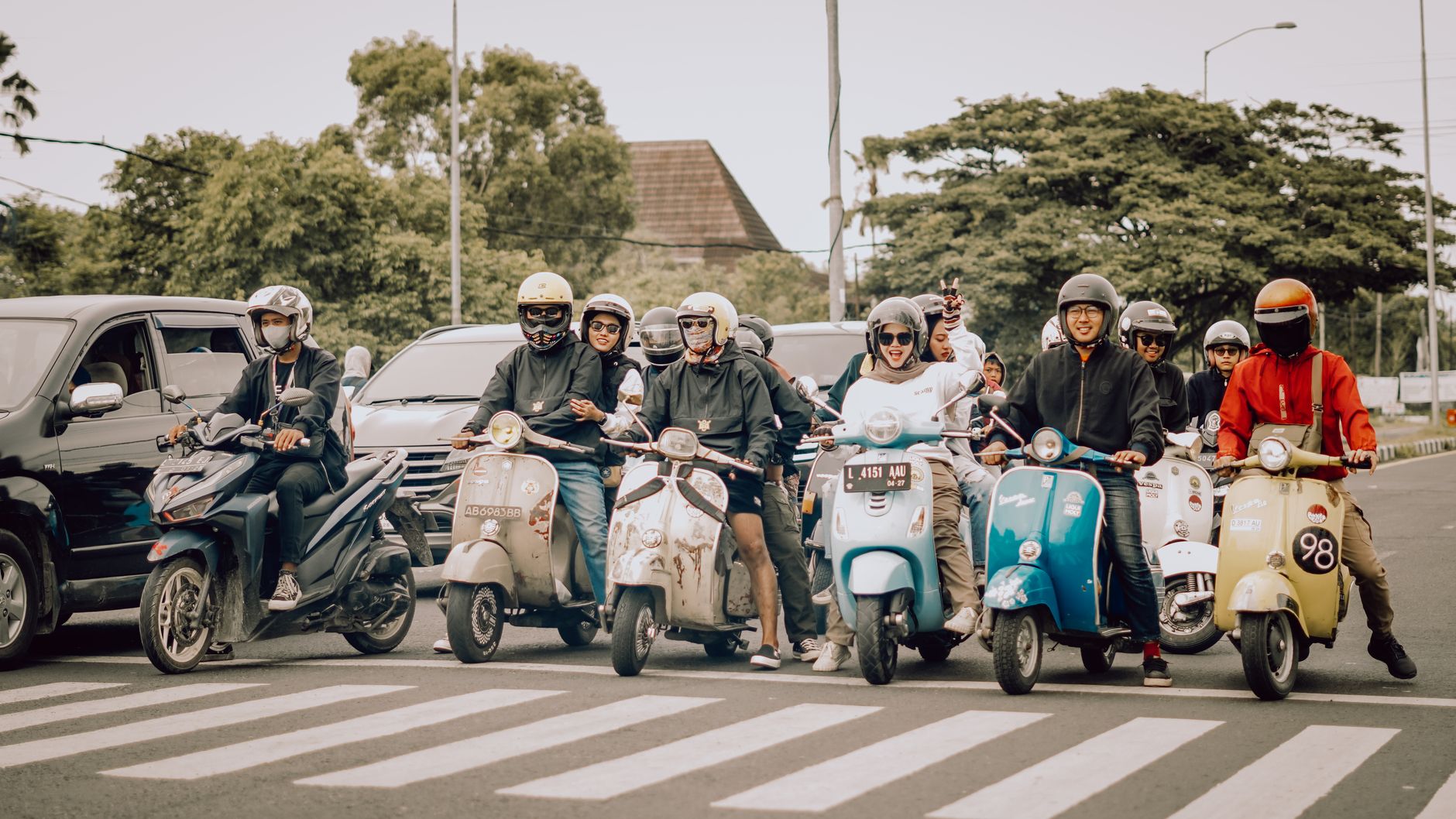
The first thing I noticed about the road between Ubud and the coast wasn’t the scenery. It was the smell of clove cigarettes mixed with diesel exhaust, drifting through the open window of a hired scooter I was gripping a little too tightly. I had been in Bali for three days, and the itinerary I’d sketched out in a notebook had already become a collection of asterisks and crossed-out names. That is the nature of the place, I think. You arrive with a plan, and the island quietly dismantles it.
Most coverage of Bali follows a well-worn path: sunrise at a temple, a rice terrace photo, a beach club sunset. What it misses is that the island’s real architecture is not its temples but its schedules. The best food I ate was from a man named Gede who ran a small warung about fifteen minutes north of Ubud’s center, down a road whose name I never caught. I found him because a local mechanic had pointed me there after my scooter’s fuel line clogged in the middle of a downpour. The mechanic shrugged when I asked about parts. “Later,” he said. “Eat first.” The warung served babi guling so fresh the skin was still crisp, and Gede told me he started roasting at three in the morning. “Tourists go to the big places,” he said, wiping a counter with a rag. “But they serve yesterday’s meat. Why would you do that?” The question was rhetorical, but it hung there.
The itinerary most first-time visitors follow is a quadruple bypass: Kuta, Seminyak, Ubud, and maybe a day trip to Uluwatu. It’s efficient, which is its problem. It treats Bali like a checklist rather than a place with its own rhythms. I spent my fourth day in a village called Sidemen, in the shadow of Mount Agung. The road in was narrow and potholed, and my scooter kicked up dust that coated everything in a fine brown film. The rice terraces here are less famous than those in Tegallalang, but also less manicured. Farmers worked without an audience. I stopped to watch a man repairing an irrigation channel with his hands. I asked if he minded me sitting nearby. He shook his head and said something in Balinese that I think meant “do whatever you want.” I sat for almost an hour. No one took a photo of me taking a photo of them.
The real friction in Bali is not traffic, though the traffic is real. It is the gap between what the island promises and what it actually delivers if you let it. I met a German couple at a homestay in Amed who were visibly frustrated. They had booked a private driver for a week, and the driver had insisted on taking them to the same waterfalls and coffee plantations as everyone else. “We wanted to see how people live,” the woman said. “Not how they perform living for tourists.” The performance is polished, well-lit, and widely photographed. The living is messier. It happens in the heat of the afternoon when most visitors are napping. It happens in the back of a warung where the menu is handwritten and the English translations are approximate. It happens when your scooter breaks down and a stranger tells you to eat first.
Timing, it turns out, changes everything—just not in the way the guidebooks suggest. The common advice is to go early for calm. But the Bali I found was more interesting during the hours people tell you to avoid. Midday heat in the southern beaches turns the sand into a griddle and sends tourists indoors, leaving the shoreline to a scattering of stray dogs and men mending nets. I walked the length of Balangan Beach at one in the afternoon, sweating through my shirt, and saw exactly three other people. The water was flat and turquoise, and the only sound was the hush of waves and the occasional clatter of a coconut falling. The temple at Uluwatu, which I visited not at sunrise but at the tail end of a rainy afternoon, was the same. The crowds had thinned, the limestone cliffs were slick and dark, and the monkeys seemed less interested in stealing sunglasses than in waiting out the weather. It was not a photogenic visit. You always remember those days more.
One evening in Ubud, I found myself at a small bar that had no sign and no social media presence. I had been tipped off by a Canadian surfer I met at a petrol station, who simply said, “It’s down the alley behind the laundry, or something like that.” I walked past it twice. Inside, a woman was playing a gamelan arrangement on a small Bluetooth speaker, and the owner—a man named Wayan—poured arak into mismatched glasses. He told me he had run the place for seventeen years and had never advertised. “If people want to find it, they will,” he said. “If they don’t, they would not have liked it anyway.” It was a philosophy that contradicted everything the tourism industry tells you about visibility and SEO.
The drive from Ubud to Lovina takes about two hours on a good day, and most visitors decide that is too far for just a boat ride and some dolphins. The road itself—through the highland village of Munduk, past clove plantations and fog-shrouded hills—is worth the trip. I stopped at a small waterfall in the woods, one not listed on any map I had, and found a pool of cold, dark water that smelled of wet stone and fern. I was the only person there. I swam for ten minutes and left when the light began to shift. The north coast, too, has a different character. Lovina’s beach is black sand, not white, and the water is calm but unglamorous. The dolphin-watching boats leave in the dark and return by mid-morning, and the experience is less about spectacle than about being on the water before the sun has fully committed to the day.
The logistics of a first trip to Bali are straightforward: fly into Ngurah Rai, hire a driver or a scooter, book accommodation ahead in peak season. What is not straightforward is the decision to stop treating the island as a set of destinations and start treating it as a set of conditions. Near Jatiluwih, where the farmers use a traditional irrigation system called subak, a local man named Nyoman explained to me—in broken English—that the water was shared according to a schedule that had been in place for centuries. “It is not mine,” he said, gesturing at the flooded field. “It is ours. It is time.” He meant the water, but that phrase stuck with me. The island operates on a different sense of ownership and schedule than the one most visitors bring with them.
Would I do it again? Yes. But I would not do the same itinerary. I would skip the coffee plantation that charges admission and walk the dirt paths behind it instead. I would spend less time in Seminyak and more time in a village whose name I cannot confidently pronounce. I would let the scooter break down again, if only for the warung it led me to. The seven-day itinerary that most coverage offers is not wrong. It is just incomplete. It gives you the places but not the texture. You need both.

📷 Photos: Sebastian Pena Lambarri (Unsplash), Geio Tischler (Unsplash)