It was a Wednesday in Surabaya, and the air was doing what Surabaya air usually does — thick, warm, carrying the particular Indonesian blend of clove cigarettes and diesel and frying shallots from a hundred street stalls. We were standing in a dusty lot on the city’s eastern edge, staring at a white campervan that looked, from the outside, like it had seen several lifetimes already. The handover took about forty minutes, most of it spent in a small office with a single fan that did nothing but move the humidity around. The paperwork was straightforward enough — a photocopy of a passport, a deposit in cash, a laminated map with the route circled in highlighter. What nobody mentioned was the door. The sliding door, specifically, which required a specific angle of pull and a simultaneous upward lift that we hadn’t yet figured out. For the first few minutes, it seemed like a minor thing. By the end of day one, it had become a recurring character in the trip, the kind of detail that travel guides never include but every road-tripper eventually learns: some things simply don’t work the way they’re supposed to. That becomes its own kind of normal.
Surabaya itself wasn’t on most itineraries we’d seen before leaving. The standard Java route tends to skip straight from Jakarta or Yogyakarta to Bromo, leapfrogging the country’s second-largest city entirely. But picking up a campervan here meant starting with a day of urban orientation, and that turned out to be worth the stop. The city moves at a different pace than Bali or even Jakarta — less polished, less curated for tourism, more genuinely itself. We spent the afternoon driving through the old port district, past the colonial-era warehouses that still line the Kalimas River, and stopped at a small warung near the Pabean market where a plate of rawon — the dark beef soup that Surabaya is known for — cost about fifteen thousand rupiah. The broth was the color of dark chocolate, rich with keluak nut, and it arrived with a mound of rice and a single lime wedge. We ate in near-silence, the only sound the whir of a ceiling fan and the occasional shout from the market across the street.
The campervan had a small kitchen setup in the back — a two-burner stove, a tiny sink, a cooler that claimed to be a fridge. We tested it that evening with instant noodles and eggs bought from a minimart down the road, cooking while parked in a lot near the city’s aquarium, which was closed. It was the kind of meal that tasted better than it deserved because of where and how it was made, eaten cross-legged on the van’s fold-out bench, the windows open to catch a breeze that never quite arrived. By the time we’d washed the single pan and packed things away, the sliding door had been mastered — pull, lift, slide. It would jam again the next morning, but by then we’d know the trick.
Day two started early, the way days around volcanoes tend to. We’d driven from Surabaya the previous evening, taking the highway south through Probolinggo before turning toward the mountains. The road to Bromo is a study in gradual transformation — from city traffic to dusty towns to the sudden smell of sulfur on the air, then the first glimpse of the caldera’s edge in the predawn dark. We parked the van in the designated lot near the Cemoro Lawang viewpoint, joining a cluster of other vehicles — some campervans, mostly jeeps with tourists who’d arranged overpriced transfers from hotels. The air was cold in a way that felt alien after Surabaya, a sharp 10 degrees Celsius that demanded the jackets we’d nearly left at the rental office.
The walk to the viewpoint was short but steep, the ground loose volcanic ash that shifted underfoot. We found a spot on the edge of the cliff and waited, watching the horizon turn from black to deep blue to a pale gray that slowly caught fire. The sun rose behind Bromo’s cone, and the caldera revealed itself layer by layer — first the crater’s rim, then the wisps of smoke rising from inside, then the vast Sea of Sand below, a pale gray expanse that looked like another planet’s surface. Other tourists were taking the kind of posed photos that populate social feeds for weeks afterward. We just stood there, not saying much, because there wasn’t much to say that the view hadn’t already said. A light rain began falling around seven, mist rolling in from the west, and the whole scene softened into something more atmospheric than the postcard version. We walked back to the van with ash in our shoes and fingers too cold to work the door latch properly.
That drive through the Bromo savanna later in the morning was the kind of road that makes a campervan rental feel like the right choice. The track runs across the floor of the Tengger caldera, a flat expanse of grass and low brush that stretches for kilometers, flanked by the cones of ancient volcanoes. We had the windows down, dust coating everything inside the cabin, the engine straining on the loose surface. It was empty — the jeep tours had mostly returned to their hotels by then, and we had the savanna to ourselves in the mid-morning light. We stopped at a point where the track crossed a small stream and ate leftover noodles from a thermos, watching a group of horses graze a hundred meters away. The silence there was different from the silence at the viewpoint — less awe-struck, more ordinary. Just a Tuesday in a volcanic crater, eating cold noodles, the van’s engine ticking as it cooled.
By afternoon we were heading east, the road to Ijen unfolding through a landscape that shifted from savanna to plantation to dense forest. The drive took most of the day, a slow climb through rubber and coffee estates where workers in wide-brimmed hats waved as we passed. We stopped at a roadside stall to buy bananas and a bag of the local coffee, a dark roast that tasted of chocolate and something smokier. The woman running the stall didn’t speak English, and our Indonesian was limited to the essentials, but she laughed at our attempts and gave us an extra handful of crackers. We paid eight thousand rupiah. It felt like a steal even by local standards.
Ijen is the kind of place that exists as two entirely different experiences depending on when you arrive. We’d planned for the night hike, arriving at the parking area around midnight, joining the stream of headlamps moving up the mountain in the dark. The trail is steep and loose, about three kilometers of switchbacks through sulfur-stained rock, and the air thins noticeably as you climb. We’d read about the blue fire, seen photos of it, but nothing prepared for the real thing — a low, electric glow flickering across the crater floor, the flames of burning sulfur gas that appear almost supernatural in the pitch-black. The miners were already at work, carrying baskets of solid sulfur up from the crater, their faces masked against the fumes. One of them, a man in his fifties with a scar across his chin, stopped to rest near us. He gestured at the blue fire and said something in Javanese that we didn’t understand, then pointed at the sky, where the stars were just beginning to fade. He pointed again, or something like that — the younger miner who translated said he’d been doing this for twenty-three years. It wasn’t a story he was telling us; it was just his Tuesday.
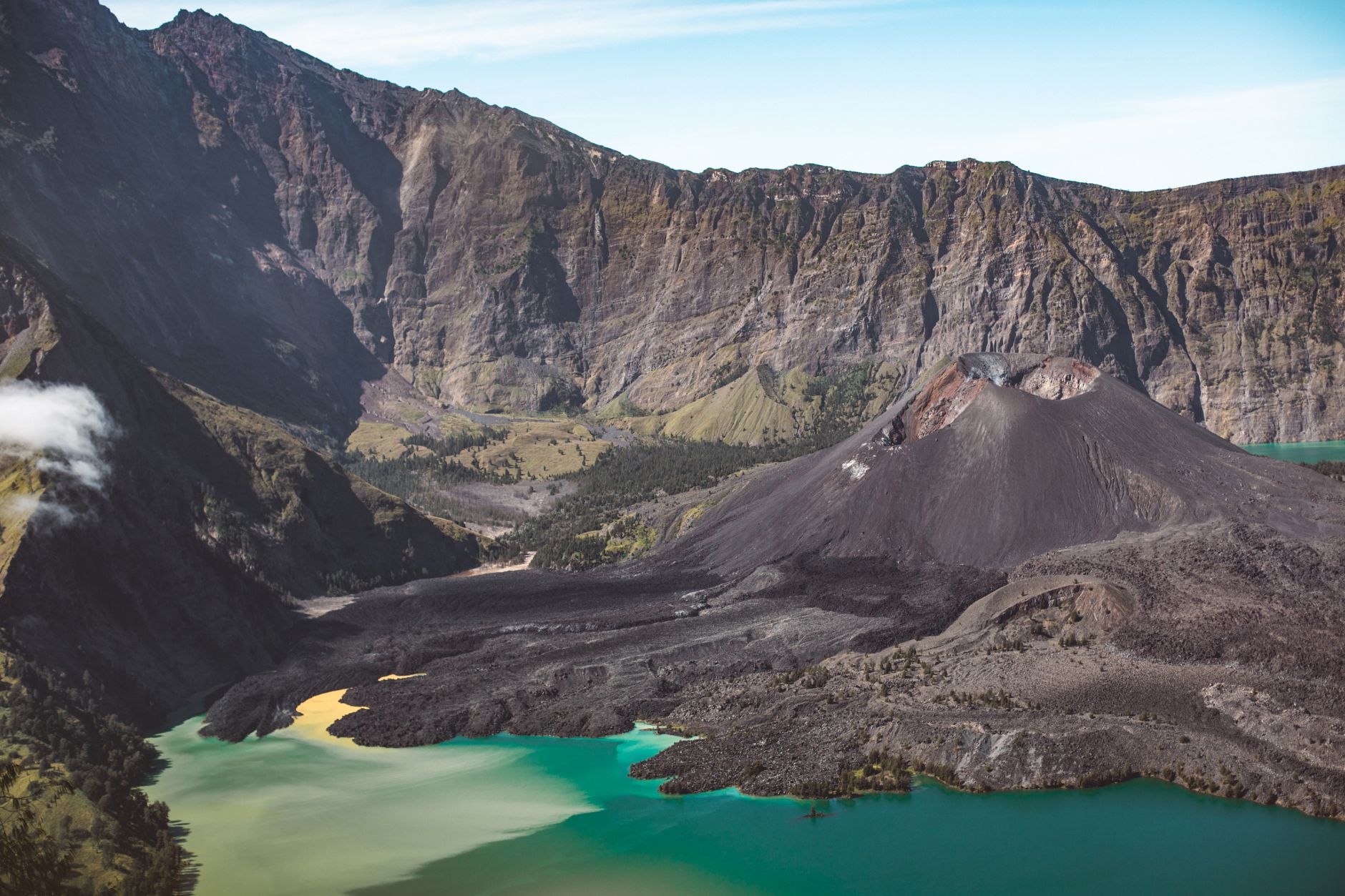
The crater rim at dawn is a different world from the crater floor at midnight. The blue fire disappears with the first light, replaced by the turquoise lake and the white clouds of sulfur smoke that drift across the water. We sat on the edge, the smell of sulfur strong but not unpleasant — a sharp, mineral scent that clung to clothes and skin. The descent was harder than the ascent, the loose gravel sending us sliding in ways that tested knees and patience in equal measure. Back at the van, we stripped off sulfur-stained clothes and wrung them out over the parking lot, drawing amused looks from a group of French tourists who’d done the smart thing and brought a change of clothes. We hadn’t.
Banyuwangi, on day four, was meant to be a rest stop before the ferry crossing. It turned into something better. The coastal camp we found was a patch of ground behind a small hotel that rented its parking lot to campervans for fifty thousand rupiah a night. It faced the Bali Strait, the water a deep blue-green that changed color with the passing clouds. We spent the afternoon doing nothing much — washing clothes in a bucket, reading on the van’s fold-out chairs, walking along the beach where local kids were flying kites made of plastic bags and bamboo. The ferry terminal was visible in the distance, and the sense of preparation was quiet but present: checking the van’s oil, confirming the reservation, figuring out which documents would be needed at the Gilimanuk arrival. None of it felt like work.
The ferry from Banyuwangi to Gilimanuk is a short crossing — about an hour, depending on the queue — but it marks a genuine boundary. Java and Bali are separated by less than three kilometers of water at the narrowest point, yet the difference is immediate. The air on the Bali side is drier, the light different, the vegetation lower and more scrubby. We drove the van onto the ferry in the late morning, the deck crowded with trucks and motorbikes and a few other campervans. The crossing was calm, the water a flat gray-green under an overcast sky. A man selling packets of fried tempeh walked between the vehicles, and we bought two for five thousand each, eating them standing by the van’s side door — which, for the first time in four days, slid open on the first try.
Gilimanuk is not what most people picture when they think of Bali. There are no rice terraces, no beach clubs, no yoga retreats in sight. The town is a port, pure and simple, with the kind of functional architecture that ports have: warehouses, docks, a market selling dried fish and diesel and phone credit. We drove west along the coast road, past empty beaches and small fishing villages, looking for a spot to camp near the national park boundary. The road was narrow, lined with coconut palms and the occasional warung selling coffee and fried bananas. We found a patch of gravel overlooking a bay where the water was so clear we could see the sand ripples from the road above. We parked, opened the door — still working — and sat in the late afternoon light, watching a fishing boat return to shore, its crew hauling nets that glinted silver in the low sun.
The crossing from Java to Bali is only a formality on paper. We’d been in the van for five days, driven through three distinct landscapes, hiked a crater and a volcano, and learned the exact angle needed to close a sliding door. The van was dusty, the cooler smelled faintly of old eggs, and we were out of coffee. The bay was quiet, the water warm, and the road ahead — through West Bali and beyond — was still unwritten. We sat there until the light went orange, then pink, then gray, and nobody came to tell us we had to move.
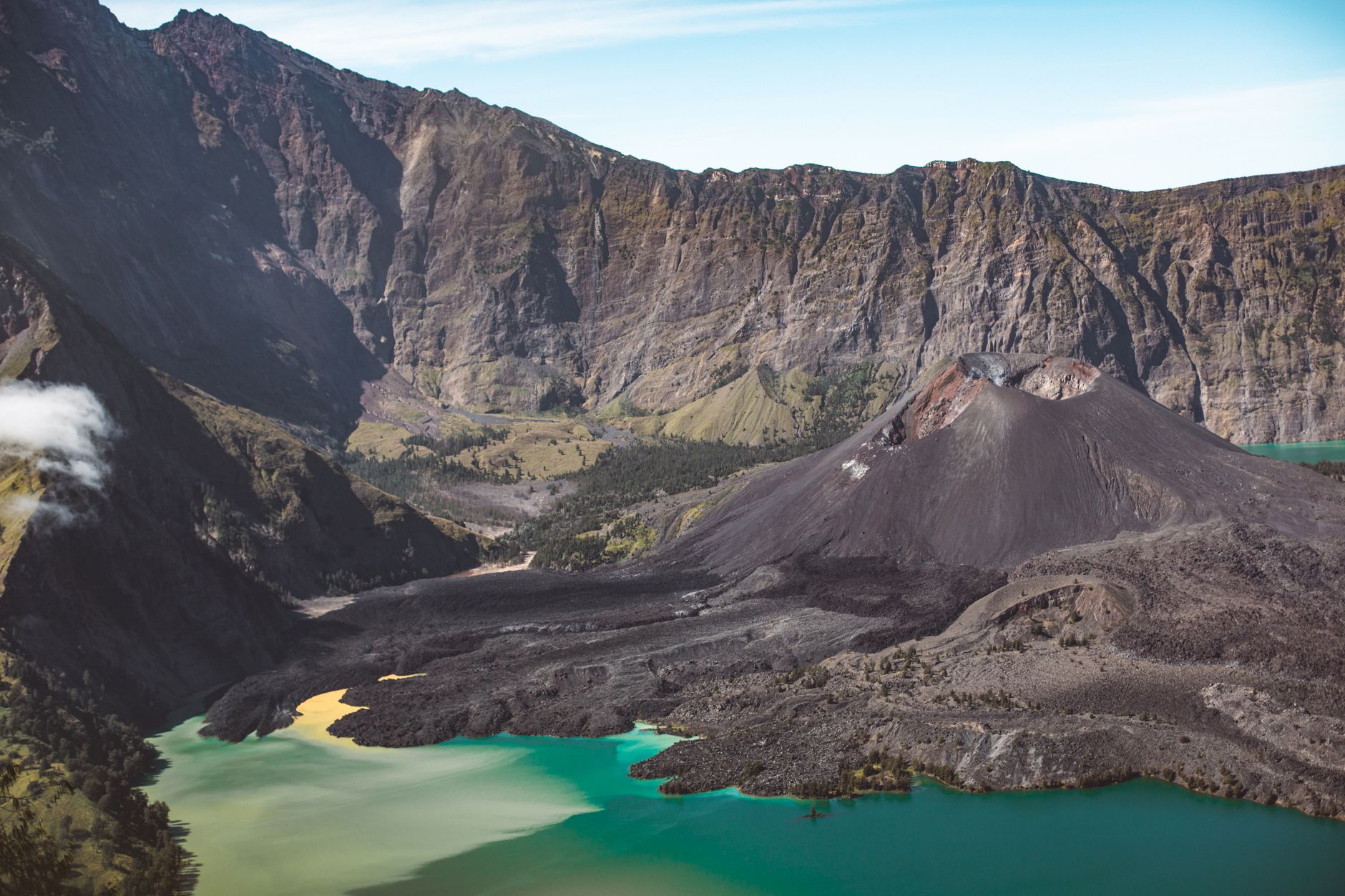
📷 Photos: ROMAN ODINTSOV (Pexels), ROMAN ODINTSOV (Pexels)