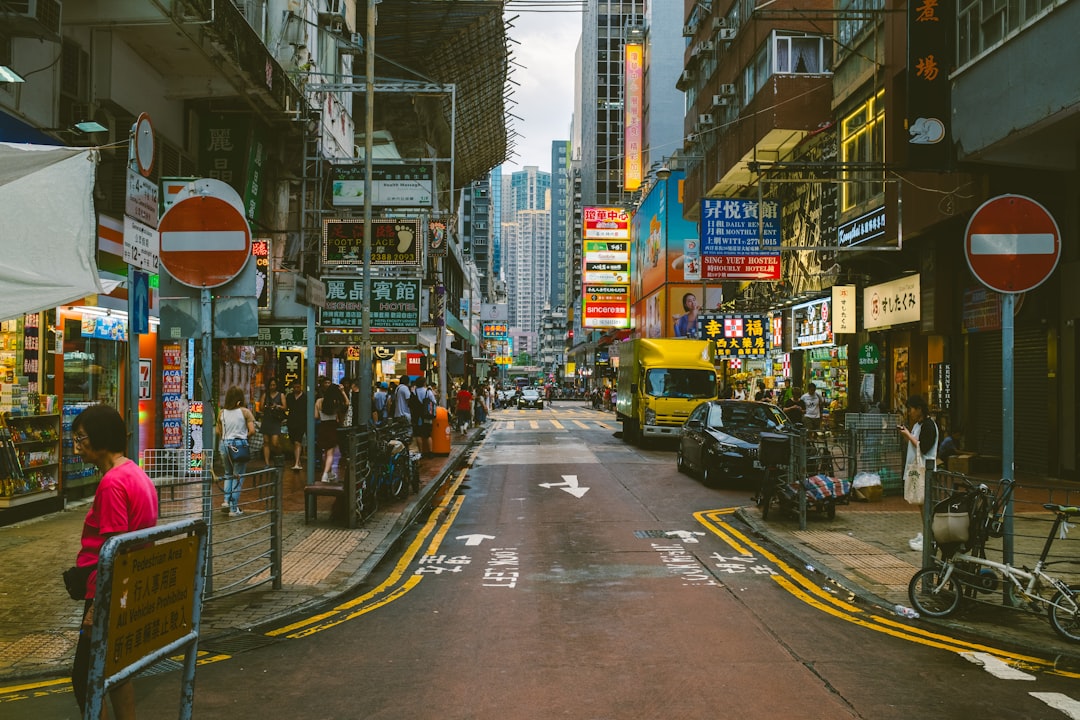
There’s a particular kind of thrill that comes from holding a piece of paper that’s older than you are, especially when it depicts a city you thought you knew. In Hong Kong, that thrill lives in the narrow, covered alleyways of Sham Shui Po’s paper wholesale district, where the smell of old ink and dried glue hangs in the air alongside the clatter of hand trucks and the murmur of wholesale negotiations. You’re not here for the electronics market or the famous street food — though both are worth a detour. You’re here for the hunt, for the specific satisfaction of sifting through boxes of unsorted postcards that have travelled from someone else’s attic to a cardboard crate in a fluorescent-lit shop.
The paper alleys run like a secret network between Ki Lung Street and Nam Cheong Street, a series of covered walkways and narrow lanes where shopfronts spill over with everything from wedding invitations to school exercise books. But the real treasure is in the back rooms. You need to look past the front counter, past the stacks of fresh cardstock and the rolls of wrapping paper. Ask the person at the register — usually a retiree who’s been in the trade for decades — if they have any old stock, any leftover lots from closed-down printers or estate clearances. In Cantonese, a simple “yáuh mouh gauh jat?” (do you have any old things?) will often earn you a nod and a gesture toward a dim corner. What you’ll find there, if you’re patient, is a jumble of cardboard boxes and plastic tubs filled with postcards that no one has catalogued, priced, or even looked at in years.
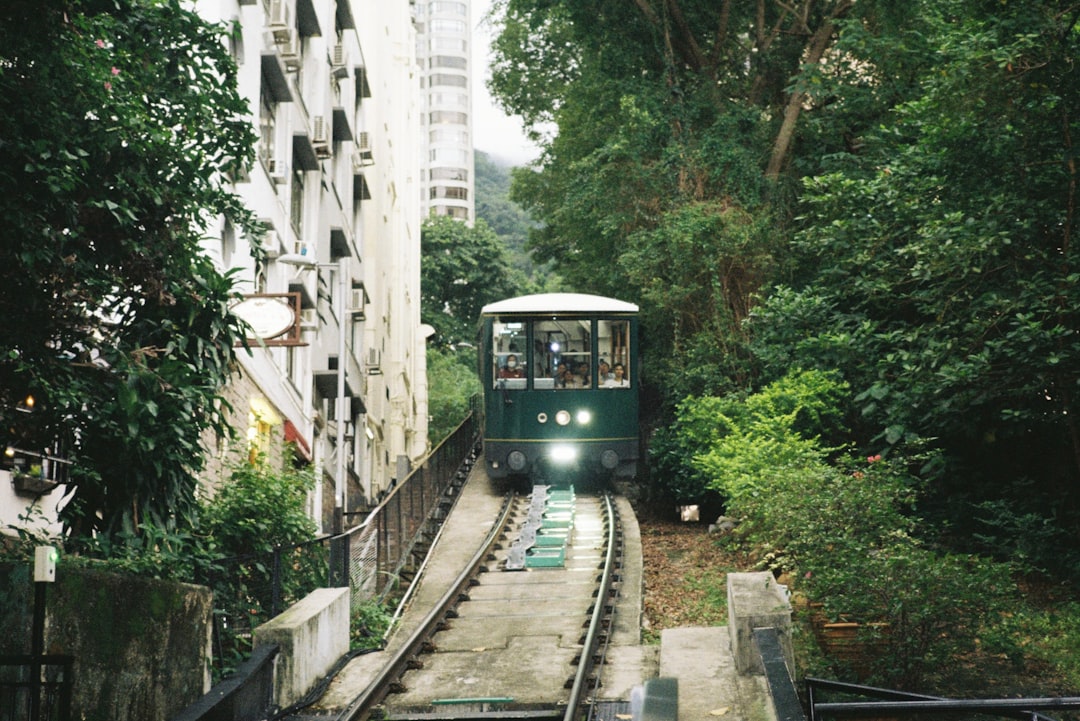
This is not curated vintage shopping. There’s no glass case, no spotlighting, no carefully handwritten price tag explaining the provenance. You will pull out dozens of faded tourist cards from the 1970s — the Peak Tram, Aberdeen fishing village, the Star Ferry in teal and white — before you find the real gems. The ones you want are earlier: black-and-white scenes from the 1950s and 1960s, showing a Hong Kong of wooden junks and low-rise tenements, or the hand-tinted colour cards from the 1930s that give the harbour an almost painterly glow. When you find one, the paper will feel different — thicker, with a slight tooth to the surface, and the image will have a depth that modern digital prints lack. You’ll pay anywhere from five to twenty Hong Kong dollars for it, which is to say, almost nothing for a piece of the city’s visual history.
The trick, the old-timers at the shop counters will tell you, is to look at the back. The message side of a vintage postcard tells a story the front never can. You’ll find messages in elegant cursive, in smudged pencil, in the blocky script of a child. “Dear Mum and Dad, having a wonderful time, weather is hot.” A 1960s card from a British sailor posted to HMS Tamar. A 1980s card from a Japanese tourist, the kanji characters cramped into the narrow space. The postmark dates and the stamps are their own reward — the old colonial-era stamps, the Queen’s head, the surcharges and cancellations that tell you exactly when and where this card passed through the postal system. Some collectors focus exclusively on the stamps, but you’re after the whole package: the image, the message, the journey.
You’ll develop a system quickly. First, you scan the top of each box for any cards with distinctive borders or typography — Art Deco-style edge treatments, or the embossed gold borders that were popular in the 1950s. Those are your quickest indicators of age. Then you fan through the stack with your thumb, looking for the telltale signs of a hand-tinted card: the slightly uneven colour, the way the reds bleed just a fraction beyond the outline of a sampan’s sail. If you find a series from the same photographer or publisher — Edward’s Studio, or the Government Press — you’ve hit a seam worth working through carefully. You might find a run of ten or twelve cards that together tell a complete visual story of the city as it was.
One of the best spots to start is a no-name shop on Ki Lung Street that operates more as a storage unit than a retail space. The proprietor sits behind a desk stacked with invoice books and tea cups, and if you show genuine interest, he’ll pull out a plastic tub from under his desk that he keeps for serious customers. Inside are postcards that have been separated from the general stock because they’re older or more unusual. You’ll see cards showing the old Kai Tak airport terminal, the original Kowloon-Canton Railway station, the now-demolished Tiger Balm Gardens with its garish dioramas. These are the cards that collectors in the West pay serious money for on eBay, but here they’re priced at what the local market will bear — which is not much, because the local market largely ignores them.
The experience changes depending on when you go. Early morning, before 10 a.m., is when the wholesalers are doing their real business, and you’ll be in the way if you’re just browsing. But the atmosphere is electric: hand trucks stacked high with reams of paper, the sound of shrink-wrap being applied to pallets, the shouted orders in Cantonese and Hakka. Later in the afternoon, the pace slows, and the shop owners are more willing to chat. On Nam Cheong Street, a woman who runs a shop that specialises in traditional Chinese wedding certificates keeps a drawer of old postcards under the counter because her father used to be a printer back in the sixties or something, and never threw anything away. She doesn’t advertise them, but if you ask nicely and show you’re a genuine enthusiast, she’ll pull out the drawer and let you go through it while she continues her work.
You’ll want to bring a small LED torch with you. The lighting in these alleyways and back rooms is fluorescent and harsh, casting shadows that make it hard to see the details in a card’s image. A torch lets you angle the light to catch the embossing, to check for foxing or water damage, to read the postmark clearly. You should also bring a clean cotton cloth to wipe the dust off cards you’re considering — some have sat in the same box for decades, and the grime can hide significant condition issues. A card with a clean, unwritten back and sharp corners is worth more, but don’t dismiss the worn ones. A card that’s been through the mail, with a legible message and a clear cancellation, has its own value as a piece of social history.
If you’re serious about building a collection, you’ll need to develop relationships. This isn’t the kind of shopping where you walk in, buy, and leave forever. The best finds come from being a familiar face, someone the shop owners remember as the person who took the time to look, who wasn’t just killing time before the next tourist attraction. Come back a second time, a third. Show them what you bought last time, let them see your genuine interest. Over weeks and months, they’ll start to set things aside for you — a batch of cards they found while clearing out a storeroom, a bundle that came in from a retired expat who was moving back to the UK. This is how you move from being a customer to being part of the unofficial network that keeps the city’s material history circulating.
The best find you might ever make in these alleys isn’t a postcard at all, but a photograph. Some of the boxes contain loose prints from the 1950s and 1960s — real photographic paper, not printed on cardstock. These are often one-offs, unique images that were never mass-produced. You might find a shot of a crowded tenement staircase in Shek Kip Mei, or a street scene in Wan Chai before the flyover was built. These photographic prints are harder to date and harder to value, but they are the most personal objects you’ll encounter. Someone once carried that photograph in their wallet, or kept it on a dresser, and now it’s in a box in Sham Shui Po, waiting for another pair of hands to recognise its worth.
As your afternoon deepens, you’ll notice that the alleyways have a rhythm of their own. The light shifts, the shadows grow longer, and the sounds of the street change from the urgency of commerce to the ease of the evening wind-down. You’ll step out of a shop with a paper bag containing five postcards you bought for a total of thirty dollars, and you’ll feel like you’ve pulled something back from the edge of disappearance. That’s what keeps you coming back — not the acquisition of objects, but the act of rescuing them.
Before you leave Sham Shui Po for the day, take a moment to sit at one of the plastic stools at a dai pai dong on Fuk Wing Street. Order a bowl of cheung fun with sweet sauce and sesame, or a plate of deep-fried tofu. Spread your afternoon’s finds on the small table in front of you. Look at them in the light of the street, under the glow of the fluorescent signs and the evening sky. You’ll see details you missed in the shop — a tiny figure in the background of a street scene, a banner with writing you can now read, a building that still stands or one that’s long been replaced. The city is still here, but the city in your hands is a ghost, and you are its curator.
For your next trip, bring a small notebook. Write down the shop name, the date, what you paid, and anything the seller told you about the card’s origin. Memory fades fast, and the stories attached to these objects are as fragile as the paper itself. If you’re methodical, you’ll end up with not just a collection but a kind of diary of your own — a record of what caught your eye, what you were willing to negotiate for, what the city gave up to you on each visit.
The paper alleys of Sham Shui Po are not a secret. Locals have known about them for decades. But they feel like a secret because they exist outside the tourist economy, in a part of the city that remains stubbornly functional and unglamorous. You’re not shopping for souvenirs here. You’re shopping for evidence — of a city that was smaller, slower, and somehow more vivid in its silences. When you finally walk back toward the MTR station with your paper bag, past the stalls selling phone cases and cheap headphones, you’ll understand why the hunt matters. You didn’t just buy old postcards. You brought a little bit of old Hong Kong back into the light.

📷 Photos: Joao Prates (Unsplash), Mandy Choi (Unsplash)