The key slides into a slot that looks less like a hotel door lock and more like something you’d find on a piece of medical equipment. There’s a soft electronic chirp, and the door slides open with a pneumatic hiss. We are standing in the lobby of what feels like a spaceship, except this spaceship is in the middle of Seoul, and instead of a cryo-chamber, it contains a single bed, a small desk, and a window that looks out onto the polished aluminium curves of the Dongdaemun Design Plaza.
We had booked the capsule room on a whim two weeks earlier, after a friend mentioned it existed. “It’s like sleeping in an egg or something,” they had said, and that description turned out to be closer to literal truth than metaphor. The room is part of a small, almost secretive accommodation tucked away inside the DDP complex itself — not a hotel in the traditional sense, but a kind of designer crash pad operated by the plaza’s management. There are only six of these capsules, and getting a reservation requires persistence. Ours came through a cancellations page we checked obsessively for three days.
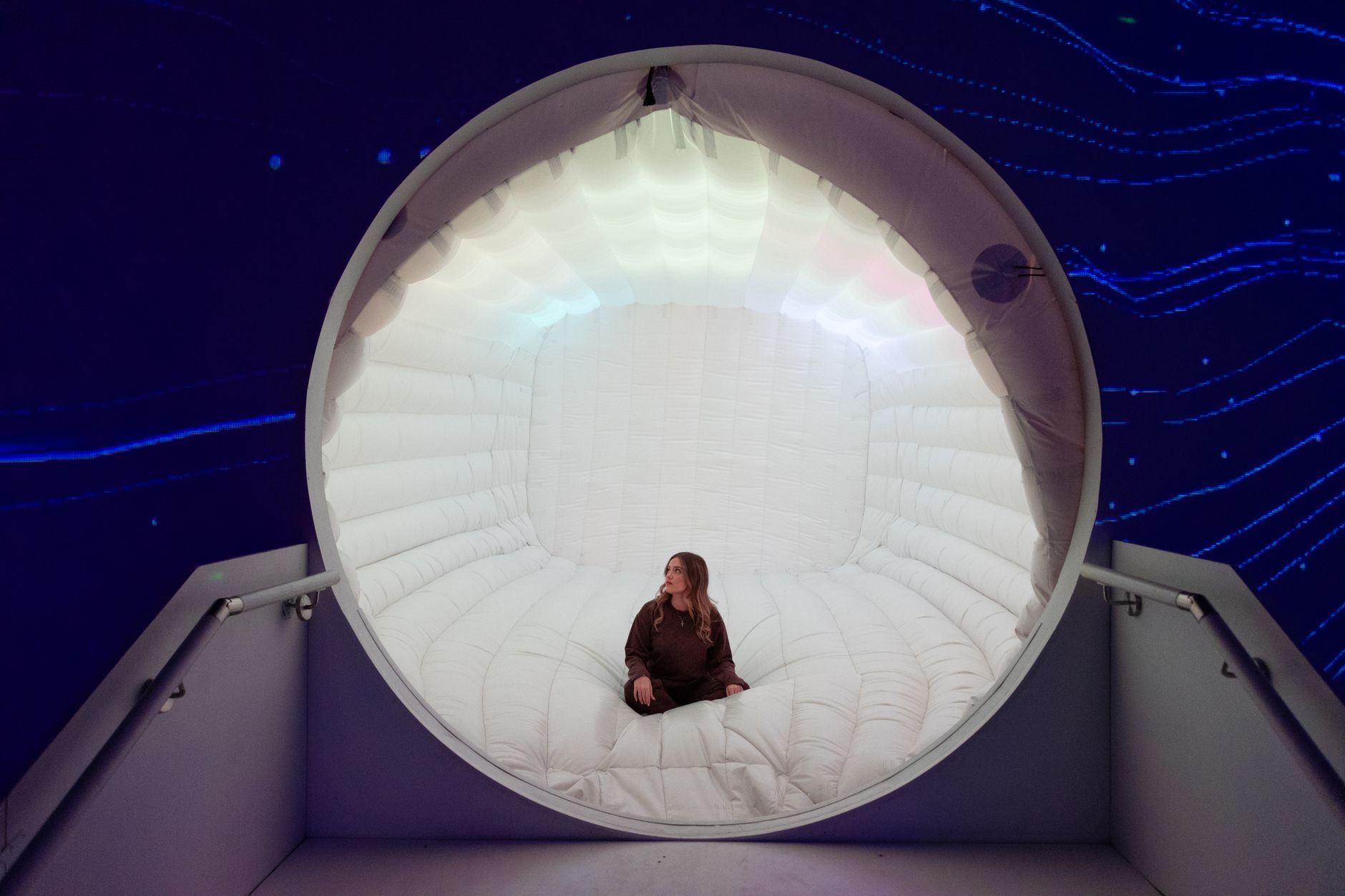
The first thing you notice is the light. It’s not the harsh fluorescent of a hostel dormitory or the warm amber of a hotel room. The capsule’s interior is lit by a single ring of LEDs embedded in the ceiling, casting a cool, even glow that makes everything look like it’s been rendered in soft plastic. The walls are a seamless white composite material, curved at every edge, with no sharp corners anywhere. The bed is built into the structure itself, a mattress that merges with the wall at the headboard, the whole thing moulded from a single piece of what looks like fibreglass. It feels less like a room and more like a sleep pod from a 1970s concept drawing of the future — the kind where everyone commutes by monorail and wears silver jumpsuits. You half expect a robot to appear and offer you a nutrition tablet.
We had arrived late, around 11 PM, after a long day of walking through the Jongno district. The evening air was still warm, the kind of late-spring night that makes you want to keep moving rather than go to bed. The DDP at that hour is a different place from the daytime version. By night, it becomes a stage for light and shadow — the building’s undulating silver surface catches the streetlights and the neon from nearby shops, creating patterns that shift as you walk past. The plaza’s famous LED rose garden was still glowing, a field of artificial flowers that sway in unison, each one programmed to a different colour. We watched them for a while from the elevated walkway that connects the main hall to the capsule entrance, sipping cans of grape soda bought from a convenience store in the Hyundai City Outlet across the street. The soda cost 1,200 won.
The capsule itself, once you get past the initial novelty, reveals a set of deliberate trade-offs. The acoustics are the first thing anyone should know about. The walls are solid composite, which means sound travels differently than in a conventional hotel room. Voices from the corridor are muffled but present, like hearing someone talk on the other side of a thick aquarium wall. We learned this at 1 AM, when a group of young Korean architects — we guessed from the conversation about parametric modelling that drifted through the door — returned from dinner and stood in the hallway for twenty minutes, debating the merits of a building in Singapore. We could hear every word, but the quality of the sound was strange, almost dreamlike, as if the walls were translating speech into a slightly different frequency. We listened longer than we should have.
This is not a complaint. The capsule’s designers clearly knew what they were doing. The bed is unexpectedly comfortable — a medium-firm mattress that supports without cradling, the kind that hotel chains spend millions trying to replicate but rarely get right. The sheets are high-thread-count cotton, and the pillow is a single, fat, goose-down number that we immediately tried to steal (we didn’t — it was bolted down, or glued, or something). The temperature is controlled by a small panel near the door, set into the wall at a forty-five-degree angle, the same angle as the control panel in a car’s centre console. It took us a moment to find it, because it’s flush with the surface and nearly invisible in the dimmed night-time lighting.
The bathroom is the part that surprises most visitors, and it surprised us too. There’s no shower. The capsule is equipped with a compact wet room — a toilet, a sink, and a handheld showerhead all in one sealed fibreglass unit, the kind of setup you’d find on a sailboat or a high-end RV. The water pressure is excellent, and the hot water arrives instantly, but the whole space is so small that you can’t fully extend your elbows while washing your hair. We learned to adapt: showering with the door slightly ajar, one foot still in the main capsule, the other in the wet room. It’s not luxurious, but it’s efficient, and after a long day of walking, the feeling of standing under hot water in a room that looks like a modernist sculpture is its own kind of pleasure.
The window is the capsule’s best feature and also its strangest. It’s a single pane of glass, roughly the size of a small television, set into the wall at pillow height. It faces directly onto one of the DDP’s internal courtyards, a space that during the day is filled with tourists photographing the building’s geometric facade. At night, the courtyard is mostly empty, lit by floodlights that cast long shadows across the polished concrete. Lying in bed, looking out that window at the empty plaza, feels like watching a movie about a city that has been evacuated. The building’s curves, visible through the glass, seem to breathe in the dim light. We lay there for an hour, not sleeping, just watching the shadows move.
The practical details are worth knowing if you plan to book this room. Check-in is handled at a small desk near the DDP’s information centre, not at a hotel front desk. The staff are efficient but not chatty — they hand you the key, point toward the elevator, and return to whatever they were doing on their tablets. There is no breakfast, no room service, no mini-bar. There is a small electric kettle and a selection of tea bags, including a rather good omija (magnolia berry) blend that we drank while sitting on the bed, watching the morning light fill the courtyard. The capsule costs 89,000 won per night, which at the time of our stay was roughly 90 Australian dollars. For central Seoul, that’s a good deal, especially given the location: step out of the DDP’s main entrance and you’re five minutes from Dongdaemun Market, ten minutes from the walking street that leads to the Cheonggyecheon stream.
We woke early the next morning, around 6:30 AM, before the plaza opened to the public. The capsule’s window had let in the first light — a pale, milky dawn that turned the silver exterior of the DDP into something softer, almost gold. We dressed quickly and walked out into the empty courtyard, the only people there apart from a single maintenance worker sweeping the tiles with a long-handled broom. The rose garden was off, the flowers dark and still, their stems bowed slightly as if sleeping. We walked the perimeter of the plaza, following the building’s curves, and found a small coffee cart set up near the east entrance, run by an older woman who served us a coffee that cost 3,000 won and tasted like good, strong, Korean-style drip — not too bitter, not too acidic, just right for the hour.
That morning walk changed how we thought about the capsule. The room makes sense as a base for exploring the DDP itself, not just as a novelty. The plaza opens at 7 AM for walkers and early risers, and for an hour or so, before the tour buses arrive, the space belongs to the people who slept there. We watched a group of older Seoulites doing tai chi on the lawn, their movements slow and deliberate, the reflection of the building’s curves mirrored in the glass facades across the street. A photographer set up a tripod near the main entrance and waited for the light to hit a particular angle on the facade. He told us, unprompted, that he had been coming to the DDP every morning for three years, and that the light in April was the best of the year. We believed him.
The downsides are real and should be weighed honestly. The capsule has no storage space beyond a small shelf and a cubby under the bed — you have to live out of your bag, which for a single night is fine, but for longer stays would become frustrating. The noise, as mentioned, is a factor: the DDP hosts events, concerts, and conferences, and during the day the building hums with activity. If you’re a light sleeper, bring earplugs. The wet-room shower requires a willingness to accept that you will, at some point, get water on the floor of the main capsule, no matter how careful you are. The capsule also lacks a proper desk, which makes working there difficult — the small table is just large enough for a laptop, but there’s no chair that allows you to sit upright comfortably.
We checked out that morning, returning the key to the same desk where we had collected it twelve hours earlier. The staff member barely looked up from her tablet. We walked out into the late-morning sun, past the growing crowds, past the selfie sticks and the tour groups and the children chasing each other across the plaza’s smooth surfaces. The capsule was already beginning to feel like a dream — the cool, even light, the hiss of the door, the weight of the window’s view. We turned back once to look at the building, its silver curves gleaming in the sun, and tried to pick out which window had been ours. From the outside, they all look the same. That’s the point.
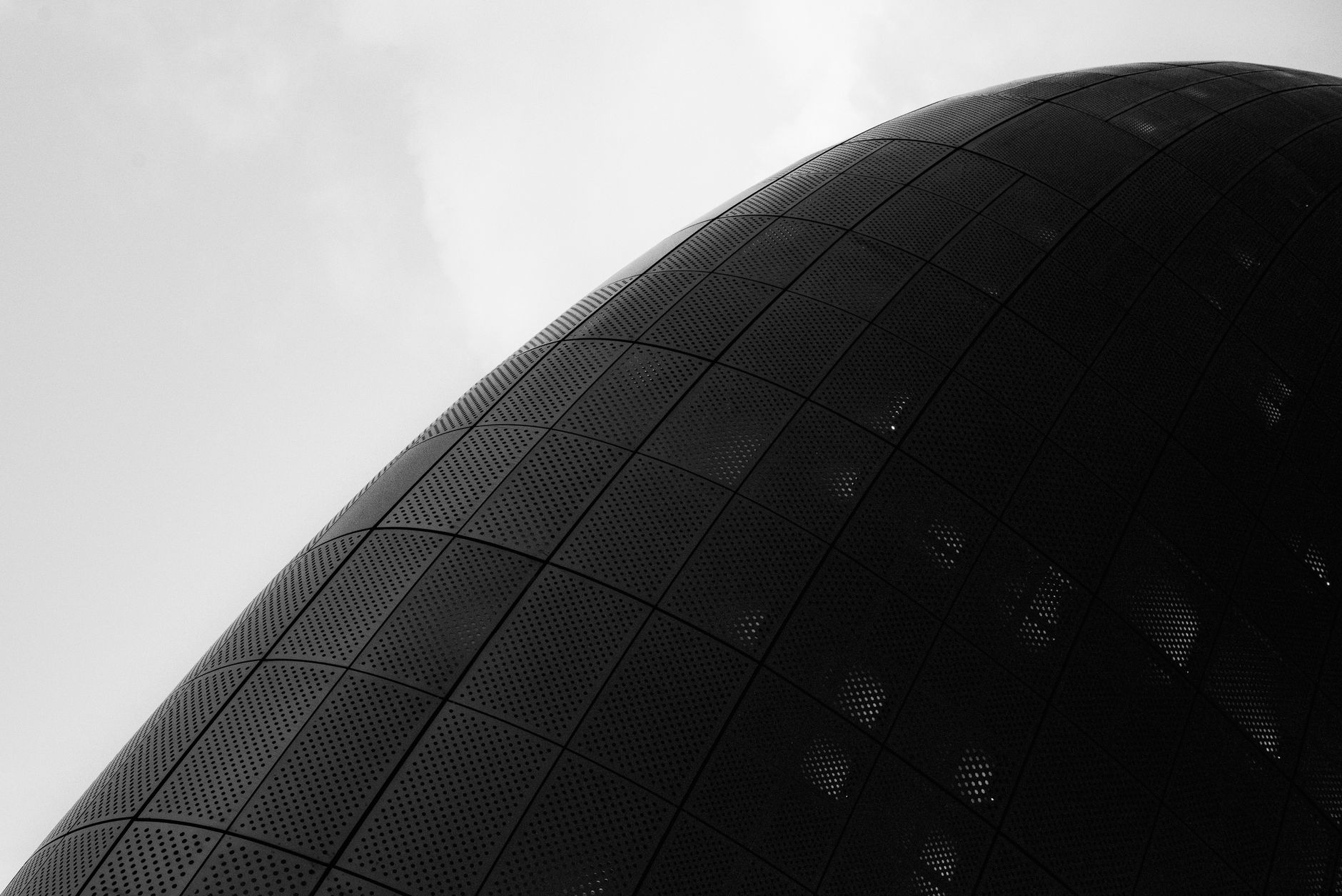
📷 Photos: Macourt Media (Pexels), Gije Cho (Pexels)