The asphalt stopped just north of Phong Nha, which was the first sign that our plan had been too tidy. The Ho Chi Minh Trail isn’t one road. It never was. The maps show a single winding line through central Vietnam, but the trail was always a network of parallel tracks and hidden bypasses, and the spirit of that arrangement survives in the present-day Highway 15 and its lesser siblings. We had three days, two rented Honda XR150s, and a route sketched from a hostel corkboard in Đồng Hới. The corkboard had not accounted for the late-February rain.
We left town under a sky that looked like a dirty sheet. The first thirty kilometres were easy—fresh asphalt, new bridges, the occasional bus passing with a warning blast of its horn. A German couple we’d met at breakfast had told us the trail was mostly paved now, “more of a scenic drive than an adventure.” They were right for about an hour, until the road narrowed, the pavement cracked, and the rain started in earnest.
By noon we were soaked through, stopped under a concrete shelter that smelled of damp earth and tyre rubber. A woman selling sugarcane juice from a cart watched us peel off our gloves. She didn’t say anything at first, just poured two glasses and set them on the cart’s counter. Her name was Hạnh, and her family had lived near this stretch of road since before the war ended. “This road,” she said, gesturing vaguely eastward, “used to be mud. All mud. Now it’s concrete, but the rain stays the same.” It was the kind of observation that sounds like a riddle until you’ve been riding through it for three hours. And you have been.
The first crater lake appeared just past a village called Tân Trạch. We almost missed it. The road curved through a dense patch of acacia trees, and then suddenly the forest opened into a wide, perfectly circular pond, its surface a dull green under the low clouds. A sign in Vietnamese and English explained that the crater was from a 500-pound bomb dropped in 1970. We parked the bikes and walked to the edge. The water was still, opaque, about thirty metres across. A few small fish broke the surface, then disappeared. There’s something unsettling about these lakes—they’re too round, too deliberate-looking. Nature doesn’t make circles like that. The war made them, and sixty years later they’re still there, full of water and fish and silence.
We saw seven more over the next two days, each one different in size but identical in shape. Some were marked, some weren’t. The unmarked ones were harder to place—you’d be riding through a stretch of farmland, and suddenly there it was, a perfect blue disc in the middle of a cassava field. A local farmer told us he didn’t think much of them anymore. “They’re just ponds to us,” he said through a translator. “Good for watering the buffalo.” That was the thing that kept surfacing, the gap between what we saw and what they lived with. To us, each crater was a monument. To him, it was a drinking trough.
That first night we aimed for a village called A Lưới, a name that appeared on our map with a small dot suggesting services. What we found was a single guesthouse run by a woman who seemed surprised to see us. The room had concrete walls, a ceiling fan that wobbled, and a mattress that felt like it had been filled with gravel. The bathroom was a concrete room with a hose and a bucket. We ate dinner in what passed for the village’s main street: a woman grilling pork skewers over charcoal, a man selling warm beer from a cooler, a group of children kicking a deflated football in the rain. The pork was good—charred and fatty, dipped in a fish-sauce dressing that burned more than we expected. The beer was better than it had any right to be.
We made two mistakes that first day. The first was not eating lunch properly—we’d relied on energy bars and water, which was fine until the sun came out at 3pm and we realised we’d been running on sugar and caffeine for six hours. The second was more embarrassing. We’d filled the tank at a station near Đồng Hới, but somewhere around Phong Nha we’d taken a wrong turn, added forty kilometres to our route, and burned through nearly half the fuel. The next station was sixty kilometres away, according to a man at a roadside repair stall who looked at our fuel gauge and laughed. He sold us two litres of petrol from a repurposed whiskey bottle, poured through a funnel made of a paper cone. It cost about a dollar and a half — cheap. We didn’t make that mistake again.
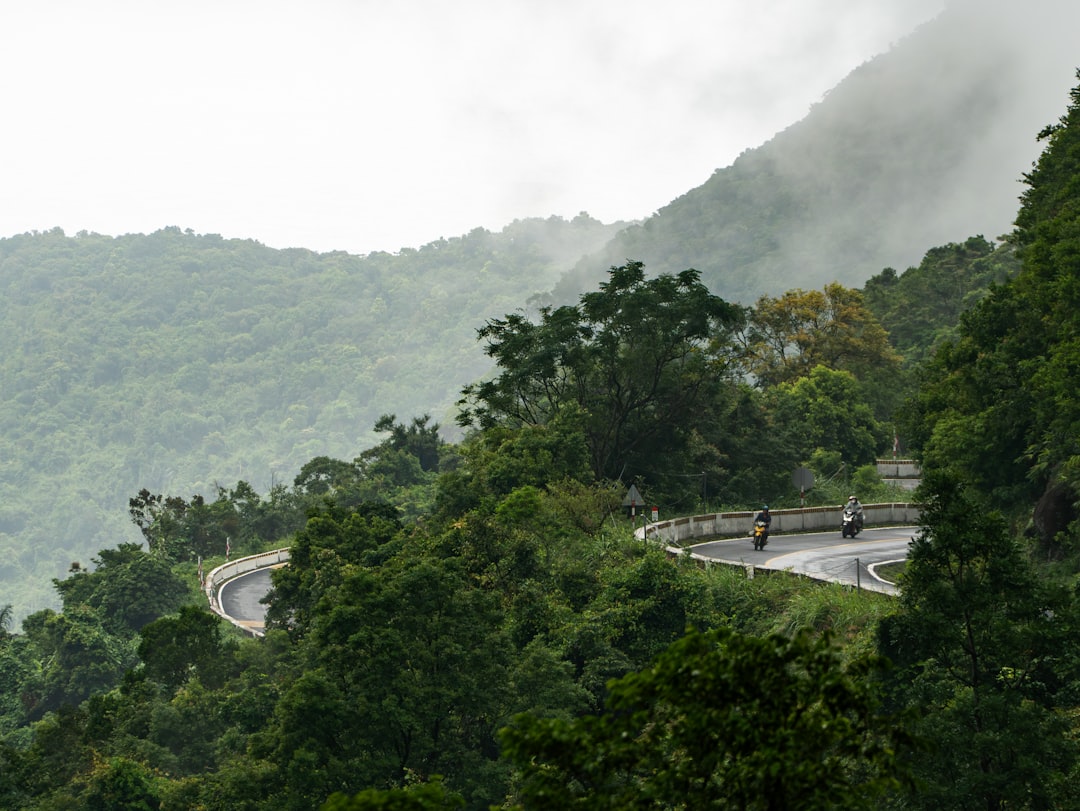
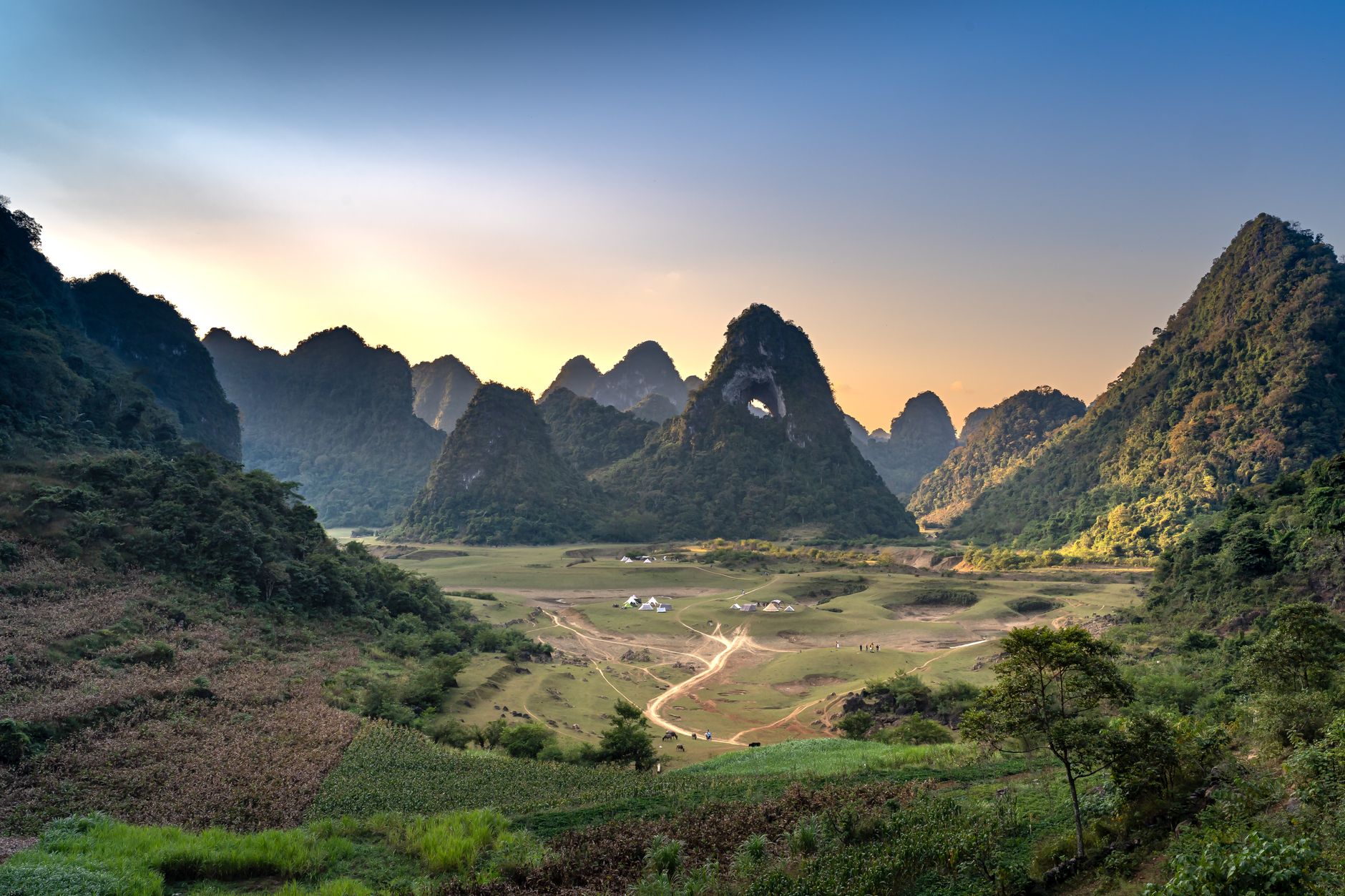
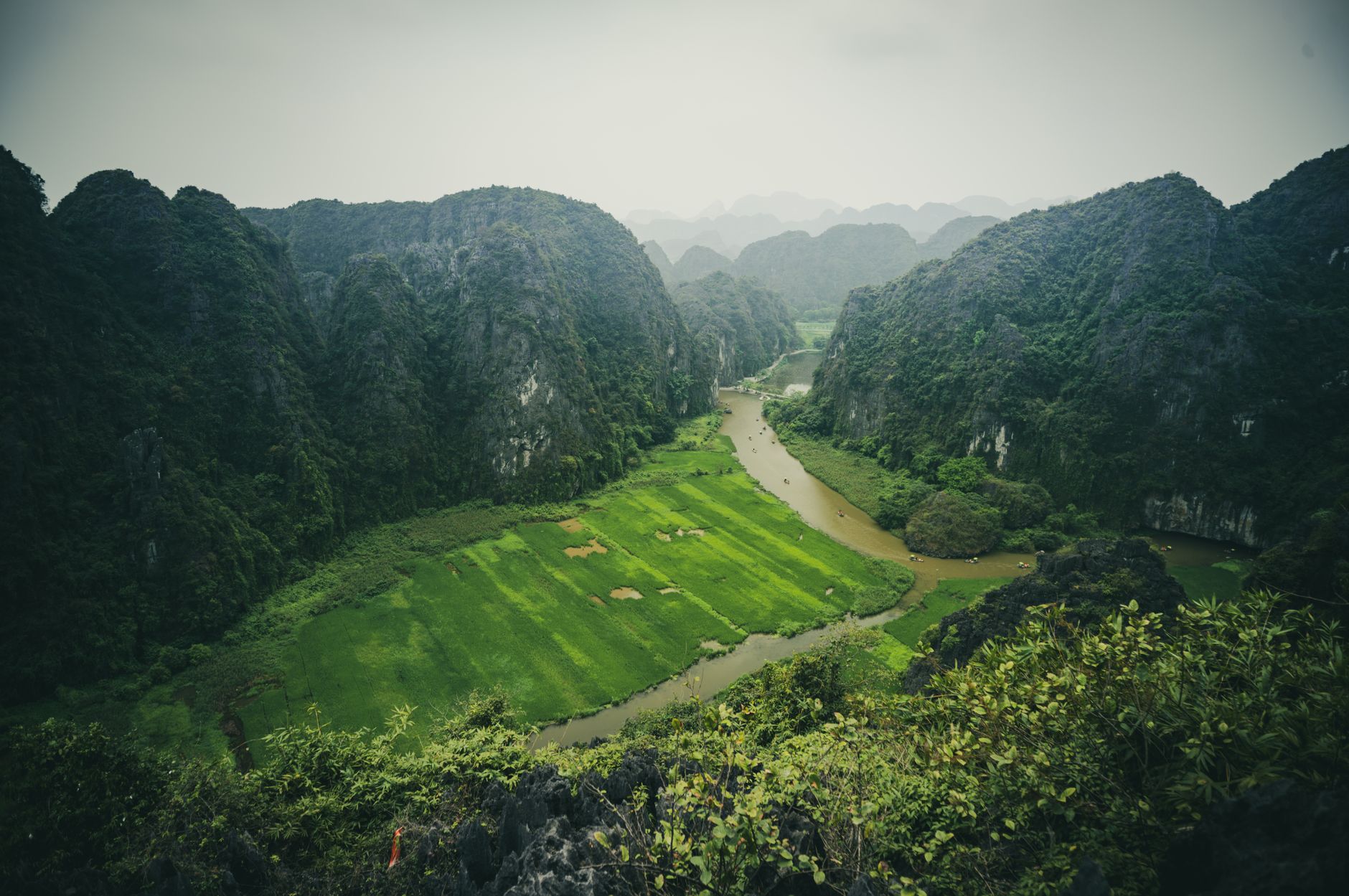
Day two dawned clear and hot, the rain having scrubbed the air clean. The road south from A Lưới climbs into the Truong Son mountain range, and for the first time the trail earned its reputation. The asphalt gave way to gravel, then dirt, then a surface that seemed to be composed of equal parts mud, broken stone, and the ghosts of old tyre tracks. The switchbacks were tight, the drops off the edge dramatic, and the views—when we could take our eyes off the road—were the kind that make you understand why people keep doing this. Valleys unfolded below us, patchworks of rice terraces and forest, the occasional wisp of smoke from a village you couldn’t see. We passed a truck carrying timber, its load lashed with vines. We passed a family of four on a single scooter, the youngest child asleep against the mother’s back. We passed nothing for long stretches, just the green and the sky and the sound of our engines bouncing off the hills.
The tunnels near Vinh Moc came as a surprise, even though we’d planned for them. The guidebooks prepare you for the idea but not for the scale. Vinh Moc is a village that moved underground during the war, and the tunnels there are not the tourist version—they’re the real thing, narrow and dark and suffocatingly low. We ducked through the entrance, our shoulders brushing the dirt walls, and followed a passage that opened into a room the size of a small car. A guide named Lâm, who had been a child during the war, walked us through. He pointed to a corner where a family of six had slept. He pointed to a hole in the ceiling where a chimney had been. “Three hundred people lived here, off and on, for three years,” he said. “Children were born here. We had a school.” The ceiling dripped. The air was thick and warm. We stayed maybe twenty minutes, and it felt like hours.
There’s a kind of silence that happens in those tunnels that isn’t quiet—it’s heavy, pressing in from all sides. We didn’t talk much afterward. We sat on a bench near the entrance and watched a group of Vietnamese students take selfies by a cannon emplacement, and something about the contrast—their laughter, the bright plastic cases on their phones, the rusted metal behind them—felt like the whole country’s relationship with history in a single frame. It’s not that they don’t remember. It’s that they’ve found a way to live alongside it.
The ethnic minority villages along the trail are not set up for tourists, which is both their appeal and their challenge. We stopped at a village called Ta Vàng, home to the Pa Cô people. The houses were built on stilts, their roofs patched with tarps and corrugated metal. Children ran barefoot through the mud. A woman wove a basket on her porch, her hands moving with a rhythm that looked effortless but clearly wasn’t. We didn’t know if we were welcome, so we stood by the edge of the village until an older man waved us over. His name was A Sinh, and he spoke a little English, mostly learned from NGO workers. He offered us tea, boiled in a pot over a fire, so strong it was almost black. We sat on wooden stools and drank it, and he told us about the road. “Before the road, we walked everywhere,” he said. “Two days to the market. Now, one hour. But the road also brings people who take photos and leave.” He didn’t seem angry about it, just factual. We stayed an hour, helped A Sinh split some firewood—badly—and left when the afternoon rain started again.
That night we made it to Khe Sanh, which was not what we expected. The town is small, dusty, and feels like it’s still deciding what to do with its history. The old American base is now a coffee plantation and a museum that’s closed more often than it’s open. We found a guesthouse run by a retired Vietnamese Army officer, who showed us to a room with a framed photograph of his unit on the wall. He asked where we’d come from, traced our route on a map with his finger, and nodded. “Good road,” he said. “But in the rainy season? Not so good.” He didn’t charge us for the coffee he brought the next morning.
The last day was the longest. We rode from Khe Sanh to the coast, a stretch that took us through the Dakrong Valley and past the old Truong Son National Cemetery. The graveyard stretches across a hillside, row after row of white headstones, each one inscribed with a name and a province. We didn’t stop long. It felt wrong to treat it as a photo opportunity. But we slowed down, and we rode past in silence, and the wind carried the sound of someone playing a flute from somewhere nearby.
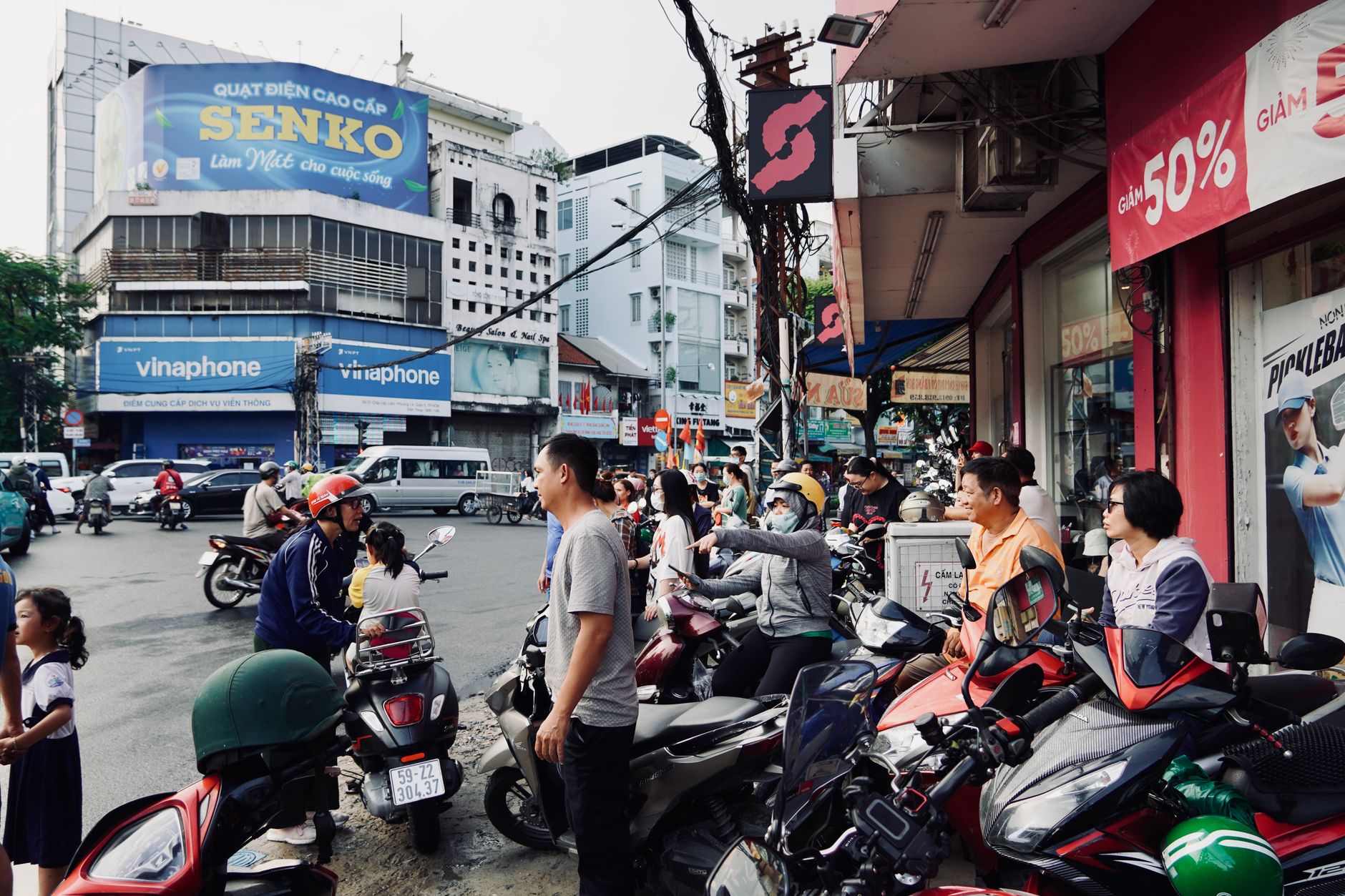
By the time we hit Highway 1 and turned south toward Huế, the trail was behind us. The road widened, the traffic thickened, the honking resumed. We pulled over at a roadside café and ordered two cans of iced coffee, sweetened with condensed milk, the kind that wakes you up by sheer force of sugar. A man on the next table was watching a karaoke video on his phone, singing along tunelessly. A dog slept under the table. The afternoon sun was bright and hot, and we were tired in a way that felt earned.
The Ho Chi Minh Trail isn’t a route you follow. It’s a route you find, one crater lake and one cup of tea at a time.
📷 Photos: Tuan Vy (Pexels), Tuan Vy (Pexels)