Why Dawn Is the Only Time to Take a Sleeper Van Over the Mountain Passes of Gangwon-do
There’s a particular kind of silence that settles over a mountain pass just before the sun crests the ridge—a stillness so complete you can hear the crackle of frost forming on the windshield of your sleeper van, the soft creak of the suspension as the temperature drops another degree. You’re awake because the road itself has woken you, its curves pulling at your sleeping body in the back, the engine note changing as the grade steepens. And that’s the moment you realize: this is why you came to Gangwon-do.
The province is South Korea’s mountainous spine, a region of granite peaks, pine forests, and narrow valleys where highways give way to two-lane roads that coil like ribbon around the terrain. For most travelers, it’s a daytime destination—ski resorts in winter, hiking trails in summer, the coastal city of Sokcho in between. But for those who know the sleeper van, the real experience begins when the sun hasn’t. The passes of Gangwon-do—Daegwallyeong, Misiryeong, Hangyeryeong—demand a different relationship with time, one that rewards the early riser and the patient driver alike.
You pull over at a rest area near the base of Daegwallyeong Pass around 4:30 AM, the van’s diesel heater ticking as it warms the cabin. Outside, the world is monochrome: charcoal mountains, silver mist, the black ribbon of asphalt disappearing into the dark. This is the hour when fog pools in the valleys, when the deer venture close to the road, when the only other vehicles are the occasional produce truck heading toward the markets of Pyeongchang. You brew instant coffee on the portable stove, the smell filling the van, and watch the sky begin its slow shift from indigo to violet. There is no rush. The pass will still be there when you’re ready.
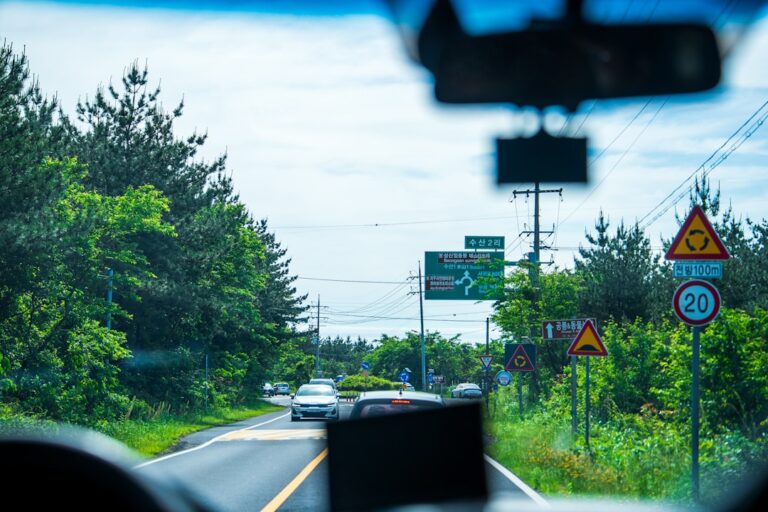
The geography of Gangwon-do is not forgiving. The Taebaek mountain range runs north-south through the province, creating a series of passes that range from manageable to genuinely challenging. Daegwallyeong, at an elevation of around 700 meters, is the most traveled—it’s the gateway between the eastern coast and the interior, a steady climb of six kilometers with gradients that touch eight percent. In a sleeper van, especially one with a manual transmission and a diesel engine that wakes slowly, you learn to read the road differently. You downshift before the hairpin, not during. You keep your speed steady through the chicanes, letting the engine’s torque do the work. You give yourself an extra car length on the blind corners, because the trucks coming down from the east have momentum on their side and no intention of losing it.
But the challenge is precisely the reward. There is a physicality to driving these passes that modern highways have erased from most road trips. You feel the gradient in your shoulders as you brace through the turns. You sense the altitude change in the way the engine breathes, in the thinness of the air when you step out at the summit rest area. Your hands know the wheel in a way they don’t on the flat, straight expressways of the west. And when you finally crest the pass, the view opening from one side to the other as the valley floor drops away below you, there is a moment of genuine accomplishment that no photograph can capture.
Misiryeong Pass, further north near the DMZ, offers a different character. It’s less traveled than Daegwallyeong, a road that feels almost forgotten in the early hours. The pavement is older here, patched in places, the guardrails weathered to a dull gray. You drive through corridors of pine and birch, the trees pressing close on either side, the road narrowing until it feels like a tunnel through the forest. The fog is thicker at Misiryeong, and the temperature can drop ten degrees from the base to the summit, even in late spring. You’ll want to check your coolant and your wiper fluid before you start—nothing ruins a dawn run like a frozen windshield washer.
What makes the sleeper van the ideal vehicle for these roads is not just the ability to park and sleep at altitude—it’s the way it changes your relationship with the landscape. You are not passing through on your way to somewhere else. You are living in the pass. You wake up at a rest stop, make breakfast, watch the fog burn off, and then decide whether to push on or linger. The van becomes a base camp, a mobile observation post, a home on the edge of the road. You learn to find the sweet spots: the rest areas with views of the eastern horizon, the turnouts where you can pull over and watch the sunrise in privacy, the parking lots of small Buddhist temples where the monks don’t mind if you stay until morning so long as you’re quiet.
Hangyeryeong Pass, the highest of the three at over 800 meters, is where the road trip gets serious. The approach from the west is a series of switchbacks so tight you’ll need to shift into first gear on some of them, the engine straining as the van climbs. The eastern descent is steeper, with gradients that demand steady braking and careful gear selection. In a sleeper van, you feel every meter of elevation change, the weight of the vehicle working against you on the climb, pushing you forward on the descent. You learn to brake in short, firm pulses rather than riding the pedal, to keep your transmission and brakes from overheating.
But the summit of Hangyeryeong at dawn is a revelation. You park facing east, the van’s nose pointed toward the Sea of Japan, and watch the light come up over the distant peaks. The air is cold enough that your breath steams, clean enough that you can smell the pine resin and the earth. Below you, the valleys are still dark, the villages invisible, the roads empty. For a few minutes, you have the entire mountain to yourself. You stand on the gravel beside the van, coffee in hand, and feel the absurd privilege of being in this place at this hour.
The practical realities of a Gangwon-do sleeper van trip are worth understanding before you go, because the margin for error on these roads is small. Fuel stations are rare above the valley floors, and many close by nine in the evening—you’ll want to fill your tank before you start the climb. Cell service drops in and out on the passes, sometimes vanishing entirely for ten or fifteen kilometers at a stretch. Download your maps offline and carry a paper backup, because the switchbacks can confuse GPS signals, and the last thing you want is to find yourself on a logging road at 3 AM with no way to navigate back.
Water is another consideration. The rest areas on the passes often have public restrooms, but they’re not always maintained in the early hours. Carry a portable toilet or a dedicated bottle for emergencies, and don’t rely on finding potable water at altitude. Your van’s fresh water tank will serve you well if you filled it before leaving the city, but in winter, you’ll need to drain it at night to prevent freezing. The same goes for your cooking stove—propane works better than butane in cold conditions, and you’ll want to keep the canisters inside the van rather than in an external locker.
Food becomes a ritual on these trips. There’s something elemental about cooking a simple meal at altitude—rice and kimchi jjigae, or a packet of instant noodles with an egg dropped in—while the sun rises over the mountains. The small convenience stores at the base of the passes stock the essentials: ramyeon, canned tuna, dried seaweed, rice balls, and the ubiquitous Korean instant coffee that tastes of chicory and nostalgia. You learn to appreciate the economy of a well-packed cooler, the satisfaction of a hot meal when the temperature is near freezing outside.
The wildlife is another gift of the early hour. At Daegwallyeong, you might spot deer grazing at the edge of the forest, their eyes catching the headlights as you crest a hill. At Misiryeong, the birdlife is extraordinary—you’ll hear the calls before you see the birds, a chorus that builds as the light strengthens. At Hangyeryeong, if you’re lucky, you might catch a glimpse of a wild boar crossing the road, though you’ll want to give it a wide berth. These encounters feel like a secret, a reward for being awake when no one else is.
The downsides of the dawn approach are real and worth naming honestly. You will be tired, especially on the second or third morning, when the novelty has worn off and the bed in the van feels less romantic and more cramped. The cold is relentless at altitude—even in June, the temperature can drop to single digits, and the dampness of the fog finds its way into every seam of your clothing. The driving demands constant attention, and one lapse in concentration on a blind corner can turn a beautiful road trip into something else entirely. You will need to pace yourself, to know when to stop for the day and when to push through.
But the rewards outweigh the discomfort, and that’s the calculus that makes sense of the trip. You are trading a few hours of sleep for the memory of a sky that turns from black to violet to gold over a mountain pass that has been here for millennia. You are choosing the road less traveled in the most literal sense, driving at an hour when the only witnesses are the deer and the mist. And you are doing it in a van that becomes, for those hours, the most intimate possible connection to the landscape—a home on wheels that carries you through the mountains and into the light.
One final note on the passes themselves: the conditions change dramatically by season. In winter, the roads are often snow-covered and require chains or dedicated winter tires. The passes close unpredictably during snowstorms, and you can find yourself stuck on the wrong side of a mountain for hours or even days. Spring and autumn offer the best balance of manageable weather and stunning scenery, with the foliage turning in October and the azaleas blooming in April. Summer brings monsoon rains that reduce visibility and make the roads slick, but the lush green of the forest canopy is its own reward.
You will come away from a Gangwon-do dawn run changed in small ways. Your sense of time will shift—you’ll find yourself waking earlier on ordinary mornings, looking for the light. Your relationship with the van will deepen, its quirks and capabilities becoming familiar as the lines of a well-worn map. And you will have seen the mountains of Korea in a way that most travelers never do: not as a backdrop for a photo, but as a living, breathing presence that you moved through in the quiet hours before the world woke up. That is the gift of the sleeper van at dawn on the passes of Gangwon-do, and it is a gift that keeps giving long after the trip is over.