Why South Korea’s Eastern Coast Is the Ultimate Cherry Blossom Road Trip
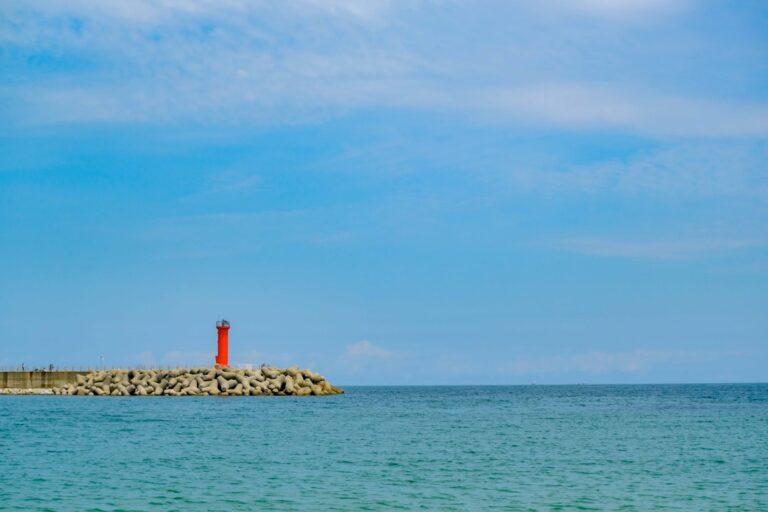
You are behind the wheel, the sea a constant presence to your left, a ribbon of silver that catches the low spring light and throws it back at you in shards. To your right, the land rises steeply, cloaked in a pale pink haze that, as you round the next bend, resolves into thousands of cherry trees in full, furious bloom. This is not the choreographed, festival-scene cherry blossom chase you might imagine. This is the eastern coast of South Korea, and you are driving it in spring—a journey that feels less like a sightseeing itinerary and more like a slow, unfolding secret.
The conventional wisdom for cherry blossom travel in Korea points you to Seoul’s Yeouido or Jinhae’s famous festival. Those are fine, but they are also crowded. What you want, instead, is the open road: the six- or seven-hour drive from Gangneung down to Busan along the eastern coastline, where the blossoms arrive later, linger longer, and frame themselves against a landscape of dramatic cliffs, pine forests, and the deep blue of the East Sea. Seoul’s trees peak in early April, but the coast runs about a week to ten days behind. If you plan your departure for the second week of April, you hit the sweet spot: the city trees are already dropping petals, but the coastal route is just reaching its peak.
Your base camp for the first leg should be Gangneung. Arrive a day early to acclimatise, to buy snacks and water for the road, and to make sure your rental car is fitted with a proper navigation system—Korean GPS is excellent, but it requires the car’s registration number to be entered at the rental counter. Don’t skip this step. The coastal route has long stretches where phone signal dips, and having offline-capable navigation (or a downloaded KakaoMap area) is what separates a smooth trip from a frustrating one.
The drive south from Gangneung begins along Route 7, a coastal highway that hugs the shore with an intimacy that surprises. You pass through small fishing villages where the cherry trees are not planted in tidy rows but seem to have grown wild, their branches reaching over the road to form a tunnel of pink. You can stop anywhere. The first real pull-over is at the Gyeongpo Beach area, just south of Gangneung, where a long stretch of cherry trees lines the lake. There’s a walking path here that takes about an hour at a leisurely pace, but you are in a car, so you do the drive slowly, window down, the scent of salt and blossom mixing in a way you didn’t know you needed.
The key to making this work is flexibility. You are not on a strict schedule. You have a cooler in the back seat with kimchi pancakes and bottled coffee. When you see a side road that looks promising—a narrow lane disappearing into a grove of pink—you take it. This is how you find the abandoned pavilion at the edge of a cliff, where the cherry trees have grown into a canopy over a stone bench, and the view is nothing but ocean. There is no sign. There is no parking lot. There is just you and the blossoms and the sound of waves.
Around lunchtime, you hit the town of Jeongdongjin, famous for its sunrise view and its beachside train station, the closest station to the sea in all of Korea. The cherry trees here are younger, more spindly, but they frame the station platform in a way that makes every departing train look like a scene from a film. You can eat at one of the raw fish restaurants facing the water, where the catch is brought in that morning and the owner will likely ask where you’re from before recommending the day’s special. The fish is cold, clean, and cut thick.
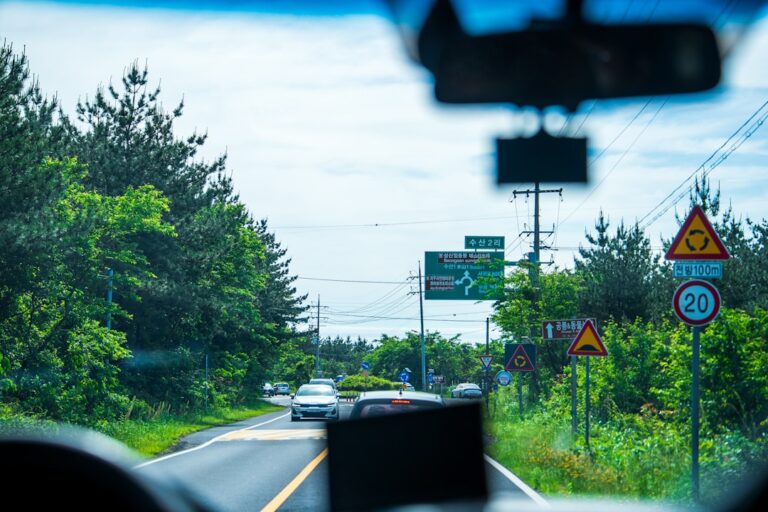
Be honest about the downsides. The coastal route is not a superhighway. There are stretches where the road narrows to two lanes, and local trucks carrying seafood or construction materials move slowly. You will get stuck behind them. You will curse. Then you will pass them at a designated passing zone, and the road will open up again, and the sea will reappear, and you will forgive everything. The real challenge is accommodation: small coastal towns have limited lodging, and spring is peak season. You should book your stops at least two weeks in advance, especially if you want a room with an ocean view. Guesthouses (pensions) are the best bet here—they are often family-run, with a kitchenette and a small balcony where you can drink your morning coffee while the cherry petals drift past.
South of Jeongdongjin, the landscape shifts. The mountains push closer to the sea, and the road begins to climb and fall in long, rolling curves. This is the most spectacular driving section of the trip, between Donghae and Samcheok where the road is carved into the cliff face itself. You drive through short tunnels that open onto sudden vistas of rocky coastline, and every tunnel exit is framed by cherry trees that have been planted specifically to catch the light at that exact angle. You will want to pull over at every scenic overlook. Do it. There are plenty of them, and they are never crowded.
Samcheok is where you should plan your second night. Its cherry blossom road along the Osipcheon stream is a two-kilometre stretch of trees that arch over the water, their branches meeting in the middle. You can walk it, or you can drive it slowly, but the real pleasure is to find a bench near the bridge and just sit, watching the petals fall into the water and float away. The convenience store at the end of the street sells beer and ice cream, and you should buy both.
The next morning, you continue south toward Pohang, the industrial port city that marks the pivot point of your route. The drive from Samcheok to Pohang takes about two hours, and the cherry blossoms thin out noticeably as you approach the city. You are here for one specific thing: the Homigot Sunrise Square, where the famous hand sculptures rise from the sea. The cherry trees here are fewer, but the contrast between the pink blossoms and the rough concrete of the hands creates a visual tension that is surprisingly photogenic. More importantly, Homigot has a large, free parking lot and a clean public restroom.
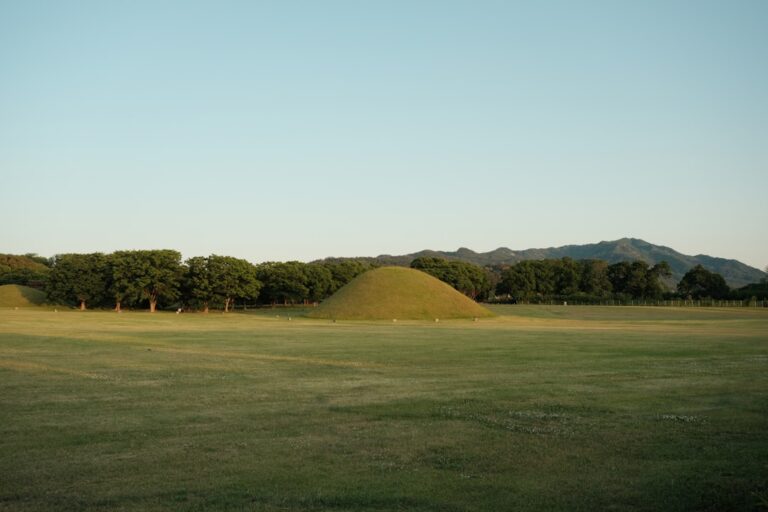
From Pohang, you turn inland slightly to reach Gyeongju, the ancient capital of the Silla dynasty. This is the climax of your cherry blossom road trip. Gyeongju is not on the coast, but it is only a 30-minute drive from the sea. The city’s main attraction for blossom chasers is the area around Bomun Lake, where hundreds of cherry trees line the walking paths and the lake’s edge. But the real magic is in the historic district: the ancient tombs of Silla kings, which are grassy mounds scattered through the city centre, surrounded by cherry trees that have been growing here for decades. You can walk the path around Cheomseongdae, the ancient observatory, and the blossoms frame the stone structure in a way that feels almost designed. The contrast of age and ephemerality—stone that has stood for 1,300 years and petals that fall in a single week—is the entire point.
A practical note about Gyeongju: it is a tourist city, and it gets busy on weekends. If you can arrange to arrive on a weekday, you will have the place nearly to yourself. The cherry blossom tunnel at the entrance to Daereungwon Tomb Complex is one of the most photographed spots in the country, and on a Tuesday morning, you can stand in the middle of it without another person in frame. On a Saturday, you will be shoulder to shoulder.
Your final leg takes you from Gyeongju down to Busan, a drive of just over an hour. The cherry blossoms along this stretch are less concentrated, but they appear in unexpected bursts: a schoolyard full of trees, a temple gate flanked by pink, a hilltop cemetery where the trees have been planted in neat rows. The approach to Busan is industrial—container ships, warehouses, the sprawl of a major port city—but the city itself rewards you with one last blossom site: the Nakdong River estuary, where a long bike path runs through a tunnel of cherry trees. If you have time, rent a bike for an hour and ride it at sunset. The light turns the blossoms golden, and the river reflects the pink in a double exposure you try to photograph but never quite capture.
This road trip is not a luxury experience. Your car will be a modest Hyundai or Kia sedan, probably in white or silver. The roads have potholes in unexpected places. The navigation system will occasionally try to route you through a one-lane village road. The motels (yeogwan) you stay in will have thin walls and firm mattresses. But these small frustrations are part of what makes the trip feel real, feel earned. You are driving through a country in spring, and the blossoms are not a backdrop—they are a destination you have to work for, a reward that comes only after the right combination of timing, route, and willingness to take the unmarked road.
Do not skip the coastal seafood. Every town you pass through has its specialty—Gangneung is known for its grass-fed beef, Samcheok for its grilled mackerel, Pohang for its raw fish platters. But the cherry blossom season also brings seasonal dishes: cherry blossom rice cakes (hwajeon) sold at roadside stalls, cherry blossom tea served at temple cafes, and, if you are lucky, a local grandmother selling handmade blossom-covered cookies from a folding table. Buy them. Eat them.
You return your car at Busan Station or Gimhae Airport, tired and sunburned and carrying a bag of snacks you bought at a convenience store because you couldn’t resist the packaging. The blossoms are already beginning to fade by the time you leave—the sea breeze pulls them from the branches. Somewhere, in the back of your mind, you are already planning next year’s route, the one that goes north from Gangneung instead, up toward the DMZ, where the cherry trees grow in fields that have been empty for seventy years. But that is a trip for another spring.