Sleeping on Taiwan’s Coastal Cliffs: A Campervan Overnight at Qingshui Cliff
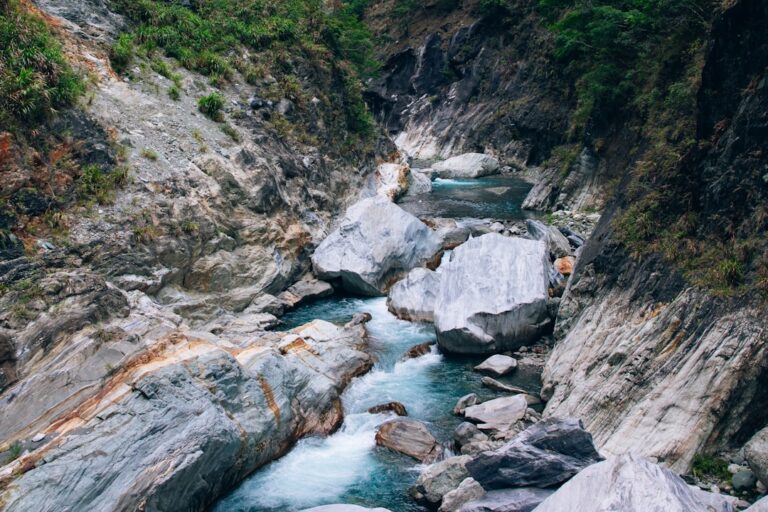
You’ve rolled down the window on the Suhua Highway, and the Pacific hits you first as a sound—a deep, rhythmic percussion against marble walls. Then the color: a cyan so saturated it looks like a tropical fish tank someone forgot to cap. This is Qingshui Cliff, where the Central Mountain Range meets the sea with none of the usual Taiwanese politeness of a beach or a bay. Instead, the rock plunges straight down, a thousand meters of vertical schist and marble, into water that shifts from turquoise to ultramarine as the afternoon light changes. For a road trip in a campervan, this is the ultimate parking spot—if you know where, how, and when to pull over.
You’re not here for the overlooks where tour buses disgorge crowds for a seven-second photo. You’re here to spend the night with the cliff as your neighbor, the ocean as your lullaby, and the stars as your ceiling. The first thing you need to understand is that this isn’t a free-for-all. Taiwan’s beautiful east coast is increasingly regulated, and for good reason. The narrow shoulder of Highway 9 is officially a no-parking zone along much of Qingshui Cliff—but the government has designated specific pull-offs and rest areas where overnight campervan parking is tolerated, if not actively promoted. The trick is finding them before dark.
The best-known official spot is the Qingshui Cliff Rest Area, a small concrete lot perched high above the water. You’ll see it on the right as you head south from Hualien, about twenty minutes past the city’s northern edge. It has a public toilet, a few benches, and a view that will make you forget to cook dinner. The lot holds maybe a dozen vehicles, and on weekends, every space is claimed by sunset. Arrive by four in the afternoon, park with your passenger side facing the ocean, and you’ll watch the sky fade from pink to deep indigo while the lights of passing container ships trace slow paths across the water.
The lot is simple, but the experience is anything but. You’ll set up your camp chair on the curb, a steaming cup of instant coffee or a cold Taiwan Beer in hand, and listen to the bass note of waves crashing two hundred meters below. There’s no beach access here, no swimming, no distraction. Just you, the cliff, and the immensity of the Pacific. It’s the kind of quiet that makes you want to whisper, even though there’s no one else to hear. Tilt your head back: with almost zero light pollution to the east, the Milky Way arcs overhead like a road you could actually drive.
If the rest area is full—or if you simply want a more rugged experience—consider the less formal pull-offs just south of the main viewpoint. These are unmarked gravel strips where the road widens slightly before a tunnel. They have no facilities, no lighting, and no guarantees. But they also have no crowds. You’ll need to arrive early enough to assess the ground, make sure your campervan’s tires won’t sink into gravel, and check that you’re not blocking any potential emergency access. Local wisdom suggests you talk to the owner of the small noodle shop near the Xiulin intersection; they’ll often wave you toward a flat spot they know. This is old-school Taiwan, where a smile and a wave can open doors—or in this case, a view.
Your campervan setup needs to be self-sufficient for this kind of overnight. There’s no plug-in power, no water hookup, and no dump station. The rest area’s toilet is basic at best. Seasoned overlanders bring a portable toilet cassette or use a reliable method of waste disposal that leaves no trace. You’ll want a fully charged portable power station for your phone, camera, and maybe a small fan on humid nights. A propane stove for your evening meal is essential—the wind off the ocean can be fierce, so pack a windscreen. And bring warm layers, even in summer; the temperature drops sharply once the sun disappears behind the Central Mountain Range.
The food you eat here matters. You’re in the heart of Hualien County, famous for its indigenous Taiwanese cuisine. Before you head up the coast, stop at the Dongdamen Night Market in Hualien City and grab a few bamboo tube rice portions—sticky rice steamed inside a green bamboo stalk, infused with the subtle fragrance of the wood. They reheat beautifully on a camp stove. Pair it with a bag of local pomelos, sold at roadside stands all along the highway, their thick green rinds giving way to flesh that’s sweet and slightly bitter. You can also pick up a block of Hualien’s renowned fermented bean curd—it’s an acquired taste, but spread on fresh bread with a drizzle of Taiwanese honey, it becomes a campfire delicacy.
Sunrise is the reason you’re here. Set your alarm for 4:45 AM. The show begins before the sun itself appears. First, the horizon shifts from black to a bruised purple. Then a thin line of orange ignites along the edge of the sea. The air cools further, and you’ll be grateful for that fleece jacket. As the first rays crest the horizon, they strike the cliff face in layers: white marble glows gold, green vegetation catches the light, and the blue water turns to polished lapis lazuli. The whole spectacle lasts about fifteen minutes. You will take photos. They will not capture it. Some things are meant to be witnessed, not archived.
After the sun is fully up, you have a decision to make. You can head north toward Taroko Gorge, where the marble walls close in and the Liwu River churns through canyons that make Qingshui Cliff look tame. Or you can continue south along the coast toward Taitung, past more dramatic cliffs at Shihtiping and the terraced rice paddies of the East Rift Valley. Your campervan gives you the freedom to choose on a whim. Before you go, take one last walk along the cliff edge. Find a flat rock, sit cross-legged, and simply look.
The Suhua Highway is notorious for its serpentine curves and narrow tunnels. Driving it in a campervan requires patience and a low gear. Avoid the section between Chongde and Heping during peak tourist hours, roughly 10 AM to 3 PM, when tour buses and rental cars create a logjam. Arrive in late afternoon, when the light is golden and the traffic thins. Your reward will be a drive that feels like a flight, the ocean flashing through gaps in the rock, the road carving along cliffs that seem to float above the waves.
If you’re prone to vertigo, sit in the passenger seat for this stretch. The drop to the sea is sheer and unrailed in places, and the tunnel exits often push you directly toward the edge with no guardrail buffer. It’s not dangerous if you’re paying attention, but it is intense. You’ll feel the full weight of Taiwan’s geography—a young, restless island where the plates are still colliding, still pushing mountains upward. Sleeping on that edge, you become part of the geology, if only for a night.
One last practical note: phone reception is spotty along this stretch of coast. Download your maps offline before you leave Hualien. Tell someone your plan, including your expected return time. And carry a physical map as backup—the kind that folds and crinkles and can be read by flashlight. In an age of constant connection, this small act of disconnection is part of the appeal.
Your campervan is more than a vehicle on this trip. It’s your bedroom with a view of the Pacific, your kitchen overlooking the ocean, your mobile shelter from the wind and the rain. So pull over. Cook a simple meal. Watch the stars come out. Wake up to the sunrise. Then pack up and drive on, knowing you didn’t just see Taiwan’s most dramatic coastline—you slept on it.