The One Macau Hike That Requires a Passport — and Why You Should Pack Yours
The One Macau Hike That Requires a Passport — and Why You Should Pack Yours
You’ve probably never thought of Macau as a hiking destination. The city’s reputation is built on glittering casinos, Portuguese egg tarts, and neon-lit streets that never sleep. But if you’re the kind of traveler who craves a story to tell — the kind that involves a border crossing, a mountain summit, and a view that straddles two countries — there’s a trail here that changes everything. It’s the only hiking path in Macau that physically crosses into mainland China, and you’ll need your passport to finish it. That’s not a bureaucratic quirk; it’s the whole point.
The Faded Sign in Portuguese and Chinese
The walk is the Coloane Trail to Hac Sa Long Chao Kok Coastal Trail, but locals and seasoned trekkers know it simply as the Macau-Zhuhai border hike. It begins in Coloane, Macau’s southernmost island, where the city’s frantic energy melts into scrubby hillside and the sound of waves at Hac Sa Beach. The black sand here is a geological oddity — tinted by manganese and iron — but it’s the trailhead that matters. You start on a well-marked path that winds through coastal vegetation, past weathered boulders and the occasional abandoned fishing shack. The air smells of salt and damp earth, and the only sounds are the crunch of your boots and the distant hum of a ferry.
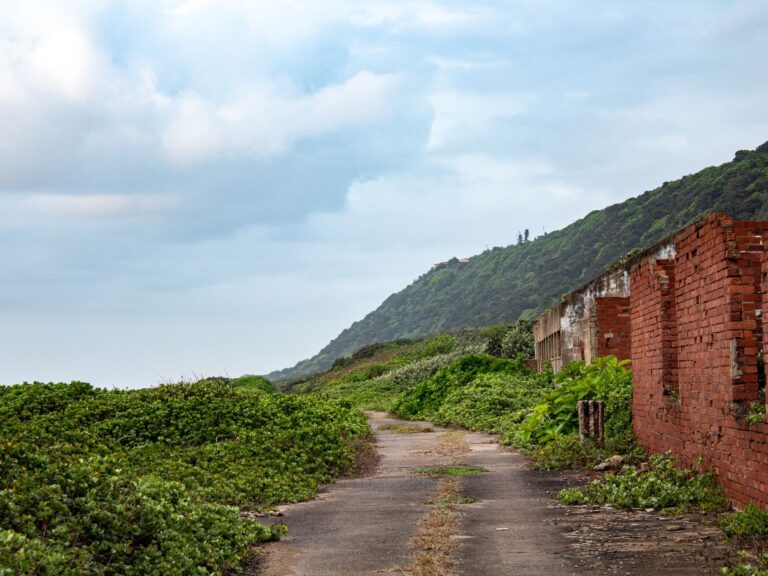
What you don’t realize at first is that the trail is literally tracing the edge of two countries. For the first kilometer or so, you’re firmly in Macau, following a concrete path that hugs the shoreline. Then the terrain shifts. The track narrows, the vegetation thickens, and you notice a subtle change in the paving stones. You’ve entered a no-man’s-land. Ahead, a small, unassuming gate appears — no guards, no barrier, just a faded sign that reads, in Chinese and Portuguese, “Border Zone — Passport Required.” You cross it, and everything changes.
A Phone Call in Mandarin
This is not your typical immigration checkpoint. There’s no booth, no queue, no official to stamp your passport. Instead, the trail itself becomes the border. For about 300 meters, you’re walking on a narrow strip of land that belongs to neither Macau nor Zhuhai — a kind of terrestrial no-man’s-land that was purposely left undefined during the 1999 handover. You’ll see a faint line painted on the ground, sometimes just a subtle change in concrete color. Cross it, and you’re in China.
The practical reality is simpler than it sounds. You need your passport — not just a photocopy, but the physical document — because at the Zhuhai end, you’ll encounter a small, unmanned checkpoint with a camera and a phone. You call a number listed on the sign, a voice answers in Mandarin, and you state your name and passport number. The voice will likely ask where you started. You say “Macau.” They’ll tell you to proceed. It takes less than two minutes, but the experience feels oddly ceremonial, as though you’re participating in a quiet ritual few people know about.
The key is to carry your passport in a waterproof sleeve or a zippered pocket. The trail can be muddy after rain, and you’ll want your document dry and accessible. Leave your bag’s main compartment for water and snacks — you’ll need both before the hike is over.
The Skyline Through Cargo Ships
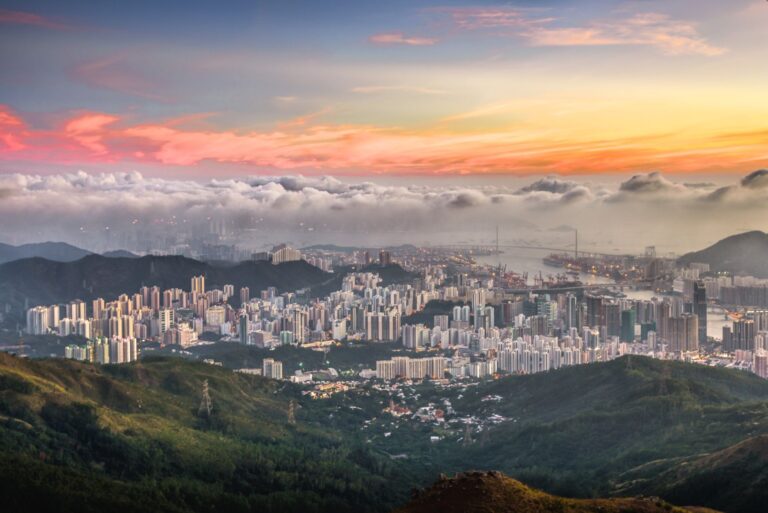
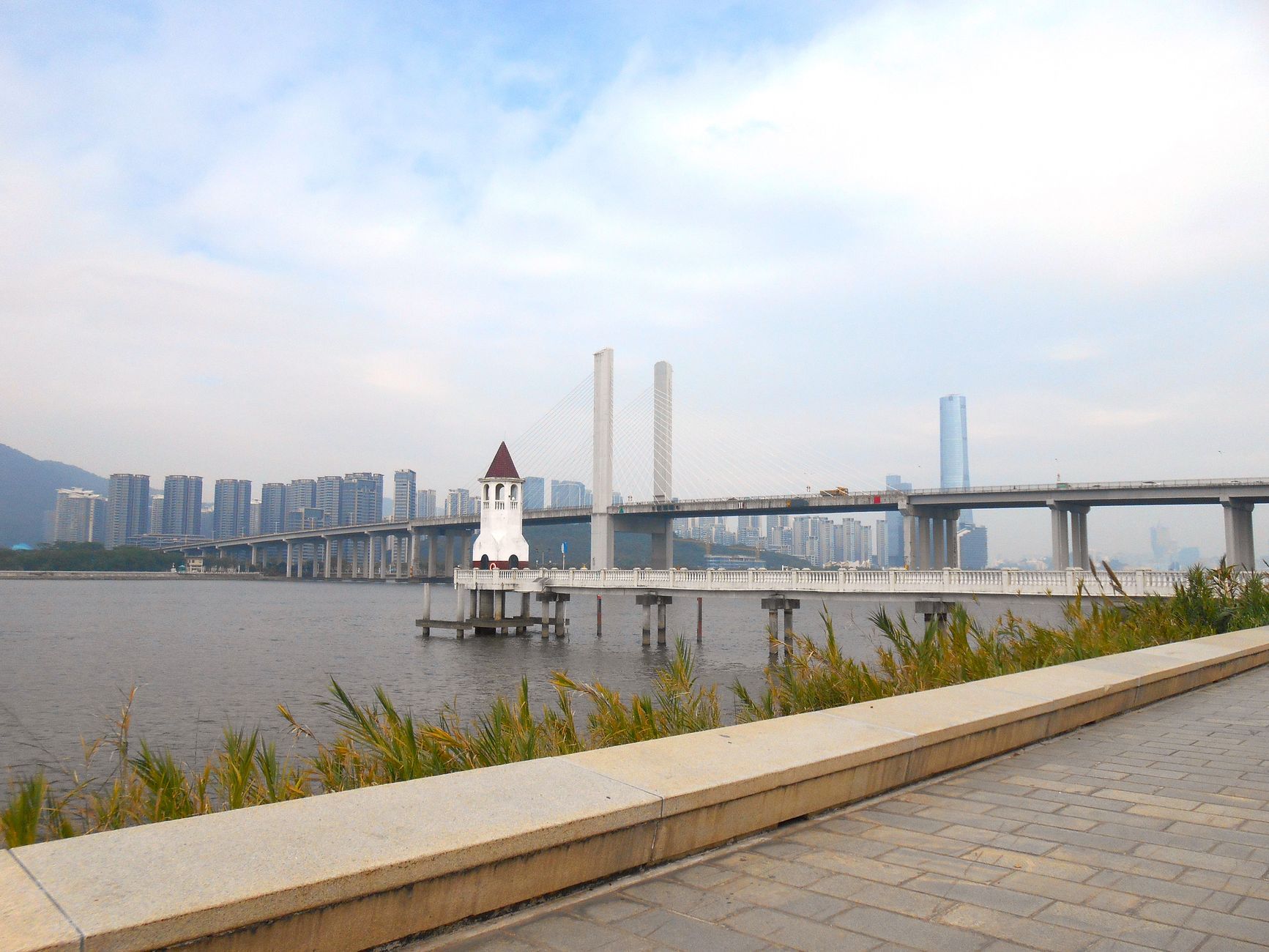
Once you’ve cleared the Zhuhai side, the trail opens up dramatically. You’re now on the Long Chao Kok Coastal Trail, a well-maintained path that runs along the edge of the Zhuhai Special Economic Zone. The landscape here is different — more manicured, with benches, interpretive signs, and the occasional pavilion. But the payoff is the view. From a lookout point about halfway along the trail, you can see the entire Macau skyline to your left, its casino towers rising like glass-and-steel pagodas. To your right, the low-rise sprawl of Zhuhai stretches toward the horizon, punctuated by the green humps of mountains. In the middle, the Pearl River Delta glints, crowded with cargo ships and the occasional high-speed ferry.
You’re standing in China, looking at Macau, a place you just walked from. The visual contrast is stark: the old Portuguese colonial influence, the hyper-modern casino architecture, and the raw, undeveloped coastline of Zhuhai all in a single frame.
Bougainvillea and a Monitor Lizard
The full round trip takes about three to four hours, depending on your pace and how long you linger at the border. Your route begins at the Hac Sa Beach parking lot, follows the coastal path past the Macau Golf and Country Club, and then enters the woods near the Coloane Trail marker. The terrain is mostly flat with gentle inclines — this is not a strenuous mountain hike, but the humidity can be punishing. Bring at least two liters of water, a hat, and sunscreen. The sun reflects off the water and the light-colored trail surface, and you’ll feel it even on overcast days.
Wildlife here is subtle but present. You might spot a Chinese egret standing motionless in the shallows, or a monitor lizard sunning itself on a rock. The vegetation is a mix of coastal scrub and invasive acacia, with occasional bursts of bougainvillea in shades of fuchsia and orange. The trail itself is well-marked in both directions, but pay attention at the border crossing — there are no signs once you’re in the no-man’s-land, and the path can feel ambiguous. Trust the painted line on the ground, and keep walking.
At the Zhuhai end, you’ll find a small pavilion with a map of the regional park system. It’s a good spot to rest, eat a snack, and watch the ferries slide past. If you’re feeling adventurous, you can continue another kilometer to a small fishing village where locals sell dried seafood and cold drinks. But most hikers turn back here, retracing their steps through the border zone and back into Macau.
Sunrise to Sunset, 8 AM to 5 PM
Timing matters more than you might think. The trail is open from sunrise to sunset, but the border checkpoint is only staffed between 8:00 AM and 5:00 PM. If you arrive after five, the phone at the Zhuhai end goes unanswered, and you’ll have to backtrack. Start early — by 7:30 AM — to give yourself buffer time. The morning light also paints the water in soft gold tones, and you’ll have the trail mostly to yourself until about 10 AM, when local joggers and dog walkers appear.
Your passport is your ticket, but it’s not the only document to consider. If you’re not a Chinese passport holder, you’ll need a valid visa for entry into mainland China. This is a genuine border crossing, and Zhuhai immigration law applies. Most travelers from the US, UK, Australia, and the EU can enter Zhuhai visa-free for up to 144 hours if they’re transiting through a Chinese airport, but the rules change frequently. Check with the Chinese embassy or consulate before you go, and carry a printout of any visa approval notice. Hiking back into Macau is straightforward — you’re re-entering a Special Administrative Region, and your Macau entry permit covers that.
One more thing: your phone will switch networks as you cross. Macau carriers drop signal about 50 meters before the border line, and Chinese carriers pick up on the other side. Your data plan won’t work in China unless you’ve arranged international roaming or bought a local SIM. Download offline maps in advance — Google Maps is blocked in China, and you’ll want offline access to the trail map and your return route.
The Sounds Change First
What makes this hike special isn’t just the border crossing or the view. It’s the quiet thrill of walking a line that few people walk — a path that exists in the margin between two countries, two economies, two ways of life. You’ll feel it in the moment you step across the painted line, the way the air seems to change, the way the sounds become just slightly different. Macau behind you sounds like a city — traffic, construction, the distant clatter of a mahjong hall. Zhuhai ahead of you sounds like a province — birds, wind, the rustle of bamboo.
And yet there’s a complication: the path itself, for all its symbolism, isn’t always clear. A hiker might wonder, at the moment of crossing, whether the line on the ground is really the border, or just a crack in the concrete left by years of weather. The answer depends on who you ask. Some say the border shifts with the tide; others insist it’s fixed. The only certainty is the phone call that follows.
📷 Photos: Eva Chan (Pexels), mitbg000 (Pexels)