Chasing the Golden Hour at Banaue: Photographing the Rice Terraces Without the Tourist Crowds
Chasing the Golden Hour at Banaue: Photographing the Rice Terraces Without the Tourist Crowds
You’ve seen the photos—those impossibly green staircases carved into the mountainside, glowing amber in the late afternoon light. The UNESCO-listed Rice Terraces of the Philippine Cordilleras are one of those rare places that actually look better in person, provided you’re standing in the right spot at the right time. That’s the trick, isn’t it? Because for every perfect shot you’ve admired, there’s a story of someone who arrived at noon under a flat grey sky, surrounded by tour vans, and left with nothing but a blurry phone snap and a sunburn.
Here’s the thing about Banaue: it’s famous enough that you’ll find crowds, but remote enough that those crowds cluster predictably. Learn where they go and when, and you can practically have the terraces to yourself for that fleeting window when the light turns everything to gold. This is how you do it.
Why Everyone Misses the Light (And You Won’t)
The golden hour in Banaue is not a suggestion—it’s the entire game. You need to understand that the terraces face east and west in different sections, meaning your best light arrives before 8:00 AM and after 4:00 PM, with the latter being the true magic hour for most viewpoints. The problem is that standard tour itineraries from Manila (a nine-hour drive) dump you in town around lunchtime. You eat, you wander to the main viewpoint, you squint into the harsh overhead sun, and you tell yourself you’ll come back tomorrow. Then your bus leaves at dawn.
You need to stay overnight. Minimum two nights, ideally three. This isn’t a day-trip location if you care about photography. The difference between a midday snapshot and a golden-hour composition is the difference between a postcard and a painting. You’ll need to accept that getting the shot means committing to the place.
Banaue Viewpoint: The Obvious Spot Done Right
This is the postcard view—the one you’ve seen in every travel guide, where the terraces cascade down the valley in sweeping curves. And yes, it’s crowded. Tour buses park here for fifteen minutes, passengers snap their selfies, and they’re gone. You’ll watch them filter through between 10:00 AM and 3:00 PM like workers on a conveyor belt.
Here’s what you do instead. Come at 4:30 PM. The buses have left by then. You’ll share the viewpoint with maybe five other patient souls, most of them locals enjoying the cool evening. The light begins to warm around 5:00, and by 5:30 the entire valley glows. The stone pathways catch the low angle, the rice stalks turn translucent, and the shadows stretch across the terraces in long, sculptural lines. You can shoot for an hour before the light fades entirely. Bring a tripod for the last fifteen minutes—the color in the sky after sunset is worth sticking around for, even if you’re handholding at ISO 3200.
What you won’t know until you’re there: the viewpoint has a small concrete platform that protrudes slightly over the edge. Get there early enough to claim the rightmost corner. It gives you a cleaner foreground without the railing that everyone else accidentally includes in their frame.
Hapao Rice Terraces: The Quiet Neighbor
Everyone heads to the main Banaue viewpoint. Almost no one makes the forty-minute drive to Hapao, and that’s your advantage. This is a different kind of terrace—wider, more open, with fewer stone walls and more continuous sheets of water and green. The road ends at a small parking area where a few locals sell coffee and grilled bananas from makeshift stalls. You’ll pass maybe two other vehicles on the way.
The light here works best in the morning. Arrive by 6:30 AM, and you’ll watch the sun crest the eastern ridge and flood the valley floor. The rice paddies reflect the sky like mirrors, and the steam rising off the water catches the light. You can walk down into the terraces themselves—there’s no prohibition, just common sense about not damaging the crops. Follow the narrow paths between paddies, crouch low to get the reflection of the mountains in the water, and wait for a farmer to walk through your frame. They usually pass around 7:00 AM on their way to work.
What goes wrong here: the road is unpaved for the last three kilometers and gets slick after rain. You’ll want a vehicle with some clearance, or you’ll be walking that stretch. Also, the coffee stand opens at 7:00, not earlier, so bring your own if you need caffeine before sunrise.
Batad Saddle: The Hike That Separates You from Everyone
Batad is the most famous of the terrace clusters—the one shaped like an amphitheater, with the village perched at the rim. It’s also the one most tourists try to day-trip. They park at the junction, hike down to the village, take a few photos, and hike back up in time for lunch. By noon, the trail is a conga line of sweating visitors.
You’ll do the opposite. You’ll hike down in the late afternoon, stay overnight at one of the village homestays (basic but clean, with shared bathrooms and cold showers), and wake up for sunrise. The hike down takes about forty-five minutes at a steady pace, and you’ll want to arrive at the saddle—the viewpoint above the main amphitheater—by 5:15 AM. The sun hits the terraces around 6:00, and for the first thirty minutes, you’ll have the entire view to yourself. The colors shift from deep blue to peach to gold, and the light crawls down the terraces row by row, like someone turning on lights in a skyscraper.
The homestay costs around 500 pesos per night. Bring a sleeping bag liner—the blankets are thin. And bring snacks, because dinner is communal rice and vegetables, and you’ll want something for the early morning hike.
The Mist Problem: When the Weather Doesn’t Cooperate
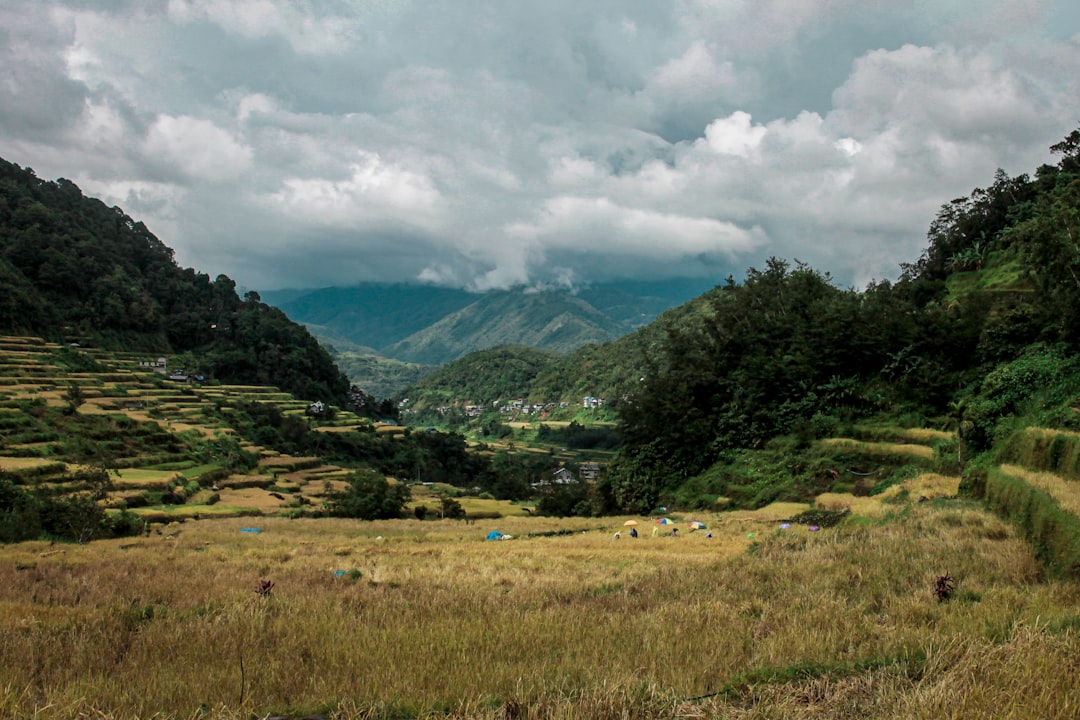
Here’s the honest truth about mountain photography: the weather doesn’t care about your plans. Banaue sits at 1,200 meters elevation, and between June and October (the wet season), you can expect afternoon clouds and rain almost daily. But here’s the thing—that mist that everyone complains about? It’s your secret weapon.
When the clouds roll in around 2:00 PM, most tourists pack up and leave. You’ll stay. The mist settles into the valleys and hangs above the terraces, diffusing the light into a soft, even glow that makes the greens pop without harsh shadows. This is the light that photographers pay thousands of dollars for, and you get it for free by being patient. The trick is to shoot wide—the compressed layers of mist, mountain, and terraces create a depth that flat sunlight can’t match. Use a longer focal length (70-100mm) to stack those layers into a single frame.
What you need to watch for: the mist can turn into rain without warning. Keep your camera in a rain sleeve or a zip-lock bag with a hole cut for the lens. A plastic shopping bag works in a pinch. And wipe the front element with a microfiber cloth every few minutes—one water droplet will ruin a dozen shots.
Mayoyao Ridge: The Photographer’s Payoff
If you’re willing to go further, Mayoyao is the terraces that even Filipinos haven’t heard of. It’s two hours from Banaue town on a winding, partially paved road that gets rougher the closer you get. The reward is a view that few have photographed: terraces so vast they seem to merge with the sky, and a silence so complete you can hear the water trickling through the paddies from a kilometer away.
The best spot is the ridge overlooking the main valley, accessible by a trail that starts behind the local elementary school. You’ll need to ask a teacher or a parent for directions—there’s no signage. The hike takes about twenty minutes, and you’ll emerge onto a grassy shelf that drops away into an endless staircase of green. The light here works in the late afternoon, around 4:00 PM, when the sun angles behind you and the terraces catch the warm reflection.
What you won’t hear on the forums: the mosquitoes at Mayoyao are aggressive at dusk. Bring repellent with DEET, or you’ll spend your golden hour slapping your own arms and legs. Also, there’s no cell signal for the last hour of the drive, so download your maps and directions before you leave Banaue.
Local Perspectives: Why You Want a Guide (But Not the Usual One)
You can photograph Banaue on your own, but you’ll miss the best locations. The official tourist guides at the main viewpoint are trained to take you to the same three spots that appear in every Instagram post. You want something different. Talk to the farmers themselves.
Walk into the terraces in the early morning, and you’ll find men and women knee-deep in mud, planting or harvesting. Ask them—politely, with a gesture toward your camera—if they know a good viewpoint. Many speak enough English to give directions, and they know secret spots that aren’t on any map. A small tip (50-100 pesos) is appreciated but not expected. One farmer in Hapao once led the way through a path that might have been walked past a dozen times, ending at a rocky outcrop with a view of three valleys converging. The guidebooks don’t mention it. The tour buses don’t stop there.
The catch: you need to be early. Farmers start work before sunrise, and by 7:00 AM they’ve mostly moved to higher fields. If you wait until mid-morning, you’ll find only tourists.
Camera Settings That Actually Work Here
You can shoot Banaue with a phone and get good results—the light does most of the work. But if you’re carrying a dedicated camera, you want specific settings. For golden hour, start with aperture priority at f/8 to f/11 for maximum sharpness across the terraces. ISO 100, and let the shutter speed fall where it falls. You’ll be at 1/60 or slower as the light fades, which is where the tripod earns its space in your bag.
The mistake everyone makes: they shoot at their lens’s widest aperture to let in more light, then wonder why the far terraces are soft. Stop down. The depth of field across a valley is enormous, and you need that front-to-back sharpness to make the landscape read properly.
For misty conditions, switch to manual mode. The camera’s meter gets confused by the bright haze and underexposes everything. Start at ISO 400, f/8, and 1/125. Bracket your exposures—one at that setting, one two stops brighter, one two stops darker. You can merge them later if you want, but even single frames benefit from having options.
Post-Sunset: The Light Nobody Shoots
Everyone leaves after the sun dips below the ridge. You won’t. The twenty minutes after sunset, when the sky turns from orange to purple to deep blue, is the most underrated photography window in Banaue. The terraces lose their direct light and take on a soft, even blue tone that makes the greens look almost fluorescent. It’s the time to shoot long exposures—10 to 30 seconds—to smooth the water surfaces into glass. The rice paddies reflect the sky like a mirror, and if there are clouds, they streak across the frame in painterly lines.
You’ll need a tripod for this. No way around it. Handholding at two seconds gets you nothing but blurred frustration. But if you’ve carried that tripod all day, this is the moment it justifies every ounce of weight. The tourists are gone, and you have the entire valley to yourself.
The Reality Check: What You’ll Actually Deal With
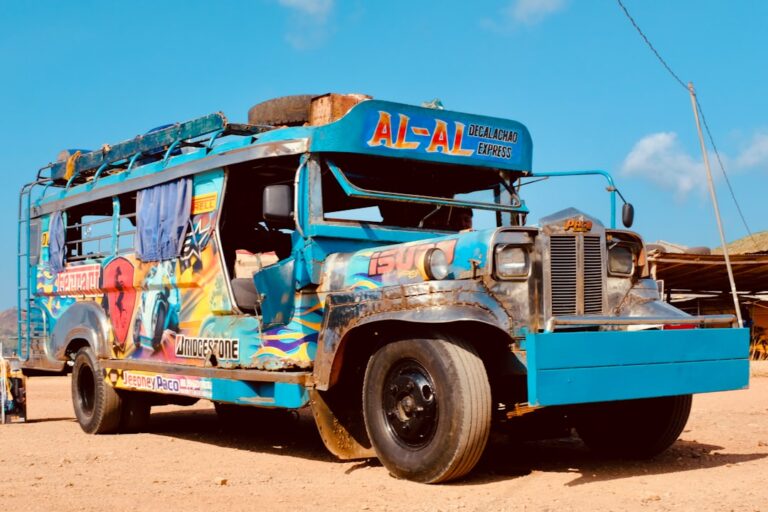
Let’s be honest. You’re going to encounter delays, breakdowns, and moments where you question why you didn’t just stay in Manila. The road to Banaue is under constant construction, and the last hour of the drive from the highway is gravel, potholes, and switchbacks that will test your patience and your suspension. You’ll share the road with jeepneys belching black smoke and cargo trucks moving at walking speed. The power goes out unpredictably, and the Wi-Fi is unreliable at best.
None of that matters when you’re standing on a ridge at 5:30 AM, watching the first light hit the terraces like a slow wave, knowing that you’ve beaten every other photographer to this view. The discomfort is temporary. The images are permanent.
Pack light, pack smart, and arrive with enough time to wait for the weather. Banaue isn’t going anywhere. The light, on the other hand, waits for no one. You just need to be there when it arrives.
📷 Photos: Arphy (Unsplash), Omri D. Cohen (Unsplash), Arphy (Unsplash)