The Old Carabiner and the Woman at Lan Ha Bay
The Old Carabiner and the Woman at Lan Ha Bay
The carabiner was rusted at the hinge. Not just surface rust—the kind that crumbled orange when you touched it, like dried mud flaking off a root. I’d borrowed it from a rental shop in Cat Ba town that morning, along with a harness that smelled of mildew and a helmet with a cracked chin strap. The woman behind the counter, maybe sixty, maybe older, handed it over without a word. She was rolling a cigarette with one hand. She didn’t look at me.
“Do you have another one?” I asked, holding up the carabiner.
She looked at it. Then at me. Then back at the cigarette. “It’s fine,” she said, in English so flat it wasn’t quite a sentence.
I took it. I wasn’t sure I had a choice.
Dirt Road and a Water Buffalo
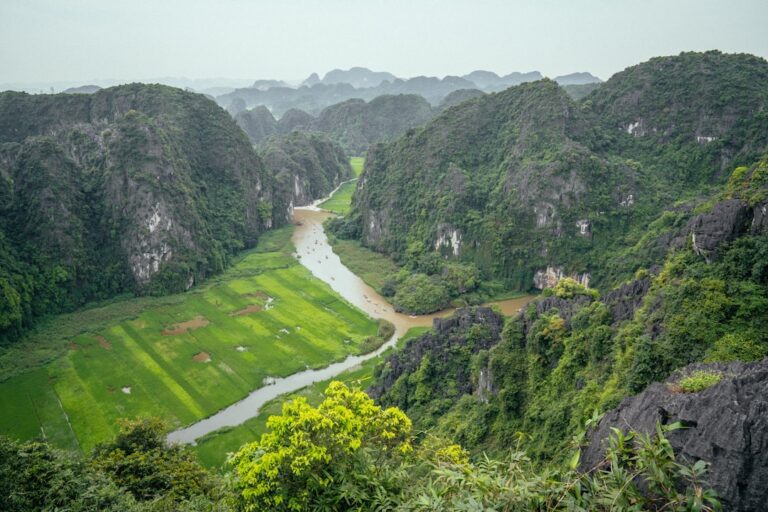
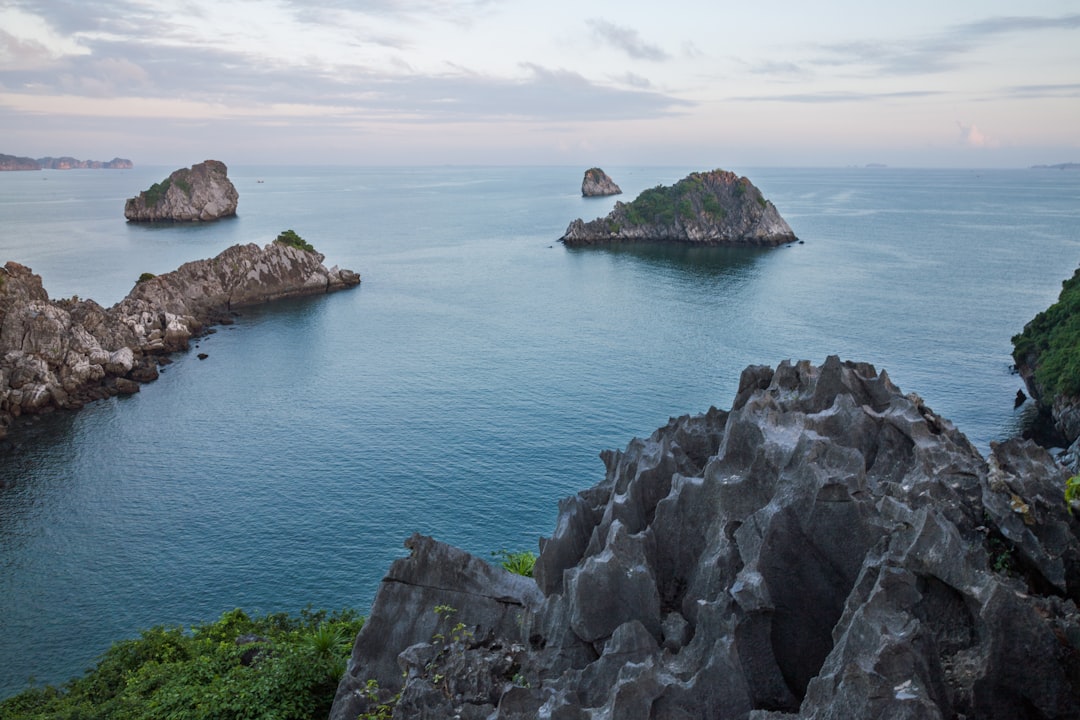
Cat Ba isn’t where you go for perfect gear. It’s where you go because the limestone rises straight out of the water in ways that don’t look real until you’re standing under them, and because the climbing community here is small enough that everyone knows which bolt is loose on which route and nobody has fixed it yet because nobody has time.
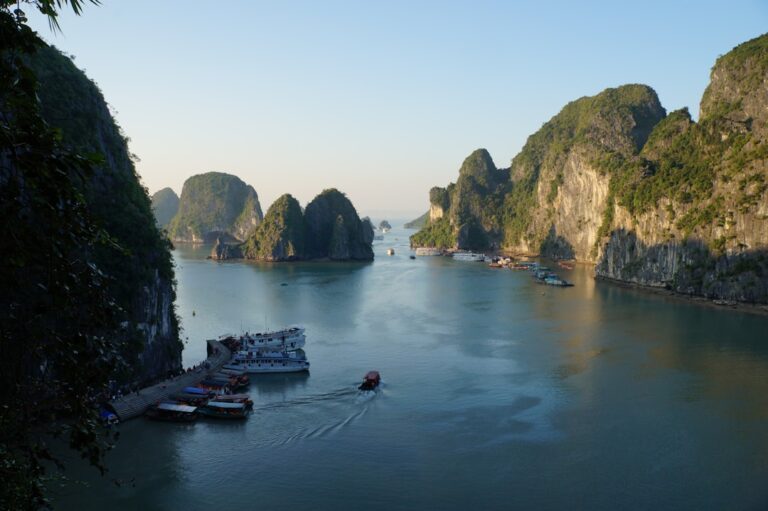
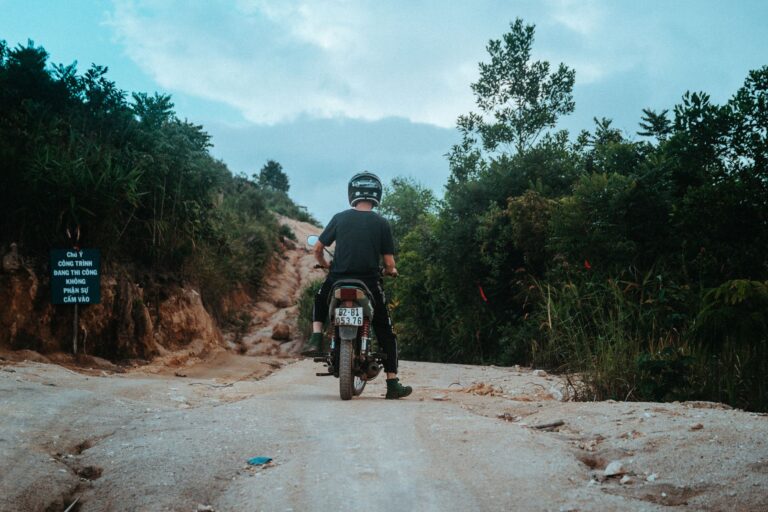
The beginner routes are on the south side of the island, near a cove called Lan Ha Bay, about forty minutes by motorbike from the main town. The road there is narrow and the asphalt gives way to dirt in patches. I passed a water buffalo standing in the middle of the road, chewing something, not moving. I had to drive around it.
I’d booked a guide through a hostel in town—a guy named Trung, who showed up twenty minutes late on a Honda Wave with two ropes coiled over his shoulder. He was maybe thirty, with short hair and a faded red t-shirt. He didn’t introduce himself. He just said “follow me” and got back on the bike.
We parked near a small pier where a few fishing boats were tied up. The water was flat and green, the color of old glass. A French couple was already there, sitting on a rock, eating baguette with pâté. They’d been climbing for three weeks. They looked bored.
250 Million Years and One Fossil
The karst here is different from what I’d climbed in Thailand or Laos. The rock is older, sharper, less forgiving. The surface feels almost greasy when it’s dry—a fine dust of decomposed limestone that makes your fingers slip before you’ve even found a hold. When it’s wet, which it often is in the mornings, it’s like climbing on bar soap.
The first route Trung set up was a 5.7, maybe twenty meters, bolted with stainless steel that had gone grey from salt air. The first bolt was at about four meters. You could hit the ground before Trung even finished yelling “watch me.” I didn’t think about that until I was clipping it.
He showed me the anchor setup—two bolts with a chain, no rings, just a steel carabiner worn thin at the gate. “This one,” he said, pointing at the left bolt, “it’s old. But it’s fine.”
I asked him when it was last replaced. He didn’t answer. He just started coiling the rope.
Cat Ba’s karst formed over 250 million years, give or take. That’s what I read later. The limestone was once a coral reef, and you can see the fossilized shells embedded in the rock if you look closely. I saw one on the third route, a spiral shape about the size of my thumb, pressed into the stone like a photograph. It was at a rest hold, just before the crux. I stayed there for maybe thirty seconds, just looking at it. A snail that died before the first tree grew on this island.
Ninety Seconds and a Grigri Taped Together
The safety briefing, if you could call it that, lasted about ninety seconds. Trung pointed at the harness, then at the rope, then at the anchor. “Clip this. Not this. If you fall, shout ‘falling’. I will catch you.” Then he walked to the base of the wall and sat down on a rock to light a cigarette.
I wasn’t sure if I was supposed to be reassured or terrified. I think I was both.
The harness was a Petzl Corax, which is a decent model, but this one was maybe eight years old and the leg loops had been adjusted so many times the webbing was frayed at the buckle. The belay device was a Grigri that had been dropped so many times the casing was held together by electrical tape. The tape was brown and peeling. Trung checked it. He shrugged.
I asked if he had a backup device. He looked at me like I’d asked him for a helicopter.
“We don’t need,” he said. And that was that.
There was a moment, standing at the base of that first route, staring up at the first bolt and the greasy limestone and the electrical-taped Grigri in Trung’s hand, when I thought about walking back to the motorbike. I thought about the woman at the rental shop—how long she’d been handing out the same rusted carabiner to tourists like me, how many people had clipped it, how many times it had held. I thought about the French couple eating baguette, looking like they’d done this a thousand times. I thought about the fossil in the wall.
I clipped in and started climbing.
Three Falls and One Roof
The first route was easy. Big holds, jugs big enough to wrap your hand around, a straight line up the face. The kind of route that makes you feel like a rock star until the second route humbles you. The second route was a 5.9, a slabby face with tiny crimps and polished footholds that might as well have been painted on. I fell three times. Once at the second bolt, once at the fourth, and once near the top, just as I was reaching for the anchor. Each time, Trung caught me without moving from his sitting position. He didn’t even put the cigarette down.
The third route was different. It was a 5.8 that ran up a corner between two walls of karst, with a roof about halfway. The rock was damp—not wet, but the kind of moisture that makes your hands feel sticky and then suddenly not. At the roof, I had to pendulum my feet out, swing my right hand to a hold I couldn’t see, and trust that it was there. It was. But for a second—maybe two seconds—I was hanging by one arm, my feet off the wall, the rope slack below me, and I could feel the air moving against my back. It wasn’t fear. It was the opposite. It was the feeling of not needing to be anywhere else.
When I topped out, Trung was already standing at the anchor, coiling the rope. He’d climbed the route in about forty seconds. I didn’t see him do it.
Mathieu and Claire, Still Eating Baguette
The French couple, Mathieu and Claire, were climbing a route to my left. Mathieu was leading a 5.10d, moving with the kind of fluidity that only comes from doing it every day. Claire was belaying, eating the rest of the baguette. When Mathieu fell—a clean whip from about twelve meters—Claire caught him while holding the baguette in her other hand. She didn’t drop it. I watched her take another bite while he was still swinging.
They’d been traveling for six months, they told me later. They’d climbed in France, Spain, Morocco, Thailand, and now Vietnam. They had no fixed plan. They’d end up in Laos eventually, then maybe China. “The climbing in China is good,” Mathieu said, not quite convincingly. He’d hurt his knee on a route the week before and was taping it with a roll of white athletic tape that was almost gone. He asked Trung if he knew where to buy more. Trung said the pharmacy in town might have some.
“The one with the red sign?” Mathieu asked.
“No,” Trung said. “The one with the green sign.”
They nodded. It was the kind of conversation that only made sense if you already knew the island.
The Same Water Buffalo, Still Chewing
I climbed five routes that day. Each one, I clipped the same rusty carabiner into the anchor. Each time, I checked it. Each time, it held. But I couldn’t shake the feeling that I was gambling—not with the rock, not with the route, but with the gear itself. The helmet with the cracked chin strap. The harness with the frayed webbing. The carabiner that should have been retired years ago. I thought about the woman at the rental shop. Did she know? Did she care? Or was this just how it was on Cat Ba—you used what you had, and you hoped it was enough?
After the climb, Trung packed up the ropes. He didn’t count the quickdraws. He just stuffed them into a bag and got back on the bike. I asked him if he ever replaced the gear. “Sometimes,” he said. “When it breaks.”
I didn’t know if he was joking.
On the ride back to town, the light was starting to change. The water in the bay turned from green to gold to something between grey and pink. The air smelled of diesel and salt and the particular sweetness of rotting fruit. I passed the same water buffalo. It was still standing in the road, still chewing. I drove around it again.
I thought about the fossil in the wall. The snail that had been dead for 250 million years, embedded in the rock I’d just climbed. I’d touched it. I’d rested on it. And now I was driving past a water buffalo on a rented motorbike, with a harness that smelled like someone else’s sweat, and I wasn’t sure if the whole day had been reckless or exactly right. Probably both.
If you’re thinking of climbing here, bring your own gear. The island will give you the rock. You bring the safety. And maybe a spare carabiner or two.
📷 Photos: Rowan Heuvel (Unsplash), David Emrich (Unsplash)