Sandflies find the gap between a sock and a boot cuff with unnerving accuracy. On the Kepler Track, in the beech forest above Lake Te Anau, that gap becomes the site of a small, relentless siege every time a walker stops moving for more than a minute. The trick, learned fast, is to keep walking through the shady stretches where the little black flies gather, and to save the photo stops for the open tops where the wind scatters them.
That bit of hard-won knowledge sits at the heart of what makes New Zealand’s Great Walks so worth planning around. Ten of them, spread across the country, each booked through a single reservation system that opens on a set date and often sells out of the popular huts within minutes. They range from a flat riverside amble that families do in sneakers to a four-day alpine crossing that demands real scrambling and a genuine respect for the weather. Choosing between them is less about which is “best” and more about matching a trail to a body, a timetable, and a tolerance for discomfort.
What follows is not a ranking. It is a set of distinctions, drawn from the trailheads, hut porches, and long ridgelines where the differences between these walks actually show themselves.
Start with the one most people picture when they picture a Great Walk, and the one that surprises them most. The Milford Track carries a century of reputation — the “finest walk in the world,” a phrase so old it has worn smooth. The reality is a walk through a temperate rainforest so wet that the track itself is often a shallow stream, and the reward is a waterfall called Sutherland Falls that drops in three tiers from a hanging valley. Walkers who arrive expecting a gentle nature stroll are met with mud, roots, and a river crossing on a swing bridge that sways more than the photos suggest. The track runs one direction, north to south, over four days and three nights, and the huts are grand by backcountry standards — gas cookers, flush toilets at the busier ones, a resident warden who delivers a weather briefing each evening with the gravity of a ship’s captain.
The walk’s character changes entirely with the weather. On a clear day the Mackinnon Pass section opens onto a panorama that stretches to the sea; in cloud, the same pass is a disorienting white room where the track markers are the only thing between a walker and a wrong turn. Neither version is the “real” Milford. Both are.
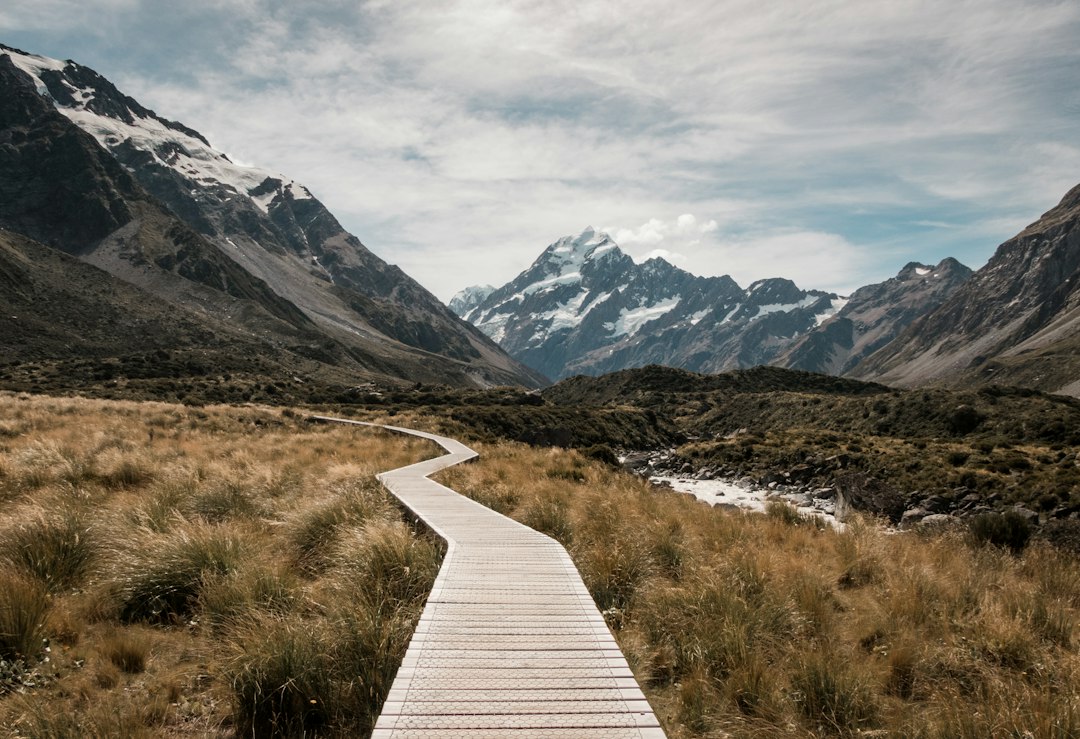
Then there is the Routeburn, which many return walkers quietly prefer. It crosses from the bush of Mount Aspiring National Park into the open tussock of Fiordland, and the transition happens over the course of a single morning — one moment enclosed in green, the next stepping into a valley of golden grass and pale rock. The Routeburn is shorter, three days, and the climbing is concentrated rather than constant. Its signature moment arrives at the Harris Saddle, a wind-scoured notch where the track forks: one path continues to the huts, the other climbs to a viewpoint over a lake the colour of a swimming pool. On a still day the water is glass. On most days it is not, and the wind coming through the saddle has a way of reminding walkers why the alpine plants here grow low and close to the ground — a lesson the plants learned long before any of us arrived, and one they seem disinclined to let anyone forget.
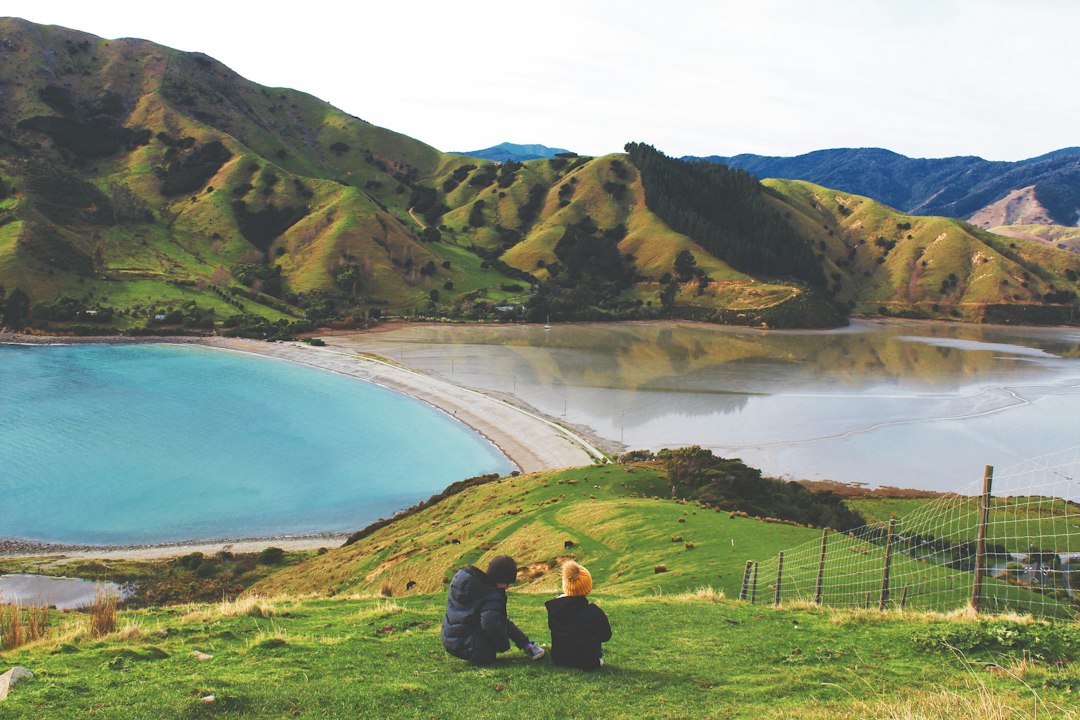
The Abel Tasman sits at the opposite end of the spectrum, and it is where the Great Walks reveal their range. This is a coastal track of golden sand and shallow turquoise water, and it can be walked in sections by water taxi, which means a family with young children can sample a day of it without committing to the full multi-day route. Kayakers share the same bays, and the two modes of travel overlap at the tidal estuaries, where walkers time their crossing to low tide and the water can turn a five-minute ford into a waist-deep wade. The huts here have a different atmosphere — sea air instead of beech smoke, the sound of oystercatchers instead of bellbirds, and a general air of holiday rather than expedition.
The catch, and it is a real one, is that the Abel Tasman is the most heavily booked of the coastal walks in summer. The campsites fill, the water taxis run to a schedule, and the sense of solitude that defines the Fiordland tracks is harder to find.
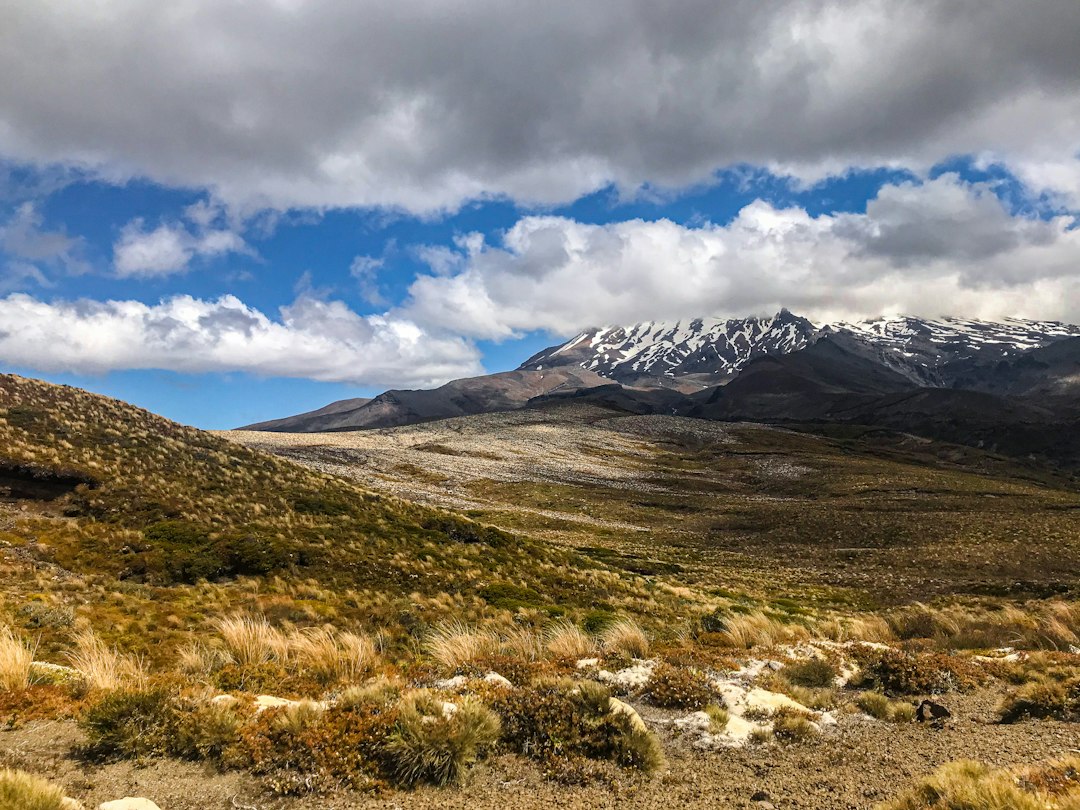
For walkers who want the alpine drama without the full commitment, the Tongariro Northern Circuit offers a middle path. It loops around Mount Ngauruhoe, the volcanic cone that stood in for Mount Doom, and crosses the volcanic plateau where steam rises from vents in the ground and the soil is warm to the touch. The famous day section, the Tongariro Alpine Crossing, is done by thousands as a single long day walk, but the circuit version spreads it over three or four days and gives walkers the crater lakes at hours when the day-trippers have gone. The terrain is genuinely volcanic — loose scoria underfoot, the smell of sulphur in the still air, and a colour palette of red, grey, and an unnatural emerald in the crater lakes that no photograph quite prepares a walker for.
Up here, the weather is the great variable. The plateau sits exposed, and a sunny morning at the trailhead can turn into horizontal sleet on the crossing by early afternoon. Walkers who have done the circuit describe learning to read the clouds in a way that lowland tracks never demand.
The Heaphy Track breaks a different expectation. Most people do not associate New Zealand’s South Island with palm trees, and the Heaphy delivers them — nikau palms with their stiff, upright fronds, growing along a track that runs from the leafy interior out to a wild west coast beach. The walk is long, four to five days, and it crosses from one climate to another, from beech forest to coastal scrub, ending at a beach where the surf pounds and the sand is a dark, mineral grey. It is one of the less crowded Great Walks, and the reward for the extra days is a sense of having crossed something rather than simply completed a loop.
What ties all of these together is the booking system, and it deserves its own paragraph because it shapes the experience as much as the terrain does. Huts and campsites on the Great Walks are reserved online, and the popular walks release their beds on a set date each year, with the busiest dates gone within an hour. Walkers who miss the opening scramble can still find space by watching for cancellations, which appear throughout the season as plans change, or by walking in the shoulder months — late spring and early autumn — when the weather is less reliable but the beds are easier to secure. The huts themselves vary from basic bunks with a wood stove to staffed lodges with a warden and a gas cooker, and the price reflects it.
A recurring surprise for first-timers is the social texture of the huts. Walkers who set off alone often find themselves sharing a long wooden table with a dozen strangers by the second evening, trading blister remedies and weather forecasts. The conversation tends to follow a rhythm — where you’ve come from, where you’re headed, what the pass was like. It is one of the quieter pleasures of the multi-day format, and it does not happen on a day walk.
Packing reveals the differences between the walks more sharply than any guidebook. The Milford and the Routeburn demand rain gear that actually works, because the rain is not a possibility but a near-certainty, and boots that have been broken in on shorter trips. The Abel Tasman rewards lighter footwear and a swimsuit. The Tongariro wants layers, because the temperature swings with the altitude and the wind, and a hat that will not blow off the ridge. The Heaphy wants a pack that can handle a long, flat, sometimes muddy trail where the challenge is distance rather than elevation.
There is a piece of advice that seasoned walkers pass along and that first-timers tend to ignore until they regret it: book the huts you can actually reach comfortably, not the ones that look best on a map. A track that sounds manageable on paper can become a forced march when the terrain is rougher than expected or the weather turns. The Great Walks are not a race, and the walkers who enjoy them most are the ones who build in time to stop — for the view, for the swim, for the cup of tea on the hut porch while the sandflies circle.
And that is perhaps the most useful distinction of all. These walks are not interchangeable challenges to be ticked off; they are different moods of the same country. The Milford is the grand, wet, dramatic one. The Routeburn is the one that opens suddenly into light. The Abel Tasman is the holiday. The Tongariro is the strange, volcanic, otherworldly one. The Heaphy is the long crossing from forest to surf.
On the last evening of a walk, the hut fills with the smell of rehydrated food and damp wool, and someone always asks the same question around the table — which one next? The answer is rarely the one they just finished. It is usually the one that sounded too hard, or too far, or too wet. The boots come off, the sandfly bites get counted, and the map comes out again.

📷 Photos: Tyler Lastovich (Unsplash), www.WeAreTravellers.nl (Unsplash)