The trailhead at the end of Shek O Road is mostly empty by late afternoon. A few taxis drop off stragglers, a couple of joggers stretch their calves against the stone wall, and then they leave too. By five-thirty, the only sounds are the clatter of a distant construction site and the wind moving through the bamboo that lines the track up to the ridge.
Dragon’s Back is not a secret. It is one of the most-hiked trails in Hong Kong, featured in guidebooks, travel blogs, and enough Instagram posts to fill a small hard drive. But the version most people see — the one from the mid-morning to mid-afternoon window, when the sun is high and the heat bakes the exposed ridge — is not the only version. There is another one, and it starts when everybody else is heading home.
The first section of the climb is a paved road, gentle and shaded, that winds past scattered village houses and occasional barking dogs behind locked gates. It’s easy to wonder whether this is even the right path. A signboard confirms it. The pavement gives way to dirt and stone steps, and the canopy closes overhead. The air shifts from the damp heat of the lowland to something drier and cooler, almost imperceptibly at first, then noticeably so once the trail opens out onto the first real vista.
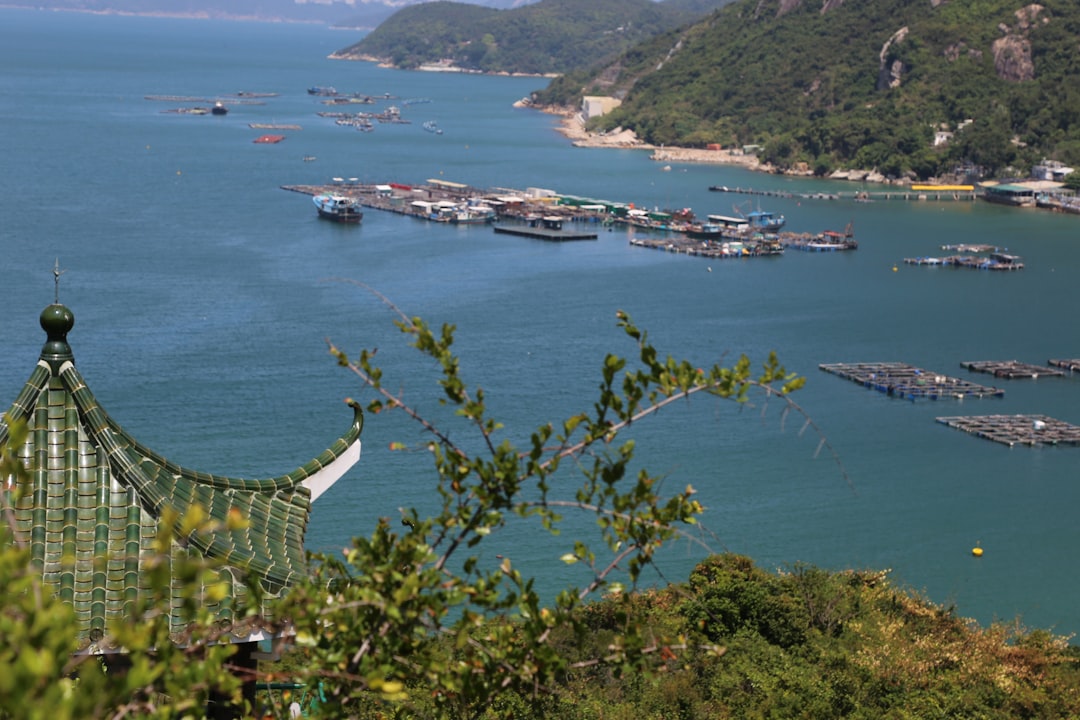
From the ridge, the view stretches across Shek O beach, the South China Sea, and the distant islands of the eastern approaches. The water has taken on the metallic sheen of late afternoon, silver-grey and flat, with the occasional wake of a cargo ship cutting a white line across it. The wind is stronger here, steady and warm, carrying the salt smell of the ocean. There is no one else on the ridge. The last hikers of the afternoon are long gone, and the sunset crowd hasn’t started yet. For a stretch of maybe forty-five minutes, the trail is completely empty. You feel like you own the whole thing — the ridge, the view, the city below starting to twinkle in the twilight.
The trail caretaker, a man in his sixties who refills the water station at the first lookout, estimates that the number of hikers between five and seven on a weekday is a tenth of what it is between ten and two on a Saturday. He has been doing this job for eight years. He doesn’t need to check a counter to know the difference.
The trail runs roughly north-south along the ridge of Shek O Peak, with access points at both ends and a middle section that connects to the coastal trail toward Big Wave Bay. Most hikers start from the northern end at To Tei Wan, do the ridge to the southern drop-off at Shek O Road, and then take the bus back to the MTR station. The sunset approach reverses this. Starting at the southern end, near the Shek O Road bus stop, the trail climbs more gradually and the sun stays at the hiker’s back for the first part of the ascent. By the time the ridge opens up, the light is turning gold, and the views unfold in front rather than having to turn around to see them.
The trick is timing the descent. From the summit of Shek O Peak at 284 metres, the trail continues north along the ridge for about two kilometres before dropping steeply toward To Tei Wan. The drop takes about forty minutes through wooded switchbacks that block the last of the sunset light. Coming down in the dark is not especially difficult — the trail is well-maintained and the tree cover makes it feel less exposed — but a headlamp or even a phone flashlight makes the last section more comfortable. The alternative is to turn around at the peak and descend the same way, which takes less time but misses the northern section of the ridge entirely. Regulars tend to do the full traverse and arrive at the bus stop at To Tei Wan in the blue hour, with the streetlights of the village glowing orange through the trees and the distant hum of Shau Kei Wan filtering across the water.
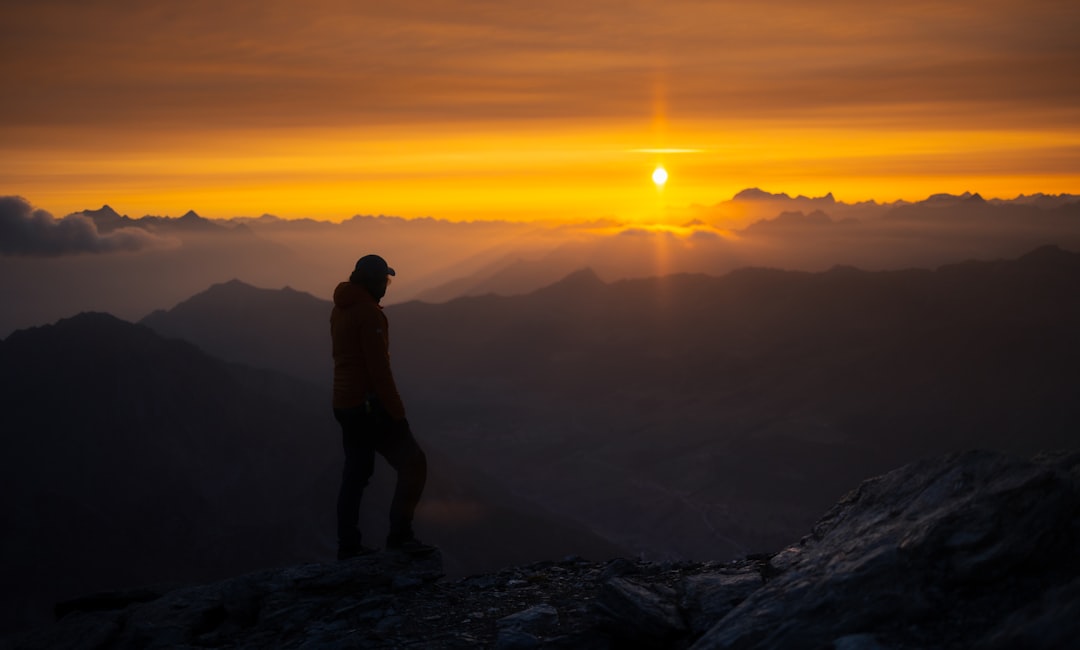
The light is the real reason. Hong Kong’s air quality varies enormously with the wind, and a hazy afternoon can produce a sunset that is less a spectacle than a gradual dimming into grey. But on a clear day, with a northerly wind pushing the pollution out toward the Pearl River Delta, the light on the ridge turns from gold to amber to a deep, warm orange that seems to flood the entire landscape. The sea goes dark blue. The islands to the east become silhouettes. The city skyline across the harbour glows pink for a few minutes before the streetlights take over. The whole thing lasts maybe twenty minutes, and then it’s gone.
About a third of the way up the ridge, a barely marked turnoff leads down toward the Shek O Country Park campsite — a short, steep path through secondary forest that opens onto a flat grassy area with a few picnic tables and a water tap. The signpost is faded enough to be easy to miss. The campsite is sometimes used by overnight hikers, but on a weekday evening in the off-season, it is empty. The noise from the trail above fades away completely. A pair of kites circles overhead, riding the thermals, and the only other sound is the distant drone of a helicopter heading toward the airport. It is a good place to sit for ten minutes and eat something before the final push to the summit, and it feels, despite being only a few hundred metres off the main trail, like an entirely separate place.
The logistics are straightforward. The number 9 bus from Shau Kei Wan MTR station runs to Shek O village every fifteen to twenty minutes and drops passengers at the trailhead on Shek O Road. The last bus back from To Tei Wan to Shau Kei Wan leaves at around eleven-thirty, which gives ample time for a sunset start and a gentle descent. The hike itself is about eight kilometres round trip if starting and ending at Shek O Road, or about six kilometres if doing the full traverse to To Tei Wan. It takes most hikers two to two and a half hours at a relaxed pace, including stops. The trail is mostly dirt and stone, with a few short sections of paved road near both ends. The climbing is steady but not punishing, with some steep sections near the summit that require a bit of care on the descent.
The strange thing about hiking Dragon’s Back at sunset is how different it feels from hiking it during the day. The same trail, the same views, the same landmarks — but the absence of other people changes the experience. The ridge becomes a place, not a route. The sound of the wind and the birds replaces the sound of conversation and footsteps. The light and colour change constantly, from minute to minute, and there is no need to hurry or to navigate around other groups. The last bus from Shek O leaves at eleven-thirty. The trail is waiting.

📷 Photos: Marek Piwnicki (Unsplash), Andrew Jooste (Unsplash)