The ride from Sokcho to the trailhead takes forty minutes by local bus, and the woman in the ticket booth at the terminal warned it would rain by noon. She was wrong. It started raining at 10:17, which meant the first hour of walking into the Baekdamsa valley was dry, and the second hour was not—a distinction that mattered less than expected, because the wet granite turned a darker grey and the leaves along the path began releasing scent in a way that only happens when water hits warm stone. The last bus up the valley had already departed by the time the shower arrived, which forced a decision that many visitors make hastily and then regret later in the day: whether to wait or to walk the remaining three kilometres uphill with a pack that suddenly felt heavier.
There was a couple from Daejeon at the lower temple gate, both in matching waterproof jackets that had clearly never been rained on before, and they looked at the sky and then at each other and then back at the shelter of the ticket booth. They did not walk. They waited. And by the time the temple stay program began at five o’clock that evening, their jackets were still dry and the air inside the meditation hall had that particular weight that comes when wet bodies and wet clothes begin to steam in a heated room full of strangers sharing the same small decision to stay rather than go.
Baekdamsa is not the most famous of the Seoraksan hermitages. That would be Sinheungsa, the one with the giant bronze Buddha that appears on every tourism poster, the one where tour buses disgorge visitors in waves between eleven and two. Baekdamsa sits higher, deeper, quieter—fifteen kilometres up a valley that dead-ends at a ridge line, no road access beyond the lower parking area, and the only sound after dark is the creek that runs past the dormitory wing. The monk who greeted the group that evening was in his late fifties, judging by the grey in his eyebrows, and he spoke Korean with a slight northern accent that the Seoul visitors occasionally had to ask him to repeat. He explained the schedule for the next morning—sunrise meditation at 4:45, breakfast at 6:30, forest walk at 8:00—and then he asked, in a tone that was not quite a joke, whether anyone had brought a proper alarm clock.
The dormitory room held six people on thin mats laid over a heated floor. The couple from Daejeon had the corner spots. A woman from Busan, traveling alone, had claimed the spot nearest the door, explaining that she needed to be able to get out quickly if the floor got too hot. A man from Hong Kong who spoke almost no Korean had shown up with a translation app and a printed itinerary that included the wrong temple entirely—he had meant to go to Naksansa, on the coast, and had only realized the mistake when the bus dropped him at the Baekdamsa junction. By then it was too late to turn back, so he stayed. His face, when he looked around the room that first night, carried a mild astonishment that had not yet resolved into either regret or gratitude.
The mistake cost him somewhere around forty thousand won in extra bus fare and a full day of his itinerary, since Naksansa and Baekdamsa are not close to each other and the coastal temple required an entirely different route. He did not seem upset. He was, in fact, the first person to wake the next morning, already dressed and sitting cross-legged on the floor when the others stirred, as if he had been waiting for the sound of the bell.
The meditation hall at Baekdamsa has no chairs. The floor is polished wood, cold even through a cushion, and the windows face east toward a gap in the ridge where the sun appears at exactly the right moment if the clouds cooperate. The first morning, the clouds did not cooperate. A thick grey blanket sat over the ridge line, and the sunrise was not a spectacle of colour but a slow brightening of the mist, the light shifting from dark grey to pale grey to something approaching white over the course of forty-five minutes. The monk leading the meditation did not mention the weather. He sat with his back straight and his hands in his lap, and the only movement in the room was the occasional shift of a sitting bone against the wood floor, and the only sound was the creek and, distantly, a woodpecker working a tree somewhere down the valley.
Six of the twelve people in the room fell asleep at some point during that first sitting. The woman from Busan later admitted she had been one of them, her head dropping forward twice before she caught herself. The monk, when asked about it afterward, said nothing disapproving. Sleep, he suggested, is itself a kind of meditation for someone who has not had enough of it, and the point of sitting is not to stay awake but to be present to whatever arises—including the decision to let the head drop.
Breakfast was a bowl of rice, a bowl of soup made from the same wild greens that grow along the valley paths, and a small dish of kimchi that had been fermenting long enough to develop the sharp, almost carbonated bite that supermarket kimchi never achieves. The monk ate with the group, and between spoonfuls he told a story about the winter of 2011, when the snow was so deep that the temple had to be resupplied by helicopter for three weeks. The power went out on the fourth day. The novices, he said, were terrified. The older monks treated it as a kind of retreat within a retreat, and when the electricity finally returned, there was a brief debate about whether to turn it back on at all.
The forest walk that followed breakfast followed a trail that the monk called the “inner circuit”—a loop of roughly four kilometres that connected Baekdamsa to a smaller hermitage called Bongjeongam, perched on a rock ledge above a waterfall. The rain had stopped by then, but the trees were still dripping, and the trail was a series of stone steps worn smooth by centuries of feet. He pointed out a yew tree estimated to be over a thousand years old, its trunk hollowed by fire but still sending up green shoots from the base. He pointed out a rock face where a hermit had lived in a cave for twelve years, leaving only to gather food and water, and the small shrine that had been built at the base of the cave to mark the site. He did not offer an opinion on whether such a life was admirable or foolish. He just showed the place and let the visitors make their own sense of it.
The Hong Kong man asked, through his translation app, whether the hermit had been happy. The monk read the screen and paused for a long moment before answering. “I think,” he said, “he was occupied. Happiness is a later question.” The translation app produced a sentence that the Hong Kong man read twice, frowning, before nodding slowly.
The second day followed a similar rhythm, but the weather shifted in a way that changed everything. A cold front moved through overnight, clearing the sky and dropping the temperature by eight degrees, and the sunrise that second morning arrived with the kind of clarity that makes a person understand why people have been getting up before dawn to watch it for thousands of years. The ridge line was sharp against a pale blue sky, and the light came through the windows in bands that fell across the polished floor like measurements. The meditation lasted an hour. Nobody fell asleep.
After breakfast, the monk offered a longer walk—eight kilometres round trip, to a hermitage called Heundeulbawi that sat near the top of a steep ridge accessible only by a series of iron ladders bolted into the rock. The couple from Daejeon declined, citing sore knees. The woman from Busan hesitated, then decided to go. The Hong Kong man was already at the trailhead, lacing his boots.
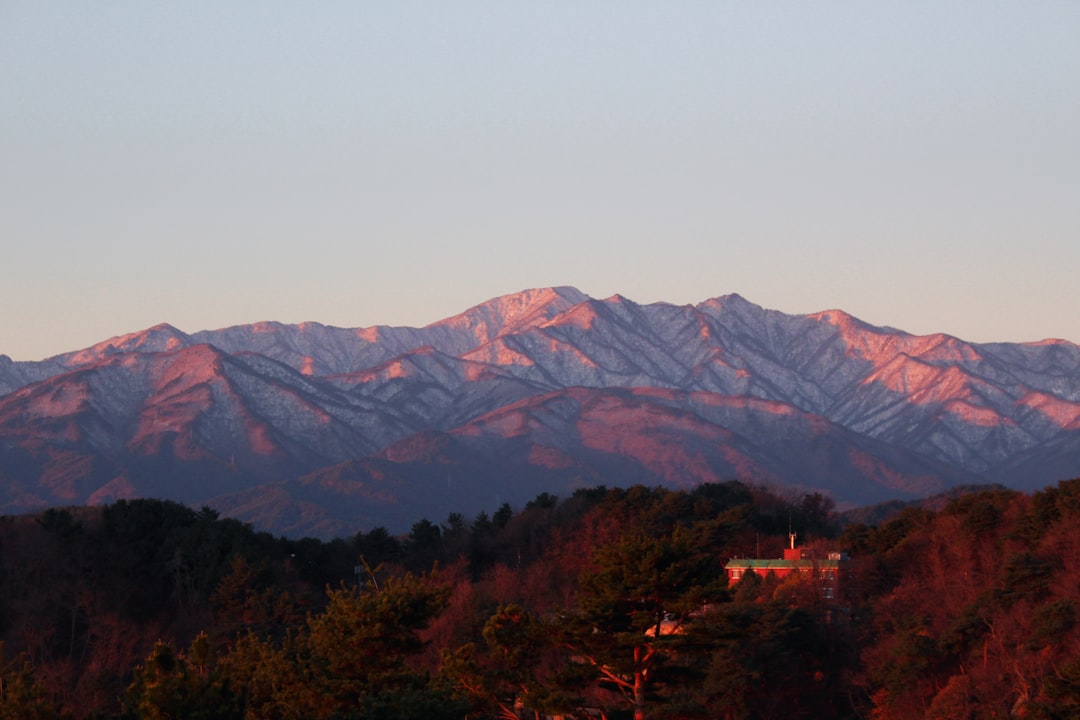
The climb took just under two hours, with several rest stops at points where the trail opened onto views of the main ridge of Seoraksan—a long spine of granite peaks that held snow in their crevices even in late spring. The trail was empty except for a single elderly Korean man who passed them on the descent, moving down the ladders with the practiced ease of someone who had made the climb many times before. He was carrying a small thermos and a wrapped bundle of what turned out to be rice cakes, which he offered to share when they reached the hermitage at the top. The hermitage itself was a single wooden building painted in the traditional dancheong colours—red, green, blue—that seemed impossibly bright against the grey rock. Inside, a single monk sat reading, and he acknowledged their presence with a nod and then returned to his book.
The view from Heundeulbawi faced east. On a clear day, it was said, you could see the East Sea. The second day was clear, and the sea was there, a line of darker blue at the edge of the sky, and below it the coastal plain where Sokcho sat, and beyond that the hazy silhouette of the coast of North Korea, visible despite the distance. The monk who had led them up sat on a rock and poured himself a cup of tea from a thermos he had carried in his pack. He did not point at the view or invite anyone to appreciate it. He simply sat, facing it, and the visitors sat nearby, and for fifteen minutes nobody said anything.
The third day was shorter. The program ended at noon, and the morning meditation was followed by a final breakfast that included a dish the monk called “mountain bibimbap”—rice mixed with whatever wild greens and mushrooms had been gathered that morning, topped with a fried egg and a spoonful of the same sharp kimchi. The couple from Daejeon had grown talkative over their two days at the temple, and at breakfast they asked the monk whether he had always lived this way, and whether he missed ordinary life. He told them he had been a businessman in Seoul for fifteen years before ordaining, and that the first thing he had noticed after moving to the mountain was the silence. “Not the absence of noise,” he said, “but the presence of it. City silence is just waiting for the next sound. Mountain silence is a sound in itself.”
The woman from Busan exchanged contact information with the Hong Kong man, who had decided to cancel his trip to Naksansa and spend the remaining two days exploring the Seoraksan trails instead. His translation app was running low on battery, but the conversation proceeded anyway, through gestures and single words and the kind of mutual understanding that happens when two people have shared something that does not require precise language to communicate.
The bus ride back down the valley was crowded with day-trippers heading up for the afternoon, their packs light, their faces fresh, their voices loud in the confined space. The woman from Busan sat by the window and watched the creek beside the road, and did not speak until the bus reached the junction where the temple road met the main highway. “It’s strange,” she said, half to herself, “that three days can feel like a week if you’re not checking your phone.”

📷 Photos: yebin kim (Unsplash), yebin kim (Unsplash)