The Blue Flash Before the Sun Hits the Water
The Blue Flash Before the Sun Hits the Water
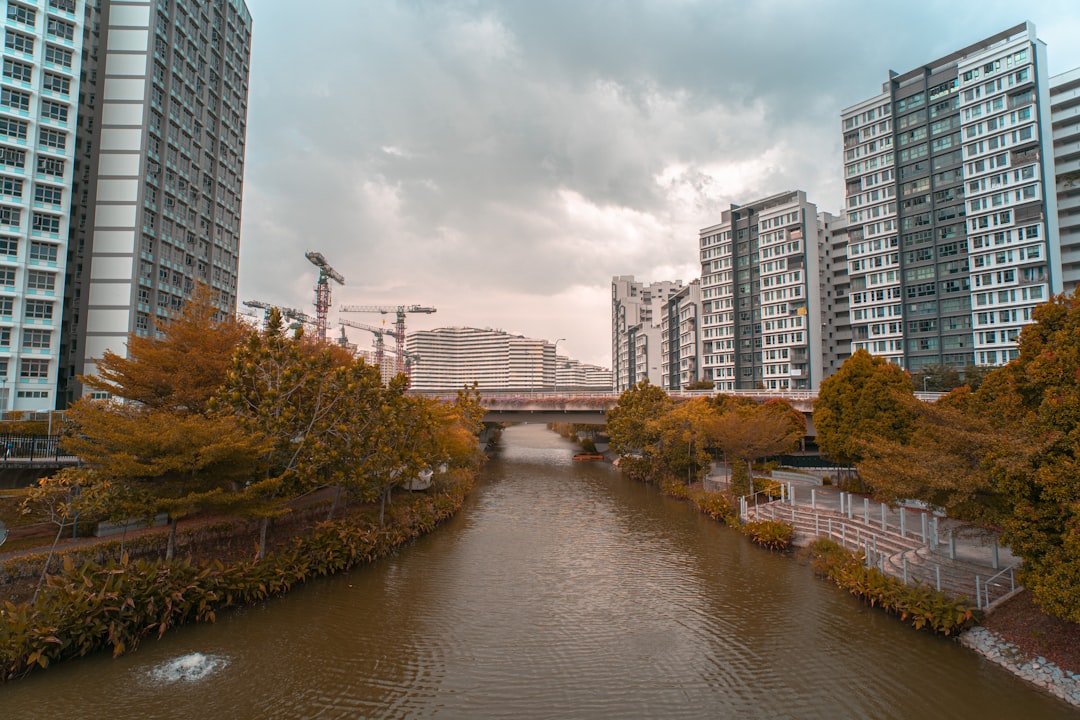
The path along Punggol Waterway is empty at 5:47 in the morning, which is surprising for a place that turns into a corridor of strollers and cyclists by seven. A jogger passes every few minutes, headphones in, not looking up. The streetlights are still on, casting the canal in an orange haze that makes the water look darker than it actually is. It takes about twenty minutes to walk from Punggol MRT station to the stretch where the kingfishers have been seen, and the entire walk feels like the city hasn’t woken up yet — except for the birds, which have been awake the whole time.
Singapore’s northeastern waterway isn’t a secret to local birdwatchers, but it rarely shows up in the same conversation as Gardens by the Bay or the Marina Bay skyline. The waterway runs for just over four kilometers, connecting Punggol Reservoir to the Serangoon Reservoir, and in the early morning it functions as a kind of unofficial sanctuary. The habitat is managed — it’s a park, after all — but the mangroves and fringing vegetation along the banks provide enough cover for a surprising density of birdlife. The kingfishers are the main draw, particularly the collared kingfisher and the larger white-throated kingfisher, both of which nest in the area year-round.
The specific spot is a bend in the waterway near the Punggol Waterway Park’s eastern edge, where a wooden boardwalk extends over the water. A photographer named Jun Wei Lim, who has been shooting birds in Singapore for about four years, described the location as “one of the few places where you’re actually level with the water, not looking down from a bridge.” That matters for photographs: the angle changes everything when the bird is perched on a mangrove branch at eye height instead of fifteen feet below.
Getting there before six means the light is still flat and gray, which is not ideal for photography. The best light arrives between 6:40 and 7:10, when the sun clears the HDB blocks to the east and hits the water edge-on. That twenty-minute window is the difference between a muddy blue-gray image and something with actual color separation between the bird’s feathers and the background.
What Actually Happens When You Get There
The first problem is that the birds don’t arrive on schedule. For three consecutive mornings, a visitor saw precisely nothing until 6:55, then a white-throated kingfisher landed on the same dead branch over the water and stayed for perhaps ninety seconds. On the fourth morning, the same bird — or another one — appeared at 6:12 and was gone in thirty seconds. Jun Wei says that inconsistency is normal: “You have to treat it like waiting for a bus that doesn’t have a timetable. The only thing you can control is being there before it arrives.”
The second problem is the noise. By 7:15, the path is no longer empty. A leaf blower starts up somewhere near the car park. A group of older walkers passes by, talking at full volume about someone’s gallbladder surgery. The kingfishers, which are skittish birds, retreat deeper into the mangroves. A visitor who arrived at seven and expected a peaceful session until eight would find the window closing before it properly opened.
The third problem is more mundane: there is no public toilet within easy walking distance of the boardwalk. The nearest one is at the Punggol Waterway Park’s main entrance, about a ten-minute walk back toward the MRT station. A photographer who had been there since 5:30 and drank coffee before leaving the house would have to choose between abandoning their spot or holding on. Most people choose to hold on.
What the Camera Sees That the Eye Misses
The collared kingfisher is about the size of a fist, blue-green on top with a white collar and a bright blue stripe above the eye. It’s not a rare bird — it’s common across Southeast Asia — but it moves fast and stays still only in short bursts. Photographing it requires a shutter speed of at least 1/2000, ideally faster, and a lens that reaches at least 300mm. A phone camera, even a recent one, cannot resolve the detail at the distance the birds typically perch. A visitor who brought only a phone would be better off just watching.
The white-throated kingfisher is larger, with a chestnut head, a white chest, and a thick red bill. It tends to perch higher and in more exposed locations, which makes it easier to see but harder to frame without including too much sky in the background. Both species hunt by diving into the water from a perch, and that moment — the bird dropping straight down, wings folded — is what photographers are really after. It happens in less than a second, and catching it requires either luck or a camera with a fast burst rate and good autofocus tracking.
One photographer who visits regularly described a morning when a collared kingfisher dove and came up with a small fish, then flew back to the same branch and ate it in front of a group of about six people. “Nobody got the shot. Every camera in that group was pointing the wrong way when it happened,” he said. “But everyone saw it, which is maybe better.”
The Other People on the Path
By 7:30, the character of the waterway changes entirely. The joggers are replaced by families with young children, elderly couples walking slowly in the shade, and the occasional person on a scooter. The kingfishers are still present, but they’ve moved deeper into the vegetation where the branches are thicker. A photographer who stays past eight is mostly photographing leaves and hoping a bird lands in a gap.
This is where Punggol Waterway differs from a dedicated nature reserve. It’s not a wilderness; it’s a park designed for people, and the people show up. The path is wide and paved, and there are benches and exercise stations every few hundred meters. It’s pleasant. It’s just not quiet in the way that serious bird photography requires. One regular walker, a retiree named Mr Tan, said he sees the photographers “crouched down with the big lenses” every morning. “They look very serious. The birds don’t care about their schedule,” he said, with no particular malice.
The tension between the photographers and the park’s other users is mostly unspoken. Nobody complains. But a photographer who sets up a tripod in the middle of the path at 6:45 will have to move it by 7:15, when the foot traffic makes it impractical. The solution is to stay off the main path entirely — there’s a narrow dirt trail along the water’s edge on the south side of the canal, less used and closer to the mangroves. It’s muddy after rain and the mosquitoes are bad, but the kingfishers are closer there.
What the MRT Commute Costs in Practice
Punggol is on the North East Line, which connects to HarbourFront and runs through Chinatown and Little India. From the city center, the journey takes about forty minutes. A standard adult fare from Raffles Place to Punggol is $1.90 on an EZ-Link card. The first train from HarbourFront departs at 5:37 AM, which means a visitor staying near the city center can arrive at Punggol station by 6:20 at the earliest — too late for the 5:30 setup that the serious bird photographers recommend. A taxi from the city center to Punggol costs around $20 to $25 and takes about twenty-five minutes with no traffic.
One visitor who miscalculated arrived at Punggol station at 6:30, expecting to walk to the waterway in fifteen minutes. The walk is closer to twenty-five minutes if you don’t know the route, and by the time they reached the boardwalk, the sun was already hitting the water and the joggers were out in force. They saw a kingfisher, briefly, in flight. No photograph worth keeping. The time cost was the better part of two hours on the MRT and the walk, with nothing to show for it except a slightly better understanding of the transit schedule.
A better approach: take the 5:37 train from HarbourFront to Punggol, walk directly to the boardwalk without stopping, and be in position by 6:15. That gives about forty minutes of usable light before the path fills up. The return trip, after the sun is fully up and the heat settles in, is straightforward — the station is never more than a twenty-five minute walk from any point along the waterway.
Where to Eat After the Birds Leave
By 8:30, when the photography window is closed and the mosquitoes have become a problem, the Punggol Waterway’s east end connects to a row of shops near the Oasis Terraces housing complex. There’s a hawker center on the second floor with a stall called Soon Lee that sells Hainanese chicken rice for $3.50 a plate. The rice is fragrant, the chicken is tender, and the chili is sharp enough to wake up anyone who’s been up since before dawn. It’s not destination food — nobody would travel across Singapore for it — but it’s the right thing at the right time, and the hawker center is air-conditioned, which is relevant after two hours in the humidity.
Some photographers pack snacks and stay through the morning, hoping for a second opportunity as the tide shifts and the fish move. It rarely works. The kingfishers, once disturbed, seem to relocate to less accessible parts of the waterway where the path doesn’t go. The smart ones leave and come back the next day.
The Gap in the Fence
The obvious path along the boardwalk is the wrong place to be. Most visitors take it because it’s the designated route, but the kingfishers are more active on the opposite bank, where the mangroves are denser and the water is shallower. Getting to that side requires walking through a construction site — the Bidadari Park development is ongoing — or taking a longer route around the reservoir. It’s not officially accessible. A photographer who tried it found a gap in the fence and spent an hour on the other side, where the birds were within fifteen meters and the path was silent. They got the shot they came for. They also got a warning from a security guard, who didn’t fine them but told them not to come back. The spot exists. It’s just not a visiting privilege.
Jun Wei, the photographer, has a different approach. “I just come back every week. Eventually the bird does what I want it to do, or I do what it wants me to do. One of us adjusts.” He’s been shooting the same white-throated kingfisher for about eight months and says he still doesn’t have the dive sequence the way he wants it.
📷 Photos: Ivan Yeo (Unsplash), Ivan Yeo (Unsplash)