I Paid $8.50 for a Rain Puddle That Had Other Plans
I Paid $8.50 for a Rain Puddle That Had Other Plans
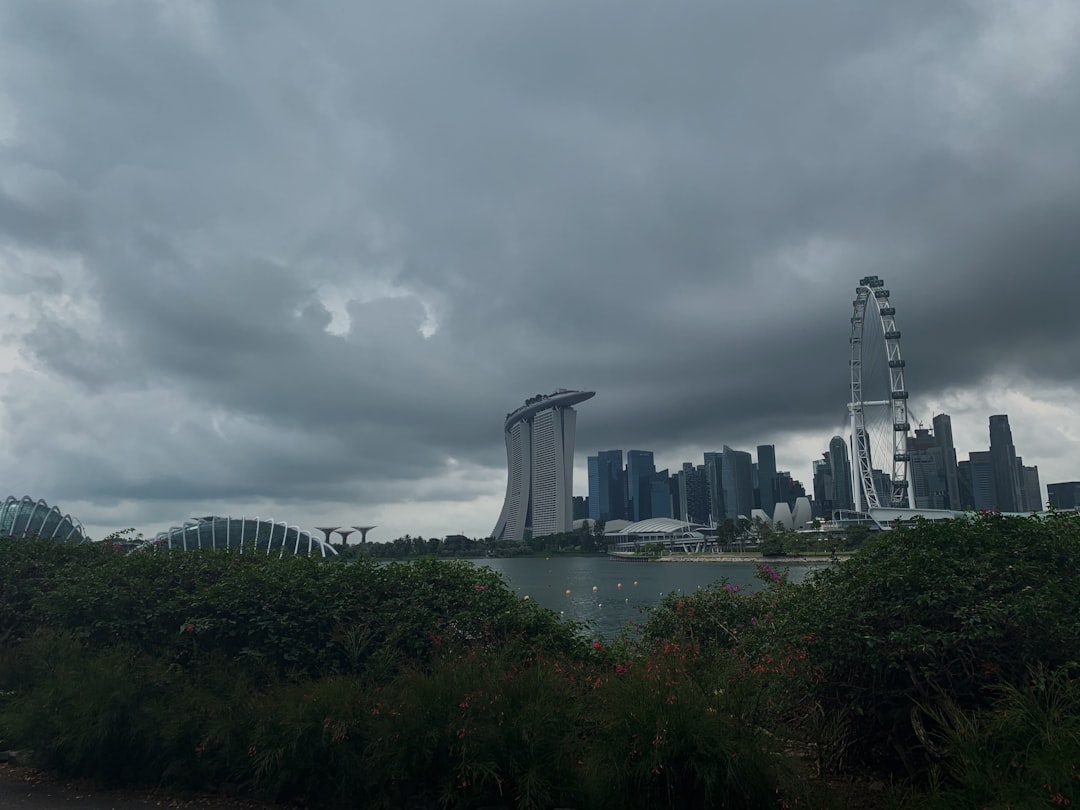
The thing about Singapore is that it doesn’t do subtle. Everything is deliberate — the way the trees are planted, the way the MRT doors open exactly on the line, the way the humidity hits you like a wet towel the second you step outside. And Marina Bay Sands, that three-boat-on-a-skyscraper thing, is the most deliberate of all. Every photo of it looks the same: perfect reflection, golden hour, no people. I wanted that photo. I wanted it badly enough to set an alarm for 4:45 AM on a Tuesday.
I should mention that I am not a morning person. I am the kind of person who, in normal life, considers 8 AM “early.” But I’d read the blogs. I’d seen the Instagram posts. “Get there before sunrise, find a puddle after a rain, shoot from ground level.” Simple, right? Three steps to the perfect shot. I figured I’d be back at the hotel by 7, having breakfast, scrolling through my victory photos.
It didn’t go like that.
The Grab Driver Laughed at Me
I’d checked the weather app the night before. It said “scattered thunderstorms” for the whole week, which in Singapore means it’ll rain at least once a day, usually in the late afternoon. That’s what I’d counted on — that there’d be puddles from yesterday’s downpour still hanging around the Helix Bridge area at dawn. I didn’t consider that the city cleans. Aggressively. Or that the heat would have evaporated most of the standing water by midnight anyway.
I took a Grab from my hotel in Chinatown at 5:10 AM. It cost $8.50 SGD. The driver was a middle-aged man named Mr. Tan, who asked why I was going to Marina Bay at this hour. I explained my plan and he just kind of laughed — not meanly, but in a way that suggested he’d heard this before.
“You want puddle, you go after rain, not before,” he said, pulling up to the drop-off point near the ArtScience Museum. “Now, maybe no water. Maybe you get lucky. But you look, you see — ground already dry.”
He wasn’t wrong. I stepped out onto the promenade and the concrete was bone-dry, still warm from the previous day’s heat. Not a single decent puddle anywhere near the iconic spots. I walked the whole stretch from the Helix Bridge to the Event Plaza, crouching down to check every low point where water might have pooled. Nothing. Not even a damp spot.
Singapore is not just a city, it’s a system. Everything is managed — drainage, cleaning schedules, even the puddles. I’d assumed nature would cooperate with my plan, but nature was just the day’s heat and the city’s infrastructure met it halfway.
The Security Guard at the Office Tower
I gave up on finding a natural puddle around 5:45. I’d been walking in circles near the bridge, feeling increasingly stupid with my camera out, trying to make something work. That’s when I noticed a security guard at the entrance to one of the office towers near Bayfront Avenue. She was in her late 50s, maybe, in a crisp blue uniform, sweeping the marble floor just inside the glass doors.
I don’t know why I walked over. Maybe because I was frustrated and wanted to complain to someone. But she saw me coming and didn’t wait for me to speak.
“You want picture of the hotel, right?” she said, not looking up from her sweeping. “Everyone comes here for that. But you go to the back — behind the flower dome, there’s a canal. Water always there. Not nice like the big puddle, but you get the reflection, sure.”
I nodded and thanked her. She waved a hand like it was nothing. “Just don’t fall in,” she added.
I didn’t fall in. But I did go find the canal — and she was right. It was a narrow concrete channel, maybe two feet wide, with slow-moving dark water. Not photogenic in itself. The reflection of Marina Bay Sands was there, though, perfectly still because the water barely moved. I crouched down and got the shot — not the wide, dramatic puddle I’d imagined, but the building upside down in a thin strip of brownish water, the flowers of the Supertrees reflecting in a different part of the frame. It looked okay. More honest, somehow. Like a photo of a real place, not a postcard.
A Tourist Couple and a Spray Bottle
By this point it was nearly 6:30 AM. The sun was fully up, the light was already harsh, and I’d been walking around for an hour and a half without actually shooting much. I’d spent $8.50 on the Grab, which felt wasteful for a failed mission. But I decided to stick around and wait — maybe the early morning cleaning crew would spill some water, or maybe a sprinkler system would kick on.
Neither happened.
What did happen was that I started noticing the other early birds. A Chinese tourist couple, probably in their 30s, showed up at 6:45 with a professional-looking tripod and a small backpack. They walked straight to the exact spot I’d seen in every Instagram photo — the low wall near the ArtScience Museum — and the woman pulled out a spray bottle. I watched, fascinated, as she sprayed water on the concrete to create her own puddle. She angled the spray to form a thin, even sheet of water, then stepped back while her husband positioned the tripod.
I felt a mix of awe and annoyance. Awe because it was clever. Annoyance because I’d been standing there for two hours not thinking of it. I could have brought a spray bottle. I could have made my own puddle. But I was so fixated on the idea of finding one naturally that I didn’t consider creating the conditions myself.
That’s the mistake I still think about: assuming the scene would come to me ready-made. Travel photography, at least the kind that looks effortless, is never effortless. It’s manufactured. The spray bottle, the careful angling, the wait for the right moment of no people — it’s all work. I just hadn’t done the work.
Helix Bridge Shadows and the Pigeon Man
I ended up scrapping the puddle idea entirely around 7:15. The sun was getting more aggressive, the security guys were starting to shoo people off the grass, and the tourist groups were arriving — not in droves yet, but a steady trickle. I decided to just walk around and shoot whatever was available, no expectations.
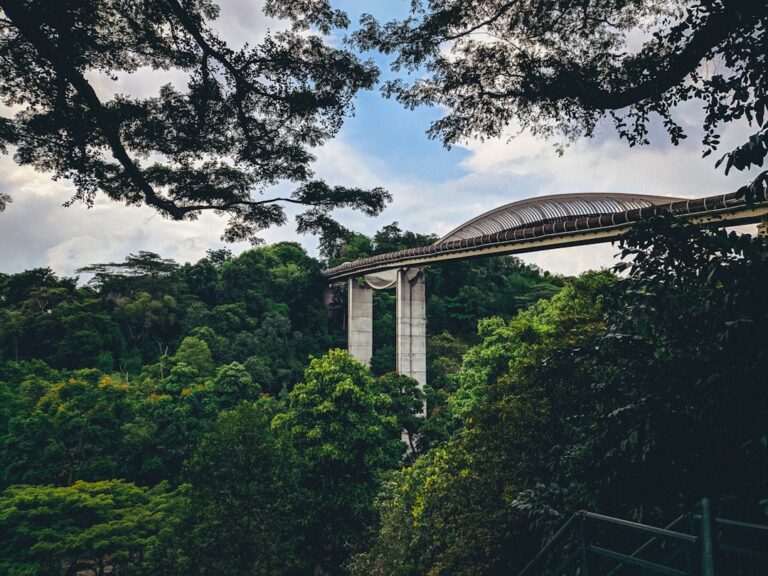
I walked along the Helix Bridge, which I’d crossed twice already without really looking at it. The bridge is covered in this crazy spiraling lattice, and at this hour, the light was casting hard shadows across the metal. I stopped to photograph the way the shadows fell on the wooden deck — it looked like some kind of abstract pattern, the supports repeating over and over. I spent maybe fifteen minutes there, just adjusting angles, waiting for a jogger to pass through the frame at the right moment. I ended up with a photo I actually like more than any reflection shot I could have forced.
Then I walked toward the bayfront, near where the ferries dock. There’s a row of benches there, facing the water, and one of them had an old man sitting on it with a packet of bread. He was feeding the pigeons. Not photographically interesting, I know, but there was something about the scene — the way the light caught his shirt, the way the birds moved in a choreographed frenzy — that made me shoot it. Just a roll of shots, twenty seconds, then I moved on.
That’s the part of the morning I remember most clearly. Not the failed puddle hunt, but the bridge shadows and the pigeon man. Those weren’t what I came for, but they’re what I keep coming back to when I look at that memory card.
Breakfast at an Unnamed Kopitiam
If you’re the kind of planner who wants details: I stayed at the Hotel Boss on Jalan Sultan. It was $120 a night, cheap for Singapore, and the rooms were small but clean. I ate breakfast afterward at a kopitiam near the hotel — kaya toast and a soft-boiled egg, $4.20. The coffee was sweet and thick and tasted vaguely of condensed milk. I don’t remember the name of the place; it was just a corner shop with a plastic awning and an elderly woman working the register.
I didn’t take photos of the breakfast. That feels like a mistake too, in retrospect — not because the toast was photogenic (it wasn’t, it was just yellow and shiny with butter), but because it was the first thing I’d eaten in six hours and the relief of it, the quiet normalcy after a frustrating morning, deserves some kind of record.
I also wish I’d brought a second lens. I had a 24-70mm, which is fine for landscapes, but for the bridge shadows I wanted something wider, and for the pigeon man I wanted something longer. I didn’t have either. I made do with cropping in post, which never looks as good. Next time, I’ll pack a 70-200mm even if it means the backpack is heavier and my shoulder hurts by the end of the day.
What the Light Does to Old Roof Tiles
On the walk back to the hotel, I passed through the Chinatown Heritage Centre area — not the main street with the souvenir shops, but a side lane called Smith Street. The shophouses there have these old clay roof tiles, dark red and slightly mossy, and the morning sun was hitting them at just the right angle to make them glow.
I stopped. I didn’t have a puddle, I didn’t have a reflection, but I had those tiles. I shot them from ground level, from a low angle, trying to get the texture right. It’s not a photo I’ll ever post on Instagram — too niche, too brown, too many power lines — but I like it. It’s the kind of photo that only makes sense if you were there, if you remember the weight of the humidity and the sound of a moped starting up somewhere down the alley and the way your shirt stuck to your back.
That’s the thing about travel photography. The shots you plan for are the ones you show people. But the shots you stumble into, the ones you take when you’re frustrated and hot and kind of done with the whole project — those are the ones you keep for yourself.
I’ll probably do the same thing next time — obsess over a specific shot, fail to get it, feel stupid, then wander into something better. That’s the cycle. I don’t think it ever stops. But at least now I know to bring a spray bottle and a long lens and the willingness to walk away from the plan.
📷 Photos: Anjali Mehta (Unsplash), Sunny San Myint (Unsplash)