The woman at the campground reception in Kaikōura didn’t look surprised when we told her the itinerary. “Everyone does the same loop,” she said, handing back the keys to the dump station. “South Island first, then the ferry, then a mad dash through the North.” She wasn’t wrong, and we knew it. But knowing you’re part of a predictable pattern doesn’t make the drive any less yours. We filled the water tank, checked the gas bottle, and pulled out of the coastal camp at a little after eight—later than planned, because the previous night’s crayfish dinner had been one of those meals that makes you forget to set an alarm.
The road into Wellington is a long, straight comedown from the dramatic coastline of the previous days. The campervan’s engine had started making a noise we couldn’t identify—a low, intermittent hum that seemed to come from somewhere near the rear axle. We pulled over once near Blenheim, then again just south of Picton, and finally decided it was probably nothing, or possibly everything, and either way there was nothing to be done about it until we reached a mechanic. The noise continued, unbothered by our concern, all the way to the ferry terminal.
We’d booked the crossing weeks earlier—the Interislander, Cook Strait, the three-and-a-half-hour hop between the two islands. What we hadn’t accounted for was the wind. Wellington was living up to its reputation, gusts sweeping across the terminal lot strong enough to rock the van while it was parked. “It’ll be fine,” said the man in the booth when we checked in, waving at the sky. “They only cancel when the swell hits six metres, or something like that.” He said it like it happened often enough to have a number ready.
The ferry itself was surprisingly ordinary once we were on it—a cafeteria selling overpriced sandwiches, a row of seats bolted to the floor, the kind of fluorescent lighting that makes everyone look slightly ill. We sat near a window on the port side and watched the South Island shrink behind us, grey-green and indistinct, until it was just a smudge on the horizon. The water was rougher than expected, and someone a few rows back was loudly regretting the breakfast burrito they’d bought at the terminal. We’d packed our own food—a habit formed early in the trip, after too many $18 roadside pies that tasted of nothing but grease and regret.
By the time we docked in the North Island, the wind had died, and the weather felt different—warmer, more humid, as if we’d crossed a climate boundary along with the strait. Wellington at dusk is a city of hills and lights, and from the ferry terminal it looked compact and navigable, which turned out to be mostly an illusion. We drove straight to a campground in the suburb of Petone, about fifteen minutes north of the city centre, because parking a campervan anywhere closer required a logistics degree we didn’t have. The site was basic: power hook-up, a shared kitchen, a toilet block that smelled of bleach. We cooked pasta on the van’s stove, drank a bottle of wine we’d been carrying since Christchurch, and tried to plan the next day.
Day 11 was supposed to be Wellington—Te Papa, the cable car, all the things you’re meant to do when you have one day in the capital. But the noise from the van had gotten louder overnight, and we spent the first hour of the morning at a mechanic’s shop in a light-industrial strip near the motorway, watching a man named Tony slide under the chassis with a torch. “Loose heat shield,” he said, emerging with grease on his forehead. “Not serious. But you’d have heard it all the way to Auckland.” He charged us forty dollars and refused to take more. “Honesty’s not that common,” he said, wiping his hands on a rag. “Drive safe.”
Te Papa, when we finally got there, was overwhelming in the way a good museum should be. We spent two hours in the Gallipoli exhibition, the one with the giant sculptures by Weta Workshop, and came out feeling like we’d been pummelled. The detail on the figures—the way the fabric of a uniform bunched around a knee, the hollow look in a soldier’s eyes—made the scale almost unbearable. We didn’t say much to each other afterward. We just walked down to the waterfront and stood watching a container ship being loaded, which felt like an appropriately mundane thing to do after all that weight.
The cable car was a different kind of experience entirely. It’s a short ride, barely five minutes from Lambton Quay to the botanic garden at the top, and the view is pleasant without being spectacular—Wellington laid out like a model city, the harbour flat and grey, the hills rising steeply behind. The line was long, the car was crowded, and the whole thing felt like checking a box. But the walk back down through the garden was better than the ride itself: mature trees, quiet paths, a moment of stillness after the noise of the city. We stopped at a bench near a pond and sat in silence for maybe ten minutes, not looking at phones, just being still in a way that the trip so far had rarely allowed.
That evening, we packed the van in the dark, checked the tyre pressure, and set an alarm for 5:30 AM. The drive to Taupō was roughly five hours, and we wanted to arrive with enough daylight to see the lake properly.
Day 12 began in fog. The road north from Wellington is undramatic at first—pastureland, small towns, the occasional petrol station with a sign advertising the world’s best milkshake (it wasn’t). But somewhere around the Rangitīkei River, the terrain began to change. The hills got steeper, the forests thicker, and by the time we crossed into the Central Plateau, the landscape had turned volcanic. Bare slopes, scrubby vegetation, the occasional glimpse of a mountain through cloud. The fog lifted around midday, and suddenly we could see Mount Ruapehu in the distance, still capped with snow even in late summer.
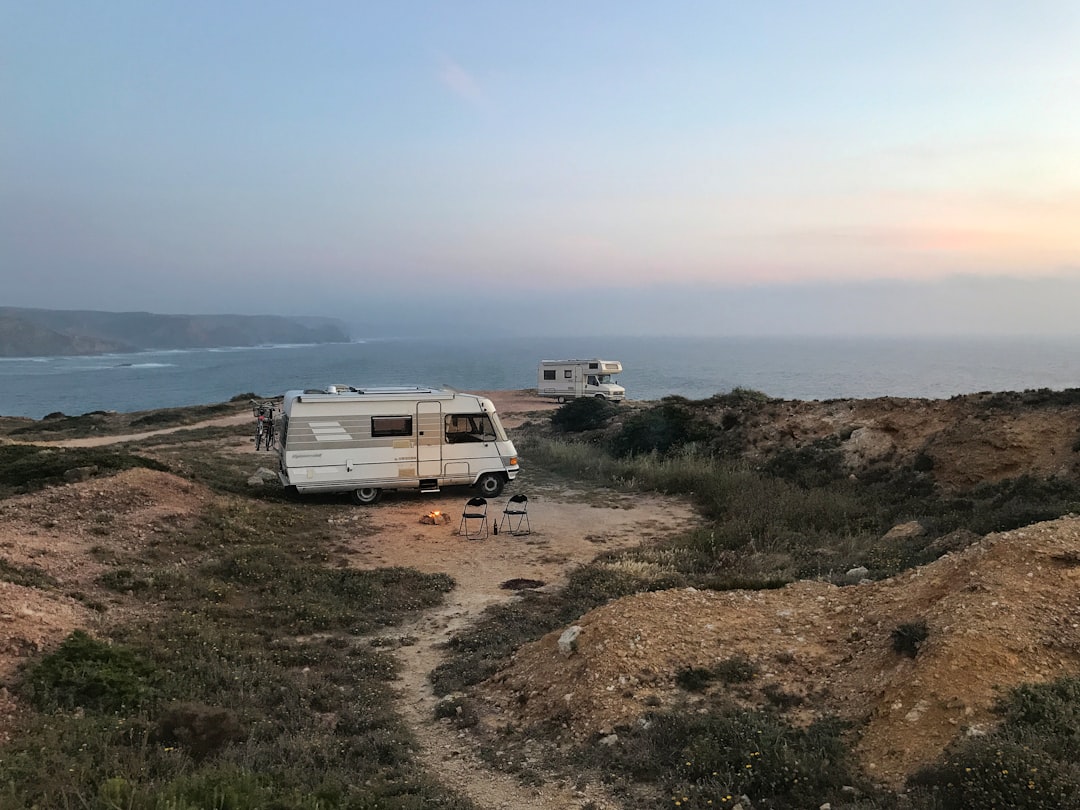
Taupō appeared slowly, a lakeside town that felt larger than it looked on the map. We found a freedom camping spot near the lake’s southern edge—a gravel pull-off with a view of the water and nothing else. No power, no facilities, just a sign saying “self-contained vehicles only.” We’d deliberately chosen a campervan with a built-in toilet and greywater tank for exactly this moment, and it felt like we’d earned the privilege of parking somewhere this beautiful for free. The lake stretched to the horizon, blue-green and impossibly still. A man nearby was fly-fishing from the shore, standing waist-deep in waders, not moving for long stretches at a time. We watched him for a while. He didn’t catch anything.
Huka Falls, about a fifteen-minute drive from town, is the kind of place that photographs well but feels different in person—the water is that improbable shade of electric blue, and the volume is shocking, though the exact number on the sign at the viewpoint doesn’t really matter. What’s harder to capture in a photo is the sound—a low, constant roar that vibrates through your chest, the kind of noise that makes conversation feel pointless. We stood on the bridge and watched the water pour through the narrow channel, and after a few minutes, we didn’t say anything. We just stood there, feeling it.
The geothermal activity around Taupō is less touristy than Rotorua’s but just as present. A short walk from the falls, steam rose from cracks in the ground near the riverbank, and the air smelled faintly of sulphur—not unpleasant, more like a kitchen where someone had boiled too many eggs. We saw a sign for a hot spring that was free to access, a spot where locals apparently went to soak after work. We found it tucked behind a row of pōhutukawa trees, a shallow pool fed by a warm stream, with a muddy bottom and a view of the river. Two women were already there, talking quietly in what sounded like Māori. We left without getting in, not wanting to intrude. But we noted the location.
That night, we cooked dinner over a portable gas stove at the lakeside camp, eating canned soup and bread while the sunset turned the water pink and gold. A couple from Germany had pulled in next to us, renting a campervan that was identical to ours except for the colour. They asked about the South Island, and we told them about Kaikōura and the glaciers and the coastal road that had made us pull over every twenty minutes just to stare. They seemed pleased. “We’re doing the same route,” the woman said. “But backwards.”
Day 13 took us to Rotorua, and the sulphur smell announced the town before the signs did. It’s a strange place—part resort, part industrial town, with a thermal energy plant visible from the main road and a tourist strip lined with hotels and souvenir shops. The geothermal parks around Rotorua are the main draw, and we picked one that seemed less crowded than the famous ones: a smaller reserve on the outskirts, with walking paths that wound past bubbling mud pools and steaming vents. The ground felt warm through the soles of our shoes. The mud pools made a sound like wet burps, rhythmic and ancient, and we spent a long time watching one particular pool that seemed to be moving in patterns, as if something beneath the surface was breathing.
The Maori cultural experience we’d booked was in a small marae outside town, run by a family who had been hosting visitors for three generations. It felt less like a performance and more like a gathering—a welcome ceremony, a hangi meal cooked in a pit, stories told in a mix of English and te reo Māori. One of the elders, a woman named Aroha, spoke about the connection between the geothermal activity and the land’s spiritual significance. “The steam is not just heat,” she said. “It’s a reminder that the earth is alive. That it has memory.” We didn’t take notes, but the sentence stayed with us.
The mud pools closer to town are the ones you see in every postcard—large, active, surrounded by boardwalks and railings. They’re impressive in their way, but they feel managed, contained, the wildness tamed for easy viewing. The smaller pools we’d found earlier, on the other hand, had no railings, no signs, no path at all. We’d followed a dirt track that ended at a clearing, and the mud there was darker, thicker, bubbling at a slower pace. A single dead tree stood at the edge, bleached white by the steam. It felt less like a tourist attraction and more like a place you weren’t supposed to find.
Day 14 was the final stretch: Rotorua to Auckland, a three-hour drive that felt anticlimactic after everything else. The motorway north of Hamilton is flat and boring, the kind of road that makes you check your watch every twenty minutes. We stopped for lunch at a café in a town whose name we’ve already forgotten, ate sandwiches that were fine but not memorable, and watched a truck driver argue with his dispatcher on the phone. The campervan’s engine hummed steadily, no strange noises, no drama. It was the most uneventful drive of the entire trip.
Auckland appeared gradually, first as a haze on the horizon, then as a cluster of buildings that grew denser as we approached. The Sky Tower was visible from kilometres away, a needle against the sky, and we followed it like a beacon through the motorway ramps and exit lanes that seemed designed to confuse visitors. We returned the campervan to the depot in the suburb of Ellerslie, a process that took longer than expected because the agent—a young man with a clipboard and an air of mild impatience—insisted on inspecting every surface for damage. He found a small scratch on the rear bumper that we hadn’t noticed. We argued for a while, then paid the fee, because we were tired and wanted to be done.
We took a taxi to a hotel in the city centre, a proper room with sheets that smelled of fabric softener and a shower that didn’t require holding the nozzle at a specific angle. We stood under the hot water for a long time, not moving. Then we walked to the Sky Tower, rode the elevator to the observation deck, and stood looking out at the Harbour Bridge and the distant islands. The city spread out below, orderly and bright. The campervan was gone, returned to the fleet, and we were just tourists again, carrying backpacks and checking the time.
We ate dinner at a Korean restaurant in the city, the kind of place that doesn’t bother with decor because the food does the work. The owner brought out banchan in small bowls, refilling them without being asked. We ordered too much and ate most of it, and when we left, the night air felt warmer than it had any right to, and the city hummed around us, indifferent and alive. We walked back to the hotel past a row of bars and convenience stores, past people heading home or heading out, past the ordinary rhythms of a city that didn’t know we’d just crossed two islands and a strait to get here.

📷 Photos: Peter Schulz (Unsplash), Jayde Keroi (Unsplash)