The sea caves along the eastern edge of Sai Kung don’t announce themselves on any map in a way that prepares you for them. We’d read the blog posts, watched the drone footage that makes every cave look like a cathedral carved from volcanic rock, and assumed we understood what we were getting into. What we hadn’t accounted for — what none of the coverage seems to mention — is that the real show happens not inside the caves, but in the water itself, and only at a specific hour that most visitors never see.
Our window was 4:15 in the morning. Not dawn, not quite. The kind of hour that feels like the world has forgotten to finish turning itself back on. We’d arranged a kayak rental through a small operation near the Sai Kung pier — a faded blue container that doubles as a storage shed, run by a man named Kwok who told us, with no small amount of amusement, that we were his only booking that week. “Most people come at ten,” he said, handing us two life vests that smelled of brine and plastic and something vaguely fishy. “They see the caves. They don’t see what comes before.”
We launched into darkness. The water was glass-flat, the kind of surface that makes you question whether you’re moving at all or simply suspended in a black mirror. The paddles cut through with a sound less like splashing and more like tearing silk. There were no lights on the shoreline — just the occasional pinprick from a distant fishing boat, and the glow of Hong Kong’s skyline somewhere behind us, reduced to a faint orange smear on the horizon. We’d been told to head northeast toward the Bluff Island group, a cluster of sea-eroded rock formations that sit about forty minutes from the launch point by kayak. What we hadn’t been told — what Kwok had mentioned only as an afterthought, as we were pushing off — was to watch the water itself, not just the cliffs.
Bioluminescent plankton in Hong Kong are not rare, but they are seasonal and fickle. The conditions need to be right: warm water, minimal wind, no rain in the preceding days. November is considered late in the season by local standards, but we’d caught a stretch of still weather and a sea temperature that hadn’t yet dropped. What makes Sai Kung different from the more famous bioluminescence spots — the Maldives, Mosquito Bay in Puerto Rico, the shores of Tasmania — is that here, the light show is not just a shoreline phenomenon. It happens in the deep channels between islands, where the water circulates differently and the plankton concentrate in drifting clouds that you can’t see until you’re already inside them.
About twenty minutes in, we stopped paddling to adjust a footrest and noticed something beneath the hull. A faint greenish-blue glow, like a submerged starfield, appeared and disappeared with each passing ripple. At first we assumed it was a reflection — a trick of distant city lights bouncing off the water. But the glow was coming from below, not above. We dipped a paddle experimentally, and the blade erupted in blue fire. The plankton, disturbed by the movement, had released their chemical light all at once, turning every stroke into something theatrical.
That first encounter lasted maybe ten seconds before the glow faded. But it was enough to change how we approached the rest of the trip. We stopped rushing toward the caves and began drifting instead, letting the kayak glide silently across patches of water that revealed themselves only when we passed through them. The effect was disorienting: we couldn’t see the plankton without moving, but we couldn’t predict where they’d be. It felt less like navigating and more like playing a game whose rules kept shifting.
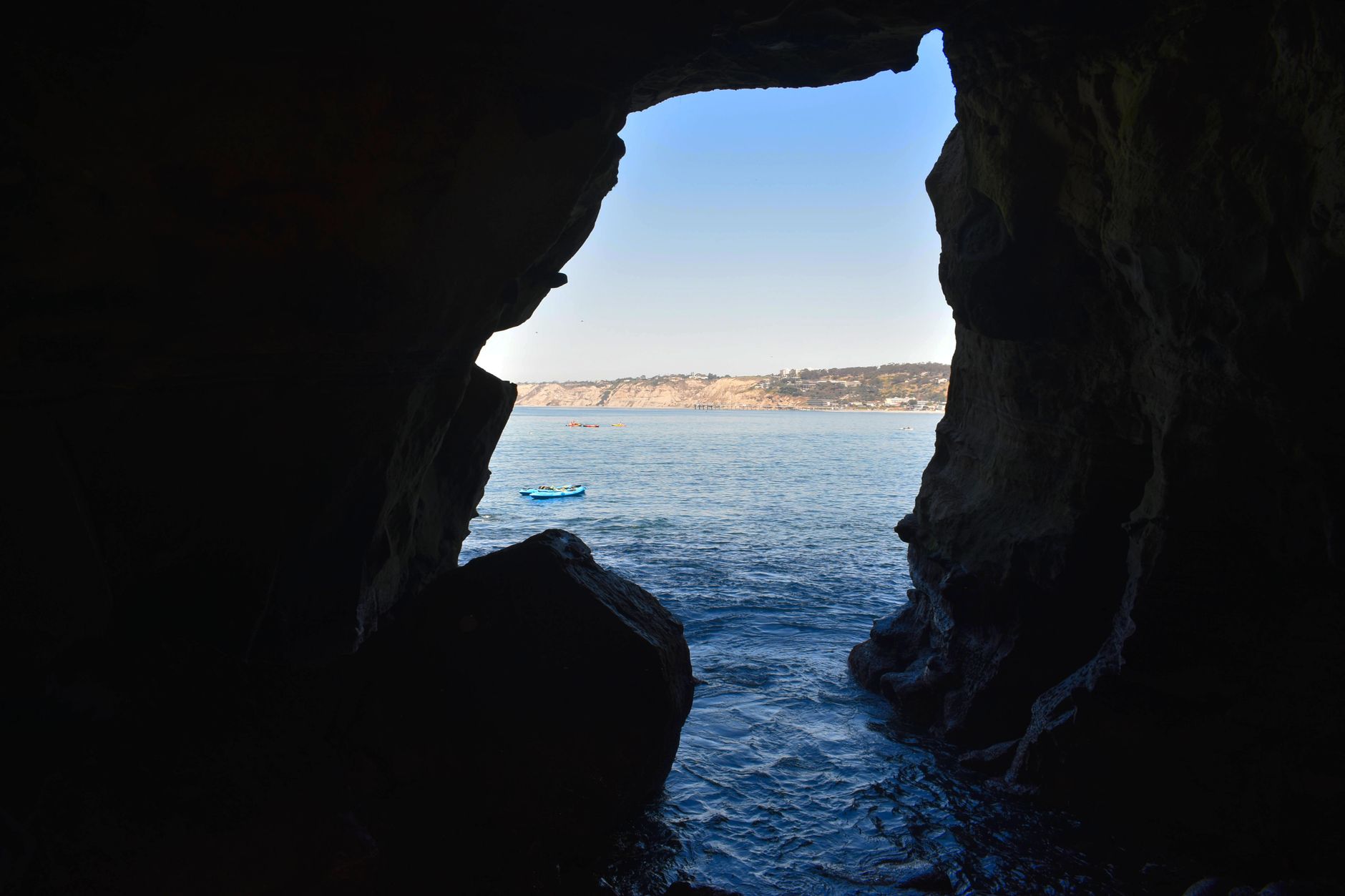
The caves themselves, when we finally reached them, were not the main event. That’s the part most coverage gets wrong. The sea caves of Sai Kung — particularly the large one on the eastern side of Bluff Island — are impressive in scale, with ceilings that arch thirty feet above the waterline and chambers that open into smaller, hidden pools. But they are also deeply dark in a way that photos never convey. The drone footage makes them look like they’re lit from within; in reality, the interior is a solid black that absorbs even the beam of a headlamp. We entered with our paddles held horizontally across the cockpit, bracing against the walls, which were slick with algae and barnacles sharp enough to cut through a life vest. The sound changed too — the slap of water against rock became a hollow boom, amplified and distorted by the chamber’s shape.
What we hadn’t expected, and what we only discovered by accident, was a smaller opening near the back of the main cave. It was low — barely two feet above the waterline — and we nearly missed it entirely. We leaned forward to peer inside and felt a draft of cooler air, the unmistakable sign of a chamber beyond. We had to lie flat across the kayak deck to pass through, paddles stowed, using our hands to push against the rock walls. The passage narrowed until the hull scraped the sides, and then opened into a second chamber, smaller but completely enclosed. The ceiling here was lower, maybe fifteen feet, and there was a crack in the rock above that let in a single shaft of the early dawn light, now beginning to register as a pale blue-gray.
Inside this inner chamber, the water was perfectly still. And in that stillness, the bioluminescence was everywhere. Every movement of our hands — every drip from a paddle — triggered a burst of light that reflected off the rock walls, lighting up the cave in brief, electric flashes. The effect was not the gentle glow we’d seen in the open water. It was violent, almost aggressive, as if the plankton had been waiting in the dark for something to disturb them. We stayed there for perhaps twenty minutes, speaking in the kind of low tones that feel appropriate in a place that seems sacred, watching the water ignite and fade in rhythm with our breath.
Not everything went smoothly. The logistics of a predawn kayak trip in Sai Kung are more complicated than the glossy blog posts suggest. The rental shop doesn’t open until seven, which means any early launch requires a prior arrangement — and that arrangement depends entirely on whether Kwok is willing to come in early, which he isn’t always. We’d called three times to confirm, and each time he’d answered with a noncommittal grunt that we interpreted as agreement but could just as easily have been annoyance. When we arrived, he was there, but the kayaks weren’t prepped. We spent the first fifteen minutes of our launch window inflating our own seat cushions and checking the skegs by headlamp while he watched from a stool, drinking what appeared to be instant coffee from a thermos. “You want early,” he said, as if that explained everything. “Early means you do the work.”
The paddle back was harder than the paddle out. The wind had picked up by six-thirty, and the sea state shifted from glass to chop in what felt like minutes. We were fighting a slight current now, and the kayak, which had felt nimble in the dark, now felt heavy and sluggish. The glow was gone — the plankton, if they were still there, were invisible in the daylight — and without the visual reward, the physical effort became more noticeable. Our shoulders ached. We’d brought water but not nearly enough, and the salt spray had dried on our faces in a crust that tightened every time we blinked. By the time we saw the pier again, we were paddling on instinct, not strength.
Kwok was waiting with a plastic bag containing two bottles of cold water and a pair of steamed rice rolls from a shop we hadn’t noticed earlier. “Eat,” he said, not as a suggestion. The rice rolls were plain — just rice sheets with a drizzle of sweet soy and some dried shrimp — but they were the best thing we’d eaten in days. We sat on the concrete edge of the pier, legs dangling over the water, and watched the first proper tour boats chug out of the harbor, loaded with passengers clutching cameras and life vests that still smelled new. None of them looked toward the caves. They were headed for the islands further out, the ones with beaches and hiking trails and signs in English. The caves, it seemed, were not on their itinerary.
We asked Kwok why he didn’t promote the early trips. “I do,” he said, shrugging. “People don’t want to hear about the dark part. They want the pictures.” He gestured vaguely toward the horizon. “The pictures don’t show what it’s like to sit in the dark and wait. That’s the part they skip.” Whether he meant the pictures or the people was unclear. Either way, he wasn’t wrong.
There’s a specific quality to the light in Sai Kung just before sunrise that we haven’t seen replicated anywhere else. It’s not the golden-hour warmth that photographers chase; it’s a colder, more diffused light that seems to come from everywhere at once, erasing shadows rather than casting them. On the water, this light has the effect of flattening the sea into a single silver sheet, so that the boundary between sky and water becomes impossible to locate. We sat in that light for a while after eating, not talking, watching the color change from silver to pink to blue in the span of a single breath. A cormorant surfaced near the pier, shook itself once, and dove again.
The cave at Bluff Island will still be there in a year, and in ten years, provided the sea doesn’t claim it first. The plankton will return with the right conditions, as they always have. But the combination — the dark, the stillness, the eruption of light in a space that felt like the inside of a lung — is harder to replicate. It depends on timing, on weather, on the willingness of a man like Kwok to unlock a container at four in the morning for two strangers he’s never met. We have no advice for how to guarantee that experience, because we don’t think it can be guaranteed. It can only be attempted, with the understanding that some mornings will yield nothing but sore arms and a cold paddle back.
This one, for whatever it’s worth, yielded plenty.
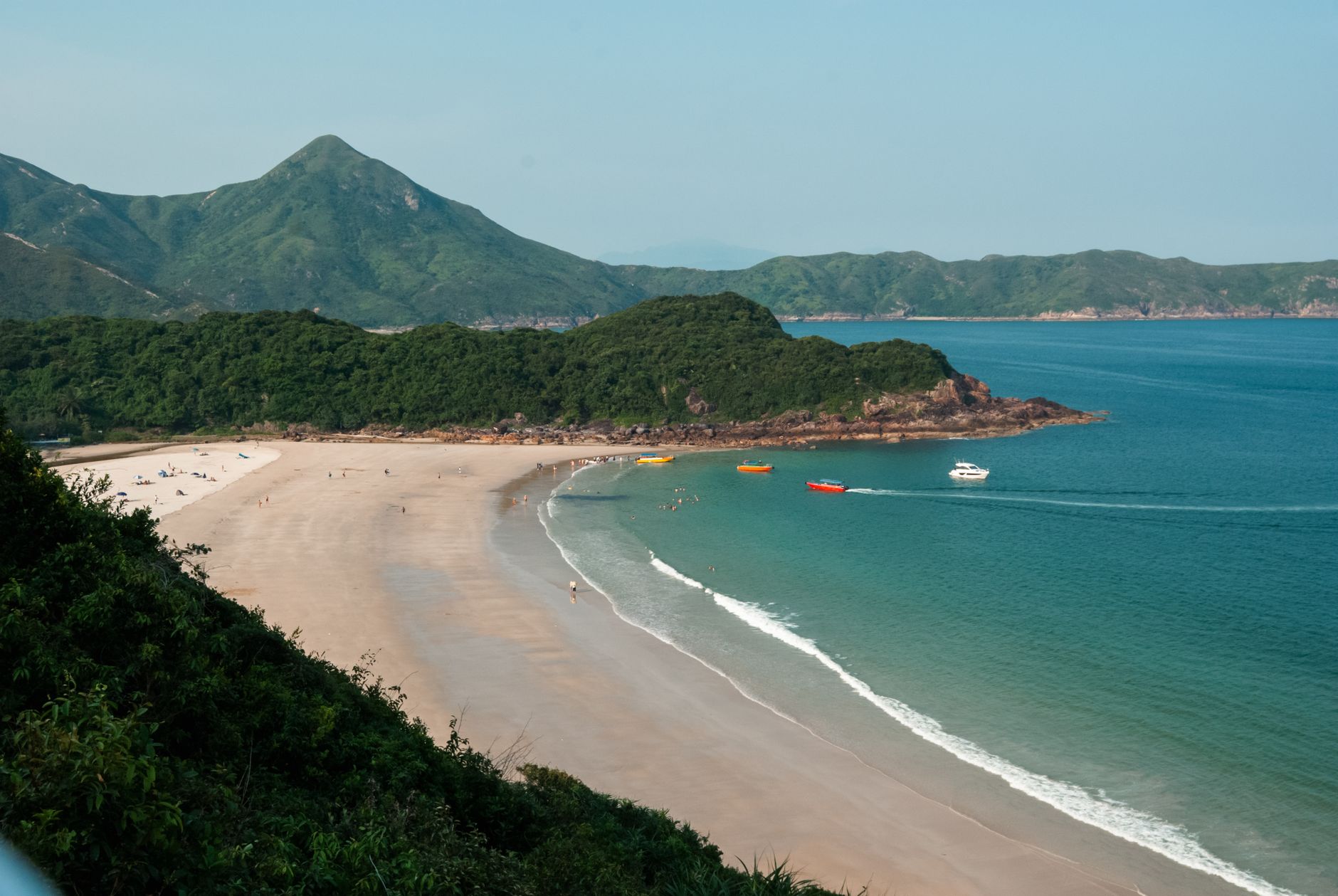
📷 Photos: I Bautista (Pexels), Da Na (Pexels)