The first thing you notice at the Khao Yai salt lick after dark is not the elephants. It’s the quiet. That kind of quiet that feels loud—air thick with humidity and the low, mechanical hum of cicadas. I’d come expecting chaos. A parade of tourist vans, headlights, a crowd jostling for position. What I got instead, at 8:45 on a Tuesday night in late November, was a clearing lit by a single weak floodlight, and the sound of something large breathing somewhere beyond it.
I had spent the previous day doing what most visitors to Khao Yai do: driving the main road through the park, stopping at every viewpoint, feeling the crush of bodies at each one. The elephants I saw that day were a rumor—a flash of grey between trees, a tail disappearing into scrub, a parked car whose occupants were staring at nothing I could see. “They come down at night,” a ranger at the visitor centre had said. “Salt lick. After dark. No guarantees.”
I almost didn’t go. The logistics felt awkward—my rental car wasn’t allowed in the park after sunset without a guide, and the official night safari was a bus tour that left at 6 p.m. and cost 1,500 baht. I didn’t want to be on a bus. I wanted to walk. But walking in a national park at night, in a place where the main attraction was a five-tonne animal with unpredictable moods, felt like the kind of decision you make when you’ve watched too many nature documentaries and not enough safety briefings.
I booked a private guide through a small outfit in Pak Chong called Jungle Trails—not a big company, just a guy named Nirut who’d been working the park for eleven years. He picked me up at my hotel at 6:30 p.m. in a battered Isuzu pickup with a single spotlight mounted on the roll bar. “We go slow,” he said. “Maybe we see nothing. Maybe we see everything.”
Nirut told me he’d gone three weeks in the dry season without a single sighting. “Then one night,” he said, “twenty of them. All at once. You never know.”
We entered the park through a ranger checkpoint that was unattended. Nirut unlocked the gate himself, using a key he kept on a carabiner clipped to his belt. The road beyond it was unpaved—deep ruts, loose rocks, the kind of surface that makes you grateful you’re not the one driving. The pickup’s headlights cut a narrow tunnel through the dark; everything outside it was just noise and smell. Wet earth. Something rotting. The sharp tang of elephant dung.
We parked about a kilometre from the salt lick, at a spot where the trail widened enough to turn around. Nirut cut the engine. The silence that followed was the kind that fills your ears. “We walk from here,” he said. “No flashlight. Only my headlamp, on red.”
I’d read about red light before—it’s less disruptive to wildlife, doesn’t spook the animals—but I hadn’t understood what it would feel like. Walking through a forest at night, seeing only the shapes of trees in a dim crimson wash, my own feet invisible unless I looked straight down. Every sound was amplified: the crunch of dry leaves, the snap of a twig, the distant crack of something heavy moving through brush. My heart was doing that thing where it’s not quite racing but it’s not resting either. I could feel it in my throat.
Nirut walked ahead, unhurried. He’d stop every few steps, tilt his head, listen. Once he held up a hand and I froze mid-step. For maybe a minute we stood there, not breathing, while something rustled off to the left. Then he shook his head and kept walking. “Monitor lizard,” he said. “Big one. But not what we want.”
The salt lick itself is a small clearing, maybe thirty metres across, where the ground is churned into a muddy, mineral-rich soup. There’s a wooden platform built into the treeline, about fifteen metres away, elevated enough to give you a vantage point. That’s where you’re supposed to stand. Nirut led me there, and we settled in—him sitting cross-legged on the boards, me crouching beside him, trying not to make noise with my jacket.
The wait lasted two hours. I’m not going to pretend it was thrilling. It was boring, mostly. I checked my watch thirty times. I shifted my weight until my legs went numb. I thought about the cold noodles I’d left in the hotel fridge and whether they’d still be good when I got back. Nirut didn’t move. He just sat there, breathing slowly, scanning the dark.
And then, at 10:47 p.m.—I remember the exact time because I looked at my phone—the air changed. Not the temperature. The pressure. There was a shift in how the sounds moved, a kind of denseness that hadn’t been there before. Nirut touched my arm. He didn’t say anything. He just pointed.
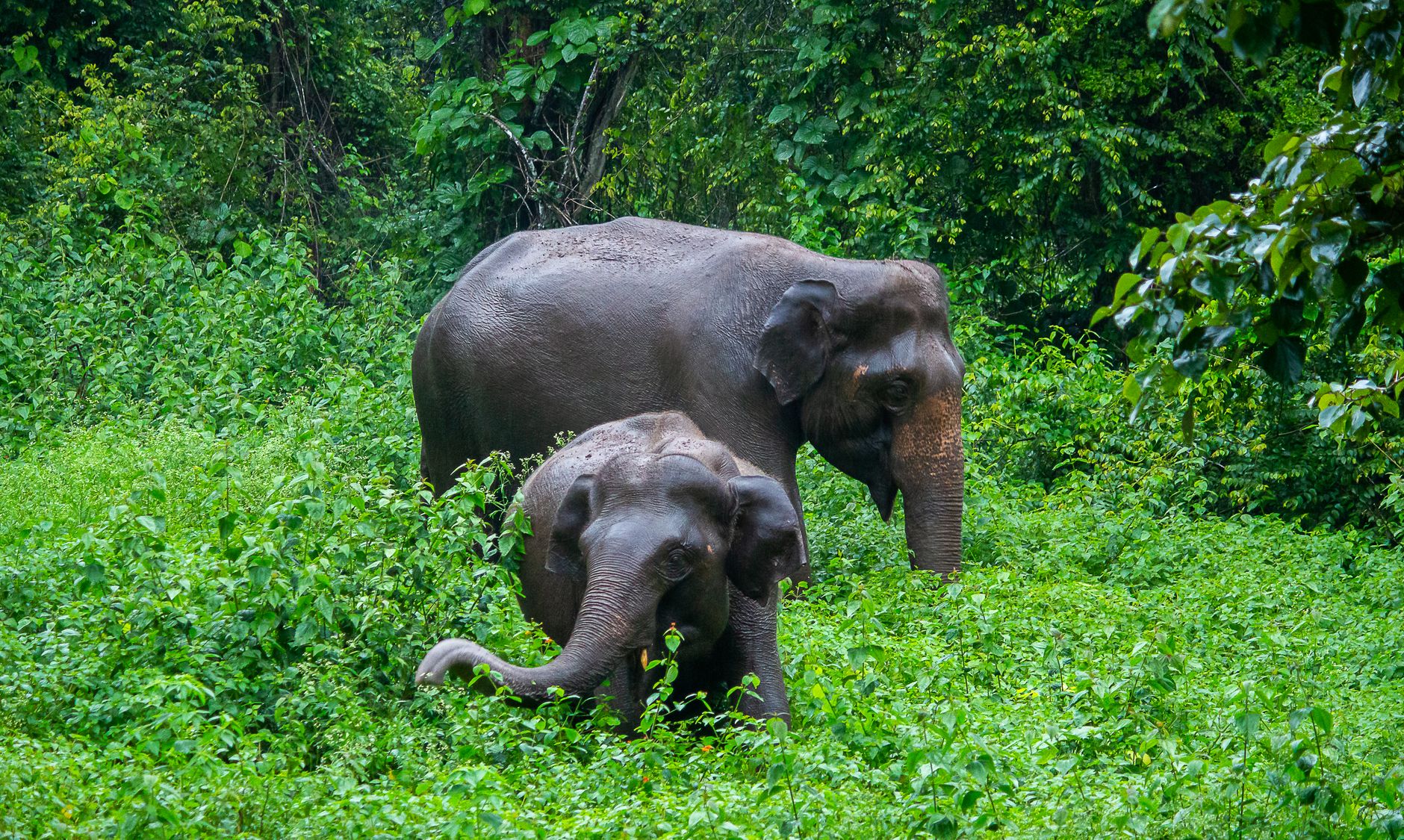
I saw nothing at first. Then I saw the shape. It was like watching a shadow detach itself from the rest of the shadows and take on mass. A female elephant, maybe eight or nine years old, stepped into the clearing. She was smaller than I’d pictured, but that didn’t matter. What mattered was how she moved—deliberately, each foot placed as if the ground might not hold. She walked to the salt lick and stood there, not eating, just standing. Listening.
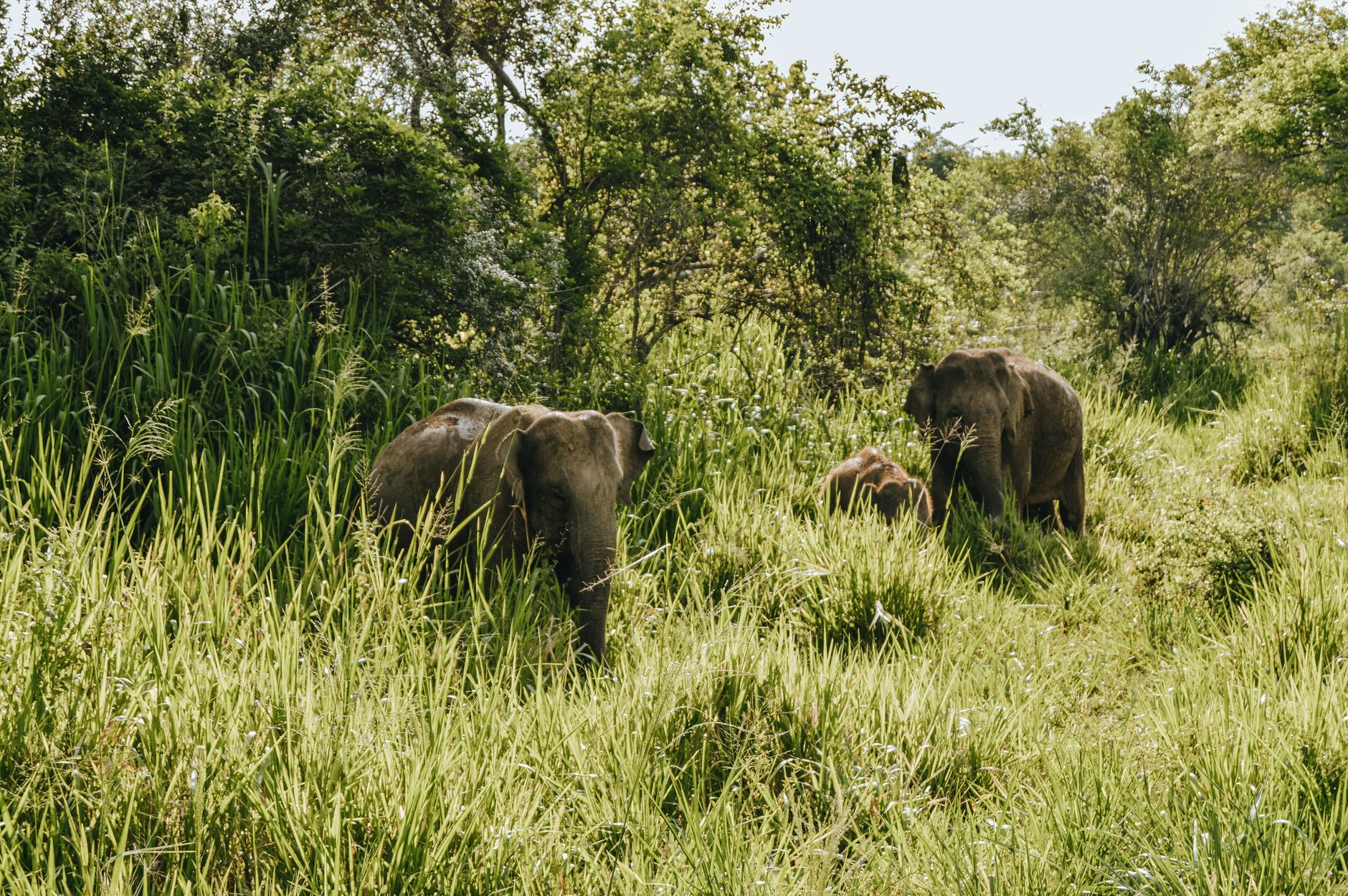
Then came the second one. Larger, older, her ears ragged at the edges. And then a third. And a fourth. Within ten minutes, there were seven elephants in that clearing, moving through the mud with that slow, almost thoughtful gait. They didn’t seem to mind the red light. One of them looked directly at the platform for a long moment, and I could feel its attention on me like a weight. Then it looked away and resumed its business.
What struck me wasn’t the size or the power or any of the usual things people say about elephants. It was the smell. A musky, grassy, animal smell that was completely different from anything I’d encountered around the animals in a zoo or a sanctuary. This was the smell of sweat and mud and leaves and something else I couldn’t identify—something wild, in the truest sense of the word. It filled the clearing. You could taste it.
We stayed for forty-five minutes. At some point, a juvenile elephant—a male, Nirut whispered, about three years old—wandered directly below the platform. I could have reached down and touched its back. I didn’t. I wasn’t scared. It was more that I felt like I’d be breaking a rule I didn’t fully understand. The elephant passed under us without looking up, following its mother to the edge of the clearing, and then the whole group began to melt back into the trees the same way they’d arrived—one by one, without ceremony, as if they’d never been there at all.
On the walk back to the truck, I didn’t say much. Nirut didn’t either. He drove me to the hotel in silence. When I got out, he said, “Good night. Very good.” That was it.
If you go, bring insect repellent and wear long pants. Bring water. Don’t bring a camera with a loud shutter—the click alone can spook them. And don’t expect anything. That’s the hardest part: paying for an experience that might not happen.
I went back to the hotel at midnight, ate my cold noodles standing over the sink, and lay awake for an hour replaying it in my head. The smell. The quiet. The way that juvenile elephant walked under me without a sound. I still don’t know exactly what I felt.
📷 Photos: Pavan Prasad (Pexels), Dinesh Pathirana (Pexels)